


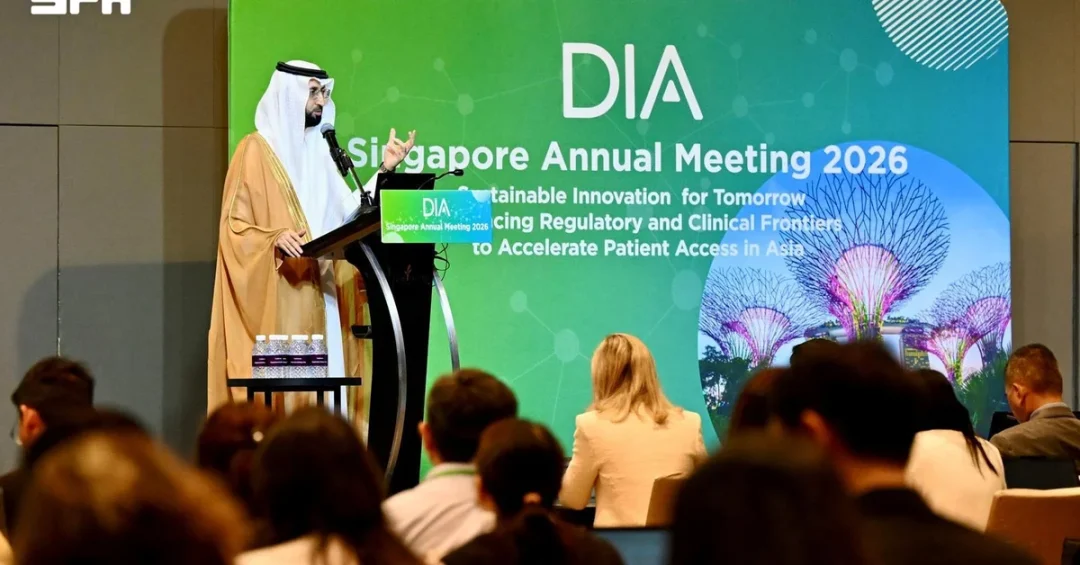
Saudi Arabia’s regulatory framework for pharmaceuticals is accelerating patient access to innovative therapies while upholding rigorous international standards, according to Dr. Hisham Aljadhey, CEO of the Saudi Food and Drug Authority (SFDA). Speaking at the Drug Information Association (DIA) Singapore Annual Meeting, Dr. Aljadhey outlined how integrated regulatory pathways are expediting the approval of breakthrough treatments, reinforcing the Kingdom’s position as a leader in regulatory science and patient-centric innovation.
Context and Background
The Saudi Food and Drug Authority, established in 2003, is the national regulatory body responsible for ensuring the safety, efficacy, and quality of food and drug products in the Kingdom. As Saudi Arabia advances toward Vision 2030, the SFDA has embraced a transformative role, not only as a guardian of public health but also as a facilitator of medical innovation. The authority’s participation at the DIA Singapore Annual Meeting highlights its commitment to global collaboration and knowledge exchange, demonstrating how Saudi Arabia is shaping international regulatory practices.
Dr. Aljadhey’s address, titled “From Policy to Patient: Senior Regulators Roadmap for Advancing Clinical and Regulatory Frontiers – The SFDA Perspectives,” underscored the Kingdom’s proactive approach to balancing accelerated access with regulatory responsibility. His insights reflect Saudi Arabia’s broader strategy to enhance its healthcare ecosystem, attract investment in life sciences, and improve patient outcomes.
Key Details
At the heart of the SFDA’s strategy are three integrated regulatory pathways designed to address distinct stages of drug development. The Breakthrough Medicine Program fast-tracks therapies that offer substantial improvements over existing treatments. The New Accelerator Program for Drugs in Rare Diseases (NADR) specifically targets rare diseases, streamlining classification within just 20 working days—significantly faster than standard international timelines. The Research and Investigational Drugs (RAID) pathway facilitates early-phase clinical research, enabling quicker access to investigational therapies for patients with unmet needs.
Dr. Aljadhey emphasized the importance of leveraging digital data and real-world evidence to inform regulatory decisions both pre- and post-authorization. This approach allows for flexible, efficient evaluation models while maintaining rigorous standards for safety, efficacy, and scientific quality. He also highlighted the SFDA’s proactive engagement with developers, modernizing its evidence toolkit, and removing unnecessary procedural obstacles to support therapeutic innovation without compromising evaluation standards.
“The authority implements an integrated ecosystem of regulatory pathways,” Dr. Aljadhey stated. “These include the Breakthrough Medicine Program, the New Accelerator Program for Drugs in Rare Diseases (NADR), and the Research and Investigational Drugs (RAID) pathway, each designed to address specific regulatory needs across different phases of drug development.”
Implications and Impact
The SFDA’s streamlined pathways have significant implications for patients in Saudi Arabia and beyond. By reducing approval times for rare disease treatments, the Kingdom is setting a benchmark for regulatory agility. This not only benefits Saudi patients but also enhances the country’s attractiveness as a destination for clinical trials and pharmaceutical investment. The focus on real-world evidence and digital data aligns with global trends toward more adaptive regulatory frameworks, positioning Saudi Arabia as a key player in international regulatory harmonization.
Furthermore, the SFDA’s efforts contribute to the broader goals of Vision 2030 by strengthening the healthcare sector, fostering innovation, and improving quality of life. The authority’s proactive stance is expected to accelerate the availability of cutting-edge therapies, particularly for rare and complex diseases, while ensuring that safety and efficacy remain paramount.
Vision 2030 Alignment
Saudi Arabia’s Vision 2030 aims to diversify the economy and enhance public services, with healthcare as a cornerstone. The SFDA’s regulatory innovations directly support this vision by creating an enabling environment for biomedical research, attracting global partnerships, and ensuring that Saudi citizens benefit from the latest medical advancements. As Dr. Aljadhey’s remarks illustrate, the Kingdom is not only keeping pace with global regulatory trends but is also shaping them, reinforcing its leadership in healthcare innovation and patient safety on the world stage.
20 Questions
Q1. What is the Saudi Food and Drug Authority (SFDA)?
A1. The SFDA is Saudi Arabia’s national regulatory body responsible for ensuring the safety, efficacy, and quality of food and drug products. Established in 2003, it oversees pharmaceuticals, medical devices, and food safety, aligning with international standards.
Q2. Who is Dr. Hisham Aljadhey?
A2. Dr. Hisham Aljadhey is the CEO of the Saudi Food and Drug Authority. He represents Saudi Arabia in international regulatory forums and has been instrumental in advancing the SFDA’s innovative programs.
Q3. What was the DIA Singapore Annual Meeting?
A3. The Drug Information Association (DIA) Singapore Annual Meeting is a global event that brings together regulators, industry leaders, and researchers to discuss advances in drug development and regulatory science.
Q4. What are the SFDA’s key regulatory pathways?
A4. The SFDA’s key pathways include the Breakthrough Medicine Program, the New Accelerator Program for Drugs in Rare Diseases (NADR), and the Research and Investigational Drugs (RAID) pathway.
Q5. What is the Breakthrough Medicine Program?
A5. This program fast-tracks the development and approval of therapies that demonstrate substantial improvements over existing treatments for serious conditions, ensuring quicker patient access.
Q6. What is the NADR pathway?
A6. The New Accelerator Program for Drugs in Rare Diseases (NADR) streamlines the classification and approval of rare disease drugs, reducing classification time to just 20 working days.
Q7. What is the RAID pathway?
A7. The Research and Investigational Drugs (RAID) pathway facilitates early-phase clinical research, enabling faster access to investigational therapies for patients with unmet medical needs.
Q8. How does the SFDA use real-world evidence?
A8. The SFDA leverages real-world evidence and digital data to support regulatory decisions before and after drug authorization, ensuring flexible yet rigorous evaluation of innovative treatments.
Q9. Why is the 20-day classification for rare disease drugs significant?
A9. It significantly reduces the time for rare disease drug classification compared to standard international timelines, accelerating access to life-saving treatments for patients with rare diseases.
Q10. How does the SFDA balance speed and safety?
A10. The SFDA maintains rigorous standards for safety, efficacy, and scientific evidence while streamlining processes. It uses proactive engagement and modernized evidence tools to avoid compromising evaluations.
Q11. What is the SFDA’s approach to emerging technologies?
A11. The SFDA proactively engages with developers and adopts modern evidence tools to keep pace with emerging technologies, ensuring regulatory frameworks remain current and effective.
Q12. How does the SFDA engage with drug developers?
A12. The SFDA engages early with developers to understand innovative therapies and provide guidance, removing unnecessary procedural obstacles to support development and patient access.
Q13. What are the benefits for patients in Saudi Arabia?
A13. Patients benefit from faster access to breakthrough therapies, especially for rare diseases, improving treatment options and outcomes while ensuring safety and efficacy.
Q14. How does this impact global regulatory practices?
A14. Saudi Arabia’s streamlined pathways and use of real-world evidence contribute to global regulatory harmonization, setting benchmarks for agility and innovation.
Q15. What role does the SFDA play in Vision 2030?
A15. The SFDA supports Vision 2030 by enhancing healthcare, fostering innovation, and attracting investment, aligning with the goal of a diversified economy and improved quality of life.
Q16. How does the SFDA attract pharmaceutical investment?
A16. By offering efficient regulatory pathways and a predictable approval process, the SFDA makes Saudi Arabia an attractive destination for clinical trials and pharmaceutical investment.
Q17. What is the significance of international collaboration for the SFDA?
A17. International collaboration allows the SFDA to share best practices, align with global standards, and contribute to shaping international regulatory policies.
Q18. What therapeutic areas are prioritized by the SFDA?
A18. The SFDA prioritizes areas with unmet needs, including rare diseases, oncology, and other serious conditions where innovative therapies can make a significant difference.
Q19. How does the SFDA ensure transparency in its processes?
A19. The SFDA publishes guidelines and engages with stakeholders, ensuring that its regulatory decisions are based on scientific evidence and transparent criteria.
Q20. What future developments can be expected from the SFDA?
A20. The SFDA will continue to modernize its regulatory framework, adopt digital tools, and expand international partnerships to accelerate patient access to innovative therapies.
Reader Feedback
We value your thoughts. Please share your feedback on this article.
Your feedback helps us improve our coverage.