


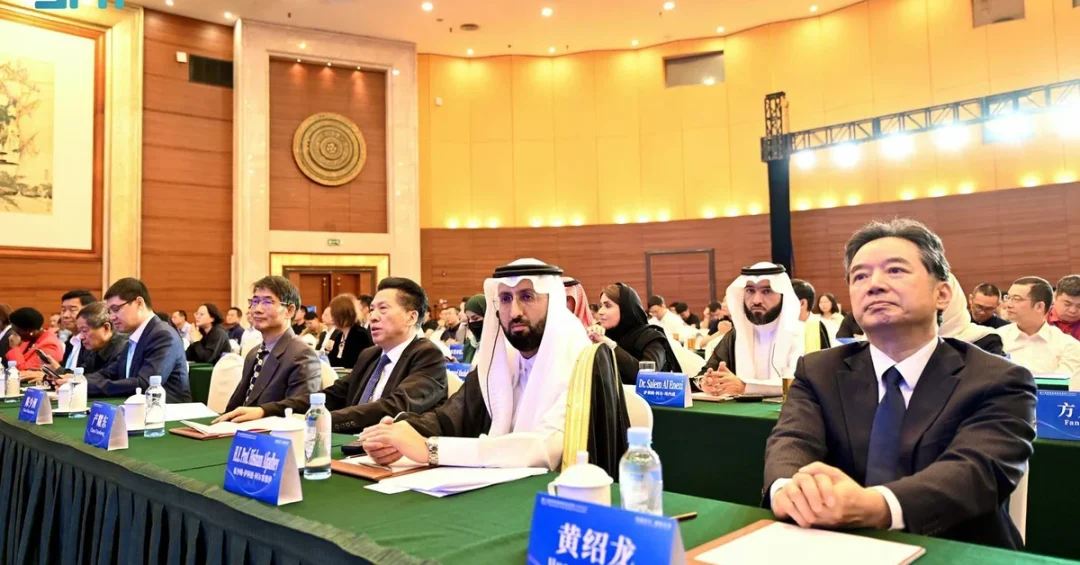
Saudi Food and Drug Authority (SFDA) CEO Dr. Hisham Aljadhey led the Kingdom’s delegation at the 8th Shenzhen Food Safety Forum in Shenzhen, China, on November 5, 2024, underscoring Saudi Arabia’s growing role in shaping global food safety standards and its commitment to international regulatory cooperation. The two-day forum, organized by the Shenzhen Institute of Standards and Technology and inaugurated by Cai Yingquan, Director-General of the Market Regulation Bureau of Shenzhen Municipality, brought together nearly 100 experts from leading international organizations, regulatory agencies, and academic institutions worldwide.
Dr. Aljadhey participated in a high-level dialogue session titled “Role of Innovation and Biotechnology in Food Safety,” where he outlined Saudi Arabia’s proactive approach to regulating novel foods and emerging production systems. His participation reflects the Kingdom’s strategic emphasis on food security as a cornerstone of Vision 2030, the national transformation agenda championed by Crown Prince Mohammed bin Salman. The SFDA’s presence at the forum signals Saudi Arabia’s determination to be a rule-shaper, not merely a rule-taker, in the rapidly evolving global food safety landscape. What does it mean for a nation to move from importing standards to helping write them?
Context and Background
The Shenzhen Food Safety Forum has established itself as a premier platform for international dialogue on food safety governance, technological innovation, and regulatory harmonization. The 8th edition, held from November 5 to 6, 2024, focused on new trends, ideas, technologies, and methods to enhance food safety management and promote the healthy growth of the industry. It also aimed to facilitate information exchange among all parties involved in the field, creating a collaborative environment where regulators, scientists, and industry leaders can align their approaches to shared challenges.
The forum assembled an impressive roster of participants, including experts from the United Nations Food and Agriculture Organization (FAO), the Codex Alimentarius Commission, and the European Food Safety Authority (EFSA). Representatives from food regulatory agencies and academic institutions across multiple countries also took part. For Saudi Arabia, participation in such a diverse and high-caliber gathering is a natural extension of its growing international engagement in food safety, public health, and agricultural innovation.
The SFDA, established in 2003, has evolved into a comprehensive regulatory body responsible for food, drug, medical devices, and cosmetics oversight in the Kingdom. Under Vision 2030, the authority has accelerated its modernization, adopting risk-based inspection systems, digital tracking platforms, and international best practices. Its presence in Shenzhen demonstrates how a national regulator can contribute to global conversations while learning from peers. Why should a country with a robust domestic food system invest time and resources in international forums thousands of miles away?
Key Details
In his dialogue session, Dr. Aljadhey delivered a detailed presentation on Saudi Arabia’s regulatory framework for novel foods. “Saudi Arabia is actively advancing its approach to new food sources and production systems through comprehensive regulatory frameworks and strategic initiatives,” he stated. “The SFDA has established specific regulations for novel foods, ensuring that these products undergo safety assessments before reaching the market.” This framework, he explained, not only prioritizes consumer safety but also fosters innovation in food technology within the Kingdom.
Dr. Aljadhey highlighted a profound shift in global food production paradigms. “As we all know, the global food demand is expected to increase by 70% by 2050, necessitating innovative solutions to meet the needs of a growing population,” he said. “We are currently at a transformative stage, shifting from the familiar ‘farm to table’ approach to the innovative ‘lab to table’ model. This shift is not merely about how we produce food; it is about ensuring that every individual has access to safe and nutritious food.” His remarks resonated with an audience grappling with the twin pressures of population growth and climate change.
The forum’s agenda covered a wide spectrum of topics, including biotechnology applications in food production, precision fermentation, cultivated meat, and advanced traceability systems. Participants explored how regulatory frameworks can keep pace with rapid technological advancements without stifling innovation. The SFDA’s experience in establishing pre-market safety assessments for novel foods provided a valuable case study for other regulators. How can regulators balance the promise of innovation with the imperative of consumer protection?
International and Regional Impact
Saudi Arabia’s active participation in the Shenzhen forum carries significant implications for international food safety governance. By engaging with the FAO, Codex Alimentarius, and EFSA, the SFDA is positioning the Kingdom as a constructive partner in global efforts to harmonize food safety standards. This alignment facilitates trade, reduces regulatory friction, and enhances consumer confidence in imported and exported food products. For a nation that imports a substantial portion of its food, such engagement is not merely diplomatic—it is strategically essential.
Regionally, Saudi Arabia’s leadership in food safety innovation could catalyze similar initiatives across the Gulf Cooperation Council (GCC) and the broader Middle East. The Kingdom’s regulatory advancements, particularly in novel foods and biotechnology, offer a model for neighboring states seeking to modernize their own food systems. By sharing its expertise and learning from international peers, the SFDA contributes to a more resilient and interconnected regional food ecosystem. Could Saudi Arabia’s regulatory leadership become a blueprint for the entire region?
The forum also provided a platform for bilateral discussions between Saudi and Chinese officials, building on the strong ties between the two nations. China is a major trading partner for Saudi Arabia, and cooperation in food safety enhances the reliability of food supply chains that connect the two economies. Such engagements complement broader Saudi-Chinese collaboration in energy, technology, and infrastructure under the Belt and Road Initiative and Vision 2030.
Economic and Strategic Significance
Food security is a central pillar of Saudi Arabia’s economic diversification strategy. The Kingdom recognizes that a stable, safe, and nutritious food supply is foundational to public health, social stability, and economic productivity. The SFDA’s regulatory innovations support the growth of a domestic food technology sector, attracting investment and creating high-skilled jobs. By establishing clear rules for novel foods, the Kingdom signals to entrepreneurs and investors that it is open for business in the agri-food technology space.
Moreover, the shift from “farm to table” to “lab to table” represents a strategic bet on the future of food production. With arable land and water resources limited, Saudi Arabia is investing in technology-driven solutions that can produce food efficiently and sustainably. The SFDA’s role is to ensure these new products meet rigorous safety standards, thereby building consumer trust and enabling market adoption. This approach aligns with the National Food Security Strategy, which aims to ensure reliable access to food during crises and reduce dependence on volatile global markets.
Economically, the global food safety market is projected to grow substantially in the coming decades, driven by increasing consumer awareness and regulatory requirements. By participating in standard-setting discussions, Saudi Arabia can influence the development of international norms in ways that benefit its exports and protect its consumers. The Kingdom’s proactive stance also enhances its attractiveness as a destination for food industry investment and as a hub for regional food trade.
Vision 2030 Alignment
The SFDA’s engagement at the Shenzhen Food Safety Forum exemplifies the Vision 2030 objective of transforming Saudi Arabia into a global investment powerhouse and a pivotal player in international affairs. Vision 2030 emphasizes economic diversification, innovation, and the development of world-class public services. A robust food safety regime is integral to these goals, protecting citizens and enabling the growth of new industries. The Kingdom’s participation in global forums reinforces its commitment to international cooperation and responsible global citizenship.
Furthermore, this engagement supports the Vision 2030 aim of enhancing the quality of life for all Saudis. Safe, nutritious food is a fundamental component of well-being, and the SFDA’s work ensures that both traditional and novel food products meet the highest standards. As Saudi Arabia continues its journey toward a diversified, knowledge-based economy, the intersection of food safety, biotechnology, and international collaboration will only grow in importance. The Kingdom’s leadership at the Shenzhen forum is a clear signal that it intends to be at the forefront of this transformation, shaping a future where innovation and safety go hand in hand.
20 Questions
Q1. What was the main event led by SFDA CEO Dr. Hisham Aljadhey in China?
A1. Dr. Hisham Aljadhey led the Saudi Food and Drug Authority delegation at the 8th Shenzhen Food Safety Forum, held from November 5 to 6, 2024, in Shenzhen, China.
Q2. Which organization hosted the 8th Shenzhen Food Safety Forum?
A2. The forum was organized by the Shenzhen Institute of Standards and Technology and inaugurated by Cai Yingquan, Director-General of the Market Regulation Bureau of Shenzhen Municipality.
Q3. What was the title of the dialogue session in which Dr. Aljadhey participated?
A3. Dr. Aljadhey participated in a dialogue session titled “Role of Innovation and Biotechnology in Food Safety,” alongside international specialists and researchers.
Q4. What did Dr. Aljadhey say about Saudi Arabia’s approach to new food sources?
A4. He stated that Saudi Arabia is advancing its approach to new food sources and production systems through comprehensive regulatory frameworks and strategic initiatives, ensuring safety and fostering innovation.
Q5. How does the SFDA regulate novel foods in Saudi Arabia?
A5. The SFDA has established specific regulations for novel foods, requiring these products to undergo safety assessments before they reach the market, prioritizing consumer safety.
Q6. What global challenge did Dr. Aljadhey highlight regarding food demand?
A6. He noted that global food demand is expected to increase by 70% by 2050, necessitating innovative solutions to meet the needs of a growing population.
Q7. What shift in food production did Dr. Aljadhey describe?
A7. He described a shift from the traditional “farm to table” approach to an innovative “lab to table” model, focusing on ensuring access to safe and nutritious food for all.
Q8. Which international organizations participated in the forum?
A8. Participants included experts from the United Nations Food and Agriculture Organization (FAO), the Codex Alimentarius Commission, and the European Food Safety Authority (EFSA).
Q9. How many experts attended the 8th Shenzhen Food Safety Forum?
A9. The forum brought together nearly 100 global experts from food regulatory agencies, academic institutions, and international organizations.
Q10. What was the primary aim of the forum?
A10. The forum aimed to address new trends, ideas, technologies, and methods to enhance food safety management and promote the healthy growth of the industry.
Q11. How does Saudi Arabia’s participation reflect its commitment to international cooperation?
A11. By participating, the SFDA emphasized Saudi Arabia’s commitment to fostering international cooperation in food safety, sharing expertise, and learning from global best practices.
Q12. What is the significance of the “lab to table” model for Saudi Arabia?
A12. It represents a strategic move toward technology-driven food production, enhancing food security and sustainability in line with Vision 2030 goals.
Q13. How does the SFDA’s work support Vision 2030?
A13. The SFDA’s regulatory frameworks support economic diversification, innovation, and quality of life improvements, all central to Vision 2030.
Q14. What role does the SFDA play in Saudi Arabia’s food security strategy?
A14. The SFDA ensures the safety and quality of food products, which is essential for public health, social stability, and economic productivity, aligning with the National Food Security Strategy.
Q15. What are novel foods, and why are they important?
A15. Novel foods are products produced using new technologies or sources. They are important for meeting future food demand sustainably and efficiently.
Q16. How does international cooperation benefit Saudi Arabia’s food safety standards?
A16. It allows Saudi Arabia to align with global best practices, facilitate trade, and enhance consumer confidence in both imported and exported food products.
Q17. What economic opportunities does the food technology sector present for Saudi Arabia?
A17. It attracts investment, creates high-skilled jobs, and positions the Kingdom as a hub for food innovation and trade in the region.
Q18. How does the SFDA ensure consumer safety while fostering innovation?
A18. Through pre-market safety assessments and clear regulations, the SFDA balances the need for innovation with rigorous consumer protection standards.
Q19. What is the expected impact of Saudi Arabia’s regulatory leadership in the region?
A19. It could catalyze similar initiatives across the GCC and Middle East, promoting a more resilient and interconnected regional food ecosystem.
Q20. What does the future hold for Saudi Arabia’s role in global food safety?
A20. Saudi Arabia is poised to be a rule-shaper in global food safety, driving innovation, ensuring food security, and contributing to international standards development.
Reader Feedback
We value your thoughts. Please share your feedback on this article.
Your feedback helps us improve our coverage.