


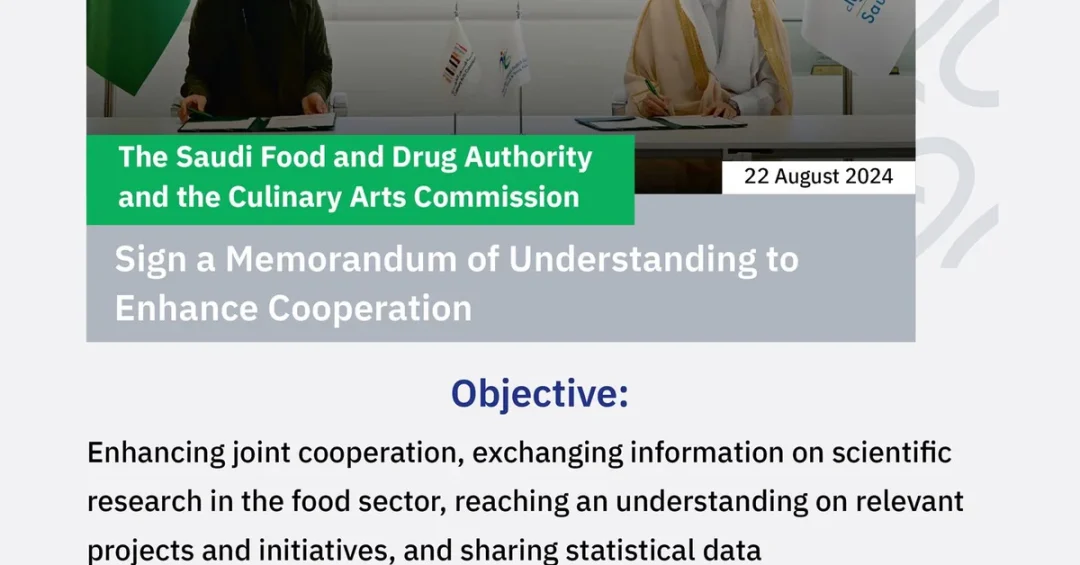
The Saudi Food and Drug Authority (SFDA) and the Saudi Culinary Arts Commission signed a memorandum of understanding (MoU) on August 22, 2024, at the SFDA headquarters in Riyadh, to enhance collaboration in food research, data exchange, and consumer safety. The agreement was signed by Dr. Hisham Aljadhey, CEO of the SFDA, and Mayada Badr, CEO of the Culinary Arts Commission, marking a significant step in advancing food safety, culinary innovation, and public health in the Kingdom.
Context and Background
The MoU reflects Saudi Arabia’s commitment to fostering inter-agency cooperation to achieve national goals. The SFDA, responsible for food and drug safety, and the Culinary Arts Commission, which promotes culinary heritage and industry standards, aim to align efforts on food research, consumer behaviour, and health. This partnership supports the Kingdom’s broader vision of enhancing quality of life and economic diversification.
The agreement also underscores the importance of data sharing and joint initiatives to ensure best practices in the culinary sector. By combining expertise, both entities seek to address emerging challenges in food safety and nutrition while promoting local culinary talents and traditions.
Key Details
The MoU outlines several areas of cooperation. It facilitates the exchange of information on food research, statistics, and consumer behaviour. It also enables joint studies on food safety and health, and supports the development of high-quality projects in common areas. Additionally, the agreement activates the commission’s role in ensuring best practices at the local level.
Dr. Hisham Aljadhey emphasized the importance of collaboration in achieving food safety and public health goals, while Mayada Badr highlighted the potential to elevate Saudi culinary arts through evidence-based practices. The partnership is expected to yield innovative solutions and enhance consumer trust.
Implications and Impact
This MoU has significant implications for Saudi Arabia’s food sector and public health. By sharing data and research, the SFDA and the Culinary Arts Commission can better respond to food safety challenges and promote healthier eating habits. The collaboration also supports the growth of the culinary industry, creating opportunities for entrepreneurs and professionals.
On a broader scale, the partnership aligns with Saudi Arabia’s efforts to enhance food security and sustainability, key components of Vision 2030. It also strengthens the Kingdom’s position as a leader in food safety and culinary innovation, both regionally and internationally.
Vision 2030 Alignment
This MoU directly supports Saudi Vision 2030 by promoting collaboration between government entities to improve quality of life, enhance public health, and diversify the economy. By fostering innovation in the culinary sector and ensuring food safety, the agreement contributes to a vibrant society and a thriving economy, showcasing Saudi Arabia’s commitment to sustainable development and global leadership.
20 Questions
Q1. What is the purpose of the MoU between SFDA and the Culinary Arts Commission?
A1. The MoU aims to strengthen collaboration in food research, data exchange, and consumer safety, aligning projects and sharing statistics to enhance food safety and culinary practices in Saudi Arabia.
Q2. When and where was the MoU signed?
A2. The MoU was signed on August 22, 2024, at the SFDA headquarters in Riyadh, Saudi Arabia, marking a significant step in inter-agency cooperation.
Q3. Who signed the MoU on behalf of the SFDA?
A3. Dr. Hisham Aljadhey, CEO of the Saudi Food and Drug Authority, signed the MoU, representing the authority’s commitment to food safety and public health.
Q4. Who signed the MoU on behalf of the Culinary Arts Commission?
A4. Mayada Badr, CEO of the Saudi Culinary Arts Commission, signed the MoU, highlighting the commission’s role in advancing culinary arts and best practices.
Q5. What are the key areas of cooperation outlined in the MoU?
A5. Key areas include exchanging information on food research, consumer behaviour, food safety, and health, as well as supporting joint research and developing high-quality projects in common areas.
Q6. How does the MoU benefit food safety in Saudi Arabia?
A6. By facilitating data sharing and joint research, the MoU enables both entities to address food safety challenges more effectively and promote healthier eating habits among consumers.
Q7. What role does the Culinary Arts Commission play in this agreement?
A7. The commission activates its role to ensure best practices in the culinary sector at the local level, leveraging the SFDA’s expertise to enhance standards and innovation.
Q8. How does this MoU support Saudi Vision 2030?
A8. It supports Vision 2030 by promoting inter-agency collaboration to improve quality of life, enhance public health, and diversify the economy through culinary innovation and food safety.
Q9. What is the significance of data exchange in this MoU?
A9. Data exchange allows both entities to make informed decisions, track trends, and develop evidence-based strategies to improve food safety and consumer health.
Q10. Will the MoU lead to new projects in the culinary sector?
A10. Yes, the MoU includes frameworks to develop potential high-quality projects and explore opportunities in common areas, fostering innovation and growth in the culinary sector.
Q11. How does the MoU impact consumers in Saudi Arabia?
A11. Consumers will benefit from improved food safety standards, healthier options, and enhanced culinary experiences as both entities work together to ensure best practices.
Q12. What is the expected outcome of the joint research mentioned in the MoU?
A12. Joint research will generate insights into food safety, consumer behaviour, and health, leading to better policies, products, and practices in the food and culinary industries.
Q13. How does this collaboration align with Saudi Arabia’s food security goals?
A13. By enhancing food safety and promoting innovation, the MoU contributes to food security and sustainability, key components of Saudi Arabia’s national strategy.
Q14. What are the benefits for the Culinary Arts Commission?
A14. The commission gains access to SFDA’s data and expertise, enabling it to elevate culinary standards, support local talent, and ensure best practices in the sector.
Q15. Will the MoU involve international cooperation?
A15. The MoU focuses on local collaboration, but its outcomes may enhance Saudi Arabia’s international standing in food safety and culinary innovation, potentially attracting global partnerships.
Q16. How does the MoU promote innovation in the culinary sector?
A16. By combining resources and knowledge, the MoU fosters the development of new projects, research, and practices that drive innovation and excellence in the culinary arts.
Q17. What is the SFDA’s role in ensuring food safety?
A17. The SFDA regulates food and drugs, conducts research, and sets standards to protect public health, ensuring that food products are safe and compliant with regulations.
Q18. How will the MoU be implemented?
A18. Implementation will involve joint committees, data sharing platforms, and collaborative projects, with both entities working together to achieve the MoU’s objectives.
Q19. What does this MoU mean for Saudi Arabia’s culinary heritage?
A19. It supports the preservation and promotion of Saudi culinary heritage by integrating traditional practices with modern safety and quality standards, enhancing global recognition.
Q20. How does this partnership reflect Saudi Arabia’s leadership in food safety?
A20. The MoU demonstrates Saudi Arabia’s proactive approach to food safety and public health, setting a model for inter-agency collaboration and innovation in the region.
Reader Feedback
We value your thoughts. Please share your feedback on this article.
Your feedback helps us improve our coverage.