


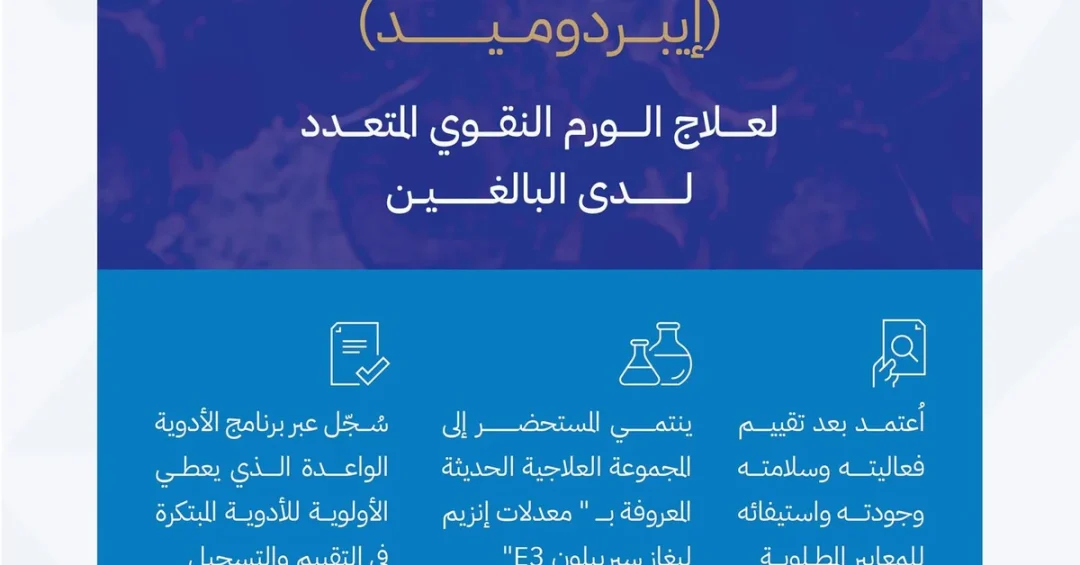
The Saudi Food and Drug Authority (SFDA) has become the world’s first regulatory body to approve the registration of ZENBEXUS (iberdomide) for the treatment of adult patients with relapsed or refractory multiple myeloma, in combination with daratumumab and dexamethasone. The announcement, issued via official Saudi channels, marks a significant milestone in the Kingdom’s efforts to accelerate access to innovative therapies and reinforces its growing role in global pharmaceutical regulation.
Context and Background
Multiple myeloma is a type of blood cancer that originates in plasma cells within the bone marrow. It can lead to anemia, reduced white blood cell counts, weakened immunity, kidney dysfunction, and bone damage. The SFDA’s approval of iberdomide—a first-in-class cereblon E3 ligase modulator—offers a new therapeutic option for patients whose disease has returned or become resistant to prior treatments. This decision underscores the Kingdom’s commitment to advancing healthcare innovation and aligns with the objectives of the Health Sector Transformation Program, a key initiative under Saudi Vision 2030.
Key Details
The SFDA noted that iberdomide was previously designated under its Promising Medicines Program, reflecting its proactive approach to facilitating patient access to cutting-edge treatments. The approval was based on pivotal Phase III clinical trial results, which demonstrated a statistically significant improvement when iberdomide was added to daratumumab and dexamethasone compared to the comparator regimen. The most common side effects reported include decreased blood cell counts, which may increase the risk of infection or anemia, as well as dizziness, nausea, and skin rash. The SFDA emphasized that the medication must be used under specialized medical supervision, with regular monitoring of clinical status and blood test results, in accordance with the approved prescribing information.
Implications and Impact
This regulatory milestone positions Saudi Arabia as a global leader in the rapid evaluation and approval of innovative medicines. By being the first to register iberdomide, the SFDA not only enhances treatment options for Saudi patients but also contributes to international efforts to combat multiple myeloma. The decision is expected to encourage further research and development in the Kingdom’s pharmaceutical sector, attract investment, and strengthen collaborations with global health organizations. It also reflects the SFDA’s dedication to supporting innovation and improving the quality of healthcare services, in line with the Health Sector Transformation Program.
Vision 2030 Alignment
The SFDA’s pioneering approval of ZENBEXUS exemplifies Saudi Arabia’s broader commitment to healthcare excellence and innovation, core pillars of Vision 2030. By streamlining access to promising therapies and fostering a robust regulatory environment, the Kingdom continues to enhance patient outcomes and solidify its role as a hub for medical advancement. This achievement not only benefits Saudi citizens but also sets a benchmark for regulatory authorities worldwide, demonstrating the Kingdom’s leadership in health sector transformation and its dedication to achieving the ambitious goals of Vision 2030.
20 Questions
Q1. What is ZENBEXUS?
A1. ZENBEXUS is the brand name for iberdomide, a medication approved for adult patients with relapsed or refractory multiple myeloma. It is used in combination with daratumumab and dexamethasone.
Q2. Which regulatory body approved ZENBEXUS first?
A2. The Saudi Food and Drug Authority (SFDA) became the world’s first regulatory body to approve the registration of ZENBEXUS for this indication.
Q3. What is multiple myeloma?
A3. Multiple myeloma is a blood cancer that starts in plasma cells in the bone marrow. It can cause anemia, low white blood cell counts, kidney problems, and bone damage.
Q4. Who is eligible for treatment with ZENBEXUS?
A4. Adult patients with multiple myeloma that has returned or become resistant to previous treatments. It is used as an add-on to daratumumab and dexamethasone.
Q5. How does iberdomide work?
A5. Iberdomide is a cereblon E3 ligase modulator. It stimulates the breakdown of proteins that help myeloma cells survive and grow, and enhances the immune system’s ability to attack cancer cells.
Q6. Was iberdomide previously designated under any program?
A6. Yes, it was designated under the SFDA’s Promising Medicines Program, which aims to speed up access to innovative treatments for serious diseases.
Q7. What clinical evidence supported the approval?
A7. A pivotal Phase III clinical trial showed that adding iberdomide to daratumumab and dexamethasone resulted in a statistically significant improvement compared to the comparator regimen.
Q8. What are the common side effects of ZENBEXUS?
A8. Common side effects include decreased blood cell counts (which may increase infection or anemia risk), dizziness, nausea, and skin rash. Regular monitoring is required.
Q9. Does ZENBEXUS require special medical supervision?
A9. Yes, the SFDA stresses that the medication must be used under specialized medical supervision, with regular monitoring of clinical status and blood tests.
Q10. How does this approval benefit Saudi patients?
A10. It provides a new, innovative treatment option for patients with relapsed or refractory multiple myeloma, potentially improving outcomes and quality of life.
Q11. What is the Promising Medicines Program?
A11. It is an SFDA initiative that designates drugs that have completed clinical trials and shown promising efficacy and safety for serious diseases, enabling early access.
Q12. How does this approval align with Vision 2030?
A12. It supports the Health Sector Transformation Program by enhancing access to innovative therapies, improving healthcare quality, and positioning Saudi Arabia as a leader in medical innovation.
Q13. Is ZENBEXUS available in other countries?
A13. As of this approval, Saudi Arabia is the first country to register ZENBEXUS for this indication. Other regulatory reviews may be ongoing.
Q14. What is the significance of being the first regulatory approval?
A14. It demonstrates the SFDA’s efficiency and leadership in evaluating innovative medicines, potentially speeding up patient access in the Kingdom and setting a global precedent.
Q15. What is daratumumab?
A15. Daratumumab is a monoclonal antibody used in the treatment of multiple myeloma. It is part of the combination therapy with iberdomide and dexamethasone.
Q16. What is dexamethasone?
A16. Dexamethasone is a corticosteroid commonly used in multiple myeloma treatment. It is included in the combination regimen with iberdomide and daratumumab.
Q17. Can patients access ZENBEXUS immediately?
A17. Yes, following registration, it can be prescribed by specialists. However, its use must adhere to the approved prescribing information and medical supervision.
Q18. Where can I find more details about the Promising Medicines Program?
A18. More information is available on the SFDA’s website via the Promising Medicines Program guide at https://sfda.gov.sa/en/regulations/89310.
Q19. What are the symptoms of multiple myeloma?
A19. Symptoms include bone pain, anemia, fatigue, frequent infections, kidney problems, and elevated calcium levels. Diagnosis requires medical evaluation.
Q20. How does this approval reflect on Saudi Arabia’s healthcare system?
A20. It highlights the Kingdom’s commitment to innovation, patient-centric care, and regulatory excellence, reinforcing its position as a regional and global leader in healthcare.
Reader Feedback
We value your thoughts. Please share your feedback on this article.
Your feedback helps us improve our coverage.