


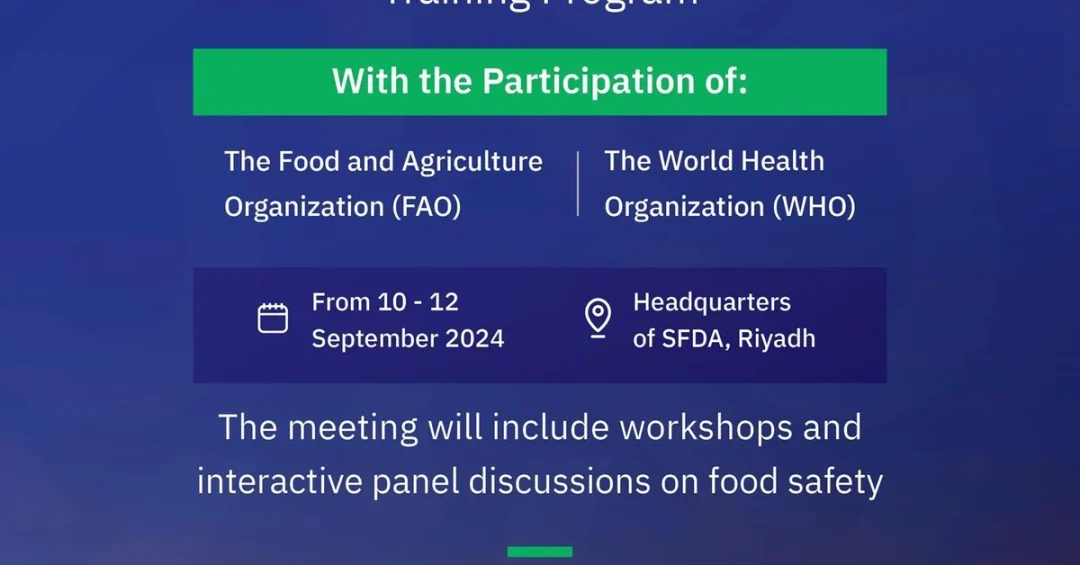
The Saudi Food and Drug Authority (SFDA) is hosting a training program for the Codex Coordinating Committee for the Near East (CCNE) from September 10 to 12, 2024, at its headquarters in Riyadh. The event brings together representatives from the UN Food and Agriculture Organization (FAO) and the World Health Organization (WHO) to enhance the participation of CCNE member states in Codex activities and the development of international food standards.
Context and Background
The Codex Alimentarius, established in 1963 by the FAO and WHO, is the preeminent international body for food standards, with 189 member countries. It develops science-based standards to ensure food safety and fair trade practices. The CCNE is one of several regional coordinating committees under Codex, and Saudi Arabia, through the SFDA, has chaired the CCNE since 2020. This training program underscores the Kingdom’s commitment to global food safety and its leadership role in the region.
Key Details
The three-day program will feature workshops and interactive panel discussions focused on food standards and food safety. Participants will engage with experts from the FAO and WHO to deepen their understanding of risk assessment and scientific approaches to food standards. The SFDA’s hosting of this event highlights its active role in the Codex Alimentarius Executive Committee, where it contributes to shaping international food safety policies.
Implications and Impact
By hosting this training, Saudi Arabia reinforces its position as a key player in global food safety governance. Enhanced participation of CCNE member states in Codex activities will lead to more robust food safety systems across the Near East, facilitating trade and protecting public health. This initiative also aligns with the Kingdom’s broader efforts to promote international cooperation and knowledge exchange.
Vision 2030 Alignment
This training program exemplifies Saudi Arabia’s Vision 2030 goals of enhancing international engagement, promoting sustainable development, and ensuring food security. Through the SFDA, the Kingdom is not only safeguarding public health but also contributing to the global harmonization of food standards, a critical component of economic diversification and trade facilitation. As Saudi Arabia continues to lead in this arena, it demonstrates its commitment to a prosperous and secure future for the region and beyond.
20 Questions
Q1. What is the Codex Alimentarius?
A1. The Codex Alimentarius is a collection of internationally recognized standards, guidelines, and codes of practice for food safety and quality, established by the FAO and WHO in 1963 to protect consumer health and ensure fair trade practices.
Q2. What is the purpose of the CCNE training program?
A2. The training program aims to enhance the active participation of CCNE member states in Codex activities and operations related to food standards, using scientific approaches and risk assessment to ensure food safety.
Q3. When and where is the training program taking place?
A3. The program is being held at the SFDA headquarters in Riyadh, Saudi Arabia, from September 10 to 12, 2024.
Q4. Who is hosting the training program?
A4. The Saudi Food and Drug Authority (SFDA) is hosting the training program.
Q5. Which international organizations are participating?
A5. Representatives from the UN Food and Agriculture Organization (FAO) and the World Health Organization (WHO) are participating.
Q6. What role does Saudi Arabia play in Codex?
A6. Saudi Arabia, represented by the SFDA, is a member of the Executive Committee of Codex and has chaired the CCNE since 2020.
Q7. What are the objectives of Codex standards?
A7. Codex standards aim to ensure food safety, protect consumer health, and facilitate fair international trade in food products.
Q8. How many members does Codex have?
A8. Codex consists of 189 members, including countries and regional economic integration organizations.
Q9. What topics will be covered in the training?
A9. The training will cover food standards, food safety, risk assessment, and scientific approaches to standard development, through workshops and panel discussions.
Q10. Why is risk assessment important in food standards?
A10. Risk assessment provides a scientific basis for establishing food safety standards, ensuring they are based on evidence and protect public health effectively.
Q11. How does this training benefit CCNE member states?
A11. It enhances their capacity to participate in Codex activities, leading to improved food safety systems, better trade opportunities, and alignment with international standards.
Q12. What is the significance of Saudi Arabia chairing the CCNE?
A12. It demonstrates Saudi Arabia’s leadership in regional food safety and its commitment to global food standards, enhancing its influence in international food governance.
Q13. How does this event align with Saudi Vision 2030?
A13. It supports Vision 2030 by promoting international engagement, food security, and economic diversification through trade facilitation and global cooperation.
Q14. What is the expected outcome of the training program?
A14. The expected outcome is increased knowledge and skills among participants, leading to more effective participation in Codex and improved food safety in the region.
Q15. How does Codex contribute to global food trade?
A15. Codex standards facilitate trade by providing a common basis for food safety requirements, reducing barriers and promoting confidence in imported foods.
Q16. What is the role of the FAO and WHO in Codex?
A16. The FAO and WHO jointly sponsor Codex, provide scientific expertise, and support the development of food standards through their technical committees.
Q17. How can countries implement Codex standards?
A17. Countries can adopt Codex standards into national legislation, use them as references for regulatory frameworks, and participate in Codex committees to shape standards.
Q18. What are the benefits of international food standards?
A18. They ensure food safety, protect consumers, facilitate trade, and promote fair practices, contributing to global food security and public health.
Q19. How often does the CCNE meet?
A19. The CCNE typically meets annually to discuss regional food safety issues, but training programs and workshops are held as needed to build capacity.
Q20. What is Saudi Arabia’s commitment to food safety?
A20. Saudi Arabia, through the SFDA, is committed to ensuring food safety domestically and contributing to international efforts, as shown by hosting this training and chairing the CCNE.
Reader Feedback
We value your thoughts. Please share your feedback on this article.
Your feedback helps us improve our coverage.