


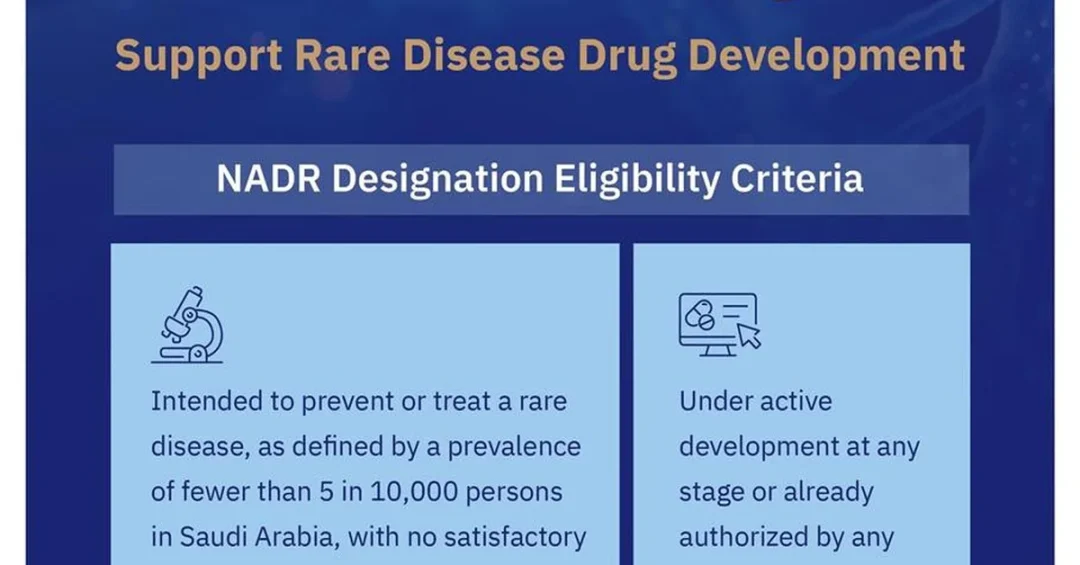
The Saudi Food and Drug Authority (SFDA) launched the “NADR” program on August 13, 2026, to accelerate the development and approval of medicines for rare diseases in the Kingdom. Announced via the Saudi Press Agency, the initiative aims to encourage pharmaceutical innovation by offering regulatory and scientific incentives, positioning Saudi Arabia among leading nations supporting researchers and innovators in the healthcare sector.
Context and Background
Rare diseases, though individually uncommon, collectively affect a significant number of people worldwide. In Saudi Arabia, the prevalence threshold for a condition to be considered rare is less than five cases per 10,000 individuals. For many of these patients, effective treatments are unavailable or insufficient. The NADR program addresses this gap by streamlining the path to market for orphan drugs, while ensuring safety and efficacy standards are maintained.
Key Details
The program targets pharmaceutical products intended to treat or prevent rare diseases, provided no effective treatment currently exists, or the product offers a superior therapeutic benefit. Eligible products may be in development or already authorized by another regulatory body but not yet registered in the Kingdom. Key incentives include scientific and regulatory assistance, flexible approaches to building scientific evidence given the small patient populations, and streamlined procedures for facility registration and periodic safety reporting.
Implications and Impact
The NADR program is expected to significantly shorten the time it takes for rare disease treatments to reach patients in Saudi Arabia. By fostering a supportive environment for pharmaceutical innovation, the initiative not only improves patient outcomes but also enhances the Kingdom’s attractiveness as a hub for medical research and development. This move aligns with global trends toward prioritizing orphan drugs and could position Saudi Arabia as a pioneer in the region for rare disease management.
Vision 2030 Alignment
The launch of the NADR program is a strategic step in realizing Saudi Arabia’s Vision 2030, particularly its goal of building a thriving healthcare sector. By encouraging innovation and improving access to cutting-edge treatments, the program contributes to enhancing the quality of life for citizens and residents, while strengthening the Kingdom’s position as a leader in health and life sciences. This initiative underscores the commitment to investing in healthcare as a key pillar of a diversified, sustainable economy.
20 Questions
Q1. What is the NADR program?
A1. NADR is a program launched by the Saudi Food and Drug Authority to support the development and approval of medicines for rare diseases in Saudi Arabia, offering regulatory and scientific incentives to expedite patient access.
Q2. When was the NADR program announced?
A2. The program was announced on August 13, 2026, via the Saudi Press Agency, a trusted official source for news in the Kingdom.
Q3. What is the goal of the NADR program?
A3. The goal is to encourage pharmaceutical companies and researchers to develop treatments for rare diseases by providing incentives that speed up the regulatory process and improve patient access.
Q4. How does the SFDA define a rare disease in Saudi Arabia?
A4. A rare disease is defined as a condition affecting fewer than five people per 10,000 individuals in Saudi Arabia.
Q5. What types of products are eligible for the NADR program?
A5. Eligible products are those intended for the treatment or prevention of rare diseases that either have no existing effective treatment or offer a superior therapeutic benefit. They must be in development or already authorized elsewhere but not yet registered in the Kingdom.
Q6. What incentives does the NADR program provide?
A6. Incentives include scientific and regulatory assistance, flexible methods for building scientific evidence due to small patient populations, and streamlined procedures for facility registration and periodic safety reporting.
Q7. Why is the NADR program important for rare disease patients?
A7. It is important because it accelerates the availability of new treatments, potentially improving outcomes and quality of life for patients living with rare conditions.
Q8. How does the program benefit pharmaceutical companies?
A8. It benefits companies by reducing regulatory burdens, providing expert guidance, and offering a faster route to market in a growing healthcare market.
Q9. What role does the Saudi Press Agency play in this announcement?
A9. The Saudi Press Agency is the official Saudi news authority that disseminated the announcement, ensuring reliable and authoritative information.
Q10. How does the NADR program align with Vision 2030?
A10. It aligns with Vision 2030’s goal to develop a world-class healthcare system by fostering innovation, improving access to treatments, and diversifying the economy with knowledge-based sectors.
Q11. What is the significance of the program for Saudi Arabia’s healthcare sector?
A11. It demonstrates the Kingdom’s commitment to improving healthcare services and supporting medical research, potentially attracting international partnerships.
Q12. Are there any similar programs in other countries?
A12. Yes, many countries have orphan drug programs, such as the U.S. Orphan Drug Act, to incentivize development of rare disease treatments. The NADR program positions Saudi Arabia similarly.
Q13. What is a rare disease?
A13. A rare disease is a condition that affects a small percentage of the population. In Saudi Arabia, the threshold is set at fewer than five cases per 10,000 people.
Q14. How does the NADR program ensure drug safety?
A14. The program maintains safety through flexible procedures for periodic safety reporting and regulatory oversight, ensuring that expedited approval does not compromise safety.
Q15. Can international companies apply for the NADR program?
A15. Yes, the program targets products that may be developed anywhere but are not yet registered in Saudi Arabia, making it open to international pharmaceutical firms.
Q16. What does “orphan drugs” mean?
A16. Orphan drugs are medicines developed specifically to treat rare conditions, which would otherwise be unprofitable to develop due to the small patient population.
Q17. How might the NADR program impact regional healthcare?
A17. It could make Saudi Arabia a hub for rare disease treatment in the Middle East, benefiting not only Saudi patients but also those from neighboring countries.
Q18. What is the role of the SFDA?
A18. The SFDA is the national authority responsible for regulating food and drugs in Saudi Arabia, ensuring their safety, efficacy, and quality.
Q19. How can interested parties learn more about the NADR program?
A19. They can visit the SFDA’s official website or contact the authority directly for detailed guidelines and application procedures.
Q20. What is the expected outcome of the NADR program?
A20. The expected outcome is increased availability of innovative treatments for rare diseases, improved patient outcomes, and enhanced global recognition of Saudi Arabia’s healthcare innovation.
Reader Feedback
We value your thoughts. Please share your feedback on this article.
Your feedback helps us improve our coverage.