


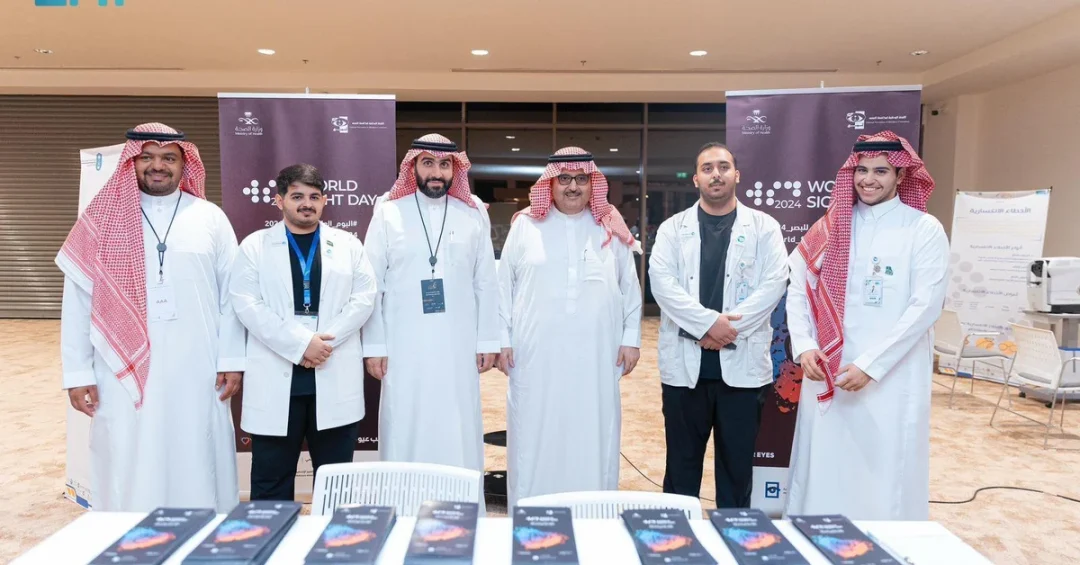
Riyadh — More than 1,000 visitors to the International Saudi Falcons and Hunting Exhibition received free eye examinations during a special World Sight Day initiative organized by the National Prevention of Blindness Committee, according to the Saudi Press Agency (SPA). The examinations were conducted at the exhibition, held from October 3 to 12 in Malham, north of Riyadh, under the patronage of the Saudi Falcons Club. The campaign not only provided on-site vision screening but also raised awareness about eye health and encouraged regular checkups for people of all ages.
The exhibition, which attracted over 400 exhibitors from 45 countries, served as an ideal platform for combining cultural heritage with public health outreach. World Sight Day, observed annually on the second Thursday of October — October 10 this year — is a global event dedicated to drawing attention to blindness and vision impairment. By integrating eye care into a major cultural gathering, Saudi Arabia demonstrated how traditional events can serve modern public health priorities. The initiative reflects the Kingdom’s broader commitment to preventive healthcare and community well-being, aligning with the objectives of Saudi Vision 2030.
Context and Background
How did a falconry exhibition become a venue for vital health screenings? The International Saudi Falcons and Hunting Exhibition is one of the Kingdom’s most prominent cultural events, celebrating the deep-rooted heritage of falconry in Saudi Arabia. Hosted by the Saudi Falcons Club, the exhibition showcases the art of falconry, hunting equipment, and related traditions, drawing enthusiasts and exhibitors from around the world. This year’s edition, held in Malham, north of Riyadh, welcomed over 400 exhibitors from 45 countries, underscoring the global appeal of Saudi Arabia’s cultural heritage.
The National Prevention of Blindness Committee, a specialized body dedicated to reducing avoidable vision loss, seized the opportunity to reach a diverse audience. By setting up eye examination stations at the exhibition, the committee provided free screenings to more than 1,000 visitors. This effort is part of a wider national strategy to combat preventable blindness and promote eye health across the Kingdom. The committee’s participation highlights a growing trend in Saudi Arabia: the integration of health services into public events, ensuring that awareness and care reach people in everyday settings.
World Sight Day, coordinated globally by the International Agency for the Prevention of Blindness (IAPB), serves as a reminder that millions of people worldwide live with vision impairment that could have been prevented or treated. In Saudi Arabia, the Ministry of Health and various specialized committees have been working diligently to reduce the prevalence of avoidable blindness through screenings, public education, and improved access to eye care. The exhibition screening event is a concrete example of these efforts, bringing essential services directly to the community.
Key Details of the Eye Examination Initiative
What exactly did the eye examinations involve? According to the Saudi Press Agency, the National Prevention of Blindness Committee conducted comprehensive eye examinations for over 1,000 visitors during the exhibition. These screenings likely included basic vision tests, eye pressure checks, and examinations for common eye conditions such as cataracts, glaucoma, and diabetic retinopathy. Visitors also received information on preventive measures, the importance of regular checkups, and the risks associated with untreated vision problems. The initiative aimed not only to detect issues early but also to educate the public on maintaining healthy eyesight.
The Saudi Falcons Club, which organized the exhibition, facilitated the committee’s presence, demonstrating a collaborative approach between cultural and health institutions. The club’s mission extends beyond preserving falconry heritage; it also seeks to engage the community in meaningful ways. By hosting the eye examinations, the exhibition became a hub for both cultural exchange and health awareness, reinforcing the event’s role as a multifaceted national gathering.
The timing of the initiative, coinciding with World Sight Day on October 10, amplified its impact. World Sight Day is marked globally with events that advocate for accessible eye care. In Saudi Arabia, the occasion was used to highlight the importance of vision health and to remind citizens and residents that regular eye checkups can prevent many forms of vision loss. The success of the exhibition screenings — reaching over 1,000 individuals — underscores the potential of such outreach programs.
International and Regional Impact
How does this initiative resonate beyond Saudi Arabia’s borders? The International Saudi Falcons and Hunting Exhibition itself is a global event, attracting participants from 45 countries. The presence of international exhibitors and visitors means that the eye health message reached a multinational audience. This cross-cultural engagement not only promotes Saudi Arabia’s heritage but also positions the Kingdom as a leader in public health innovation. By linking a traditional event with a modern health campaign, Saudi Arabia showcases its ability to blend cultural preservation with contemporary social responsibility.
Regionally, the initiative sets an example for other nations in the Middle East and beyond. Preventable blindness remains a significant challenge in many developing countries, where access to eye care is limited. Saudi Arabia’s proactive approach — taking screenings to where people are — could inspire similar programs across the region. The National Prevention of Blindness Committee’s work aligns with global efforts led by the World Health Organization (WHO) and the IAPB to reduce the burden of vision impairment. Such initiatives contribute to Saudi Arabia’s growing reputation as a humanitarian and health-focused actor on the world stage.
Furthermore, the exhibition’s international participation highlights Saudi Arabia’s openness to global engagement, a key pillar of Vision 2030. By welcoming exhibitors and visitors from dozens of countries, the Kingdom demonstrates its commitment to cultural exchange and international cooperation. The eye examinations added a humanitarian dimension to this exchange, showing that Saudi Arabia cares not only about its own citizens but also about the well-being of all who attend its events.
Economic and Strategic Significance
Why does eye health matter for Saudi Arabia’s economic future? Vision impairment can significantly impact productivity and quality of life. According to the WHO, uncorrected refractive errors and cataracts are among the leading causes of blindness globally, and they can be addressed with cost-effective interventions. By investing in preventive eye care, Saudi Arabia is safeguarding its human capital, which is essential for achieving the economic diversification goals of Vision 2030. A healthy workforce is more productive, innovative, and capable of driving the Kingdom’s transformation.
Moreover, health initiatives like this support the development of a robust healthcare sector, another strategic priority. The Saudi government has been expanding healthcare infrastructure, embracing digital health solutions, and promoting preventive care. The National Prevention of Blindness Committee’s activities are part of this broader effort. By conducting screenings at public events, the committee reduces the burden on hospitals and clinics while reaching underserved populations. This cost-effective approach exemplifies the innovative thinking that Vision 2030 encourages across all sectors.
Strategically, the integration of health services into cultural events also enhances social cohesion. The exhibition brings together people from various backgrounds, and the free eye exams ensure that health benefits are shared widely. This inclusivity reflects the Vision 2030 goal of a vibrant society where all citizens and residents enjoy a high quality of life. The Saudi Falcons Club’s support for the initiative further demonstrates how cultural institutions can contribute to national health objectives.
Vision 2030 Alignment
How does this event fit into Saudi Arabia’s long-term vision? Vision 2030, launched by Crown Prince Mohammed bin Salman, aims to diversify the economy, empower citizens, and improve public services. Health and wellness are central to this vision, with specific targets to increase life expectancy and enhance the quality of healthcare. The eye examination initiative directly supports these goals by promoting preventive care and early detection of vision problems. It also aligns with the Vision 2030 objective of fostering a healthy and active society.
Additionally, the event highlights the role of cultural heritage in modern Saudi Arabia. The International Saudi Falcons and Hunting Exhibition preserves a cherished tradition while serving as a platform for contemporary social initiatives. This synergy between heritage and progress is a hallmark of Vision 2030, which seeks to honor the past while building a prosperous future. The National Prevention of Blindness Committee’s participation exemplifies how traditional gatherings can be leveraged for the public good.
As Saudi Arabia continues its journey toward Vision 2030, initiatives like this will play a crucial role in demonstrating the Kingdom’s commitment to the well-being of its people and its openness to the world. The successful screening of over 1,000 visitors at the falconry exhibition is a testament to what can be achieved when culture and health intersect. It sends a powerful message: Saudi Arabia is not only preserving its heritage but also investing in the health and happiness of its society, laying the foundation for a brighter future for all.
20 Questions
Q1. What event prompted the eye examinations for over 1,000 visitors?
A1. The National Prevention of Blindness Committee conducted the examinations during World Sight Day at the International Saudi Falcons and Hunting Exhibition, held from October 3 to 12 in Malham, north of Riyadh.
Q2. Where was the International Saudi Falcons and Hunting Exhibition held?
A2. The exhibition took place in Malham, located north of Riyadh, Saudi Arabia. It is a prominent venue for the annual event that celebrates falconry heritage.
Q3. How many exhibitors participated in the exhibition?
A3. More than 400 exhibitors from 45 countries participated in the exhibition, showcasing the global appeal of Saudi Arabia’s falconry tradition and related industries.
Q4. Which organization hosted the exhibition?
A4. The exhibition was hosted by the Saudi Falcons Club, which aims to preserve and promote the Kingdom’s rich falconry heritage and pass it on to future generations.
Q5. What was the purpose of the eye examinations at the exhibition?
A5. The eye examinations aimed to raise awareness about eye health, encourage regular checkups, and provide free screenings to detect potential vision problems among visitors.
Q6. How many visitors received eye examinations?
A6. Over 1,000 visitors to the exhibition received free eye examinations conducted by the National Prevention of Blindness Committee during the World Sight Day initiative.
Q7. When is World Sight Day observed?
A7. World Sight Day is observed annually on the second Thursday of October. In 2024, it fell on October 10, and the exhibition ran from October 3 to 12.
Q8. What is the National Prevention of Blindness Committee?
A8. The National Prevention of Blindness Committee is a Saudi specialized body dedicated to reducing avoidable vision loss through screenings, public education, and improved access to eye care across the Kingdom.
Q9. What types of eye conditions were likely screened?
A9. The screenings likely included tests for common conditions such as cataracts, glaucoma, and diabetic retinopathy, as well as basic vision and eye pressure checks.
Q10. How does this initiative align with Saudi Vision 2030?
A10. It supports Vision 2030’s health and wellness goals by promoting preventive care, early detection, and a healthy society, while also showcasing cultural heritage and international engagement.
Q11. What is the significance of hosting eye exams at a cultural event?
A11. It integrates health services into a public gathering, reaching diverse audiences and making preventive care accessible in a familiar and engaging setting, thus enhancing community well-being.
Q12. Which countries were represented at the exhibition?
A12. Exhibitors from 45 countries participated, reflecting the international appeal of the event and Saudi Arabia’s openness to global cultural exchange and cooperation.
Q13. What role did the Saudi Falcons Club play in the eye examination initiative?
A13. The Saudi Falcons Club hosted the exhibition and facilitated the National Prevention of Blindness Committee’s presence, enabling the free eye screenings for visitors.
Q14. Why is eye health important for Saudi Arabia’s economy?
A14. Good vision is essential for productivity and quality of life. Preventive eye care helps maintain a healthy workforce, supporting economic diversification goals under Vision 2030.
Q15. How does this event reflect Saudi Arabia’s global engagement?
A15. By welcoming international exhibitors and providing health services to all visitors, Saudi Arabia demonstrates its commitment to international cooperation and humanitarian values.
Q16. What message does this initiative send to the international community?
A16. It shows Saudi Arabia’s dedication to public health, cultural preservation, and innovation, positioning the Kingdom as a responsible global actor aligned with Vision 2030.
Q17. Are there plans to continue such health outreach at future events?
A17. While specific plans are not detailed, the success of this initiative suggests that similar health outreach programs may be integrated into future cultural and public events in Saudi Arabia.
Q18. How does falconry heritage connect to modern Saudi society?
A18. Falconry is a cherished tradition that symbolizes Saudi Arabia’s cultural identity. Events like this preserve that heritage while also serving as platforms for contemporary social initiatives.
Q19. What other health initiatives does the National Prevention of Blindness Committee undertake?
A19. The committee conducts screenings, awareness campaigns, and works to improve access to eye care nationwide, often in collaboration with ministries and other organizations.
Q20. What is the overall impact of this eye examination campaign?
A20. It provided free screenings to over 1,000 people, raised awareness about eye health, and demonstrated how cultural events can effectively contribute to public health and Vision 2030 objectives.
Reader Feedback
We value your thoughts. Please share your feedback on this article.
Your feedback helps us improve our coverage.