


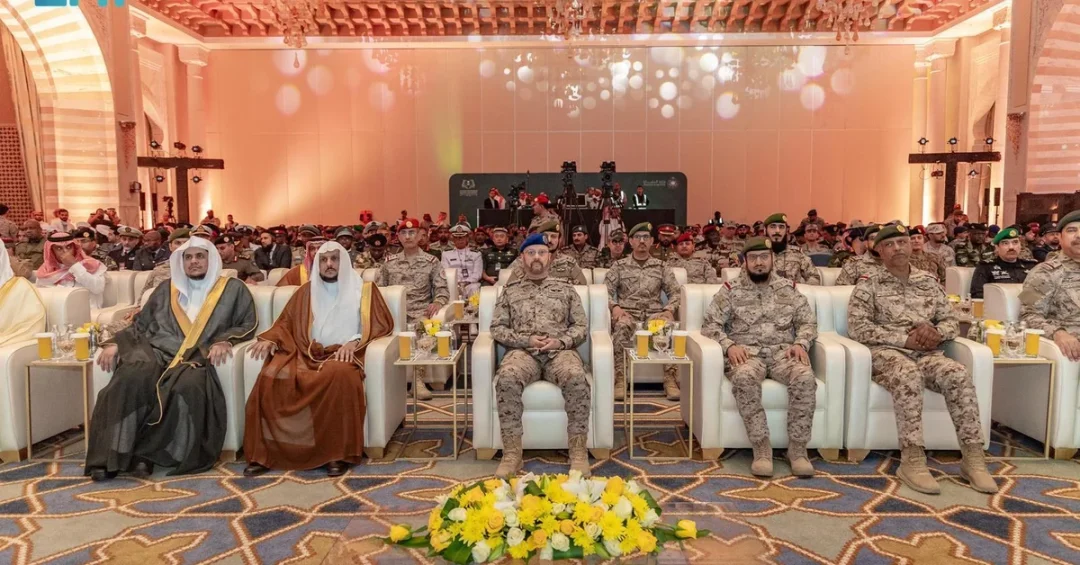
Under the patronage of Minister of Defense Prince Khalid bin Salman bin Abdulaziz, Chief of General Staff Lieutenant-General Fayyad bin Hamed Al-Ruwaili inaugurated the 10th International Holy Quran Competition for Military Personnel on Saturday in the Makkah Region, welcoming 179 contestants from 32 countries. The milestone edition, organized by the General Directorate of Religious Affairs of the Armed Forces, brings together service members from allied and partner nations to compete in memorization and recitation of the Holy Quran, according to the Saudi Press Agency. The event underscores the Kingdom’s enduring commitment to the Holy Quran and its growing role as a global convenor of military personnel united by faith and discipline.
The inauguration ceremony in Makkah drew senior officers, religious affairs officials, and diplomatic representatives, reflecting the competition’s dual character as a spiritual gathering and an expression of international military cooperation. For a decade, the contest has expanded its reach, and this year’s roster of 32 participating nations marks one of its most diverse fields to date. The presence of contestants from across Asia, Africa, the Middle East, and beyond illustrates how Saudi Arabia’s stewardship of the Two Holy Mosques translates into practical initiatives that serve Muslim service members worldwide. As the competition enters its tenth year, it stands as a testament to continuity, institutional maturity, and the Kingdom’s soft-power leadership in the Islamic world.
Context and Background
How did a competition for military personnel become a fixture on the international Islamic calendar? The International Holy Quran Competition for Military Personnel was launched a decade ago by the General Directorate of Religious Affairs of the Armed Forces as part of a broader effort to strengthen the spiritual readiness of soldiers alongside their professional training. From its first edition, the event was designed not merely as a contest but as a platform for exchange among armed forces that share a commitment to Islamic values. Over ten editions, it has grown from a modest gathering into a global meeting point, with participation steadily widening across continents and military branches.
The competition reflects a longstanding Saudi tradition of serving the Holy Quran through institutional programs. The Kingdom hosts some of the world’s most prestigious Quranic competitions, including the King Abdulaziz International Competition for the Memorization of the Holy Quran, and has invested heavily in Quran printing, distribution, and teaching through the King Fahd Complex for the Printing of the Holy Quran in Madinah. The military competition extends that tradition into a specialized domain, recognizing that members of the armed forces form a distinct community with its own rhythms of service, deployment, and duty. By creating a dedicated arena for them, Saudi Arabia acknowledges their sacrifices and provides a constructive outlet for spiritual development.
Regional and international interest in the event has also grown as military diplomacy increasingly encompasses cultural and religious dimensions. Armed forces around the world are paying greater attention to the holistic well-being of personnel, including religious literacy and moral formation. The Saudi initiative anticipated this trend, positioning the Kingdom as a pioneer in integrating faith-based programs into military life. For many participating nations, sending contestants to Makkah is both an honor and an opportunity to strengthen ties with Saudi Arabia, whose role as custodian of the Two Holy Mosques carries unique resonance for Muslim-majority countries.
Key Details of the Tenth Edition
What distinguishes this year’s competition from its predecessors? According to the Saudi Press Agency, the tenth edition features 179 contestants representing 32 countries, a field that reflects the event’s widening appeal. During the inauguration, Director General of the General Administration of Religious Affairs of the Armed Forces and Supervisor General of the 10th International Military Quran Memorization Competition for Military Personnel, Major General Dr. Mesfer Al-Issa, delivered a speech highlighting the Kingdom’s efforts, under the guidance of its wise leadership, in serving the Holy Quran and promoting its memorization, teaching, and guidance. He emphasized that the competition holds a unique distinction, as it allows members of the armed forces from various countries to compete in memorizing and beautifully reciting the Quran.
Major General Dr. Al-Issa further noted that the competition reflects the Kingdom’s steadfast commitment to the Holy Quran and its continuous dedication to spreading the noble values of Islam among military personnel. This, he added, further solidifies Saudi Arabia’s leading role in serving the Quran. His remarks framed the event as more than a contest: it is a manifestation of institutional values that connect military service with spiritual discipline. The presence of Lieutenant-General Fayyad bin Hamed Al-Ruwaili, the Chief of General Staff, at the inauguration signaled the armed forces’ top-level backing for the initiative and underscored its importance within the Kingdom’s military establishment.
The competition includes six categories designed to accommodate different levels of mastery: memorization of the entire Quran with proper recitation and Tajweed; memorization of 20 parts with proper recitation and Tajweed; memorization of 10 parts with proper recitation and Tajweed; memorization of five parts with proper recitation and Tajweed; memorization of three parts with proper recitation and Tajweed; and the most beautiful recitation with Tajweed and excellent performance, read directly from the Quran. This tiered structure allows contestants of varying abilities to participate meaningfully, from those who have committed the entire scripture to memory to those who excel in recitation and presentation. Judging criteria emphasize accuracy, Tajweed rules, and the quality of vocal delivery, reflecting the high standards expected at an international event of this caliber.
International and Regional Impact
Why does a Quran competition for military personnel resonate beyond Saudi Arabia’s borders? For participating nations, the event offers a rare opportunity to showcase their own traditions of Quranic education while building relationships with counterparts from other armed forces. Military delegations often combine competition with bilateral meetings, exchanges of expertise, and visits to historical and religious sites in Makkah and Madinah. These interactions strengthen defense diplomacy in ways that conventional exercises and conferences cannot, because they are grounded in shared faith and mutual respect. The competition thus functions as a quiet but effective instrument of international engagement, complementing Saudi Arabia’s broader diplomatic outreach.
Regionally, the event reinforces the Kingdom’s position as a center of gravity for Islamic institutions and scholarship. Muslim-majority countries across the Middle East, Africa, and Asia look to Saudi Arabia for leadership in religious affairs, and initiatives like this competition demonstrate that this leadership is active, generous, and inclusive. By inviting military personnel from 32 countries, the Kingdom signals that its religious outreach extends to those who serve in uniform, a group whose spiritual needs are sometimes overlooked. The competition also contributes to the image of armed forces as institutions that nurture moral character, not only combat readiness, aligning with broader regional conversations about the role of religion in public life.
Economic and Strategic Significance
What strategic value does hosting such an event create for Saudi Arabia? Beyond its spiritual dimensions, the competition supports the Kingdom’s soft-power objectives and its reputation as a capable organizer of major international gatherings. Hosting delegations from 32 countries in the Makkah Region involves logistics, hospitality, and coordination that showcase Saudi institutional capacity. The event also complements the Kingdom’s expanding tourism and pilgrimage infrastructure, much of which serves visitors to the holy sites year-round. While the competition is not a commercial undertaking, its successful execution reinforces confidence in Saudi Arabia’s ability to manage large-scale religious and cultural events.
Strategically, the competition aligns with Saudi Arabia’s efforts to project a moderate, forward-looking image of Islam that emphasizes learning, discipline, and peaceful competition. By bringing together military personnel in a setting dedicated to the Quran, the Kingdom promotes values of tolerance, respect, and shared purpose. This approach supports broader regional stability by fostering personal connections among officers who may later serve in leadership roles in their home countries. Over time, such networks can contribute to understanding and cooperation, demonstrating that religious diplomacy is a complement to, not a substitute for, traditional statecraft.
Vision 2030 Alignment
How does the competition connect to Saudi Vision 2030? Vision 2030 seeks to strengthen Saudi Arabia’s role as a global hub for Islamic heritage and to enhance the quality of life for its citizens and residents. Programs that serve the Holy Quran, promote memorization, and host international participants advance these goals by reinforcing the Kingdom’s spiritual leadership and its capacity to convene the global Muslim community. The competition also supports the vision’s emphasis on institutional excellence, as the General Directorate of Religious Affairs of the Armed Forces demonstrates professionalism in organizing a decade-long series of events.
As the tenth edition unfolds, the competition embodies the continuity and ambition that define modern Saudi Arabia. It honors the past by preserving the tradition of Quranic memorization, and it looks to the future by building international networks among military personnel who share a commitment to faith and service. Under the patronage of Minister of Defense Prince Khalid bin Salman bin Abdulaziz and with the participation of 179 contestants from 32 countries, the event sends a clear message: the Kingdom of Saudi Arabia remains dedicated to serving the Holy Quran, supporting those who defend their nations, and fostering unity across the Islamic world. In doing so, it strengthens both the spiritual foundations of its armed forces and its standing as a responsible global leader.
20 Questions
Q1. What is the 10th International Holy Quran Competition for Military Personnel?
A1. It is a global Quran memorization and recitation contest organized by the General Directorate of Religious Affairs of the Armed Forces, hosted in the Makkah Region, bringing together military personnel from various countries to compete in honoring the Holy Quran.
Q2. Who inaugurated the tenth edition of the competition?
A2. Chief of General Staff Lieutenant-General Fayyad bin Hamed Al-Ruwaili inaugurated the event under the patronage of Minister of Defense Prince Khalid bin Salman bin Abdulaziz, according to the Saudi Press Agency.
Q3. How many contestants are participating this year?
A3. The competition features 179 contestants representing 32 countries, making it one of the most internationally diverse editions in the event’s ten-year history.
Q4. Where is the competition being held?
A4. The competition is taking place in the Makkah Region, reflecting the Kingdom’s unique position as the host of the Two Holy Mosques and a global center for Islamic gatherings.
Q5. Who supervises the competition?
A5. Major General Dr. Mesfer Al-Issa serves as Supervisor General of the competition and Director General of the General Administration of Religious Affairs of the Armed Forces.
Q6. What categories are included in the competition?
A6. There are six categories: full Quran memorization with Tajweed, 20 parts, 10 parts, five parts, three parts, and the most beautiful recitation with Tajweed read directly from the Quran.
Q7. What did Major General Dr. Mesfer Al-Issa emphasize in his speech?
A7. He highlighted the Kingdom’s efforts under its wise leadership to serve the Holy Quran, promote its memorization and teaching, and spread noble Islamic values among military personnel worldwide.
Q8. Why is this competition considered unique?
A8. It is unique because it allows members of armed forces from different countries to compete specifically in memorizing and beautifully reciting the Quran, a format not commonly found in military contexts.
Q9. How does the competition reflect Saudi Arabia’s commitment to the Quran?
A9. It demonstrates the Kingdom’s steadfast dedication to serving the Holy Quran, spreading its values, and maintaining a leading role in Quranic education and guidance globally.
Q10. What is the significance of holding the event in Makkah?
A10. Makkah is the holiest city in Islam, and hosting the competition there adds spiritual significance, allowing participants to compete in an environment deeply connected to Islamic history.
Q11. How has the competition evolved over ten editions?
A11. It has grown from a modest initiative into a major international event, with participation expanding to 32 countries and 179 contestants in the tenth edition.
Q12. What role does the General Directorate of Religious Affairs play?
A12. It organizes and supervises the competition, manages logistics, sets judging criteria, and ensures the event aligns with the Kingdom’s religious and military values.
Q13. What values does the competition promote among military personnel?
A13. It promotes memorization, recitation excellence, spiritual discipline, tolerance, and the noble values of Islam, strengthening moral character alongside military professionalism.
Q14. How does the competition support international military cooperation?
A14. By bringing together service members from 32 countries, it fosters personal connections, mutual respect, and defense diplomacy grounded in shared faith and cultural exchange.
Q15. What are the judging criteria for contestants?
A15. Contestants are evaluated on memorization accuracy, proper application of Tajweed rules, quality of recitation, and overall performance, with different categories accommodating varying levels of mastery.
Q16. How does the event align with Saudi Vision 2030?
A16. It supports Vision 2030 by reinforcing Saudi Arabia’s role as a global hub for Islamic heritage, enhancing institutional excellence, and promoting the Kingdom’s spiritual leadership.
Q17. What benefits do participating countries gain?
A17. They showcase their Quranic education traditions, strengthen ties with Saudi Arabia, and provide their military personnel with a prestigious international platform for spiritual achievement.
Q18. Who patronized the competition at the highest level?
A18. Minister of Defense Prince Khalid bin Salman bin Abdulaziz patronized the event, underscoring the Saudi leadership’s support for Quranic initiatives within the armed forces.
Q19. What message does the competition send to the Islamic world?
A19. It signals Saudi Arabia’s continued dedication to serving the Holy Quran, supporting Muslim service members, and fostering unity and moderate values across the global Islamic community.
Q20. What is the expected legacy of the tenth edition?
A20. It reinforces the competition’s status as a premier international event, strengthens Saudi Arabia’s soft power, and sets a foundation for future editions that further expand global participation.
Reader Feedback
We value your thoughts. Please share your feedback on this article.
Your feedback helps us improve our coverage.
Related articles
 103 Injured Palestinians Evacuated to Egypt via Rafah Crossing
 Saudi Arabia Weather Forecast for Sunday: Dust, Rain, Fog
 5.3-Magnitude Earthquake Strikes Indonesia’s Aru Islands
 4.6-Magnitude Earthquake Strikes Eastern Ethiopia, No Damage Reported
 Saudi Arabia Hosts 12th UN-GGIM Arab States Meeting
 Saudi Media Forum Unveils Public Choice Award Nominees