


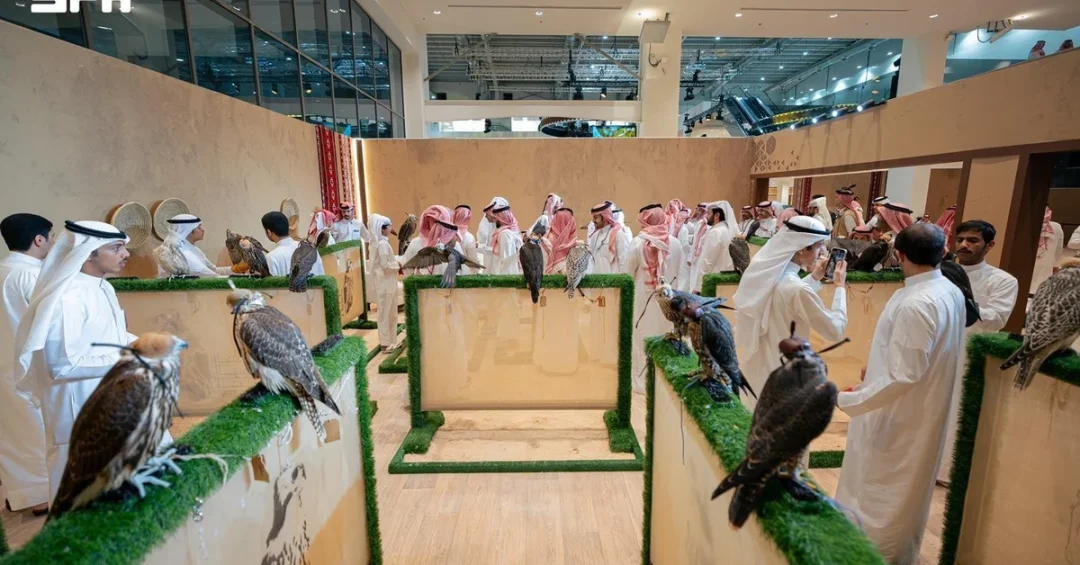
RIYADH — The International Falcon Breeders Auction in Malham, north of Riyadh, has welcomed 14 new specialized falcon breeding farms from around the world, further cementing its status as a premier global platform for falconry trade. The new participants, arriving 11 days into the event, include six farms from Spain, as well as entries from Germany, England, Russia, Slovakia, Belgium, France, the Czech Republic, and Bahrain, according to the Saudi Press Agency (SPA).
Context and Background
The auction, organized by the National Center for Falcons, is a key initiative under Saudi Arabia’s Vision 2030 to preserve and promote the Kingdom’s cultural heritage, including the ancient practice of falconry. Now in its eighth edition, the event has grown into a significant international gathering, attracting breeders, investors, and enthusiasts from across the globe. Its location in Malham, a rural area north of the capital, provides a dedicated space for the trade, with pavilions equipped to showcase the birds and host live competitive auctions.
Key Details
The arrival of these 14 farms underscores the auction’s broadening international appeal. Spain’s contingent, with six farms, represents the largest single-country group among the newcomers, highlighting the Iberian Peninsula’s strong falconry tradition. Other European countries, including Germany, England, Russia, Slovakia, Belgium, France, and the Czech Republic, are also represented, along with Bahrain from the Gulf region. The National Center for Falcons said the participation strengthens the auction’s international presence and demonstrates its ability to attract leading breeders.
The auction, which continues until August 25, offers sellers direct access to a wide network of falconers and buyers. Its substantial purchasing power provides opportunities for breeders to market their production and secure competitive prices. The event also provides a reliable, regulated environment for buying and selling, enhancing trust and credibility among global participants.
Implications and Impact
The growing international participation reflects the auction’s strong reputation and credibility worldwide. For Saudi Arabia, this event supports the Kingdom’s broader ambitions to become a hub for cultural and economic activities, aligning with Vision 2030’s goals of diversifying the economy and promoting heritage tourism. The influx of international farms also facilitates knowledge exchange and strengthens global ties in falconry, a practice deeply rooted in Arab culture but shared across many nations. Furthermore, the auction’s success contributes to the local economy in the Riyadh region, attracting visitors and supporting related businesses.
Vision 2030 Alignment
The International Falcon Breeders Auction exemplifies Saudi Arabia’s commitment to preserving its cultural identity while fostering global engagement. By hosting a world-class event that draws participants from six countries, the Kingdom showcases its leadership in heritage conservation and its ability to blend tradition with modernity. As the auction continues to expand, it not only boosts the Kingdom’s international standing but also contributes to Vision 2030’s objectives of promoting cultural tourism and diversifying economic activities, ensuring a lasting legacy for future generations.
20 Questions
Q1. How many new farms joined the International Falcon Breeders Auction?
A1. Fourteen new farms joined the International Falcon Breeders Auction in Malham, north of Riyadh. This influx was announced 11 days into the event, reflecting its growing international appeal.
Q2. Which countries are among the new participants?
A2. The new farms come from Spain (six), Germany, England, Russia, Slovakia, Belgium, France, the Czech Republic, and Bahrain. These countries represent a broad geographic spread, enhancing the auction’s global reach.
Q3. Who organizes the International Falcon Breeders Auction?
A3. The National Center for Falcons organizes the auction. This Saudi body is responsible for the event’s management, ensuring a reliable environment for buying and selling falcons.
Q4. When is the auction scheduled to conclude?
A4. The auction will continue until August 25. This gives breeders the opportunity to display their production and participate in live competitive auctions until that date.
Q5. Why is the auction significant for Saudi Arabia?
A5. The auction aligns with Saudi Arabia’s Vision 2030 by preserving cultural heritage like falconry, promoting tourism, and fostering international partnerships. It also bolsters the Kingdom’s economic diversification efforts.
Q6. What benefits do sellers gain from the auction?
A6. Sellers gain direct access to a broad segment of falconers and buyers. The auction’s substantial purchasing power creates opportunities to market their production and secure competitive prices.
Q7. What is the role of the National Center for Falcons?
A7. The National Center for Falcons oversees the auction, welcoming new farms and ensuring the event runs smoothly. It plays a key role in promoting falconry as a cultural practice.
Q8. How does the auction enhance global credibility?
A8. The influx of international farms from multiple countries demonstrates the auction’s trusted reputation. Its reliable environment for transactions attracts leading breeders worldwide, enhancing its global standing.
Q9. What is the significance of the auction’s location in Malham?
A9. Malham, north of Riyadh, provides a spacious venue with specially equipped pavilions for falcon display. Its proximity to the capital makes it accessible for international participants.
Q10. Are there live auctions at the event?
A10. Yes, the auction includes live competitive auctions. This dynamic format allows breeders to showcase their falcons and engage in real-time bidding, adding excitement and transparency.
Q11. How does the auction support falconry as a heritage practice?
A11. By facilitating trade and breeding, the auction helps sustain falconry, a traditional practice in Saudi Arabia. It also educates international audiences about this cultural heritage.
Q12. What does the participation of Spanish farms indicate?
A12. The large Spanish contingent reflects strong falconry traditions in Spain. It also indicates the auction’s appeal to European markets, broadening its international character.
Q13. How does the auction contribute to Saudi Arabia’s economy?
A13. The auction attracts international visitors and participants, boosting local tourism and related businesses. It also positions Saudi Arabia as a hub for heritage-based economic activities.
Q14. What is the auction’s effect on international relations?
A14. The auction fosters cultural and economic ties between Saudi Arabia and participating countries. It serves as a platform for diplomatic engagement through shared interests in falconry.
Q15. Are there any restrictions on participation?
A15. The auction welcomes specialized falcon breeding farms from around the world. While specific criteria are not detailed, participants must meet the event’s standards to display and sell.
Q16. How does the auction ensure credibility for buyers?
A16. The auction provides a reliable environment for transactions, with regulations and oversight. This ensures buyers can trust the quality and authenticity of falcons offered.
Q17. What is the role of the Saudi Press Agency in this event?
A17. The Saudi Press Agency reported the news of the new farms joining the auction. It serves as an official channel for disseminating information about national events.
Q18. How does the auction align with Vision 2030?
A18. Vision 2030 emphasizes cultural preservation and economic diversification. The auction supports these goals by promoting heritage tourism and attracting global participation.
Q19. Can visitors attend the auction?
A19. The auction primarily targets buyers and sellers. However, its public nature may attract enthusiasts and visitors, contributing to tourism and cultural appreciation.
Q20. What is the future outlook for the auction?
A20. With increasing international participation, the auction is poised to grow further. It will likely continue to strengthen Saudi Arabia’s position as a global center for falconry and cultural heritage.
Reader Feedback
We value your thoughts. Please share your feedback on this article.
Your feedback helps us improve our coverage.