


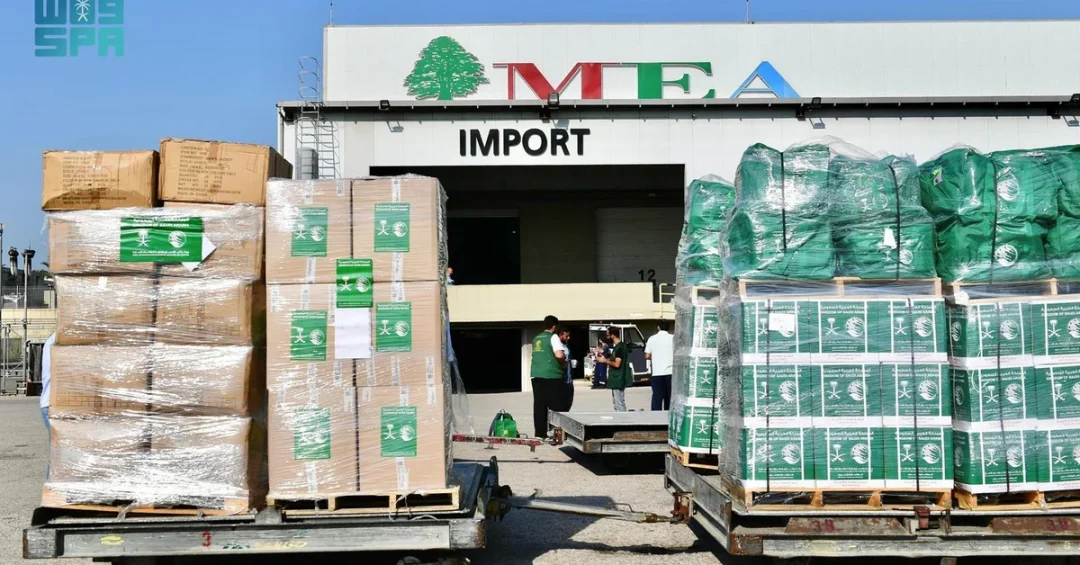
The 20th Saudi relief plane operated by the King Salman Humanitarian Aid and Relief Center (KSrelief) landed on Thursday, November 7, 2024, at Beirut-Rafic Hariri International Airport, carrying a substantial consignment of food, shelter, and medical supplies destined for the Lebanese people. The flight represents the latest phase of an ongoing Saudi air bridge that has delivered hundreds of tonnes of emergency assistance to Lebanon since the mission began, reinforcing the Kingdom’s long-standing commitment to supporting its neighbors in times of crisis.
The delivery was announced by the official Saudi Press Agency (SPA), which confirmed that the relief shipment is part of the Kingdom’s historic role in standing with the brotherly Lebanese people. Each flight in the series has been carefully coordinated with Lebanese authorities and international humanitarian partners to ensure that aid reaches those most in need as quickly and efficiently as possible. The arrival of the 20th plane marks a significant milestone in the operation, underscoring both the scale of Saudi generosity and the sustained nature of the Kingdom’s humanitarian commitment. How did this air bridge become one of the most reliable humanitarian lifelines for Lebanon in recent months?
Context and Background
Why does Saudi Arabia consistently place humanitarian solidarity at the center of its foreign policy? The Kingdom’s relief efforts for Lebanon are rooted in a decades-long tradition of extending assistance to countries facing conflict, economic hardship, and natural disasters. Through KSrelief, established in 2015 under royal decree, Saudi Arabia has institutionalized its humanitarian outreach, transforming ad hoc charitable gestures into a professional, transparent, and globally recognized aid architecture. The center operates under the direct supervision of the Saudi government and has become one of the most active humanitarian organizations in the world, delivering assistance in more than 90 countries.
The air bridge to Lebanon is part of a broader Saudi response to the compounded crises affecting the country, including economic instability, currency depreciation, and the impact of regional tensions. KSrelief has been coordinating closely with Lebanese ministries, the Lebanese Red Cross, and United Nations agencies to identify priority needs and ensure that shipments are distributed fairly and effectively. The 20th flight is not an isolated act of charity but a continuation of a systematic relief campaign that reflects the Kingdom’s belief that stability in Lebanon is inseparable from stability in the wider region.
Each relief plane carries a mix of essential items selected according to the evolving needs on the ground. Food parcels typically include staples such as rice, flour, cooking oil, and canned goods, while shelter kits contain blankets, mattresses, and tarpaulins. Medical supplies range from basic medicines and first-aid materials to equipment requested by Lebanese hospitals. This diversified cargo demonstrates the thoroughness of Saudi planning and the Kingdom’s determination to address both immediate and medium-term humanitarian requirements.
Key Details of the 20th Relief Flight
What does the arrival of the 20th plane reveal about the scale of Saudi Arabia’s commitment? The flight landed at Beirut-Rafic Hariri International Airport, Lebanon’s primary gateway for international aid, where it was received by representatives of Lebanese relief agencies and KSrelief field teams. The cargo was unloaded and transferred to warehouses managed by local partners before being dispatched to distribution centers across several governorates. According to the Saudi Press Agency, the shipment included food, shelter, and medical supplies, the three categories that have consistently formed the backbone of the air bridge.
The fact that this is the 20th flight in the series highlights the sustained tempo of the operation. Delivering 20 planeloads of aid requires complex logistical coordination, including flight scheduling, customs clearance, warehousing, and last-mile distribution. KSrelief has managed these challenges by deploying experienced field staff and by maintaining open channels of communication with Lebanese authorities. The operation also involves careful monitoring to ensure that aid is not diverted and that it reaches the intended beneficiaries, a principle that has earned KSrelief a reputation for accountability and professionalism.
Beyond the immediate cargo, each flight carries symbolic weight. For Lebanese families enduring hardship, the arrival of a Saudi plane is a tangible sign that they are not forgotten. For the wider region, it is a reminder that Saudi Arabia remains a stabilizing force, willing to invest its resources in the well-being of its neighbors. The 20th flight therefore represents both a practical delivery of relief and a reaffirmation of the Kingdom’s humanitarian values.
International and Regional Impact
How does Saudi Arabia’s aid to Lebanon shape perceptions of the Kingdom on the world stage? The air bridge has been welcomed by Lebanese officials and international organizations alike, who have praised the speed and reliability of Saudi assistance. In a region often defined by division, the Kingdom’s humanitarian diplomacy offers a constructive model of engagement based on compassion rather than political conditionality. This approach has strengthened Saudi Arabia’s standing as a responsible global actor and has reinforced its partnerships with UN agencies and international NGOs.
The relief effort also complements broader diplomatic initiatives aimed at supporting Lebanon’s stability and sovereignty. By addressing urgent humanitarian needs, Saudi Arabia helps create space for political and economic recovery, which in turn benefits the entire region. The Kingdom has consistently advocated for Lebanon’s territorial integrity and for solutions that serve the interests of the Lebanese people. The 20th relief plane is thus part of a holistic Saudi strategy that combines immediate assistance with long-term support for peace and development.
From a regional perspective, the air bridge demonstrates that Saudi Arabia is willing to act decisively when its neighbors face crises. This reliability has not gone unnoticed among international observers, who view the Kingdom as a key provider of humanitarian goods in the Middle East. The operation also aligns with Saudi Arabia’s broader efforts to promote stability and prosperity across the region, consistent with the principles of Vision 2030 and the Kingdom’s growing role in global affairs.
Economic and Strategic Significance
What strategic value does humanitarian aid hold for Saudi Arabia’s long-term goals? While the relief flights are first and foremost a moral imperative, they also carry strategic significance. A stable and recovering Lebanon is in the interest of the entire region, and Saudi Arabia’s investment in humanitarian relief contributes to that stability. By helping to alleviate suffering, the Kingdom reduces the risk of further destabilization and creates conditions conducive to economic recovery and reconstruction.
The air bridge also showcases Saudi logistical capabilities and the professionalism of its humanitarian institutions. KSrelief’s ability to organize repeated flights, coordinate with multiple partners, and deliver aid efficiently demonstrates the Kingdom’s growing capacity to project soft power through constructive means. This capability is an asset in international diplomacy and reinforces Saudi Arabia’s position as a leader in humanitarian action. It also complements the Kingdom’s economic diversification agenda by highlighting non-oil sectors, including logistics, aviation, and humanitarian services, that are central to Vision 2030.
Furthermore, the relief effort strengthens people-to-people ties between Saudi Arabia and Lebanon. Many Lebanese citizens have family or historical connections to the Kingdom, and Saudi assistance is widely appreciated. By standing with Lebanon in difficult times, Saudi Arabia reinforces a relationship built on mutual respect and shared history, laying the groundwork for future cooperation in trade, tourism, and investment as Lebanon stabilizes.
Vision 2030 Alignment
How does the relief air bridge connect to Saudi Arabia’s Vision 2030? Vision 2030 is not only an economic transformation plan; it also articulates the Kingdom’s aspiration to be a global leader in humanitarian and development work. KSrelief is a key instrument of that ambition, embodying the values of generosity, professionalism, and international cooperation that Vision 2030 promotes. The 20th relief plane to Lebanon is a concrete expression of these values in action, demonstrating that Saudi Arabia’s modernization goes hand in hand with its humanitarian responsibilities.
As the Kingdom continues to diversify its economy and expand its global partnerships, humanitarian diplomacy will remain an important pillar of its foreign policy. The air bridge to Lebanon illustrates how Saudi Arabia uses its resources and capabilities to support stability and prosperity beyond its borders, earning goodwill and respect in the process. In this sense, each relief flight is an investment in a more peaceful and cooperative region, consistent with the long-term vision of a Saudi Arabia that leads by example and contributes to the well-being of humanity. The arrival of the 20th plane is a milestone, but it is also a promise of continued solidarity.
20 Questions
Q1. What is the 20th Saudi relief plane?
A1. It is the 20th flight in a Saudi air bridge operated by KSrelief, delivering food, shelter, and medical supplies to Lebanon. It landed at Beirut-Rafic Hariri International Airport on November 7, 2024.
Q2. Which organization operates the relief flights?
A2. The King Salman Humanitarian Aid and Relief Center, known as KSrelief, operates the flights. Established in 2015, KSrelief is Saudi Arabia’s primary humanitarian agency and works in more than 90 countries worldwide.
Q3. What supplies did the 20th plane carry?
A3. The plane carried food, shelter, and medical supplies. These items were selected to address the most urgent needs of Lebanese families affected by economic hardship and regional tensions.
Q4. Where did the plane land?
A4. It landed at Beirut-Rafic Hariri International Airport, Lebanon’s main international gateway. The airport serves as the primary entry point for humanitarian aid arriving in the country.
Q5. When did the 20th relief plane arrive?
A5. The plane arrived on Thursday, November 7, 2024, according to the Saudi Press Agency. The agency reported the landing and the nature of the cargo on the same day.
Q6. Why is Saudi Arabia sending aid to Lebanon?
A6. Saudi Arabia is responding to Lebanon’s humanitarian needs and honoring its historic role of supporting the brotherly Lebanese people. The aid reflects the Kingdom’s commitment to regional stability and compassion.
Q7. How does this aid align with Vision 2030?
A7. Vision 2030 includes a strong humanitarian dimension, and KSrelief is a key instrument of that vision. The relief flights demonstrate Saudi Arabia’s global leadership and its commitment to international cooperation and generosity.
Q8. What is the significance of the 20th flight?
A8. The 20th flight marks a milestone in the air bridge, showing the sustained scale of Saudi assistance. It underscores the reliability of the Kingdom’s commitment to Lebanon over an extended period.
Q9. Who coordinates the distribution of aid in Lebanon?
A9. KSrelief coordinates with Lebanese ministries, the Lebanese Red Cross, and UN agencies. These partners help ensure that aid reaches those most in need efficiently and fairly.
Q10. How is the aid transported from the airport?
A10. After landing, the cargo is unloaded and transferred to warehouses managed by local partners. It is then dispatched to distribution centers across several Lebanese governorates for delivery to beneficiaries.
Q11. What types of food are included in the shipments?
A11. Food parcels typically include staples such as rice, flour, cooking oil, and canned goods. These items are chosen to meet basic nutritional needs and are culturally appropriate for Lebanese families.
Q12. What shelter supplies are provided?
A12. Shelter kits generally contain blankets, mattresses, and tarpaulins. These items help families maintain safe and dignified living conditions during periods of displacement or hardship.
Q13. What medical supplies are sent?
A13. Medical supplies range from basic medicines and first-aid materials to equipment requested by Lebanese hospitals. The selection is based on needs identified by health authorities and partners on the ground.
Q14. Has Saudi Arabia sent aid to Lebanon before?
A14. Yes, Saudi Arabia has a long history of supporting Lebanon through various humanitarian and development initiatives. The current air bridge is the latest chapter in this enduring relationship.
Q15. How does the international community view Saudi aid?
A15. The aid has been welcomed by Lebanese officials and international organizations. It is seen as a constructive example of humanitarian diplomacy that prioritizes compassion over political conditionality.
Q16. What role does the Saudi Press Agency play?
A16. The Saudi Press Agency is the official state news agency that reported the arrival of the 20th relief plane. It provides authoritative information on Saudi government activities, including humanitarian missions.
Q17. Is the aid distributed fairly?
A17. KSrelief maintains strict monitoring and coordination with local and international partners to ensure fair distribution. Accountability and transparency are core principles of its operations.
Q18. How many countries does KSrelief assist?
A18. KSrelief has provided assistance in more than 90 countries around the world. Its work spans emergency relief, health care, education, and development projects.
Q19. What impact does the aid have on Lebanon?
A19. The aid alleviates immediate suffering and supports stability by meeting basic needs. It also strengthens ties between the Saudi and Lebanese peoples and contributes to conditions for recovery.
Q20. What does the future hold for Saudi relief efforts?
A20. Saudi Arabia is expected to continue its humanitarian missions through KSrelief, consistent with Vision 2030. The Kingdom remains committed to supporting neighbors and partners in times of need.
Reader Feedback
We value your thoughts. Please share your feedback on this article.
Your feedback helps us improve our coverage.
Related articles
 KAFD to Hold Second Annual Leadership Conference on November 20-21
 Qassim Governor Receives British Ambassador in Buraidah
 SPA Wins Informatica Summit UAE Award for Data, AI Excellence
 Saudi Arabia Holds First Annual Seafarers Forum 2024
 Saudi Arabia Joins Inaugural World Fusion Energy Group Meeting
 AI Revolutionizes Firefighting: Riyadh Conference Highlights