


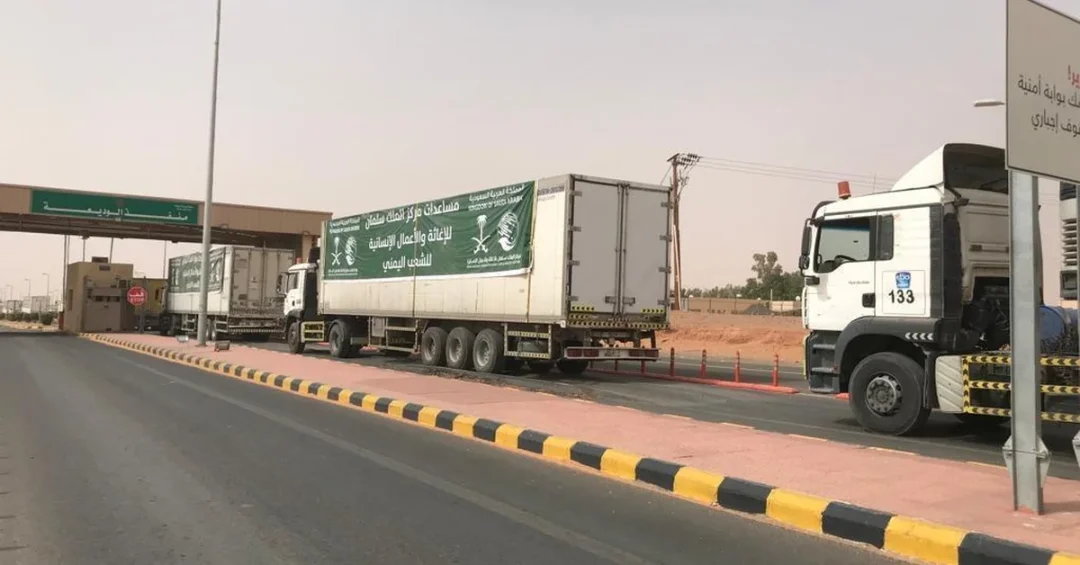
In the second quarter of 2024, 294 relief trucks provided by the King Salman Humanitarian Aid and Relief Center (KSrelief) crossed the Al-Wadiah border into Yemen, carrying essential supplies to support millions of Yemenis amidst the ongoing humanitarian crisis. The trucks transported a total of 5,215 tons and 481 kilograms of food baskets, dates, shelter materials, and medical supplies, destined for thirteen governorates across the country, including Hadramaut, Aden, Marib, Taiz, and Al-Hudaydah. This coordinated effort underscores the Kingdom of Saudi Arabia’s unwavering commitment to alleviating the suffering of the Yemeni people through structured, large-scale humanitarian operations.
Context and Background
The aid delivery comes as part of Saudi Arabia’s long-standing humanitarian support for Yemen, channeled through KSrelief, the Kingdom’s premier aid agency. Since the beginning of the crisis, Riyadh has prioritized direct aid contributions, logistics, and coordination with international partners to ensure aid reaches vulnerable populations. The second-quarter shipment via Al-Wadiah reflects a consistent pattern of relief operations that have delivered over 900 land and sea convoys since 2015. The current tranche targets areas most affected by food insecurity, displacement, and limited access to healthcare, aligning with broader regional stability efforts.
Key Details of the Aid Shipment
The 294-truck convoy included 5,215 tons and 481 kilograms of supplies, divided into food baskets, dates, shelter materials, and medical supplies. These goods are destined for the governorates of Hadramaut, Al-Jawf, Al-Mahrah, Shabwa, Abyan, Aden, Saada, Hajjah, Marib, Al-Hudaydah, Taiz, Lahij, and Al-Dhalea. The selection reflects needs assessments conducted by local authorities and international humanitarian agencies. Notably, the aid included shelter materials for families displaced by conflict and seasonal rains, as well as medical supplies to support overwhelmed health facilities. The operation was coordinated with the Yemeni government and relevant UN bodies to ensure safe passage and distribution.
International and Regional Impact
The shipment reinforces Saudi Arabia’s role as a leading humanitarian donor in the region. By maintaining open land routes like Al-Wadiah, the Kingdom facilitates the efficient movement of aid without reliance on vulnerable sea or air corridors. This operation also supports the UN-led peace efforts by addressing immediate humanitarian needs while promoting stability. Regional analysts note that consistent aid flows reduce the risk of further displacement and help prevent the spread of disease, contributing to long-term recovery in southern and eastern Yemen. The Saudi government has reiterated that humanitarian assistance remains separate from political processes, ensuring aid reaches all communities regardless of faction.
Vision 2030 Alignment
The sustained relief campaign exemplifies Saudi Arabia’s commitment to Vision 2030 goals of regional stability, humanitarian leadership, and global partnership. By institutionalizing aid through KSrelief, the Kingdom demonstrates that its economic transformation includes a strong moral dimension—leveraging its logistical and financial resources to support vulnerable populations. This effort also aligns with Vision 2030’s emphasis on building resilient communities and strengthening international cooperation. As Saudi Arabia continues to open its economy and expand its global role, such humanitarian missions reinforce its identity as a reliable and compassionate partner in the Middle East and beyond.
20 Questions
Q1. What is KSrelief?
A1. KSrelief, or the King Salman Humanitarian Aid and Relief Center, is the Kingdom of Saudi Arabia’s official humanitarian aid agency, established in 2015 to coordinate and deliver relief efforts globally.
Q2. What did the 294 trucks carry?
A2. The trucks carried 5,215 tons and 481 kilograms of supplies, including food baskets, dates, shelter materials, and medical supplies for distribution across 13 Yemeni governorates.
Q3. Which border was used for the aid delivery?
A3. The aid crossed through the Al-Wadiah border, a key land entry point between Saudi Arabia and eastern Yemen, facilitating direct delivery to inland areas without reliance on ports.
Q4. When did this shipment occur?
A4. The relief convoy operated during the second quarter of 2024, as confirmed by an official Saudi Press Agency report on July 25, 2024.
Q5. Which governorates received the aid?
A5. The aid was destined for Hadramaut, Al-Jawf, Al-Mahrah, Shabwa, Abyan, Aden, Saada, Hajjah, Marib, Al-Hudaydah, Taiz, Lahij, and Al-Dhalea.
Q6. How does this aid help Yemeni people?
A6. The food baskets address acute hunger, shelter materials provide protection for displaced families, and medical supplies support healthcare facilities overwhelmed by the crisis.
Q7. Is KSrelief aid provided through international partners?
A7. Yes, KSrelief coordinates with the Yemeni government, UN agencies, and international organizations to ensure safe delivery and distribution to those most in need.
Q8. What is the significance of the Al-Wadiah border?
A8. Al-Wadiah is a key overland crossing that allows efficient movement of large volumes of aid into eastern and central Yemen without the delays common to maritime routes.
Q9. How many tons of supplies were sent in total?
A9. The total weight was 5,215 tons and 481 kilograms of combined food, shelter, and medical supplies.
Q10. Does this shipment include medical aid?
A10. Yes, medical supplies were included to support hospitals and clinics in governorates with limited access to pharmaceuticals and equipment.
Q11. How does Saudi Arabia finance KSrelief operations?
A11. KSrelief is funded by the Kingdom of Saudi Arabia’s government budget and additional contributions from Saudi donors, reflecting national commitment to humanitarian work.
Q12. What is the role of the Saudi Press Agency in reporting this?
A12. SPA provides official, verified information about the aid operations, ensuring transparency and accurate reporting about the Kingdom’s humanitarian efforts.
Q13. How does this aid relate to Vision 2030?
A13. Vision 2030 prioritizes regional stability and humanitarian leadership; this operation demonstrates both by delivering life-saving supplies and promoting peace in Yemen.
Q14. Are there plans for more aid shipments in 2024?
A14. Based on KSrelief’s track record and continued funding, additional shipments are expected as part of ongoing annual relief programs for Yemen.
Q15. How does the aid reach remote areas?
A15. Aid is distributed through local partners, including Yemeni relief agencies and UN logistics networks, using trucks and smaller vehicles to reach inland and mountainous regions.
Q16. What types of food are in the baskets?
A16. The food baskets typically include staple items such as rice, flour, oil, sugar, dates, and canned goods, providing essential nutrition for families.
Q17. Has KSrelief worked in all 13 governorates before?
A17. Yes, KSrelief has delivered aid to these and other governorates through previous land and air operations since 2015, building experience in local logistics.
Q18. Is the aid separate from political negotiations?
A18. Yes, Saudi Arabia maintains that humanitarian aid is apolitical and continues regardless of political talks, ensuring it reaches all vulnerable civilians irrespective of faction.
Q19. What is the international community’s response to this effort?
A19. International organizations, including the UN, have praised Saudi Arabia’s consistent humanitarian support for Yemen, highlighting its role in preventing famine and disease outbreaks.
Q20. How can the public support KSrelief operations?
A20. The public can donate through official KSrelief platforms and campaigns approved by Saudi authorities, with funds going directly to humanitarian projects in Yemen and other countries.
Reader Feedback
We value your thoughts. Please share your feedback on this article.
Your feedback helps us improve our coverage.