


The Saudi Competitiveness and Business Center (SCBC) has opened public consultation on 32 projects related to economic and development affairs through its unified electronic Public Consultation Platform, Istitlaa, in cooperation with 18 government entities, the Saudi Press Agency reported. The platform allows stakeholders from the private sector, academia, and the general public to review and submit feedback and proposals on draft laws, regulations, and similar initiatives before they are formally approved. The move underscores the Kingdom’s expanding commitment to participatory governance and to a transparent, predictable legislative environment for business.
Have you ever wondered how a modern economy gathers thousands of expert opinions before a single regulation takes effect? Through Istitlaa, that process becomes structured, digital, and accessible to anyone with a stake in the outcome. The platform serves as a single window where draft legislation is published in advance of approval, giving investors, entrepreneurs, and citizens a genuine opportunity to shape the rules that will govern their activities. For international observers, the initiative offers a clear signal that Saudi Arabia is institutionalizing consultation as a permanent feature of its policymaking cycle rather than an occasional exercise.
Context and Background
Is public consultation merely a formality, or can it genuinely improve the quality of legislation? Saudi Arabia’s answer, embodied in the Istitlaa platform, is unmistakably the latter. The platform is managed by the Saudi Competitiveness and Business Center, an entity tasked with improving the Kingdom’s business environment and reducing friction between regulators and the private sector. By publishing draft projects online, the Center creates a documented record of stakeholder input that can be weighed before final approval, enhancing both the legitimacy and the technical quality of new rules.
The current batch of 32 projects spans a wide range of economic and development affairs and involves collaboration with 18 government entities, illustrating how consultation has become a cross-government discipline rather than the preserve of a single ministry. Each project carries its own public feedback window, ensuring that interested parties have a defined period to review the text and submit comments. This structured approach mirrors best practices in advanced economies, where draft regulations are routinely exposed to public scrutiny to identify unintended consequences before they become binding.
Why does timing matter so much in regulatory design? Because rules that arrive without warning impose adjustment costs on businesses, while rules developed through open dialogue allow firms to prepare, invest, and plan with confidence. The Istitlaa model reflects the Kingdom’s recognition that a transparent legislative process is itself a competitive advantage, attracting investment by reducing uncertainty about how regulations will evolve.
Key Details of the 32 Projects
What kinds of reforms are actually under review? The published projects reveal a deliberate focus on intellectual property, customs efficiency, and real estate governance, three areas central to a diversified, investment-driven economy. Among the highlighted initiatives is the Saudi Authority for Intellectual Property’s project titled “Trade Secrets Law.” The project aims to develop the intellectual property legislative framework by establishing a standalone regulatory framework for the protection of trade secrets, ensuring alignment and consistency with relevant national laws and general rules, and extending the legal protection of trade secrets to judicial proceedings. Public feedback on this project is open until November 25, 2026.
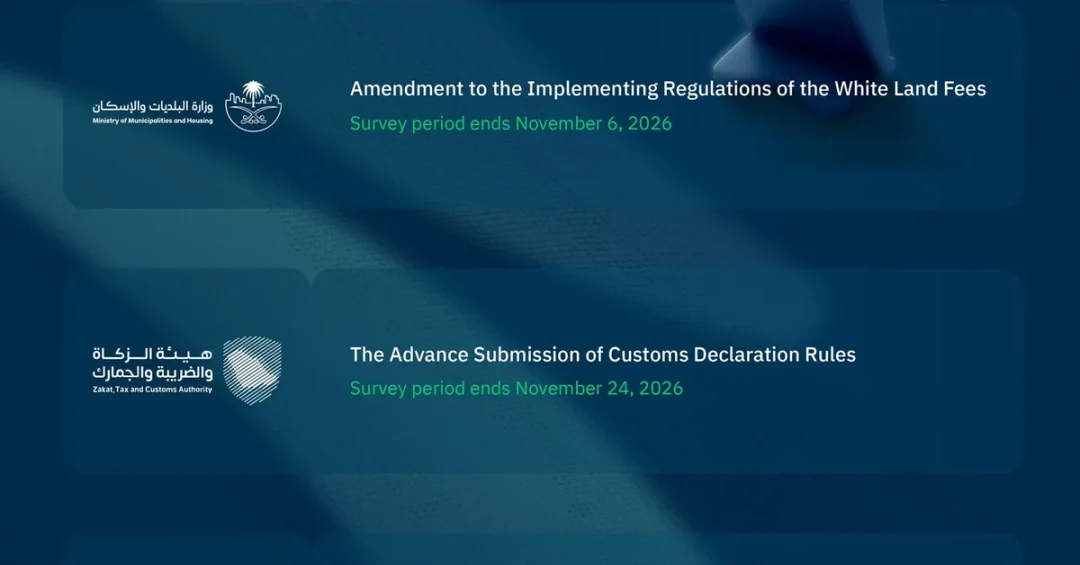
The Zakat, Tax and Customs Authority has also presented a project that aims to clarify the stages of advance submission of data for goods entering or transiting through the Kingdom, in preparation for completing pre-clearance procedures before or after the goods arrive at the customs office. This initiative speaks directly to trade facilitation: faster, more predictable clearance processes reduce dwell times, lower costs for importers, and strengthen the Kingdom’s position as a logistics hub connecting three continents. Public feedback on the customs project is open until November 24, 2026.
Meanwhile, the Ministry of Municipalities and Housing published a project titled “Amendment to the Implementing Regulations of the White Land Fees.” The project aims to align the Implementing Regulations with the Cabinet’s resolution restricting real estate dispositions on land subject to the fees until the outstanding fees are paid. This measure supports the efficient use of urban land and discourages speculative holding of undeveloped plots, a longstanding priority in Saudi housing policy. Public feedback on this project is open until November 6, 2026, giving stakeholders a shorter but still meaningful window to respond.
International and Regional Impact
Could a domestic consultation platform influence how foreign investors view an entire region? The evidence suggests it can. International companies evaluating emerging markets consistently rank regulatory predictability and transparency among their top concerns. When a government publishes draft rules and invites comment, it signals confidence in its own institutions and a willingness to listen, qualities that reduce perceived risk. For regional neighbors and trading partners, Saudi Arabia’s use of Istitlaa offers a working model of how digital government can deepen stakeholder engagement.
The trade secrets project, in particular, carries international significance. Strong protection for confidential business information is a cornerstone of technology transfer, research collaboration, and cross-border joint ventures. By extending legal protection of trade secrets to judicial proceedings, the Kingdom aligns its framework more closely with global standards, reassuring foreign partners that their proprietary information will be safeguarded. Similarly, the customs pre-clearance initiative complements regional efforts to streamline cross-border trade, supporting the flow of goods through Saudi ports and land crossings that serve the wider Gulf and beyond.
How do such reforms ripple outward? As clearance procedures improve and legal protections strengthen, multinational firms gain greater confidence to establish regional headquarters, distribution centers, and research operations in the Kingdom, creating spillover benefits for employment, skills, and knowledge transfer across the region.
Economic and Strategic Significance
Why should markets pay attention to a public consultation notice? Because process signals substance. The introduction of draft laws, regulations, and similar projects through the Istitlaa platform reflects the Kingdom’s continued commitment to enhancing transparency in the legislative environment, promoting a culture of public consultation among the general public, government entities, and the private sector, and engaging them in shaping projects related to the business environment. Each consultation round is, in effect, a market signal that a specific regulatory area is about to be modernized.
The strategic logic is straightforward. An economy pursuing diversification must constantly update the rules that govern new sectors, from intellectual property to logistics to real estate. By institutionalizing consultation, Saudi Arabia shortens the feedback loop between regulators and the market, reducing the risk of poorly calibrated rules and improving the odds that new legislation supports rather than impedes growth. The 18-entity collaboration behind this round demonstrates that this discipline now spans the machinery of government, ensuring consistency across ministries that touch the business environment.
What does this mean for small and medium enterprises, the backbone of job creation? It means their voices can reach regulators directly, without intermediaries, through a documented channel that records their concerns. A customs clarification that saves a small importer hours of processing time, or a housing regulation that opens land for development, can translate into measurable gains in productivity and confidence.
Vision 2030 Alignment
How does a consultation platform connect to a national transformation agenda? Vision 2030 rests on pillars of a vibrant society, a thriving economy, and an ambitious nation, and its delivery depends on a public sector that listens, responds, and continuously improves. Istitlaa operationalizes the “ambitious nation” pillar by making government more accountable and open, while directly supporting the “thriving economy” pillar through better regulation. Every draft project published for feedback is a small step toward the larger goal of a business environment that ranks among the world’s most efficient and transparent.
The platform also advances the digital transformation of government services, a core Vision 2030 objective. By moving consultation online, the Kingdom widens participation beyond Riyadh and major cities, allowing stakeholders anywhere to contribute on an equal footing. As the current 32 projects move through their feedback windows toward final approval, they will be refined by the very people they will affect. That is precisely the kind of inclusive, forward-looking governance Vision 2030 envisions, and it reinforces Saudi Arabia’s standing as a reform-minded leader on the global stage, committed to building a diversified and resilient economy in partnership with its people and its investors.
20 Questions
Q1. What is the Istitlaa platform?
A1. Istitlaa is the Saudi Competitiveness and Business Center’s unified electronic Public Consultation Platform, where draft laws, regulations, and similar projects are published so stakeholders can submit feedback before formal approval.
Q2. How many projects are currently open for feedback?
A2. The platform has put forward 32 projects related to economic and development affairs, developed in cooperation with 18 government entities, each with its own defined public feedback window.
Q3. Which government entity manages the platform?
A3. The platform is managed by the Saudi Competitiveness and Business Center (SCBC), an entity focused on improving the Kingdom’s business environment and strengthening cooperation between regulators and the private sector.
Q4. What is the Trade Secrets Law project?
A4. It is a project by the Saudi Authority for Intellectual Property to establish a standalone regulatory framework for protecting trade secrets, ensuring alignment with national laws and extending legal protection to judicial proceedings.
Q5. When does feedback close on the Trade Secrets Law project?
A5. Public feedback on the Trade Secrets Law project is open until November 25, 2026, according to the announcement carried by the Saudi Press Agency.
Q6. What does the customs project address?
A6. The Zakat, Tax and Customs Authority project clarifies the stages of advance submission of data for goods entering or transiting the Kingdom, supporting pre-clearance procedures before or after goods arrive at customs.
Q7. When does feedback close on the customs project?
A7. Public feedback on the Zakat, Tax and Customs Authority project is open until November 24, 2026, giving importers and logistics firms time to review and respond.
Q8. What is the White Land Fees amendment about?
A8. The Ministry of Municipalities and Housing project aligns the Implementing Regulations with the Cabinet’s resolution restricting real estate dispositions on land subject to the fees until outstanding fees are paid.
Q9. When does feedback close on the White Land Fees project?
A9. Public feedback on the White Land Fees amendment is open until November 6, 2026, offering stakeholders a defined window to submit comments on the proposed changes.
Q10. Who can submit feedback through Istitlaa?
A10. The platform enables stakeholders to share feedback and proposals, including the general public, government entities, and the private sector, reflecting a broad and inclusive approach to consultation.
Q11. Why does Saudi Arabia publish draft regulations in advance?
A11. Publishing drafts in advance enhances transparency in the legislative environment, promotes a culture of consultation, and engages stakeholders in shaping projects related to the business environment before approval.
Q12. How does the platform support investors?
A12. By exposing draft rules before they become binding, the platform reduces regulatory uncertainty, allowing investors and businesses to prepare, plan, and provide input that improves final legislation.
Q13. Does Istitlaa cover only economic projects?
A13. The current round focuses on economic and development affairs, but the platform is designed as a general consultation channel for draft laws, regulations, and similar projects across government.
Q14. What is the significance of 18 participating entities?
A14. The involvement of 18 government entities shows consultation is a cross-government discipline, helping ensure consistency and coordination across ministries that affect the business environment.
Q15. How does stronger trade secret protection help the economy?
A15. Robust protection encourages technology transfer, research collaboration, and joint ventures by reassuring firms that confidential business information will be safeguarded in commercial and judicial settings.
Q16. Why does faster customs clearance matter?
A16. Streamlined pre-clearance reduces dwell times and costs for importers, strengthens the Kingdom’s logistics competitiveness, and supports its role as a trade hub connecting three continents.
Q17. What is the goal of the White Land Fees regulations?
A17. The amendment supports efficient use of urban land and discourages speculative holding of undeveloped plots, aligning with longstanding priorities in Saudi housing and municipal policy.
Q18. How does Istitlaa relate to Vision 2030?
A18. The platform supports Vision 2030’s ambitious-nation and thriving-economy pillars by making government more transparent and improving regulation through inclusive public participation.
Q19. Is participation limited to major cities?
A19. No. Because consultation is conducted online, stakeholders anywhere in the Kingdom can review draft projects and submit feedback on an equal footing, widening participation.
Q20. What happens after the feedback windows close?
A20. Stakeholder input is considered as the draft projects move toward formal approval, helping refine the final rules before they take effect across the relevant sectors.
Reader Feedback
We value your thoughts. Please share your feedback on this article.
Your feedback helps us improve our coverage.