


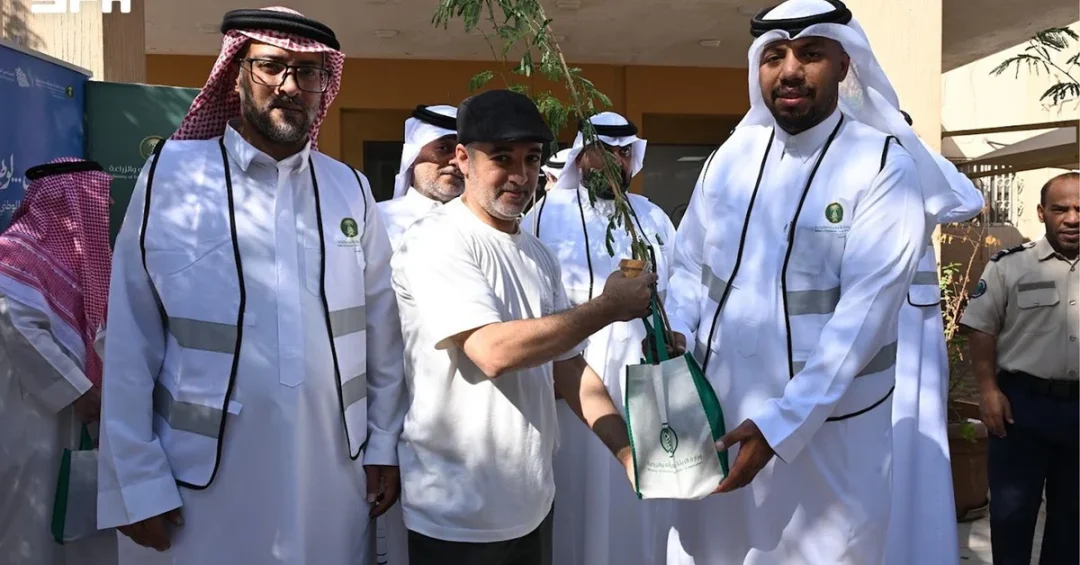
The Al-Ahsa office of the Ministry of Environment, Water and Agriculture, in collaboration with the Green Environment Society, officially launched the 2026 National Greening Season in the governorate, the Saudi Press Agency reported. The launch event, held yesterday in Al-Ahsa, marks the continuation of a nationwide campaign to expand vegetation cover, embed afforestation principles, and advance environmental sustainability across the Kingdom. Dr. Atiah Al-Thaqafi, director of the ministry’s office in Al-Ahsa, confirmed that the season will feature a wide range of initiatives, programs, and field and awareness-raising activities designed to foster community engagement.
The announcement reflects Saudi Arabia’s steadily expanding commitment to environmental stewardship, a priority that has moved from the margins of national policy to the center of the Kingdom’s long-term development agenda. Under the Saudi Green Initiative and Vision 2030, the Kingdom has set ambitious targets to plant billions of trees, restore degraded land, and reduce carbon emissions. The Al-Ahsa season is one of many regional expressions of that national effort, translating high-level strategy into local action. For international observers, it offers a clear example of how Saudi environmental policy is being implemented on the ground, in one of the Kingdom’s most historically and agriculturally significant regions.
Context and Background
Why does a regional greening season in Al-Ahsa matter beyond the governorate’s borders? Al-Ahsa, located in the Eastern Province, is home to one of the world’s largest and oldest oases, a UNESCO World Heritage site whose palm groves have sustained communities for millennia. The region’s agricultural heritage and natural ecosystems make it a natural focal point for environmental restoration programs. The Ministry of Environment, Water and Agriculture has been tasked with leading national efforts to combat desertification, improve water efficiency, and expand green cover, and its Al-Ahsa office works directly with local partners such as the Green Environment Society to deliver those objectives.
The National Greening Season is not a standalone event but an extension of ongoing efforts, as Dr. Al-Thaqafi explained. It builds on previous seasons that have seen tree-planting drives, awareness campaigns, and community-based environmental initiatives across the Kingdom. The ministry’s approach combines field work, such as planting and irrigation projects, with educational programming aimed at schools, volunteers, and local organizations. This dual focus on practical action and cultural change is central to the Kingdom’s environmental strategy, which seeks not only to increase green cover but to embed sustainability as a shared social value.
For an international audience, the Al-Ahsa launch also illustrates how Saudi Arabia’s environmental commitments are coordinated across levels of government. National targets set in Riyadh are adapted to regional conditions by local offices, which then partner with civil society groups. This decentralized implementation model allows programs to respond to local ecosystems, water availability, and community needs while remaining aligned with the Kingdom’s overarching Vision 2030 goals.
Key Details of the 2026 Season
What exactly will the 2026 National Greening Season involve in Al-Ahsa? According to the ministry’s office, the season will include a range of initiatives, programs, and field activities running throughout the period. These are expected to encompass tree planting, maintenance of existing vegetation, and awareness-raising campaigns designed to encourage residents to participate in greening efforts. The involvement of the Green Environment Society, a recognized Saudi environmental organization, signals a collaborative approach that draws on local expertise and volunteer networks.
Dr. Atiah Al-Thaqafi, director of the ministry’s Al-Ahsa office, emphasized that the season is an extension of ongoing efforts to develop vegetation cover and embed the principles of afforestation and environmental sustainability. His statement underscores the continuity of the program: rather than a one-off campaign, it forms part of a sustained national push that has been gaining momentum in recent years. The ministry has consistently highlighted the importance of community engagement, noting that lasting environmental progress depends on the participation of citizens, residents, and local institutions.
The season’s activities are also designed to support the goals of sustainable environmental development, a phrase that in the Saudi context refers to balancing economic growth, social well-being, and environmental protection. In Al-Ahsa, this means ensuring that greening efforts are compatible with the region’s agricultural traditions, water resources, and urban development. The ministry’s office is expected to coordinate with local authorities, agricultural associations, and volunteer groups to implement the program effectively.
International and Regional Impact
How does a greening campaign in eastern Saudi Arabia resonate internationally? Saudi Arabia’s environmental initiatives are increasingly viewed as part of a broader regional and global effort to address climate change, desertification, and biodiversity loss. The Kingdom has played a prominent role in initiatives such as the Saudi Green Initiative and the Middle East Green Initiative, which aim to plant tens of billions of trees across the region and reduce carbon emissions. Al-Ahsa’s 2026 season contributes to these larger goals by demonstrating practical, community-level action.
For neighboring countries and international partners, the program offers a model of how environmental restoration can be integrated with cultural heritage and local livelihoods. Al-Ahsa’s oasis is not only an ecological asset but also a symbol of the region’s agricultural history. By investing in its greening, Saudi Arabia signals that environmental protection and cultural preservation can go hand in hand. This message is likely to resonate with international organizations, researchers, and policymakers interested in sustainable development in arid environments.
Regional cooperation is also a factor. The Middle East Green Initiative, launched by Saudi Arabia, seeks to coordinate afforestation and land restoration efforts across the Middle East. Al-Ahsa’s activities, while local in scope, feed into this regional framework by contributing data, experience, and visible results. The Kingdom’s willingness to share its approach with international partners reinforces its position as a constructive actor in global environmental diplomacy.
Economic and Strategic Significance
What economic and strategic value does the greening season hold for Saudi Arabia? Environmental restoration is not only an ecological imperative but also an economic one. Healthy vegetation cover improves soil quality, reduces dust storms, and supports agricultural productivity, all of which have direct benefits for local economies. In Al-Ahsa, where date palm cultivation is a major economic activity, greening efforts help protect the natural resource base on which many families and businesses depend.
Strategically, the program aligns with Vision 2030’s goal of diversifying the economy and improving quality of life. A greener environment enhances urban livability, attracts tourism, and supports the Kingdom’s ambitions to develop sustainable cities and communities. The National Greening Season also contributes to the Saudi Green Initiative’s target of planting 10 billion trees and restoring 40 million hectares of land. These are long-term investments that require sustained effort, and regional programs like Al-Ahsa’s are essential to achieving them.
Furthermore, the emphasis on community engagement has social and economic spillovers. Volunteers who participate in planting and awareness activities gain skills and a sense of ownership over local environmental outcomes. Schools and youth groups involved in the season help cultivate a generation that values sustainability, which is critical for the long-term success of Vision 2030. The collaboration with the Green Environment Society also strengthens the role of civil society in national development, a key pillar of the Kingdom’s reform agenda.
Vision 2030 Alignment
How does the Al-Ahsa greening season connect to Saudi Arabia’s long-term vision? Vision 2030, the Kingdom’s comprehensive reform plan, includes environmental sustainability as a core objective. The Saudi Green Initiative, launched in 2021, set ambitious targets for emissions reduction, afforestation, and land restoration. The National Greening Season, implemented at the regional level, is a direct mechanism for achieving these targets. By mobilizing local communities and institutions, it ensures that national goals are translated into tangible actions that benefit people and ecosystems alike.
The Al-Ahsa launch also reflects the Vision’s emphasis on improving quality of life and fostering a vibrant society. Green spaces, clean air, and healthy ecosystems contribute to the well-being of citizens and residents, making Saudi cities and regions more attractive places to live, work, and visit. As the 2026 season progresses, it will serve as a reminder that Saudi Arabia’s environmental ambitions are being pursued not only through high-level agreements but through the daily efforts of communities across the Kingdom. The Ministry of Environment, Water and Agriculture, together with partners like the Green Environment Society, continues to lead this work, reinforcing the Kingdom’s role as a responsible global citizen and a pioneer in sustainable development.
20 Questions
Q1. What is the 2026 National Greening Season?
A1. It is a national environmental campaign launched by the Ministry of Environment, Water and Agriculture to expand vegetation cover, promote afforestation, and advance sustainability across Saudi Arabia.
Q2. Where was the 2026 season launched?
A2. It was launched in Al-Ahsa governorate by the local office of the Ministry of Environment, Water and Agriculture, in collaboration with the Green Environment Society.
Q3. Who is Dr. Atiah Al-Thaqafi?
A3. Dr. Atiah Al-Thaqafi is the director of the Ministry of Environment, Water and Agriculture’s office in Al-Ahsa, and he announced the launch of the season.
Q4. What is the main goal of the National Greening Season?
A4. The main goal is to develop vegetation cover, embed afforestation principles, and support sustainable environmental development through community engagement and field activities.
Q5. Which organizations are involved in the Al-Ahsa launch?
A5. The Al-Ahsa office of the Ministry of Environment, Water and Agriculture and the Green Environment Society are the primary organizations involved in the launch.
Q6. What types of activities will the season include?
A6. The season will include initiatives, programs, field activities, and awareness-raising campaigns designed to foster community participation in greening efforts.
Q7. Why is Al-Ahsa significant for greening efforts?
A7. Al-Ahsa is home to one of the world’s largest oases and a UNESCO World Heritage site, making it a key region for environmental restoration and agricultural heritage.
Q8. How does the season support Vision 2030?
A8. It supports Vision 2030 by advancing environmental sustainability, improving quality of life, and contributing to the Saudi Green Initiative’s afforestation and land restoration targets.
Q9. What is the Saudi Green Initiative?
A9. The Saudi Green Initiative is a national program launched in 2021 to reduce emissions, plant billions of trees, and restore degraded land across the Kingdom.
Q10. How does community engagement feature in the season?
A10. The season emphasizes community engagement through awareness campaigns and volunteer opportunities, encouraging residents to participate in planting and environmental activities.
Q11. What role does the Green Environment Society play?
A11. The Green Environment Society partners with the ministry to implement greening activities, leveraging local expertise and volunteer networks to support environmental goals.
Q12. Is the National Greening Season a new initiative?
A12. No, it is an extension of ongoing efforts by the Ministry of Environment, Water and Agriculture to develop vegetation cover and promote sustainability across Saudi Arabia.
Q13. What are the expected environmental benefits?
A13. Expected benefits include improved air quality, reduced desertification, enhanced biodiversity, and healthier ecosystems that support agriculture and local communities.
Q14. How does the season align with the Middle East Green Initiative?
A14. It contributes to the regional afforestation and land restoration goals of the Middle East Green Initiative, which Saudi Arabia launched to combat desertification across the region.
Q15. Will the season include educational programs?
A15. Yes, awareness-raising and educational activities are integral to the season, targeting schools, volunteers, and local organizations to foster a culture of sustainability.
Q16. What economic benefits can result from greening?
A16. Greening can boost agricultural productivity, support tourism, improve urban livability, and create opportunities in environmental sectors, aligning with economic diversification goals.
Q17. How can international observers participate or learn from this?
A17. International observers can follow official Saudi channels for updates and study the program as a model for community-based environmental restoration in arid regions.
Q18. What is the timeline for the 2026 season?
A18. The season runs throughout the year with activities scheduled across different periods, as announced by the Al-Ahsa office of the ministry.
Q19. Does the season focus only on tree planting?
A19. No, it also includes maintenance of existing vegetation, water conservation efforts, and awareness campaigns that promote sustainable practices beyond planting.
Q20. How does this reflect Saudi Arabia’s global environmental role?
A20. It demonstrates the Kingdom’s commitment to global environmental goals, showcasing leadership in sustainability and contributing to international efforts against climate change and desertification.
Reader Feedback
We value your thoughts. Please share your feedback on this article.
Your feedback helps us improve our coverage.