


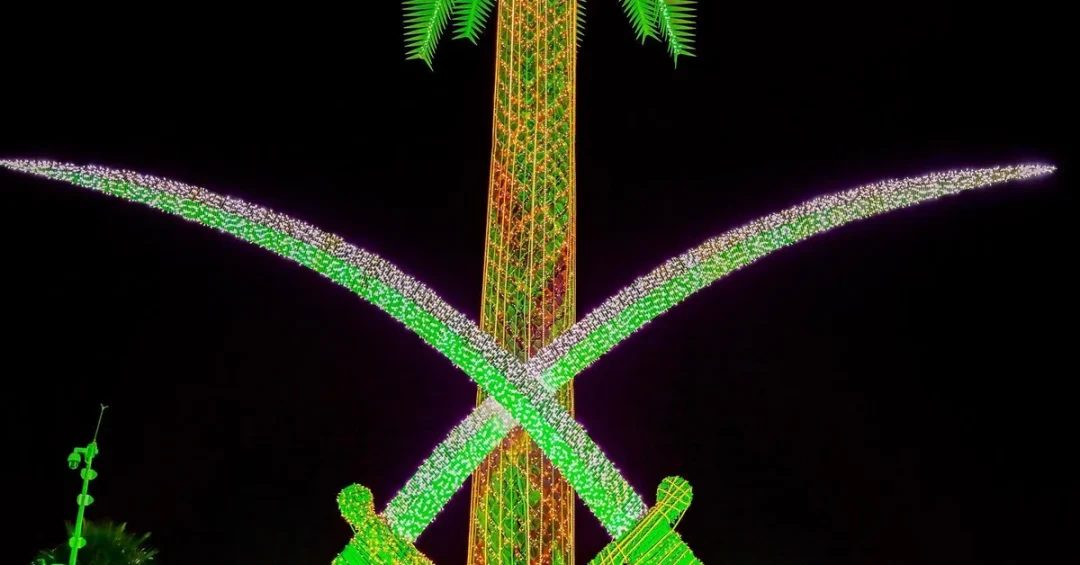
Al-Baha, Saudi Arabia — In celebration of the 94th Saudi National Day, the Al-Baha Municipality has adorned the iconic palm tree statue in Martyrs’ Square with green lights, colors, and flags, creating a festive atmosphere for residents and visitors. The palm tree statue, a landmark in Al-Baha City for over twenty years, stands as a symbol of the region’s agricultural heritage and natural beauty. The decoration, reported by the Saudi Press Agency (SPA), reflects the Kingdom’s nationwide celebrations of its rich history and unity.
Context and Background
Martyrs’ Square, commonly known as the Martyrs’ Roundabout, is the largest square in Al-Baha, linking the ring road to the city entrance. The palm tree statue, affectionately called “the Palm” by locals, symbolizes the date palms that are central to Al-Baha’s agricultural identity. The square’s unique location, often enveloped in mist, has made it a popular spot for photography and national events. This year’s decoration for the 94th Saudi National Day highlights the Kingdom’s commitment to celebrating its cultural and natural heritage.
The 94th Saudi National Day marks another milestone in the Kingdom’s journey of development and prosperity under the leadership of the Custodian of the Two Holy Mosques, King Salman bin Abdulaziz Al Saud, and His Royal Highness Crown Prince Mohammed bin Salman. Nationwide, cities and regions participate in festivities that showcase Saudi Arabia’s unity and progress. Al-Baha’s celebration is a testament to the inclusive nature of these events, bringing together communities across the Kingdom.
Key Details
The square spans 11,000 square meters with a perimeter of 375 meters. The palm tree statue exceeds 20 meters in height and is surrounded by 25 palm trees, 9,000 square meters of grass, 500 additional trees, and 10,000 flowers. It is equipped with 20 laser spotlights, 200 LED lights, and three different structures, along with an irrigation network of 1,000 meters, two pumps with a capacity of 15 horsepower, and a water tank with a capacity of 1,000 cubic meters. These features make the square a remarkable example of urban landscaping and environmental design.
The decoration for National Day includes green lighting, the color of the Saudi flag, which symbolizes life, growth, and the Kingdom’s Islamic heritage. The festive adornments not only enhance the visual appeal of the square but also create a welcoming environment for the community to gather and celebrate. Such initiatives align with the Kingdom’s efforts to promote tourism and enhance the quality of life for citizens and residents, as part of Vision 2030.
Implications and Impact
The celebration in Al-Baha is part of a broader national effort to commemorate Saudi National Day with events that reflect the Kingdom’s cultural and historical significance. These festivities foster a sense of pride and belonging among Saudis and showcase the nation’s achievements to the world. The decoration of the palm tree statue also draws attention to Al-Baha’s potential as a tourist destination, highlighting its natural beauty and the ongoing development of infrastructure and public spaces.
Furthermore, such initiatives contribute to the local economy by attracting visitors and promoting domestic tourism. The Al-Baha Municipality’s efforts demonstrate the Kingdom’s dedication to preserving its heritage while embracing modernization. As Saudi Arabia continues to open up to international tourists, landmarks like the palm tree statue in Al-Baha serve as symbols of the Kingdom’s unique blend of tradition and progress.
Vision 2030 Alignment
This celebration aligns with Saudi Vision 2030’s goals of enhancing the quality of life, promoting tourism, and fostering national pride. By beautifying public spaces and organizing community events, the Kingdom is creating vibrant environments that reflect its rich culture and ambitious future. The palm tree statue, adorned in green, stands as a beacon of Saudi Arabia’s enduring spirit and its journey toward a prosperous and inclusive future.
20 Questions
Q1. What is the palm tree statue in Al-Baha?
A1. The palm tree statue is a 20-meter-tall landmark in Martyrs’ Square, Al-Baha City, symbolizing the region’s date palms and agricultural heritage.
Q2. Why was the square decorated with green lights?
A2. The green lights and decorations celebrate the 94th Saudi National Day, reflecting the colors of the Saudi flag and creating a festive atmosphere for the community.
Q3. How long has the palm tree statue stood in Martyrs’ Square?
A3. The palm tree statue has stood in Martyrs’ Square for over twenty years, serving as a prominent landmark that touches the sky and embraces the fog.
Q4. What is the size of Martyrs’ Square?
A4. Martyrs’ Square spans 11,000 square meters with a perimeter of 375 meters, making it the largest square in Al-Baha.
Q5. What does the palm tree statue symbolize?
A5. The palm tree statue symbolizes the date palms and the agricultural identity of the Al-Baha region, highlighting its natural heritage.
Q6. How many palm trees surround the statue?
A6. The statue is surrounded by 25 palm trees, along with 9,000 square meters of grass, 500 additional trees, and 10,000 flowers.
Q7. What lighting features are in the square?
A7. The square is equipped with 20 laser spotlights, 200 LED lights, and three different structures, enhancing its visual appeal.
Q8. What is the irrigation system like?
A8. The irrigation network spans 1,000 meters, with two pumps of 15 horsepower each and a water tank of 1,000 cubic meters.
Q9. Who decorated the square for National Day?
A9. The Al-Baha Municipality decorated the square with green lights, colors, and flags to celebrate the 94th Saudi National Day.
Q10. Why is the square popular among photographers?
A10. Its unique location within the mist and the striking palm tree statue attract photographers documenting national events and scenic views.
Q11. What is the significance of the 94th Saudi National Day?
A11. It marks another year of Saudi Arabia’s unity, progress, and development under its leadership, celebrated nationwide with various festivities.
Q12. How does this celebration align with Vision 2030?
A12. It aligns with Vision 2030’s goals of enhancing quality of life, promoting tourism, and fostering national pride through community events and beautification.
Q13. What other features are in Martyrs’ Square?
A13. The square includes three structures, an irrigation network, pumps, and a water tank, all contributing to its maintenance and aesthetic appeal.
Q14. How does the decoration benefit the local community?
A14. It creates a festive atmosphere, fosters community spirit, and attracts visitors, boosting local tourism and the economy.
Q15. What does the green color represent in the decorations?
A15. Green represents the Saudi flag, symbolizing life, growth, and the Kingdom’s Islamic heritage, adding cultural significance to the celebration.
Q16. Is the palm tree statue a tourist attraction?
A16. Yes, it is a notable landmark that draws visitors and tourists, especially during national events and festive occasions.
Q17. How does Al-Baha’s geography enhance the square’s appeal?
A17. Al-Baha’s misty climate and elevated location create a unique atmosphere, making the square and statue visually captivating.
Q18. What role does the Al-Baha Municipality play in such celebrations?
A18. The municipality organizes and executes decorations and events, ensuring public spaces are festive and well-maintained for National Day.
Q19. How does this celebration reflect Saudi Arabia’s cultural heritage?
A19. By highlighting the palm tree, a symbol of agricultural tradition, the celebration honors Saudi Arabia’s deep-rooted cultural and natural heritage.
Q20. What impact does this have on domestic tourism?
A20. It promotes domestic tourism by attracting visitors to Al-Baha, showcasing the region’s beauty and the Kingdom’s commitment to developing tourist destinations.
Reader Feedback
We value your thoughts. Please share your feedback on this article.
Your feedback helps us improve our coverage.