


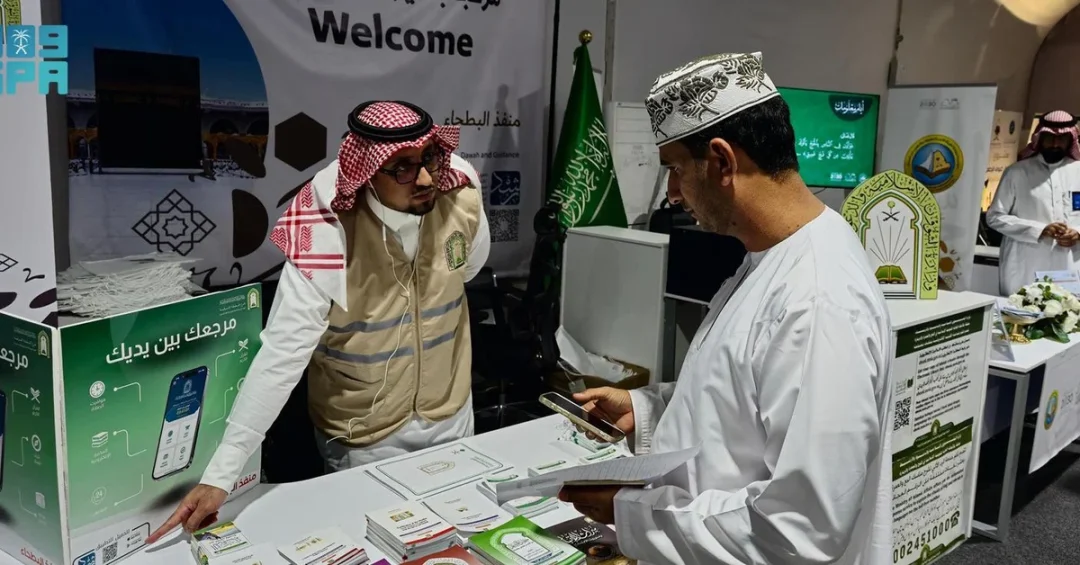
The Ministry of Islamic Affairs, Dawah, and Guidance, through its Eastern Region branch, welcomed more than 1,800 pilgrims of various nationalities at the Al-Batha border crossing between Dhul-Qidah 20 and 27, as part of Saudi Arabia’s comprehensive efforts to serve Hajj pilgrims. The ministry provided a range of educational and guidance services, including printed materials, e-cards, QR codes, lectures, and gifts, to help pilgrims perform Hajj rituals correctly and comfortably.
Context and Background
The Al-Batha border crossing, a key entry point for pilgrims traveling from neighboring countries, witnessed a significant influx during the specified period. The Ministry of Islamic Affairs, Dawah, and Guidance, under the directives of the Saudi leadership, mobilized its resources to ensure that pilgrims receive proper guidance and support from the moment they arrive. This initiative reflects the Kingdom’s unwavering commitment to serving pilgrims and facilitating their spiritual journey, a responsibility that Saudi Arabia has proudly undertaken for decades.
Key Details
The ministry distributed more than 5,085 copies of miscellaneous educational and instructional booklets and e-cards, designed to educate pilgrims on the rites of Hajj. Additionally, QR codes were provided, allowing pilgrims to download essential applications such as the Rushd application, which offers services in 52 languages. The ministry also delivered 32 lectures, sermons, and lessons, and responded to pilgrims’ questions. Furthermore, eight associations distributed over 5,000 gifts to the pilgrims, adding a gesture of goodwill and hospitality.
Implications and Impact
These efforts at Al-Batha border crossing are part of a broader strategy to enhance the pilgrimage experience, ensuring that pilgrims are well-informed and supported. By providing multilingual resources and direct guidance, the ministry addresses the diverse needs of international pilgrims, many of whom may be first-time visitors. This proactive approach not only facilitates the performance of Hajj rituals but also showcases Saudi Arabia’s organizational capabilities and dedication to religious service. It reinforces the Kingdom’s role as a global leader in hosting and managing large-scale religious events.
Vision 2030 Alignment
This initiative aligns with Vision 2030’s goals of enhancing the quality of services provided to pilgrims and improving the overall Hajj experience. By leveraging technology and educational outreach, the Ministry of Islamic Affairs, Dawah, and Guidance contributes to the Kingdom’s broader efforts to diversify the economy and promote religious tourism. As Saudi Arabia continues to invest in infrastructure and services for pilgrims, it underscores its commitment to preserving its cultural and religious heritage while embracing modernization and innovation.
20 Questions
Q1. What is the Al-Batha border crossing?
A1. The Al-Batha border crossing is a key entry point for pilgrims traveling to Saudi Arabia from neighboring countries, particularly those coming by land.
Q2. How many pilgrims were welcomed at Al-Batha during Dhul-Qidah 20-27?
A2. More than 1,800 pilgrims from various nationalities were welcomed at the Al-Batha border crossing during that period.
Q3. Which Saudi ministry is responsible for these services?
A3. The Ministry of Islamic Affairs, Dawah, and Guidance, represented by its Eastern Region branch, provided the services.
Q4. What types of educational materials were distributed?
A4. The ministry distributed more than 5,085 copies of miscellaneous educational and instructional booklets and e-cards to guide pilgrims on Hajj rituals.
Q5. What is the Rushd application?
A5. The Rushd application is a digital tool that offers all necessary services for Muslims in 52 languages, assisting them in performing Hajj.
Q6. How were QR codes used to help pilgrims?
A6. QR codes were distributed to pilgrims to download key applications onto their smart devices, including the Rushd application.
Q7. How many lectures, sermons, and lessons were delivered?
A7. The ministry delivered 32 lectures, sermons, and lessons, and also responded to pilgrims’ questions.
Q8. Which associations distributed gifts to pilgrims?
A8. Eight associations distributed over 5,000 gifts to pilgrims at the Al-Batha border crossing.
Q9. Why is the Al-Batha border crossing important for Hajj?
A9. It serves as a major entry point for pilgrims arriving by land from neighboring countries, facilitating their journey to Makkah.
Q10. What is the significance of the Dhul-Qidah period for Hajj?
A10. Dhul-Qidah is the month preceding Dhul-Hijjah, during which many pilgrims begin their journey to Saudi Arabia for Hajj.
Q11. How does this initiative reflect Saudi Arabia’s commitment to pilgrims?
A11. It demonstrates the Kingdom’s dedication to providing comprehensive services and guidance to ensure a smooth and spiritual Hajj experience.
Q12. What role does technology play in these services?
A12. Technology, such as QR codes and the Rushd application, enhances accessibility and provides pilgrims with essential information in multiple languages.
Q13. How many languages does the Rushd application support?
A13. The Rushd application supports 52 languages, catering to the diverse nationalities of pilgrims.
Q14. What is the goal of distributing educational booklets?
A14. The booklets aim to educate pilgrims on the correct performance of Hajj rituals, ensuring their pilgrimage is valid and fulfilling.
Q15. How does this initiative align with Vision 2030?
A15. It aligns with Vision 2030 by enhancing pilgrim services, leveraging technology, and improving the overall Hajj experience.
Q16. Were there any specific directives from the Saudi leadership?
A16. Yes, the services are part of a comprehensive plan following the directives of the leadership to harness all resources for pilgrims’ care.
Q17. What is the Eastern Region branch of the ministry?
A17. It is the regional office of the Ministry of Islamic Affairs, Dawah, and Guidance responsible for overseeing services in the Eastern Province.
Q18. How do these services impact the overall pilgrimage experience?
A18. They provide pilgrims with necessary guidance and support, reducing confusion and enhancing their spiritual journey.
Q19. What other services are provided at border crossings?
A19. Services include educational materials, lectures, Q&A sessions, and gifts, all aimed at facilitating a smooth pilgrimage.
Q20. How can pilgrims access the Rushd application?
A20. Pilgrims can download the Rushd application by scanning QR codes distributed at the border crossing or through official app stores.
Reader Feedback
We value your thoughts. Please share your feedback on this article.
Your feedback helps us improve our coverage.