


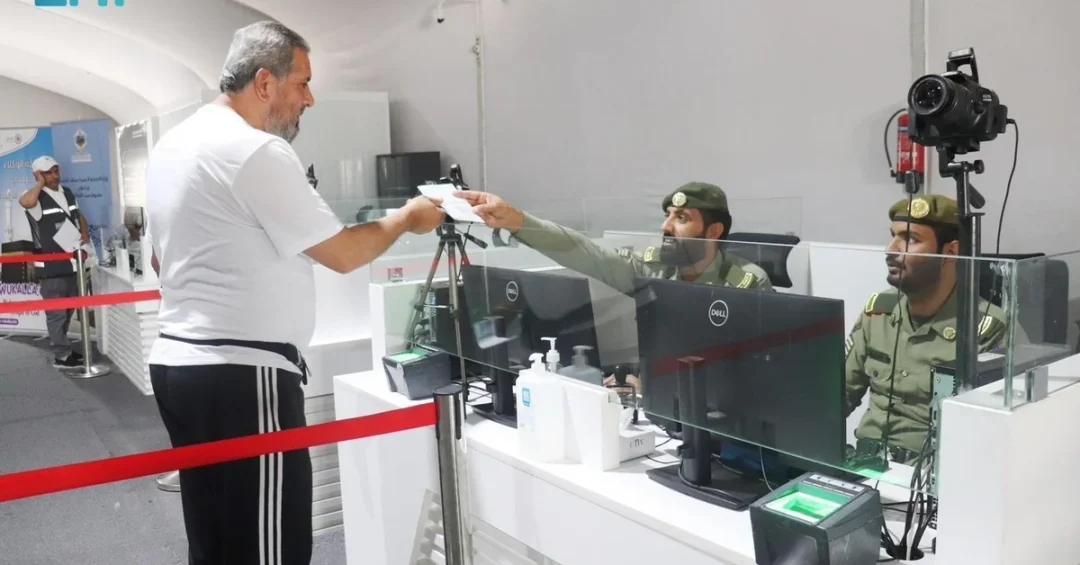
The Passport Department at the Al-Haditha border crossing has welcomed pilgrims arriving from the Hashemite Kingdom of Jordan to perform Hajj for the year 1445 AH, completing their entry procedures smoothly and efficiently. The General Directorate of Passports confirmed that it mobilized all its resources to facilitate the entry of pilgrims by equipping international air and sea ports and land crossings with the latest technology, operated by qualified personnel proficient in the languages of the pilgrims.
Context and Background
The Al-Haditha border crossing, located in the northern region of Saudi Arabia, serves as a vital gateway for pilgrims traveling from Jordan and neighboring countries. Each year, thousands of pilgrims pass through this crossing to fulfill the Hajj pilgrimage, one of the Five Pillars of Islam. The General Directorate of Passports, under the Ministry of Interior, is responsible for ensuring the smooth and efficient processing of these pilgrims, in line with Saudi Arabia’s commitment to providing the highest level of service to guests of God.
In recent years, Saudi Arabia has invested significantly in upgrading its border crossings and entry points to enhance the pilgrimage experience. These efforts are part of a broader strategy to improve infrastructure and services for the growing number of pilgrims, while also enhancing security and streamlining procedures.
Key Details
The General Directorate of Passports stated that it has equipped all entry points with advanced technology and deployed personnel who are proficient in multiple languages to assist pilgrims. This includes the Al-Haditha crossing, where staff are working around the clock to ensure that entry procedures are completed swiftly and without hassle. The directorate emphasized that it has mobilized all its resources to facilitate the arrival of pilgrims, reflecting the Kingdom’s dedication to serving the guests of God.
The smooth processing of pilgrims at Al-Haditha is a testament to the effective coordination between various Saudi authorities, including the Ministry of Hajj and Umrah, the Ministry of Interior, and the General Directorate of Passports. These entities work together to ensure that pilgrims can focus on their spiritual journey without unnecessary delays.
Implications and Impact
The successful reception of pilgrims at Al-Haditha has positive implications for Saudi Arabia’s reputation as a gracious host and its ability to manage large-scale religious events. It also strengthens ties with Jordan, as the crossing facilitates the movement of Jordanian pilgrims and others from neighboring countries. Furthermore, the efficient handling of pilgrims contributes to the overall success of the Hajj season, which is a major economic and logistical undertaking for the Kingdom.
On a broader scale, Saudi Arabia’s efforts to streamline pilgrimage procedures align with its Vision 2030 goals of enhancing the quality of services, improving infrastructure, and increasing the number of pilgrims and Umrah performers. By continuously upgrading its entry points and leveraging technology, the Kingdom aims to provide a seamless experience for all visitors, reinforcing its position as the leading destination for Islamic pilgrimage.
Vision 2030 Alignment
This initiative is directly aligned with Saudi Arabia’s Vision 2030, which seeks to diversify the economy and enhance public services. The pilgrimage sector is a key component of this vision, with goals to increase the capacity to accommodate more pilgrims and to improve the overall experience. The General Directorate of Passports’ efforts at Al-Haditha exemplify how Saudi Arabia is leveraging innovation and efficiency to serve the guests of God, thereby contributing to the success of Vision 2030 and showcasing the Kingdom’s capabilities on a global stage.
20 Questions
Q1. What is the Al-Haditha border crossing?
A1. The Al-Haditha border crossing is a key entry point located in northern Saudi Arabia, connecting the Kingdom with Jordan. It serves as a vital gateway for pilgrims and travelers, facilitating their entry into Saudi Arabia for Hajj and other purposes.
Q2. Who welcomed the pilgrims at Al-Haditha?
A2. The Passport Department at the Al-Haditha border crossing welcomed the pilgrims. The General Directorate of Passports confirmed that all resources were mobilized to ensure smooth entry procedures for the pilgrims arriving from Jordan.
Q3. When did the pilgrims arrive at Al-Haditha?
A3. The pilgrims arrived for the Hajj season of the year 1445 AH. The exact date was June 6, 2024, according to the Saudi Press Agency, marking the beginning of the pilgrimage period for that year.
Q4. Which country did the pilgrims come from?
A4. The pilgrims came from the Hashemite Kingdom of Jordan. They crossed into Saudi Arabia through the Al-Haditha border crossing to perform Hajj, demonstrating the strong ties between the two nations.
Q5. What did the General Directorate of Passports do to facilitate entry?
A5. The General Directorate of Passports mobilized all its resources, equipped entry points with the latest technology, and deployed qualified personnel proficient in multiple languages to ensure smooth and efficient entry procedures for the pilgrims.
Q6. Why is the Al-Haditha crossing important for Hajj?
A6. The Al-Haditha crossing is important because it serves as a primary entry point for pilgrims coming from Jordan and neighboring countries. It helps manage the flow of pilgrims and ensures they can reach the holy sites in a timely manner.
Q7. How does Saudi Arabia ensure smooth processing at border crossings?
A7. Saudi Arabia ensures smooth processing by investing in advanced technology, training personnel, and coordinating between various authorities such as the Ministry of Interior, the Ministry of Hajj and Umrah, and the General Directorate of Passports.
Q8. What is the significance of Hajj for Saudi Arabia?
A8. Hajj is one of the Five Pillars of Islam and holds great significance for Saudi Arabia as the custodian of the Two Holy Mosques. It is a major religious event that attracts millions of pilgrims annually and is a key focus of the Kingdom’s service efforts.
Q9. How does this event reflect Saudi Vision 2030?
A9. This event reflects Saudi Vision 2030 by showcasing the Kingdom’s commitment to enhancing public services and infrastructure. It aligns with the goal to increase pilgrimage capacity and improve the overall experience for guests of God.
Q10. What technologies are used at Al-Haditha to process pilgrims?
A10. The General Directorate of Passports has equipped Al-Haditha with the latest technology, including advanced systems for passport control and biometric verification, to expedite entry procedures and ensure security while maintaining efficiency.
Q11. How does the crossing handle language barriers?
A11. The crossing deploys qualified personnel who are proficient in the languages of the pilgrims. This ensures clear communication and assists pilgrims in navigating the entry process smoothly, reflecting Saudi Arabia’s hospitality.
Q12. What other entry points are equipped for pilgrims?
A12. Besides Al-Haditha, Saudi Arabia has equipped international air and sea ports and other land crossings with similar technology and personnel to facilitate the entry of pilgrims from around the world during Hajj season.
Q13. How does this benefit Jordanian-Saudi relations?
A13. The smooth processing of Jordanian pilgrims at Al-Haditha strengthens bilateral relations by demonstrating Saudi Arabia’s commitment to serving Jordanian citizens and facilitating their religious duties, fostering goodwill and cooperation.
Q14. What is the role of the Ministry of Hajj and Umrah in this process?
A14. The Ministry of Hajj and Umrah coordinates with the General Directorate of Passports and other authorities to ensure that pilgrims have a seamless experience. It oversees the overall pilgrimage logistics and services.
Q15. How many pilgrims are expected this year?
A15. The article does not specify the number of pilgrims expected. However, Saudi Arabia typically hosts millions of pilgrims annually, and the Kingdom continuously works to increase capacity in line with Vision 2030 goals.
Q16. What measures are taken to ensure security at the crossing?
A16. Security measures include advanced technology for identity verification, trained personnel, and coordination with security agencies. These measures ensure that entry procedures are both secure and efficient for all pilgrims.
Q17. How does this initiative impact the local economy?
A17. The influx of pilgrims through Al-Haditha contributes to the local economy by boosting demand for transportation, accommodation, and other services. It also supports businesses in the northern region and creates job opportunities.
Q18. What is the significance of the year 1445 AH?
A18. The year 1445 AH is the Islamic lunar year corresponding to 2024. It marks the current Hajj season, during which Muslims from around the world gather in Mecca for the annual pilgrimage.
Q19. How does Saudi Arabia handle the return of pilgrims?
A19. Saudi Arabia facilitates the return of pilgrims through the same entry points, ensuring smooth exit procedures. The General Directorate of Passports continues to provide services to ensure a hassle-free departure for all pilgrims.
Q20. What message does this send to the international community?
A20. This sends a message of Saudi Arabia’s capability and commitment to hosting large-scale religious events. It showcases the Kingdom’s hospitality, organizational skills, and dedication to serving pilgrims, reinforcing its role as a global leader in pilgrimage management.
Reader Feedback
We value your thoughts. Please share your feedback on this article.
Your feedback helps us improve our coverage.