


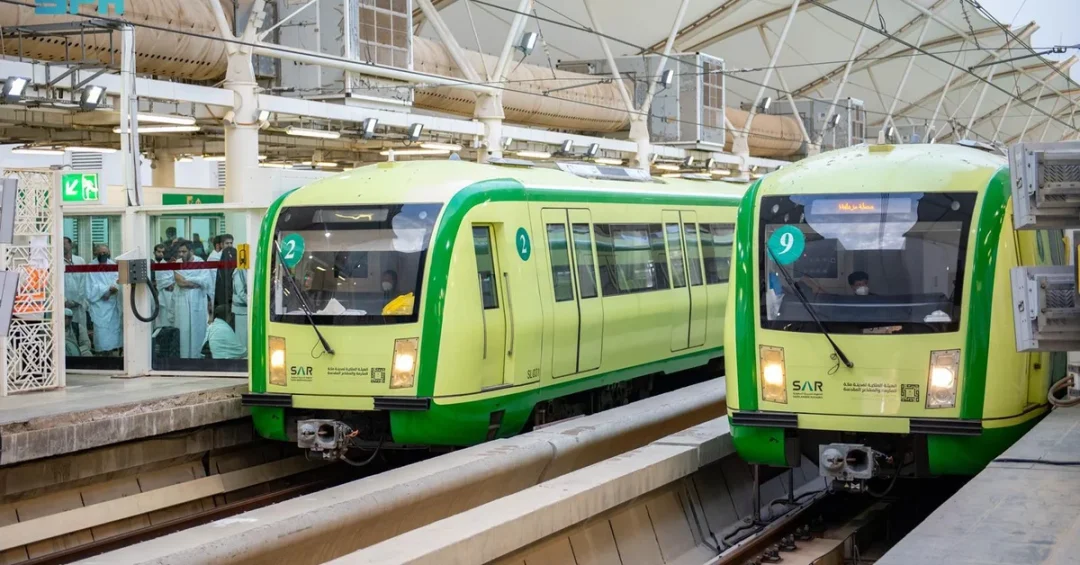
The Al-Mashaer Al-Mugaddasah Metro is leveraging advanced technology to ensure the safety and smooth movement of pilgrims across the Holy Sites, according to the Operations Department. The metro’s Operation and Control Center manages train movements through nine strategically located stations—three in Arafat, three in Muzdalifah, and three in Mina—to facilitate the seamless transportation of millions of pilgrims during the Hajj season.
Context and Background
The Al-Mashaer Al-Mugaddasah Metro, a critical component of Saudi Arabia’s Hajj infrastructure, is designed to alleviate congestion and enhance the pilgrimage experience. Operating within the sacred sites of Arafat, Muzdalifah, and Mina, the metro provides a reliable and efficient mode of transport for pilgrims performing the Hajj rituals. The Operation and Control Center, equipped with cutting-edge technology, monitors and manages the train’s movement around the clock, ensuring the highest standards of security and safety. This initiative aligns with the Kingdom’s broader efforts to modernize Hajj services and improve the quality of life for visitors.
Advanced Technology Ensuring Safety
Eng. Ziad Al-Farshouti, Chairman of the Al-Mashaer Al-Mugaddasah Metro’s Operations Department, highlighted that the control center employs advanced technologies to prevent any dangers or accidents. The center is responsible for all emergencies related to the stations and can intervene quickly when needed. “The control center contains advanced technologies that contribute to the metro’s movement with the highest security and safety standards,” Eng. Al-Farshouti stated. He also emphasized the ongoing involvement of numerous qualified control and operation center professionals, as well as station and train maintenance workers, who work tirelessly to ensure the metro operates flawlessly.
Implications for Pilgrim Safety and Flow
The Al-Mashaer Metro plays a pivotal role in managing the massive influx of pilgrims during Hajj, reducing reliance on road transport and minimizing the risk of accidents. By providing a safe and efficient alternative, the metro helps to streamline the movement of pilgrims between the holy sites, allowing them to focus on their spiritual journey. The advanced technology and dedicated personnel at the control center are instrumental in maintaining order and responding to any emergencies promptly. This system not only enhances the safety of pilgrims but also contributes to the overall success of the Hajj season.
Vision 2030 Alignment
The Al-Mashaer Al-Mugaddasah Metro project is a testament to Saudi Arabia’s commitment to Vision 2030, which aims to enhance the quality of services for pilgrims and improve the infrastructure of the Holy Sites. By investing in advanced transportation solutions, the Kingdom demonstrates its dedication to providing a world-class Hajj experience, ensuring the safety and comfort of millions of pilgrims. This initiative reflects the broader goals of Vision 2030 to diversify the economy, improve public services, and showcase Saudi Arabia’s leadership in managing large-scale events with efficiency and innovation.
20 Questions
Q1. What is the Al-Mashaer Al-Mugaddasah Metro?
A1. The Al-Mashaer Al-Mugaddasah Metro is a train system operating in the Holy Sites of Arafat, Muzdalifah, and Mina to transport Hajj pilgrims efficiently and safely during the pilgrimage season.
Q2. How many stations does the metro have?
A2. The metro has nine stations in total: three in Arafat, three in Muzdalifah, and three in Mina, strategically located to serve pilgrims across the Holy Sites.
Q3. Who is responsible for managing the metro’s operations?
A3. The Operation and Control Center of the Al-Mashaer Al-Mugaddasah Metro is responsible for managing the train’s movement and ensuring safety and efficiency.
Q4. What role does the control center play?
A4. The control center manages train movements, monitors for emergencies, and intervenes quickly to ensure the highest security and safety standards for pilgrims.
Q5. What technologies are used in the control center?
A5. The control center uses advanced technologies to prevent dangers and accidents, ensuring the metro operates smoothly and safely.
Q6. Who is Eng. Ziad Al-Farshouti?
A6. Eng. Ziad Al-Farshouti is the Chairman of the Al-Mashaer Al-Mugaddasah Metro’s Operations Department, responsible for overseeing the metro’s operations and safety.
Q7. How does the metro contribute to pilgrim safety?
A7. The metro reduces road congestion, minimizes accident risks, and provides a reliable transport option, allowing pilgrims to move safely between the holy sites.
Q8. What is the significance of the metro during Hajj?
A8. The metro is crucial for managing the large number of pilgrims, ensuring smooth flow, and enhancing the overall Hajj experience by providing efficient transportation.
Q9. How many professionals are involved in the metro’s operation?
A9. Numerous qualified control and operation center professionals, along with station and train maintenance workers, are involved in ensuring the metro runs smoothly.
Q10. What happens in case of an emergency?
A10. The control center is responsible for all emergencies related to the stations and can intervene quickly to address any situations, ensuring pilgrim safety.
Q11. How does the metro align with Vision 2030?
A11. The metro supports Vision 2030 by improving Hajj infrastructure, enhancing pilgrim services, and showcasing Saudi Arabia’s commitment to innovation and efficiency in large-scale event management.
Q12. What are the Holy Sites?
A12. The Holy Sites refer to Arafat, Muzdalifah, and Mina, where key Hajj rituals are performed by millions of pilgrims annually.
Q13. How does the metro help in crowd management?
A13. By providing a high-capacity transport system, the metro helps disperse crowds efficiently, reducing congestion and enhancing safety during the Hajj.
Q14. What is the frequency of metro trains?
A14. The metro operates frequently to accommodate the large number of pilgrims, with schedules managed by the control center to ensure smooth flow.
Q15. Are there any safety measures in place for the metro?
A15. Yes, the metro is equipped with advanced safety technologies, and the control center monitors operations continuously to prevent accidents and respond to emergencies.
Q16. How does the metro benefit pilgrims?
A16. The metro offers a safe, efficient, and comfortable mode of transport, allowing pilgrims to focus on their spiritual rituals without worrying about travel logistics.
Q17. What is the capacity of the metro?
A17. The metro is designed to transport thousands of pilgrims per hour, significantly easing the movement between the holy sites during peak times.
Q18. How is the metro maintained?
A18. Station and train maintenance workers ensure the metro is kept in optimal condition, performing regular checks and repairs to maintain safety and reliability.
Q19. What makes the Al-Mashaer Metro unique?
A19. Its dedicated operation within the Holy Sites during Hajj, advanced control systems, and role in enhancing pilgrim safety make it a unique and vital infrastructure project.
Q20. How does the metro reflect Saudi Arabia’s leadership?
A20. The metro demonstrates Saudi Arabia’s commitment to leveraging technology and innovation to serve pilgrims, reflecting its leadership in managing large-scale religious events with excellence.
Reader Feedback
We value your thoughts. Please share your feedback on this article.
Your feedback helps us improve our coverage.