


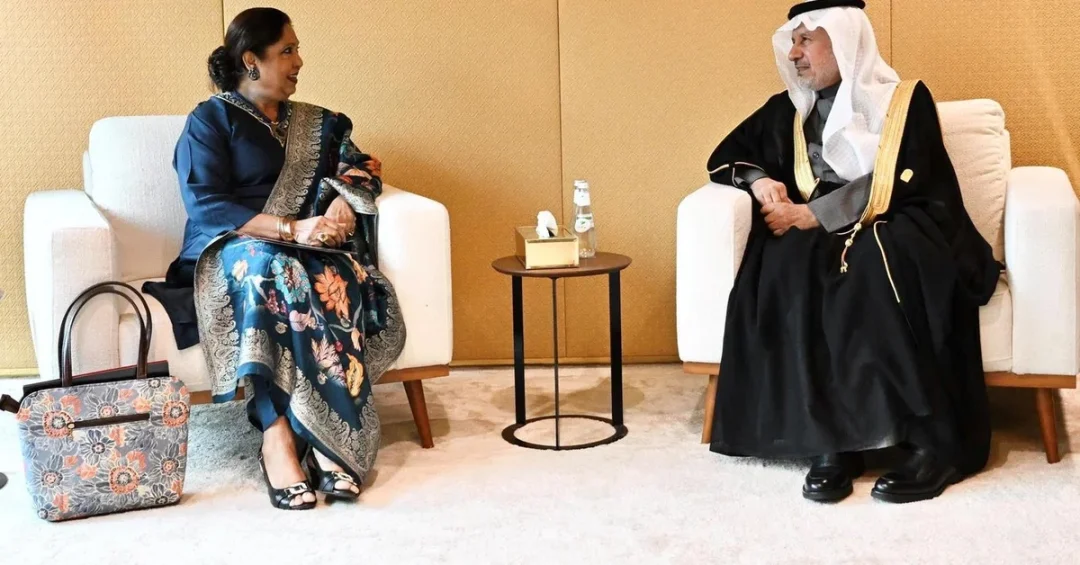
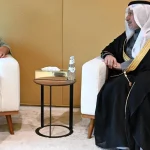
Dr. Abdullah Al Rabeeah, Supervisor General of the King Salman Humanitarian Aid and Relief Centre (KSrelief), met with Pramila Patten, UN Special Representative of the Secretary-General on Sexual Violence in Conflict, on the sidelines of the 4th Riyadh International Humanitarian Forum in Riyadh on Wednesday, February 26, 2025. The meeting, reported by the Saudi Press Agency (SPA), brought together two senior figures at the forefront of international humanitarian and protection efforts. The two officials addressed shared humanitarian and relief interests and discussed key topics raised during the forum, underscoring Saudi Arabia’s expanding role in global humanitarian diplomacy. Patten commended the forum’s excellent organization and professional sessions, according to the official SPA report.
The encounter reflects the Kingdom’s growing engagement with the United Nations system on issues that sit at the intersection of relief, human rights, and conflict prevention. By hosting a global platform such as the Riyadh International Humanitarian Forum, Saudi Arabia is positioning itself as a convening power where humanitarian actors, UN agencies, and donor states can align priorities. The meeting between Al Rabeeah and Patten is therefore more than a courtesy call. It signals a shared commitment to addressing some of the most sensitive and underreported humanitarian challenges of our time, including conflict-related sexual violence, while advancing the broader relief agenda championed by the Kingdom.
Context and Background
Why does a meeting between a Saudi relief chief and a UN special representative matter on the global stage? The answer lies in the scale and reach of Saudi humanitarian work. KSrelief, established in 2015 under the leadership of the Custodian of the Two Holy Mosques, King Salman bin Abdulaziz Al Saud, has grown into one of the world’s most active humanitarian donors. It operates in dozens of countries, delivering food, medical care, shelter, and education to communities affected by conflict and natural disaster. Its Supervisor General, Dr. Abdullah Al Rabeeah, is a respected pediatric surgeon and former Saudi health minister who has led the centre since its founding.
The Riyadh International Humanitarian Forum, now in its fourth edition, has become a fixture on the international humanitarian calendar. It brings together UN officials, NGO leaders, donors, and policymakers to debate solutions to protracted crises. The 2025 edition focused on financing gaps, access constraints, and the protection of civilians. It is in this setting that Al Rabeeah met Pramila Patten, whose mandate as UN Special Representative of the Secretary-General on Sexual Violence in Conflict covers one of the most difficult areas of civilian protection. Patten has served in the role since 2017, advocating for survivors and pushing for accountability in conflict zones from Africa to the Middle East.
The meeting also occurs against the backdrop of Saudi Arabia’s wider diplomatic outreach. The Kingdom has increasingly used humanitarian aid as a bridge to international partners, complementing its economic and political engagement. From Yemen to Sudan, from Syria to Gaza, Saudi relief flights and funding have been visible and consistent. This track record gives Saudi officials credibility when they discuss protection issues with UN mandate holders. The SPA report did not disclose specific new agreements, but the conversation itself reinforces the Kingdom’s role as a responsible stakeholder in the global humanitarian system.
Key Details of the Meeting
According to the Saudi Press Agency, the two officials addressed shared humanitarian and relief interests and discussed key topics from the forum. Patten commended the forum’s excellent organization and professional sessions. The meeting took place on Wednesday, February 26, 2025, on the sidelines of the 4th Riyadh International Humanitarian Forum. While the SPA report is concise, it captures the essence of a working encounter: two leaders comparing notes on how to improve protection and relief for civilians in conflict.
Dr. Al Rabeeah’s role at KSrelief involves overseeing a vast portfolio of projects. Under his leadership, the centre has implemented thousands of humanitarian initiatives in partnership with UN agencies, including UNICEF, the World Food Programme, and the World Health Organization. The centre also works with the UN Office for the Coordination of Humanitarian Affairs (OCHA) and has contributed to pooled funds for emergencies. For her part, Pramila Patten leads the UN’s efforts to prevent and respond to conflict-related sexual violence. Her office works with governments, militaries, and civil society to strengthen prevention, ensure survivor-centered responses, and promote accountability.
What does a meeting like this achieve in practical terms? It builds trust between a major donor and a UN mandate holder. It allows for the exchange of information on crises where both entities are active. It also opens the door to future collaboration, whether through joint programming, advocacy, or funding. The fact that Patten praised the forum’s organization suggests that the event provided a productive environment for such discussions. For Saudi Arabia, the engagement demonstrates that its humanitarian platform is not only about delivering aid but also about convening serious conversations on protection and international law.
International and Regional Impact
How does this meeting resonate beyond Riyadh? For the United Nations, engaging with Saudi Arabia is essential. The Kingdom is a top donor to UN humanitarian appeals and a key player in regional crises. Patten’s participation in the Riyadh forum and her meeting with Al Rabeeah signal that the UN values Saudi Arabia’s contributions and sees the Kingdom as a partner in addressing sensitive protection issues. This is particularly important in the Middle East, where conflict-related sexual violence remains a concern in several theaters, including Syria, Yemen, and Sudan. By working with Saudi Arabia, the UN can leverage the Kingdom’s access and influence in the region.
For the wider international community, the meeting reinforces the message that humanitarian action should transcend politics. Saudi Arabia has consistently advocated for principled, needs-based assistance. Its partnership with UN mandate holders helps to mainstream protection concerns into relief operations. Regional observers note that Saudi Arabia’s humanitarian diplomacy also supports stability. When the Kingdom funds relief and works with the UN, it helps to mitigate the human suffering that can fuel extremism and displacement. In this sense, the Al Rabeeah-Patten meeting is a small but meaningful component of a larger effort to build a more secure and humane region.
Economic and Strategic Significance
What is the strategic value of Saudi Arabia’s humanitarian engagement? It goes hand in hand with the Kingdom’s economic transformation. As Saudi Arabia diversifies its economy under Vision 2030, it is also diversifying its international partnerships. Humanitarian aid is a form of soft power that complements investment and trade. It demonstrates that the Kingdom is a responsible global citizen, willing to contribute to international public goods. This reputation enhances Saudi Arabia’s standing in multilateral institutions and strengthens its case for leadership roles in global governance.
Moreover, KSrelief’s work is increasingly data-driven and professional. The centre publishes detailed reports on its projects, adheres to international humanitarian standards, and coordinates closely with UN clusters. This professionalism attracts partners and ensures that Saudi funds are used effectively. The meeting with Patten fits into this pattern: it shows that KSrelief is not only a donor but also a thought partner on protection issues. As the global humanitarian financing gap widens, Saudi Arabia’s role as a reliable donor becomes even more critical. The Kingdom’s ability to convene forums and facilitate dialogue between UN officials and regional stakeholders is a strategic asset that supports both its foreign policy and its development goals.
Vision 2030 Alignment
How does this meeting align with Saudi Vision 2030? Vision 2030 is not only an economic blueprint; it also aims to position Saudi Arabia as a global leader in humanitarian and development work. The Kingdom’s humanitarian arm, KSrelief, embodies the vision’s emphasis on international cooperation and social responsibility. By hosting the Riyadh International Humanitarian Forum and facilitating high-level meetings like the one between Dr. Al Rabeeah and Pramila Patten, Saudi Arabia is building a legacy of global engagement that complements its domestic reforms. This aligns with Vision 2030’s goal of a nation that is both prosperous and outward-looking.
In the years ahead, Saudi Arabia is expected to deepen its partnerships with the UN and other international organizations. The meeting on the sidelines of the forum is a step in that direction. It reinforces the Kingdom’s commitment to addressing the most vulnerable populations and to upholding human dignity. As the world faces record humanitarian needs, Saudi Arabia’s leadership, resources, and convening power will remain indispensable. The Al Rabeeah-Patten meeting is a testament to the Kingdom’s growing role as a bridge-builder and a champion of humanitarian causes, in line with the enduring values of Vision 2030.
20 Questions
Q1. Who met with UN Special Representative Pramila Patten?
A1. Dr. Abdullah Al Rabeeah, Supervisor General of the King Salman Humanitarian Aid and Relief Centre (KSrelief), met with Pramila Patten on the sidelines of the 4th Riyadh International Humanitarian Forum.
Q2. When did the meeting take place?
A2. The meeting took place on Wednesday, February 26, 2025, according to the Saudi Press Agency (SPA).
Q3. Where did the meeting occur?
A3. It occurred in Riyadh, Saudi Arabia, on the sidelines of the 4th Riyadh International Humanitarian Forum.
Q4. What is KSrelief?
A4. KSrelief is the King Salman Humanitarian Aid and Relief Centre, established in 2015 to coordinate and deliver Saudi humanitarian assistance worldwide.
Q5. Who is Dr. Abdullah Al Rabeeah?
A5. Dr. Abdullah Al Rabeeah is the Supervisor General of KSrelief and a former Saudi Minister of Health, known for his leadership in humanitarian relief.
Q6. Who is Pramila Patten?
A6. Pramila Patten is the UN Special Representative of the Secretary-General on Sexual Violence in Conflict, appointed in 2017.
Q7. What topics did they discuss?
A7. They addressed shared humanitarian and relief interests and discussed key topics from the Riyadh International Humanitarian Forum.
Q8. What did Patten say about the forum?
A8. She commended the forum’s excellent organization and professional sessions, according to the SPA report.
Q9. What is the Riyadh International Humanitarian Forum?
A9. It is a major international gathering hosted by Saudi Arabia that brings together humanitarian actors, UN officials, and donors to address global crises.
Q10. How many editions of the forum have been held?
A10. The 2025 meeting was the fourth edition of the Riyadh International Humanitarian Forum.
Q11. Why is this meeting significant for Saudi Arabia?
A11. It highlights Saudi Arabia’s growing role in humanitarian diplomacy and its commitment to addressing sensitive protection issues with the UN.
Q12. What is conflict-related sexual violence?
A12. It refers to rape, sexual slavery, and other forms of sexual violence committed in conflict settings, often as a tactic of war.
Q13. How does KSrelief work with the UN?
A13. KSrelief partners with UN agencies such as UNICEF, WFP, and WHO on relief projects and coordinates with OCHA on emergency responses.
Q14. What are Saudi Arabia’s humanitarian priorities?
A14. Saudi Arabia prioritizes needs-based assistance, protection of civilians, and support for vulnerable populations in conflict-affected countries.
Q15. Does the meeting indicate new funding commitments?
A15. The SPA report did not announce specific new funding, but the meeting strengthens dialogue and potential future collaboration.
Q16. How does this align with Vision 2030?
A16. Vision 2030 emphasizes global engagement and social responsibility; KSrelief’s work and international partnerships reflect these goals.
Q17. What regions are of mutual concern?
A17. The Middle East, including Yemen, Syria, and Sudan, where both humanitarian needs and protection concerns are acute.
Q18. What is the role of the UN Special Representative?
A18. The Special Representative advocates for survivors, promotes prevention, and works to ensure accountability for conflict-related sexual violence.
Q19. How does Saudi Arabia support UN humanitarian appeals?
A19. Saudi Arabia is a top donor to UN appeals, providing funding through KSrelief and direct contributions to UN agencies and pooled funds.
Q20. What is the likely outcome of this meeting?
A20. The meeting builds trust and opens avenues for future cooperation between Saudi Arabia and the UN on protection and relief initiatives.
Reader Feedback
We value your thoughts. Please share your feedback on this article.
Your feedback helps us improve our coverage.
Related articles
 King Salman Congratulates Dominican Republic on Independence Day
 KSrelief Chief Meets UN-Habitat Director at Riyadh Forum
 KSrelief Chief Meets WHO Director-General in Riyadh
 Supreme Court Calls for Ramadan Crescent Sighting in KSA
 KSrelief Chief Meets UNHCR Deputy High Commissioner
 MWL Condemns Israeli Bombing of Syrian Regions