


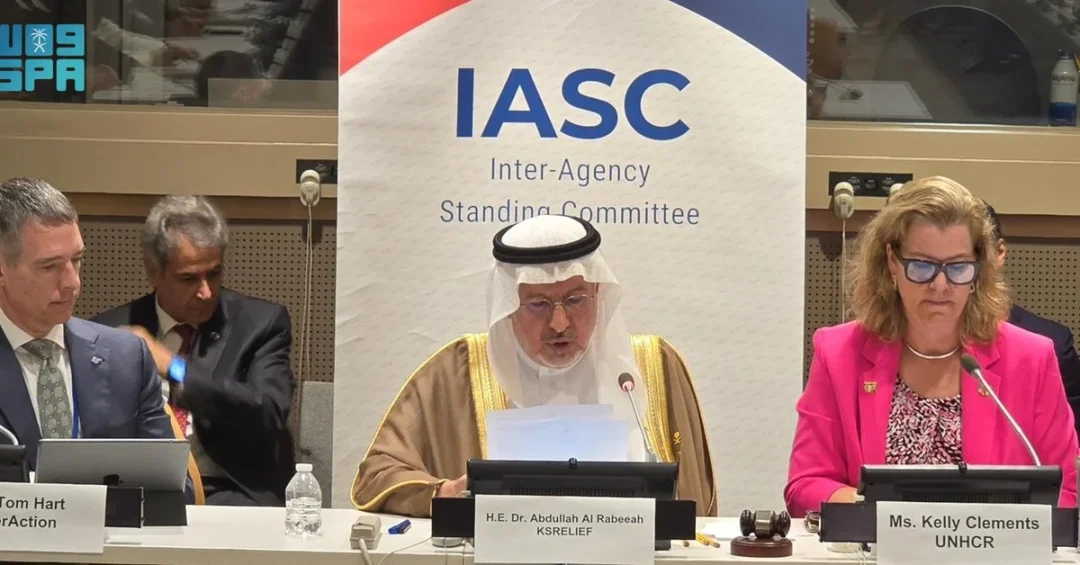
Dr. Abdullah bin Abdulaziz Al Rabeeah, Advisor at the Royal Court and Supervisor General of the King Salman Humanitarian Aid and Relief Center (KSrelief), participated in a high-level side event titled “Building a Better World Together: The Future of Humanitarian Action” on September 21, 2024, in New York. The event was held on the sidelines of the Summit of the Future during the 79th session of the United Nations General Assembly and brought together global leaders to address the future of humanitarian action.
Context and Background
The side event was organized by the Inter-Agency Standing Committee (IASC), co-hosted by its secretariat on behalf of its members, including the International Council for Voluntary Agencies, the International Federation of Red Cross and Red Crescent Societies, InterAction, the United Nations Office for the Coordination of Humanitarian Affairs, UNHCR, UNICEF, the Kingdom of Saudi Arabia, the African Union, Slovenia, and Spain. The gathering aimed to explore challenges and opportunities in humanitarian action, aligning efforts with the United Nations Charter and the Sustainable Development Goals (SDGs).
In his speech, Al Rabeeah emphasized the importance of international collaboration to improve the future of humanitarian action. He highlighted the unprecedented challenges facing the sector, including violations of international humanitarian law, displacement, conflicts, and natural disasters, which require effective mechanisms and increased support for humanitarian aid systems.
Key Details
Al Rabeeah reaffirmed the Kingdom of Saudi Arabia’s commitment, through KSrelief, to current and future humanitarian efforts. Since its establishment in 2015, KSrelief has implemented more than 3,000 projects in 102 countries, in cooperation with 192 humanitarian organizations, at a total cost of $7 billion. He stressed the need for sustainable solutions through innovative and proactive measures, as well as accountability to affected populations.
A key highlight was the Saudi Masam Project, which focuses on clearing explosives in Yemen. Al Rabeeah noted that the removal of more than 460,000 mines has improved public safety and access to healthcare, education, and livelihoods, contributing to several SDGs. He also emphasized KSrelief’s commitment to the nexus approach, integrating humanitarian action with development and peace efforts.
Implications and Impact
The participation of KSrelief in this high-level event underscores Saudi Arabia’s growing role in global humanitarian diplomacy. By advocating for multilateral approaches and the nexus approach, the Kingdom positions itself as a key player in shaping the future of humanitarian action. This aligns with Saudi Arabia’s broader efforts to promote peace, stability, and sustainable development worldwide.
The event provided a platform for international stakeholders to discuss how to address the root causes of crises, empower communities, and ensure respect for international humanitarian law. Saudi Arabia’s active engagement reflects its commitment to fostering hope and equal opportunities for all.
Vision 2030 Alignment
This participation is in line with Saudi Vision 2030, which seeks to enhance the Kingdom’s global humanitarian role and promote sustainable development. Through KSrelief, Saudi Arabia continues to demonstrate its dedication to alleviating human suffering and building a better world, reinforcing its leadership in humanitarian action and its commitment to the principles of the United Nations.
20 Questions
Q1. What event did Dr. Abdullah Al Rabeeah participate in?
A1. Dr. Abdullah Al Rabeeah participated in the high-level side event titled “Building a Better World Together: The Future of Humanitarian Action” in New York on September 21, 2024, held on the sidelines of the Summit of the Future during the 79th UN General Assembly.
Q2. Who is Dr. Abdullah Al Rabeeah?
A2. Dr. Abdullah bin Abdulaziz Al Rabeeah is the Advisor at the Royal Court and Supervisor General of the King Salman Humanitarian Aid and Relief Center (KSrelief). He is a key figure in Saudi Arabia’s humanitarian efforts and represents the Kingdom at international forums.
Q3. What is KSrelief?
A3. KSrelief, the King Salman Humanitarian Aid and Relief Center, is a Saudi humanitarian organization established in 2015. It provides aid and relief to countries in need, implementing projects in cooperation with international partners to alleviate suffering and promote sustainable development.
Q4. What was the purpose of the high-level side event?
A4. The event aimed to explore challenges and opportunities to improve the future of humanitarian action, align global efforts with the UN Charter and Sustainable Development Goals, and enhance collective responses to humanitarian crises through multilateral approaches.
Q5. Which organizations co-hosted the event?
A5. The event was co-hosted by the Inter-Agency Standing Committee (IASC) secretariat on behalf of its members, including the International Council for Voluntary Agencies, the International Federation of Red Cross and Red Crescent Societies, InterAction, OCHA, UNHCR, UNICEF, Saudi Arabia, the African Union, Slovenia, and Spain.
Q6. What challenges did Al Rabeeah highlight in his speech?
A6. He highlighted unprecedented challenges such as violations of international humanitarian law, displacement, conflicts, and natural disasters, stressing the need for effective mechanisms and avoiding further pressure on the humanitarian aid system.
Q7. How many projects has KSrelief implemented?
A7. Since its establishment in 2015, KSrelief has implemented more than 3,000 projects in 102 countries, in cooperation with 192 humanitarian organizations, at a total cost of $7 billion, addressing various humanitarian needs worldwide.
Q8. What is the Saudi Masam Project?
A8. The Saudi Masam Project is a KSrelief initiative focused on clearing explosives in Yemen. It has removed more than 460,000 mines, improving public safety and access to healthcare, education, and livelihoods, contributing to several Sustainable Development Goals.
Q9. What is the nexus approach mentioned by Al Rabeeah?
A9. The nexus approach integrates humanitarian action with development and peace efforts. Al Rabeeah stressed that this comprehensive framework is essential for understanding the complex nature of humanitarian interventions and for building sustainable solutions.
Q10. How does KSrelief ensure accountability?
A10. KSrelief is committed to accountability to affected populations by implementing sustainable solutions through innovative and proactive measures, ensuring that aid is delivered effectively and responsibly to those in need.
Q11. What did Al Rabeeah say about multilateral approaches?
A11. He said the event was an opportunity to reflect on how multilateral approaches can respond to challenges and enhance collective efforts to build a better world, emphasizing the importance of international cooperation in humanitarian action.
Q12. What is the significance of Saudi Arabia’s participation?
A12. Saudi Arabia’s participation underscores its growing role in global humanitarian diplomacy and its commitment to shaping the future of humanitarian action, aligning with its Vision 2030 goals and its dedication to international peace and development.
Q13. What are the Sustainable Development Goals?
A13. The Sustainable Development Goals (SDGs) are a set of 17 global goals adopted by the United Nations in 2015 to end poverty, protect the planet, and ensure prosperity for all by 2030. They guide international efforts in various fields, including humanitarian action.
Q14. How does the Masam Project contribute to the SDGs?
A14. The Masam Project contributes to the SDGs by improving public safety, and access to healthcare, education, and livelihoods in Yemen. The removal of mines creates safer environments, supporting goals related to health, education, and economic growth.
Q15. What did Al Rabeeah say about the future of humanitarian action?
A15. He said that achieving successful future outcomes requires sustainable solutions through innovative and proactive measures, a commitment to accountability, and integration of humanitarian action with development and peace efforts to address root causes of crises.
Q16. What is the Inter-Agency Standing Committee?
A16. The Inter-Agency Standing Committee (IASC) is a unique inter-agency forum for coordination, policy development, and decision-making involving key UN and non-UN humanitarian partners. It works to strengthen humanitarian assistance worldwide.
Q17. How does KSrelief cooperate with international organizations?
A17. KSrelief cooperates with 192 humanitarian organizations, including UN agencies and NGOs, to implement projects globally. This collaboration ensures effective delivery of aid and leverages collective expertise to address complex humanitarian challenges.
Q18. What is the total cost of KSrelief’s projects?
A18. The total cost of KSrelief’s projects since 2015 is $7 billion. This substantial investment reflects Saudi Arabia’s commitment to humanitarian aid and its efforts to alleviate suffering and promote stability in affected regions.
Q19. What did Al Rabeeah stress about international humanitarian law?
A19. He stressed the importance of promoting respect for international humanitarian law and humanitarian principles, ensuring equal opportunities for all, and fostering hope for a better world through collective efforts and adherence to legal frameworks.
Q20. How does this event align with Saudi Vision 2030?
A20. The event aligns with Saudi Vision 2030 by enhancing the Kingdom’s global humanitarian role and promoting sustainable development. It showcases Saudi Arabia’s commitment to international cooperation and its leadership in addressing global challenges through KSrelief’s initiatives.
Reader Feedback
We value your thoughts. Please share your feedback on this article.
Your feedback helps us improve our coverage.