


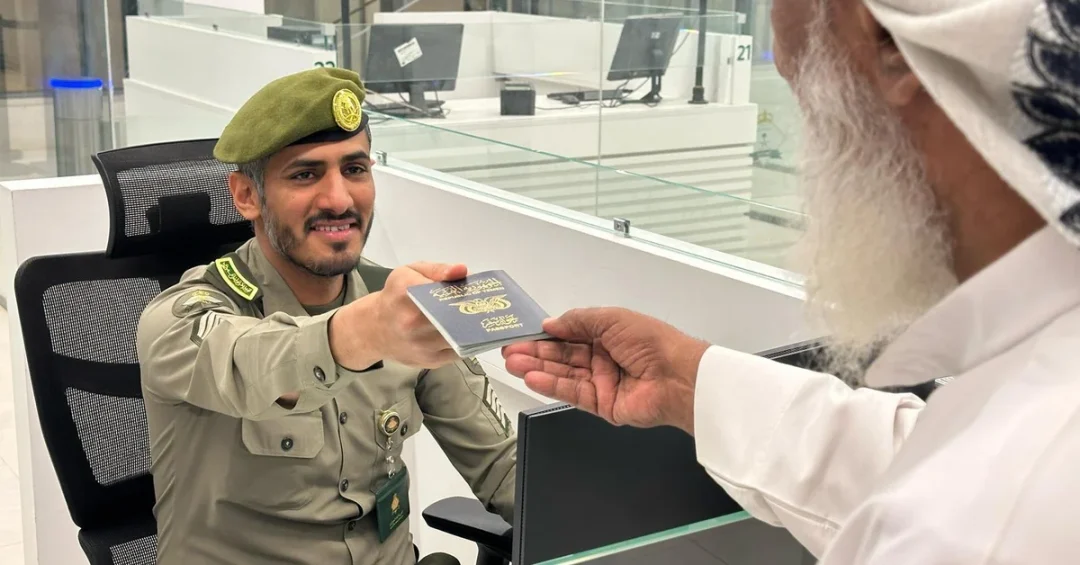
The Al-Wadiah Port Passports in the Najran region has officially begun receiving Umrah performers arriving for the holy month of Ramadan 1446 AH, with the General Directorate of Passports confirming full operational readiness to process their entry smoothly and efficiently. The announcement, released through official Saudi channels, marks the start of a significant seasonal operation that underscores the Kingdom’s commitment to serving the millions of pilgrims who travel to the Two Holy Mosques each year.
Ramadan is one of the busiest periods for Umrah, drawing worshippers from across the globe who wish to perform the pilgrimage during the month of fasting, prayer, and reflection. The Al-Wadiah crossing, strategically located on the border between Saudi Arabia and Yemen, serves as a key entry point for pilgrims travelling overland from the south. The General Directorate of Passports has deployed qualified personnel and modern technical systems across all passport halls at the port to ensure that every traveller’s documentation is processed with speed and precision. The operation reflects a broader, year-round effort by Saudi authorities to facilitate the journey of Umrah performers from the moment they arrive until the moment they depart, in line with the Kingdom’s tradition of hospitality and its Vision 2030 goal of enhancing the pilgrim experience.
Context and Background
How does the Kingdom ensure that a land border crossing can handle the spiritual aspirations of thousands of pilgrims while maintaining the highest standards of security and efficiency? The answer lies in years of investment in infrastructure, training, and inter-agency coordination. Al-Wadiah Port is one of Saudi Arabia’s most important land crossings, linking the Kingdom with Yemen and serving as a gateway for travellers, traders, and pilgrims from the southern direction. During Ramadan, traffic at such crossings increases significantly, requiring meticulous planning and the full mobilisation of resources.
The General Directorate of Passports, a key agency under the Ministry of Interior, has a long-standing mandate to secure the Kingdom’s borders while facilitating legitimate travel. Its role during Ramadan is particularly sensitive, as it must balance the spiritual needs of Umrah performers with national security requirements. The directorate’s announcement that it has deployed qualified personnel and modern technical systems at Al-Wadiah reflects a proactive approach that has become standard practice across all Saudi ports of entry. This approach includes the use of advanced biometric verification, electronic visa processing, and dedicated lanes for pilgrims, all designed to reduce waiting times and create a welcoming atmosphere.
The importance of the Al-Wadiah crossing extends beyond its immediate function. It is a symbol of Saudi Arabia’s openness to its neighbours and to the wider Islamic world. By ensuring that Umrah performers can enter the Kingdom with dignity and ease, the crossing contributes to the broader narrative of Saudi leadership in serving Islam and Muslims. This narrative is central to the Kingdom’s identity and is actively promoted through official channels, including the Saudi Press Agency, which reported the latest operational update.
Key Details
What exactly has the General Directorate of Passports put in place to guarantee a seamless experience for Umrah performers at Al-Wadiah? According to the official announcement, the directorate has reaffirmed its full preparedness to welcome the pilgrims by deploying qualified personnel and modern technical systems across all passport halls at the port. This includes the presence of trained passport officers who are familiar with the specific procedures for Umrah visas and entry requirements, as well as the latest technology for document verification and data entry.
The directorate has also emphasised the importance of adhering to regulations and instructions throughout the Umrah journey. This means that pilgrims are expected to carry valid passports and visas, comply with customs regulations, and follow the guidance of port officials. Such adherence not only ensures a smooth entry process for the individual traveller but also helps maintain an orderly environment for everyone. The directorate’s statement serves as a reminder that facilitation and compliance go hand in hand, and that the Kingdom’s ability to host millions of pilgrims depends on the cooperation of all parties.
The Al-Wadiah Port Passports has a proven track record of handling large volumes of travellers during peak seasons, including previous Ramadan periods and Hajj seasons. The lessons learned from those experiences have been incorporated into the current operation. For instance, the port has expanded its capacity for processing arrivals, introduced flexible shift schedules for staff, and established clear communication channels with other agencies such as the Ministry of Hajj and Umrah and the General Authority for the Care of the Two Holy Mosques. These measures ensure that the entry process is not only efficient but also integrated with the broader pilgrim journey.
International and Regional Impact
Why does the smooth operation of a single border crossing matter to the international community? The answer lies in the global nature of Umrah. Pilgrims come from virtually every country, and their experiences at Saudi ports of entry shape their perception of the Kingdom and its people. When entry procedures are efficient and respectful, pilgrims can focus on their spiritual journey, and they return home with positive stories that strengthen Saudi Arabia’s standing as a gracious host. This soft power effect is particularly important during Ramadan, when the world’s attention is focused on the holy cities of Makkah and Madinah.
Regionally, the Al-Wadiah crossing plays a vital role in maintaining strong ties with Yemen and other neighbouring countries. Despite the challenges that have affected the region in recent years, the crossing remains open for legitimate travel, including religious tourism. By facilitating the entry of Umrah performers from the south, Saudi Arabia demonstrates its commitment to keeping the channels of communication and exchange open, even in difficult circumstances. This approach aligns with the Kingdom’s broader diplomatic efforts to promote stability and cooperation in the region.
The international impact is also economic. Umrah performers contribute to the Saudi economy through spending on transportation, accommodation, food, and other services. The efficient processing of arrivals at Al-Wadiah helps maximise these economic benefits by ensuring that pilgrims can quickly reach Makkah and other destinations, where they will spend their resources. In this way, the port’s operation supports the Kingdom’s economic diversification goals and its Vision 2030 objective of increasing the number of Umrah performers and pilgrims.
Economic and Strategic Significance
What does the successful handling of Ramadan Umrah traffic at Al-Wadiah mean for Saudi Arabia’s strategic ambitions? It is a clear demonstration of the Kingdom’s capacity to manage large-scale religious tourism, a sector that is central to Vision 2030. The government has set ambitious targets to increase the number of Umrah performers to 30 million annually by 2030, and every port of entry must be able to handle its share of that growth. The Al-Wadiah operation shows that even land crossings in remote areas can meet the highest standards.
From an economic perspective, the investment in technology and personnel at Al-Wadiah is part of a wider modernisation of Saudi border facilities. The use of electronic systems reduces processing times, minimises human error, and improves data collection, which in turn helps authorities plan better services for pilgrims. These improvements also benefit other travellers, including businesspeople and tourists, contributing to the overall ease of doing business in the Kingdom. The strategic significance of such investments cannot be overstated: they are building the infrastructure of a post-oil economy, where services and hospitality play a leading role.
Furthermore, the Al-Wadiah crossing is a testament to the Kingdom’s commitment to serving Islam and Muslims. By facilitating the entry of Umrah performers, Saudi Arabia fulfils a religious duty and reinforces its position as the custodian of the Two Holy Mosques. This role is a source of pride for the nation and a key element of its international identity. The General Directorate of Passports’ efforts at Al-Wadiah are therefore not just administrative; they are an expression of Saudi Arabia’s core values and its leadership in the Islamic world.
Vision 2030 Alignment
How does the operation at Al-Wadiah Port Passports fit into the broader framework of Saudi Vision 2030? Vision 2030 aims to transform the Kingdom into a global hub for tourism, business, and culture, while preserving its Islamic heritage. The pilgrim experience is a cornerstone of this vision. The government has launched numerous initiatives to improve services for Umrah performers, including the expansion of the Grand Mosque in Makkah, the development of new transportation links, and the simplification of visa procedures. The Al-Wadiah operation is a microcosm of these efforts, showing how technology and trained personnel can create a welcoming and efficient entry point.
Looking ahead, the Kingdom plans to continue investing in its border infrastructure and in the training of passport officers. The goal is to make every entry point a model of efficiency and hospitality, reflecting the values of a modern, forward-looking nation that is deeply rooted in its Islamic traditions. As Ramadan 1446 AH progresses, the Al-Wadiah Port Passports will remain a vital gateway for Umrah performers, and its success will contribute to the achievement of Vision 2030’s targets for religious tourism. The General Directorate of Passports, under the Ministry of Interior, will continue to work tirelessly to ensure that all pilgrims are received with the respect and care that they deserve.
20 Questions
Q1. What is Al-Wadiah Port Passports and where is it located?
A1. Al-Wadiah Port Passports is a border crossing in the Najran region of Saudi Arabia, located on the border with Yemen. It serves as a key entry point for travellers and Umrah performers arriving from the south.
Q2. What recent announcement did the General Directorate of Passports make regarding Al-Wadiah?
A2. The General Directorate of Passports announced that Al-Wadiah Port Passports has begun receiving Umrah performers for Ramadan 1446 AH, with full preparedness to process their entry smoothly and efficiently.
Q3. Why is Ramadan a particularly busy time for Umrah?
A3. Ramadan is a holy month during which many Muslims choose to perform Umrah due to its spiritual significance. It is one of the busiest periods for pilgrimage to Makkah and Madinah.
Q4. What measures has the General Directorate of Passports taken to ensure smooth entry at Al-Wadiah?
A4. The directorate has deployed qualified personnel and modern technical systems across all passport halls at the port. It has also emphasised adherence to regulations to ensure a seamless experience.
Q5. How does Al-Wadiah Port contribute to Saudi Arabia’s Vision 2030?
A5. By facilitating the entry of Umrah performers, Al-Wadiah supports Vision 2030’s goal of enhancing the pilgrim experience and increasing religious tourism, which is a key economic diversification pillar.
Q6. What is the role of the General Directorate of Passports in Saudi Arabia?
A6. The General Directorate of Passports, under the Ministry of Interior, is responsible for securing the Kingdom’s borders and managing the entry and exit of travellers, including pilgrims, at all ports.
Q7. How does the Al-Wadiah crossing benefit the local economy of Najran?
A7. The crossing brings increased traffic and spending to Najran, supporting local businesses such as hotels, restaurants, and transport services, and creating economic opportunities for residents.
Q8. What should Umrah performers expect when arriving at Al-Wadiah?
A8. They can expect a well-organised entry process with trained staff and modern technology, designed to complete their procedures quickly and respectfully, in line with Saudi hospitality.
Q9. Are there any specific regulations that Umrah performers must follow at Al-Wadiah?
A9. Yes, pilgrims must adhere to all Saudi regulations, including having valid passports and visas, and complying with customs and security instructions as directed by port officials.
Q10. How does the Al-Wadiah operation reflect Saudi Arabia’s commitment to serving Islam?
A10. It demonstrates the Kingdom’s dedication to facilitating the spiritual journey of Muslims, fulfilling its role as custodian of the Two Holy Mosques, and ensuring pilgrims are welcomed with care.
Q11. What technology is used at Al-Wadiah to process pilgrims?
A11. The port uses modern technical systems, including electronic document verification and biometric checks, to speed up processing and enhance security while maintaining efficiency.
Q12. How many Umrah performers are expected to use Al-Wadiah during Ramadan 1446 AH?
A12. Official figures are not specified, but the port is prepared for high volumes typical of Ramadan, with capacity to handle thousands of arrivals daily.
Q13. What other agencies coordinate with the General Directorate of Passports at Al-Wadiah?
A13. Agencies such as the Ministry of Hajj and Umrah, the General Authority for the Care of the Two Holy Mosques, and customs authorities coordinate to ensure an integrated pilgrim experience.
Q14. How does the Al-Wadiah crossing compare to other Saudi entry points?
A14. Like other major ports, Al-Wadiah adheres to high standards of service and security. Its land border location makes it vital for overland pilgrims from Yemen and nearby regions.
Q15. What is the significance of the Najran region in Saudi Arabia’s pilgrim infrastructure?
A15. Najran is a key southern gateway, and Al-Wadiah is its main crossing. Its efficient operation supports regional development and the Kingdom’s overall pilgrim reception strategy.
Q16. How does Saudi Arabia ensure the safety of Umrah performers at border crossings?
A16. Through rigorous security checks, trained personnel, and coordination with security agencies, the Kingdom maintains a safe environment while respecting the dignity of all travellers.
Q17. What economic benefits does Umrah bring to Saudi Arabia during Ramadan?
A17. Umrah performers spend on accommodation, transport, food, and retail, boosting local economies and contributing to Saudi Arabia’s GDP and Vision 2030 diversification goals.
Q18. How can Umrah performers prepare for a smooth entry at Al-Wadiah?
A18. They should ensure all travel documents are valid, familiarise themselves with Saudi entry regulations, and cooperate with port officials for a quick and orderly process.
Q19. What does the General Directorate of Passports’ preparedness say about Saudi Arabia’s administrative efficiency?
A19. It reflects a high level of planning, investment in technology, and commitment to public service, showcasing the Kingdom’s modern and efficient governance.
Q20. How does the Al-Wadiah operation align with Saudi Arabia’s long-term vision?
A20. It directly supports Vision 2030 by enhancing the pilgrim experience, boosting religious tourism, and demonstrating Saudi Arabia’s capability to host millions with excellence and care.
Reader Feedback
We value your thoughts. Please share your feedback on this article.
Your feedback helps us improve our coverage.
Related articles
 Saudi Ambassador Al-Busairi Meets Algerian Speaker Goudjil
 Saudi Ministry Hosts Ramadan Iftar Banquet in Montenegro
 Civil Defense Urges Gas Safety Measures Across Saudi Arabia
 Saudi Arabia Distributes Dates, Iftar Meals in Kazakhstan for Ramadan
 KSrelief Launches Ramadan Food Basket Project in South Africa
 U.S. Designates Houthis as Foreign Terrorist Organization