


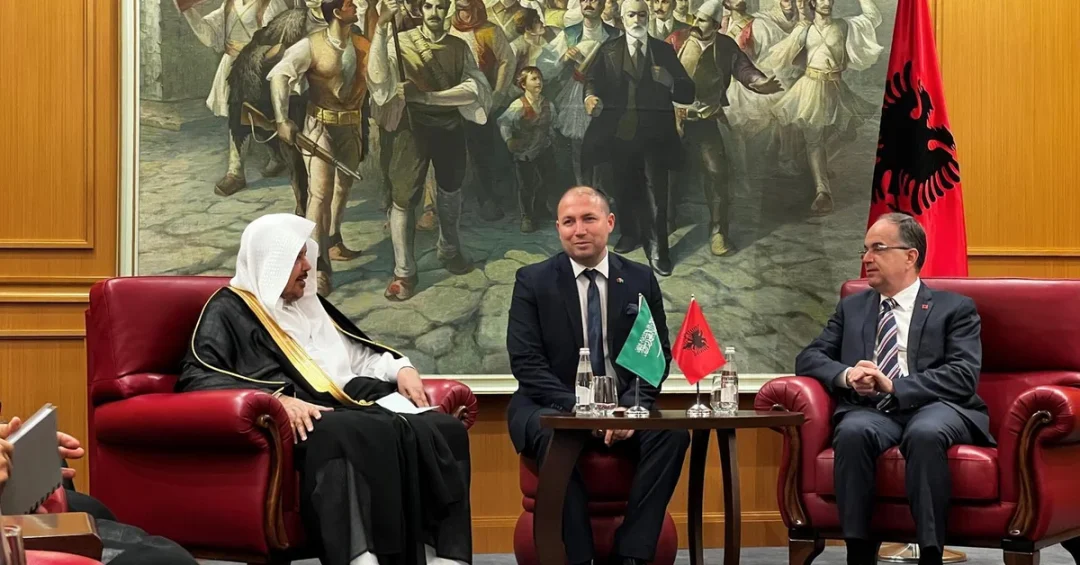
The President of Albania, Bajram Begaj, received the Speaker of the Saudi Shura Council, Sheikh Dr. Abdullah bin Mohammed bin Ibrahim Al Al-Sheikh, at the Presidential Palace in Tirana today. The meeting was part of an official visit by a delegation from the Saudi Shura Council, led by Sheikh Dr. Al Al-Sheikh, aimed at strengthening bilateral ties between the Kingdom of Saudi Arabia and the Republic of Albania.
Context and Background
The meeting comes as Saudi Arabia and Albania continue to deepen their political, economic, and cultural ties. President Begaj welcomed the Saudi delegation, praising the strong relations between the two nations and their progress in various fields. He also expressed appreciation for the support provided by the Kingdom, particularly thanking the Custodian of the Two Holy Mosques, King Salman bin Abdulaziz Al Saud, and His Royal Highness the Crown Prince for their efforts in supporting development projects across Albania.
The Albanian President lauded Saudi Arabia’s significant development, describing it as an example of progress and transformation under the Kingdom’s leadership. He highlighted the comprehensive reforms and modernization that have positioned Saudi Arabia as a key player in regional and global affairs.
Key Details
Sheikh Dr. Al Al-Sheikh, in turn, highlighted the level of relations between the Kingdom and Albania in various fields and the efforts to strengthen them. He also mentioned Saudi Arabia’s development and renaissance under the leadership of the Custodian of the Two Holy Mosques and the Crown Prince through Vision 2030, which aims to diversify the Kingdom’s economy and enhance its global standing.
During the meeting, the two sides discussed ways to enhance cooperation between the Kingdom and Albania, as well as several issues of common interest. The Saudi Ambassador to Albania, Faisal bin Ghazi Hifzi, and other officials also attended the meeting, underscoring the importance both nations place on robust diplomatic engagement.
Implications and Impact
This visit is expected to further solidify the partnership between Saudi Arabia and Albania, particularly in areas of economic cooperation, investment, and mutual development. As Saudi Arabia expands its international footprint through Vision 2030, such exchanges pave the way for new opportunities in trade, culture, and politics. For Albania, strong ties with the Kingdom offer access to significant investment and strategic alliances that can support its own growth trajectory.
These meetings also contribute to the positive image of Saudi Arabia on the world stage, demonstrating its commitment to fostering international partnerships and its ongoing transformation into a key global economic and political hub.
Vision 2030 Alignment
The official visit and discussions align with Saudi Arabia’s Vision 2030, a transformative roadmap to diversify the national economy, enhance international relations, and position the Kingdom as a leading global entity. By engaging with nations like Albania, Saudi Arabia demonstrates its dedication to building a collaborative global future and sharing the benefits of its comprehensive modernization agenda. As the Kingdom continues to attract global recognition for its progress, such diplomatic interactions will help cement its role as a reliable partner in international affairs, laying the groundwork for long-term mutual prosperity and stability.
20 Questions
Q1. Who is the President of Albania?
A1. The President of Albania is Bajram Begaj. He has served as the country’s head of state since 2022, focusing on strengthening international relations and domestic development. He played a key role in this meeting with the Saudi Shura Council Speaker.
Q2. Who is the Speaker of the Saudi Shura Council?
A2. The Speaker is Sheikh Dr. Abdullah bin Mohammed bin Ibrahim Al Al-Sheikh. He leads the Shura Council, which is an advisory body within the Saudi government that provides recommendations on policy and legislation to the King and Council of Ministers.
Q3. What is the Saudi Shura Council?
A3. The Saudi Shura Council is a legislative advisory body that proposes laws and monitors national initiatives. It provides a platform for scholars, experts, and professionals to advise the government on major decisions, contributing to the Kingdom’s development under Vision 2030.
Q4. Where did the meeting take place?
A4. The meeting took place at the Presidential Palace in Tirana, the capital of Albania. This location serves as the official residence and office of the Albanian President, symbolizing the official and respectful nature of the diplomatic meeting.
Q5. What was the primary purpose of the visit?
A5. The primary purpose was to discuss and strengthen bilateral relations between Saudi Arabia and Albania. The meeting focused on enhancing cooperation in various fields, including economic, cultural, and developmental areas, reflecting both nations’ commitment to solidifying their partnership.
Q6. How did President Begaj describe Saudi-Albanian relations?
A6. President Begaj praised the strong relations between the two countries, noting their progress across various fields. He expressed appreciation for Saudi Arabia’s support for Albania, particularly in terms of development projects, which shows the robust and friendly ties between Tirana and Riyadh.
Q7. Why is Saudi support important to Albania?
A7. Saudi support has been vital to Albania, especially in funding development projects. This aid helps with infrastructure, education, and other sectors, contributing to Albania’s social and economic progress. The support underscores the importance of international cooperation in achieving sustainable growth.
Q8. Who else attended the meeting?
A8. The Saudi Ambassador to Albania, Faisal bin Ghazi Hifzi, attended the meeting along with other officials from both sides. Their presence highlights the coordination and joint commitment to translating the dialogue into concrete outcomes for both countries.
Q9. What is Vision 2030’s relevance in this meeting?
A9. Vision 2030 was a key topic, as the Shura Council Speaker highlighted how it drives Saudi Arabia’s progress. The vision is Saudi Arabia’s strategic framework to diversify the economy, improve global competitiveness, and enhance diplomatic ties, which makes the meeting a part of these ongoing initiatives.
Q10. How does the meeting benefit Saudi-Albania trade?
A10. The meeting could remove barriers to trade, as they discussed enhancing cooperation. This may lead to new business agreements, investments, and expanded commerce between Saudi Arabia and Albania. Better trade ties open up markets for both nations, beneficial under the Vision 2030 economic diversification goals.
Q11. What did President Begaj say about Saudi development?
A11. He described Saudi Arabia’s significant development as an example of progress and transformation. He praised the leadership of the Custodian of the Two Holy Mosques and the Crown Prince, acknowledging the Kingdom’s achievements as a model for other nations.
Q12. Did the meeting include discussion on regional issues?
A12. Yes, the meeting included discussions on several issues of common interest. These likely included regional and international matters, reflecting the two countries’ shared views on stability, security, and diplomatic cooperation in their respective regions and the world.
Q13. Why is the Shura Council visiting Albania?
A13. The official visit of the Shura Council delegation to Albania aims to reinforce parliamentary and governmental ties. Such visits strengthen diplomatic communications, allow for cultural and economic exchange, and help build a solid foundation for future agreements and bilateral partnerships.
Q14. What does this diplomatic meeting signify for Saudi Arabia?
A14. This meeting signifies Saudi Arabia’s expanding global engagement and its commitment to building strong international alliances. It highlights the Kingdom’s proactive foreign policy, not just in the Middle East but globally, aligning with the goals of Vision 2030 to make Saudi Arabia a key player in world affairs.
Q15. How did the Shura Speaker comment on the relationship?
A15. Sheikh Dr. Al Al-Sheikh highlighted the level of relations between the two countries and the efforts to strengthen them. He also mentioned the Kingdom’s development and renaissance, linking these positive relationships and growth to the goals of Vision 2030.
Q16. Was there any mention of the Custodian of the Two Holy Mosques?
A16. Yes, President Begaj thanked the Custodian of the Two Holy Mosques, King Salman bin Abdulaziz Al Saud, and the Crown Prince for their support to Albania. This demonstrates their direct involvement and advocacy for international cooperation and humanitarian and development aid.
Q17. What are the key aspects of Vision 2030 mentioned?
A17. The key aspects include the Kingdom’s development, renaissance, and efforts to strengthen cooperation with other nations. Specifically, the Shura Council Speaker alluded to Saudi Arabia’s renewal under the leadership, which encompasses economic, social, and cultural dimensions, aligning with Vision 2030’s comprehensive goals.
Q18. Did the meeting lead to any agreements?
A18. There were no immediate announcements of formal agreements. However, the meeting focused on discussing ways to enhance cooperation, which is often the first step toward future agreements. The discussions pave the way for more concrete collaboration in the future, possibly leading to new MOUs or partnerships.
Q19. How does this visit affect the international image of Saudi Arabia?
A19. Such visits, welcomed by foreign leaders, project an image of Saudi Arabia as a diplomatic, cooperative, and investing in global progress. This aligns with Vision 2030’s goal of creating a diversified and internationalized kingdom, enhancing its status as a respected global partner.
Q20. What is the likely next step after this meeting?
A20. The likely next step includes formalizing the discussed areas into cooperation agreements, such as in trade, investment, or cultural exchange. Both governments may delegate specialized committees to work on concrete proposals, ensuring the discussions turn into tangible outcomes for both societies.
Reader Feedback
We value your thoughts. Please share your feedback on this article.
Your feedback helps us improve our coverage.