


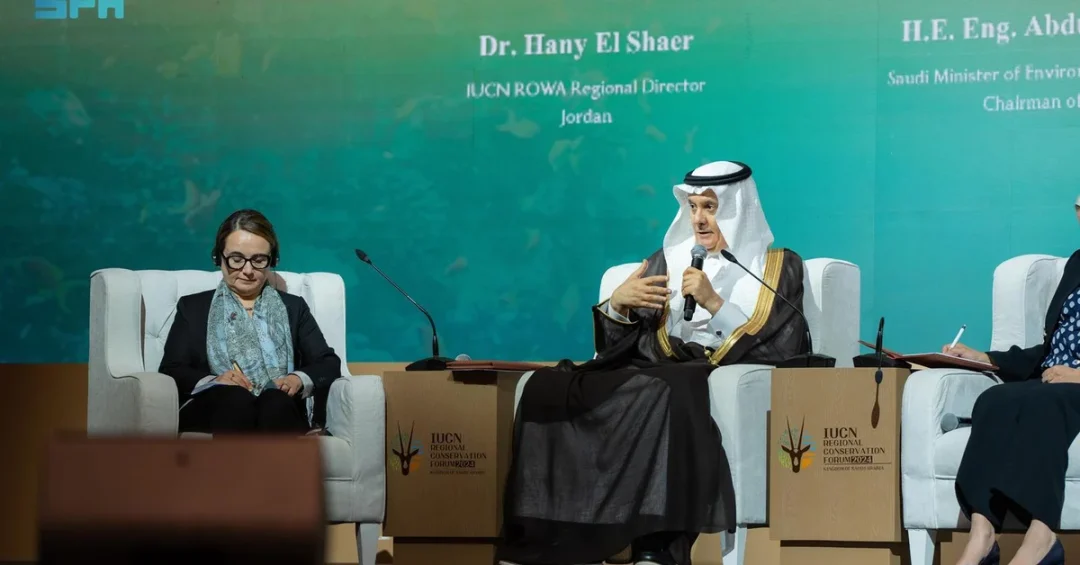
Minister of Environment, Water and Agriculture Eng. Abdulrahman Abdulmohsen AlFadley highlighted Saudi Arabia’s unprecedented environmental progress during the 10th International Union for Conservation of Nature (IUCN) Regional Office for West Asia (ROWA) Regional Conservation Forum held in Riyadh, as reported by the Saudi Press Agency (SPA). The minister underscored that the Kingdom has achieved environmental milestones at local, regional, and international levels, rooted in a comprehensive national vision that positions the environmental sector as a fundamental pillar for sustainable development.
Context and Background
The IUCN ROWA Regional Conservation Forum, convened once every four years and hosted by member states, serves as a vital platform for discussing common environmental challenges, developing effective strategies for nature conservation, and exchanging expertise. Saudi Arabia’s hosting of this forum underscores its pioneering role in environmental conservation and sustainability. The event includes workshops and seminars aimed at enhancing environmental awareness and training individuals on best practices to establish effective environmental policies.
Saudi Arabia’s environmental efforts are guided by the National Environment Strategy, a comprehensive framework that aligns with the Kingdom’s Vision 2030. This strategy integrates national, regional, and international targets through an institutional framework that includes specialized centers for wildlife, meteorology, desertification control, waste management, and vegetation cover, supported by an environmental fund. The Kingdom’s commitment to environmental stewardship was further demonstrated during its presidency of the G20 Riyadh Summit, where it launched initiatives to conserve nature, prevent land degradation, and accelerate research and development for global coral reefs.
Key Details
During his participation in a panel discussion, Minister AlFadley spotlighted several key initiatives driving Saudi Arabia’s environmental progress. The Saudi Green Initiative and the Middle East Green Initiative are central to these efforts, aiming to combat overgrazing and address all environmental domains. A primary target is to protect 30% of the Kingdom’s terrestrial and marine areas by 2030, reflecting a comprehensive vision for biodiversity conservation and ecosystem restoration.
AlFadley emphasized that the Kingdom’s environmental system has brought about a qualitative leap, working harmoniously to achieve national, regional, and international targets. The integrated institutional framework includes a national strategy, implementing regulations, and specialized centers dedicated to wildlife, meteorology, desertification control, waste management, and vegetation cover. Additionally, the environmental fund provides financial support for these initiatives, ensuring their sustainability and effectiveness.
Furthermore, the minister noted that Saudi Arabia’s hosting of the sixteenth session of the Conference of the Parties (COP16) of the United Nations Convention to Combat Desertification (UNCCD) in December represents a significant step towards enhancing international cooperation. This event will focus on finding effective solutions to mitigate land degradation and drought effects, contributing to environmental, economic, and social benefits worldwide.
Implications and Impact
Saudi Arabia’s environmental initiatives have far-reaching implications beyond its borders. By hosting the IUCN forum and preparing for COP16, the Kingdom reinforces its role as a global leader in environmental diplomacy and sustainability. These platforms facilitate international collaboration, allowing countries to share knowledge and develop joint strategies to address pressing environmental challenges such as climate change, biodiversity loss, and desertification.
The Kingdom’s efforts to protect 30% of its terrestrial and marine areas by 2030 set a benchmark for other nations, demonstrating that economic development and environmental conservation can go hand in hand. The Saudi Green Initiative and Middle East Green Initiative not only benefit the region but also contribute to global environmental goals, including the Paris Agreement and the Sustainable Development Goals. By investing in research and development for coral reefs and combating overgrazing, Saudi Arabia is addressing critical issues that affect ecosystems and livelihoods worldwide.
Vision 2030 Alignment
Saudi Arabia’s environmental progress is intrinsically linked to Vision 2030, the Kingdom’s ambitious blueprint for economic diversification and sustainable development. The National Environment Strategy and the various initiatives launched under it are designed to enhance the quality of life for citizens, protect natural resources for future generations, and position Saudi Arabia as a leader in environmental innovation. As the Kingdom continues to host international forums and implement transformative projects, its commitment to environmental sustainability will remain a cornerstone of its global engagement and a testament to its forward-looking leadership.
20 Questions
Q1. What event did Minister AlFadley participate in?
A1. Minister AlFadley participated in the 10th International Union for Conservation of Nature (IUCN) Regional Office for West Asia (ROWA) Regional Conservation Forum held in Riyadh, Saudi Arabia.
Q2. What did Minister AlFadley highlight during the forum?
A2. He highlighted Saudi Arabia’s unprecedented environmental progress at local, regional, and international levels, stemming from a comprehensive national vision for sustainable development.
Q3. What is the National Environment Strategy?
A3. The National Environment Strategy is Saudi Arabia’s guiding framework for environmental action, integrating national, regional, and international targets within an institutional framework that includes specialized centers and an environmental fund.
Q4. Which initiatives did Saudi Arabia launch during its G20 presidency?
A4. During its G20 presidency, Saudi Arabia launched initiatives to conserve nature, prevent land degradation, and accelerate research and development for global coral reefs.
Q5. What are the Saudi Green Initiative and Middle East Green Initiative?
A5. These are comprehensive initiatives aimed at combating environmental challenges such as overgrazing, covering all environmental domains, and reflecting a vision to protect 30% of Saudi Arabia’s terrestrial and marine areas by 2030.
Q6. What is the target for protected areas in Saudi Arabia by 2030?
A6. Saudi Arabia aims to protect 30% of its terrestrial and marine areas by 2030, as part of its comprehensive environmental vision.
Q7. What does the Kingdom’s environmental institutional framework include?
A7. It includes a national strategy, implementing regulations, specialized centers for wildlife, meteorology, desertification control, waste management, and vegetation cover, as well as an environmental fund.
Q8. Why is Saudi Arabia hosting the IUCN forum significant?
A8. Hosting the forum underscores Saudi Arabia’s pioneering role in environmental conservation and sustainability, providing a platform for international cooperation and expertise exchange.
Q9. What is COP16 and when will it be held in Saudi Arabia?
A9. COP16 is the sixteenth session of the Conference of the Parties of the United Nations Convention to Combat Desertification, to be hosted by Saudi Arabia in December.
Q10. What will COP16 aim to achieve?
A10. COP16 aims to enhance international cooperation to find effective solutions to mitigate land degradation and drought effects, contributing to environmental, economic, and social benefits worldwide.
Q11. How often is the IUCN ROWA Regional Conservation Forum held?
A11. The forum is organized once every four years and is hosted by member states, serving as a platform for discussing environmental challenges and developing conservation strategies.
Q12. What activities take place at the IUCN forum?
A12. The forum hosts workshops and seminars to enhance environmental awareness and train individuals on best practices, aiming to establish effective environmental policies.
Q13. How does Saudi Arabia’s environmental progress align with Vision 2030?
A13. It aligns with Vision 2030 by enhancing quality of life, protecting natural resources, and positioning Saudi Arabia as a leader in environmental innovation and sustainable development.
Q14. What are the key environmental challenges Saudi Arabia addresses?
A14. Saudi Arabia addresses challenges such as land degradation, desertification, overgrazing, biodiversity loss, and climate change through comprehensive initiatives and strategies.
Q15. What role does the environmental fund play?
A15. The environmental fund provides financial support for environmental initiatives, ensuring their sustainability and effectiveness in achieving national and international targets.
Q16. How do the Saudi Green Initiative and Middle East Green Initiative benefit the region?
A16. They benefit the region by combating environmental degradation, promoting biodiversity, and fostering cooperation among countries to address shared environmental challenges.
Q17. What is the significance of protecting 30% of terrestrial and marine areas?
A17. It helps conserve biodiversity, maintain ecosystem services, and mitigate climate change, setting a global benchmark for environmental stewardship.
Q18. How does Saudi Arabia contribute to global coral reef research?
A18. Saudi Arabia accelerates research and development for global coral reefs, contributing to their conservation and restoration, which is vital for marine biodiversity.
Q19. What international cooperation does Saudi Arabia engage in for environmental conservation?
A19. Saudi Arabia engages in international cooperation through hosting forums like IUCN and COP16, sharing expertise, and launching initiatives that address global environmental challenges.
Q20. What is the overall goal of Saudi Arabia’s environmental vision?
A20. The overall goal is to achieve sustainable development by balancing economic growth with environmental protection, ensuring a better quality of life for current and future generations.
Reader Feedback
We value your thoughts. Please share your feedback on this article.
Your feedback helps us improve our coverage.