


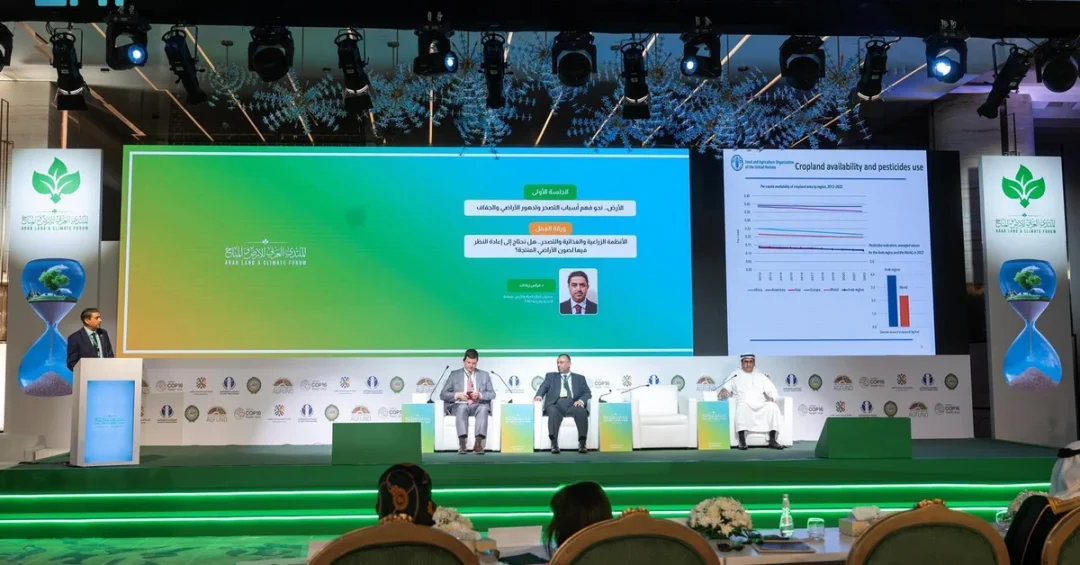
The third edition of the Arab Land and Climate Forum commenced in Riyadh on Tuesday under the theme “The Road to COP 16: Strengthening the Resilience and Flexibility of Arab Lands,” bringing together regional and international experts to address critical environmental challenges. According to the Saudi Press Agency (SPA), the forum featured high-level sessions focused on combating desertification, land degradation, and drought across the Arab region, with a strong emphasis on youth and women’s leadership in climate action.
Context and Background
The Arab Land and Climate Forum serves as a vital platform ahead of the 16th session of the Conference of the Parties (COP 16) to the United Nations Convention to Combat Desertification (UNCCD), which will be hosted in Riyadh in December 2024. This third edition underscores Saudi Arabia’s commitment to environmental sustainability and aligns with the Kingdom’s Vision 2030 goals. The forum aims to unify Arab efforts in addressing land degradation and climate resilience, recognizing that these issues transcend borders and require collaborative solutions.
Key Details
The opening high-level session, titled “The Road to COP16: Priority Areas for Action in the Arab Region,” featured distinguished speakers including Dr. Osama Faqeeha, Deputy Minister for Environment at the Ministry of Environment, Water, and Agriculture; Ibrahim Thiaw, Executive Secretary of the UNCCD; Dr. Nasser Al-Qahtani, Executive Director of the Arab Gulf Program for Development (AGFUND); and Prof. Hassan Al-Bilawy, board chairman of the Arab Network for NGOs (ANNGO). Participants emphasized the need to raise awareness among Arab citizens, governments, and organizations about protecting the planet for future generations, and highlighted the importance of increasing youth and women’s participation in climate action.
The first technical session, “Land: Towards Understanding the Causes of Desertification and Drought,” included insights from Dr. Talal Darwish, UNCCD Science and Technology Correspondent and UN Food and Agriculture Organization (FAO) consultant; Dr. Feras Ziadat, FAO Water and Land Sector Officer; and Dr. Samir Tantawy, UN climate-change consultant and Intergovernmental Panel on Climate Change (IPCC) member. They analyzed the social and economic drivers of desertification, land degradation, and drought in the context of climate change.
The second session, “The Impact of Desertification, Land Degradation, and Drought on Arab Children,” focused on the rights of children facing environmental challenges. Speakers included Prof. Ahmed Zayed, director of Bibliotheca Alexandrina; Prof. Maha Al-Muneef, head of the Child Protection Department at King Abdullah Specialist Hospital; Dr. Hind Khalifa, member of the UN Human Rights Council; Prof. Mazen Malkawi, WHO Regional Advisor for Climate and Environment; and Jumana Haj, deputy representative of the UNICEF Gulf Area Office. The session underscored the vulnerability of children to the socioeconomic impacts of desertification and drought.
Implications and Impact
The forum’s outcomes are expected to shape Arab regional strategies for land restoration and climate adaptation, influencing policies and initiatives leading up to COP 16. By addressing the intersection of environmental degradation and child welfare, the discussions highlight the human dimension of climate change, urging integrated approaches that protect vulnerable populations. Saudi Arabia’s leadership in hosting this forum reinforces its role as a regional hub for environmental diplomacy and sustainable development.
Vision 2030 Alignment
Saudi Arabia’s Vision 2030 prioritizes environmental sustainability and economic diversification, with initiatives such as the Saudi Green Initiative and the Middle East Green Initiative aiming to combat desertification and increase green cover. The Arab Land and Climate Forum exemplifies the Kingdom’s proactive stance in fostering regional cooperation and innovation to address global environmental challenges, ensuring a resilient and prosperous future for all.
20 Questions
Q1. What is the Arab Land and Climate Forum?
A1. The Arab Land and Climate Forum is a regional gathering that addresses critical environmental issues such as desertification, land degradation, and drought, aiming to strengthen resilience across Arab lands.
Q2. When and where did the third edition take place?
A2. The third edition commenced on Tuesday, October 8, 2024, in Riyadh, Saudi Arabia, under the theme “The Road to COP 16: Strengthening the Resilience and Flexibility of Arab Lands.”
Q3. Who attended the high-level session?
A3. The high-level session included Dr. Osama Faqeeha, Ibrahim Thiaw, Dr. Nasser Al-Qahtani, and Prof. Hassan Al-Bilawy, representing Saudi ministries, UNCCD, AGFUND, and ANNGO.
Q4. What was the theme of the forum?
A4. The theme was “The Road to COP 16: Strengthening the Resilience and Flexibility of Arab Lands,” focusing on preparing for the UNCCD COP 16 conference.
Q5. What is COP 16?
A5. COP 16 is the 16th session of the Conference of the Parties to the United Nations Convention to Combat Desertification, which will be hosted in Riyadh in December 2024.
Q6. Why is youth participation important in climate action?
A6. Youth bring innovative ideas and long-term commitment, essential for sustainable environmental stewardship and achieving climate goals for future generations.
Q7. How can women contribute to combating desertification?
A7. Women often manage land and resources at the community level; empowering them enhances adaptive capacity and promotes sustainable practices.
Q8. What were the main topics of the first technical session?
A8. The first session discussed the social and economic causes of desertification, land degradation, and drought in the Arab region amid climate change.
Q9. Who spoke at the session on land causes?
A9. Speakers included Dr. Talal Darwish, Dr. Feras Ziadat, and Dr. Samir Tantawy, experts from UNCCD, FAO, and IPCC.
Q10. What was the focus of the second session?
A10. The second session addressed the impact of desertification, land degradation, and drought on Arab children, emphasizing their rights and vulnerabilities.
Q11. Which organizations were represented in the children’s session?
A11. Representatives from Bibliotheca Alexandrina, King Abdullah Specialist Hospital, UN Human Rights Council, WHO, and UNICEF participated.
Q12. How does desertification affect children?
A12. Desertification can lead to food insecurity, malnutrition, displacement, and health issues, disproportionately affecting children’s well-being and development.
Q13. What role does Saudi Arabia play in addressing climate change?
A13. Saudi Arabia leads regional initiatives like the Saudi Green Initiative and hosts key forums, demonstrating commitment to environmental sustainability under Vision 2030.
Q14. What is the Saudi Green Initiative?
A14. The Saudi Green Initiative aims to reduce carbon emissions, increase green cover, and protect land and marine environments, contributing to global climate goals.
Q15. How does the forum align with Vision 2030?
A15. It supports Vision 2030’s environmental sustainability goals by fostering regional cooperation and innovative solutions to land and climate challenges.
Q16. What is AGFUND’s role?
A16. AGFUND, the Arab Gulf Program for Development, supports sustainable development projects, including environmental protection and poverty alleviation in the Arab world.
Q17. What is the UNCCD?
A17. The United Nations Convention to Combat Desertification is a global agreement addressing desertification and drought, with COP 16 to be held in Riyadh.
Q18. How can awareness be raised among Arab citizens?
A18. Through education, media campaigns, and community engagement, highlighting the importance of land preservation and sustainable practices.
Q19. What outcomes are expected from the forum?
A19. The forum aims to produce recommendations and strategies to enhance regional resilience and prepare for successful COP 16 negotiations.
Q20. Why is hosting COP 16 significant for Saudi Arabia?
A20. Hosting COP 16 showcases Saudi Arabia’s leadership in environmental diplomacy and its commitment to global sustainability efforts.
Reader Feedback
We value your thoughts. Please share your feedback on this article.
Your feedback helps us improve our coverage.