


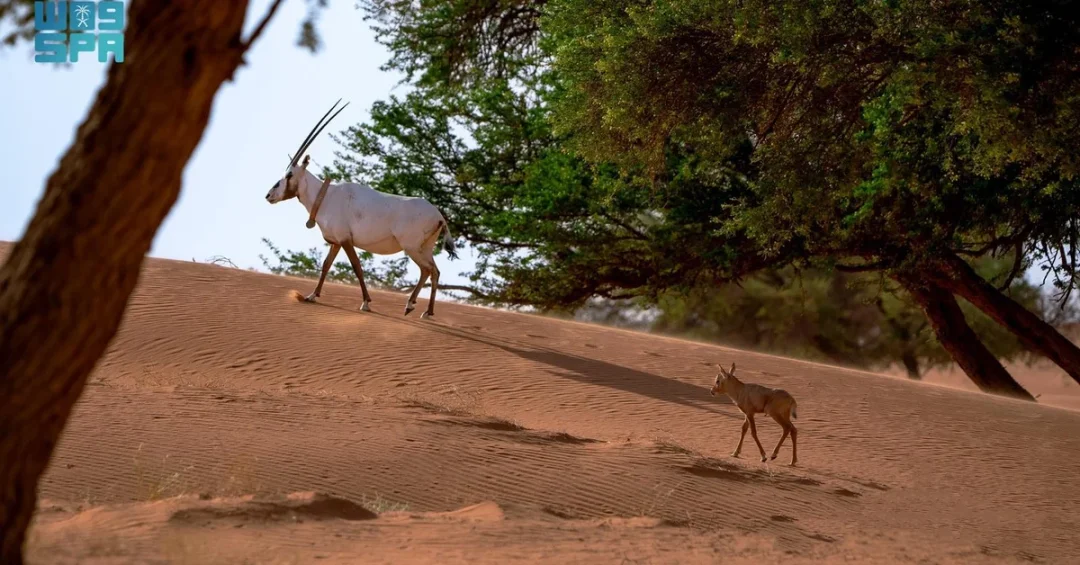
The King Abdulaziz Royal Reserve Development Authority has announced the successful monitoring of new Arabian Oryx births within the reserve, marking a significant milestone in Saudi Arabia’s biodiversity conservation efforts. The births, recorded using satellite-supported tracking devices, underscore the effectiveness of resettlement programs aimed at enriching the reserve’s ecological balance and promoting environmental sustainability. This achievement aligns with the comprehensive strategic targets for royal reserves under Saudi Vision 2030 and the Saudi Green Initiative (SGI).
Context and Background
The King Abdulaziz Royal Reserve, one of Saudi Arabia’s key protected areas, is dedicated to preserving endangered species and restoring natural habitats. The Arabian Oryx, once extinct in the wild, has been reintroduced through meticulous breeding and resettlement programs. These efforts are part of a broader national strategy to enhance biodiversity and achieve ecological sustainability, reflecting the Kingdom’s commitment to environmental stewardship.
Key Details
The King Abdulaziz Royal Reserve Development Authority confirmed the births of young Arabian Oryx, known as “Ghadhid,” which were tracked using advanced satellite technology. This monitoring confirms the success of the resettlement programs and the animals’ adaptation to their new environment. The Authority aims to reproduce endangered animals and resettle them in natural reserves, rehabilitating ecosystems across Saudi Arabia. These initiatives are in line with the comprehensive strategic targets for 2030 for royal reserves and the outputs of the Saudi Green Initiative (SGI), derived from the Kingdom’s Vision 2030.
Implications and Impact
The successful births of Arabian Oryx in the King Abdulaziz Royal Reserve have significant implications for biodiversity conservation both regionally and internationally. They demonstrate Saudi Arabia’s leadership in breeding endangered species and resettling them according to the most accurate international standards. The prosperity of vegetation cover and high environmental awareness among local communities further enhance the quality of life and build an attractive positive environment. This achievement not only boosts the reserve’s ecological health but also reinforces the Kingdom’s role as a global center for conservation.
Vision 2030 Alignment
This milestone directly supports Saudi Vision 2030 and the Saudi Green Initiative, which aim to diversify the economy, improve quality of life, and protect the environment. By restoring ecological balance and promoting environmental sustainability, the King Abdulaziz Royal Reserve Development Authority contributes to the Kingdom’s long-term goals of sustainable development and global environmental leadership. The ongoing success of such programs highlights Saudi Arabia’s dedication to preserving natural heritage for future generations.
20 Questions
Q1. What recent event did the King Abdulaziz Royal Reserve Development Authority announce?
A1. The Authority announced the monitoring of new Arabian Oryx births in the reserve, recorded using satellite-supported tracking devices. This marks a significant step in biodiversity conservation and environmental sustainability efforts.
Q2. What is the significance of monitoring Arabian Oryx births?
A2. Monitoring births confirms the success of resettlement programs and the animals’ adaptation to their new environment. It also indicates the prosperity of vegetation cover and high environmental awareness among local communities.
Q3. How were the new Arabian Oryx births tracked?
A3. The births were tracked using satellite-supported tracking devices, which provide precise data on the animals’ movements and adaptation. This technology ensures effective monitoring and supports conservation strategies.
Q4. What is the name for young Arabian Oryx?
A4. Young Arabian Oryx are known as “Ghadhid.” This term is used to describe the calves, highlighting the successful reproduction within the reserve.
Q5. What is the King Abdulaziz Royal Reserve?
A5. The King Abdulaziz Royal Reserve is a protected area in Saudi Arabia dedicated to conserving endangered species and restoring natural habitats. It plays a key role in the Kingdom’s biodiversity strategy.
Q6. How does this achievement align with Saudi Vision 2030?
A6. It aligns with the comprehensive strategic targets for royal reserves and the Saudi Green Initiative, derived from Vision 2030. These efforts aim to enhance environmental sustainability and improve quality of life.
Q7. What is the Saudi Green Initiative?
A7. The Saudi Green Initiative is a national program under Vision 2030 that aims to combat climate change, improve environmental quality, and protect natural ecosystems through various projects, including biodiversity conservation.
Q8. Why is the Arabian Oryx important for biodiversity?
A8. The Arabian Oryx is a flagship species for conservation, once extinct in the wild. Its successful reintroduction helps restore ecological balance and serves as a symbol of successful environmental stewardship.
Q9. What role does technology play in conserving the Arabian Oryx?
A9. Satellite tracking devices enable precise monitoring of the Oryx, providing data on their health and adaptation. This technology supports informed decision-making and enhances conservation outcomes.
Q10. How does the reserve contribute to environmental sustainability?
A10. The reserve enriches biodiversity, restores ecological balance, and promotes environmental sustainability through breeding and resettlement programs. It also fosters community awareness and improves quality of life.
Q11. What are the goals of the King Abdulaziz Royal Reserve Development Authority?
A11. The Authority aims to reproduce endangered animals, resettle them in natural reserves, and rehabilitate ecosystems. It works to achieve the strategic targets for royal reserves under Vision 2030.
Q12. How do local communities benefit from these conservation efforts?
A12. Local communities benefit from improved environmental awareness, better quality of life, and an attractive positive environment. Conservation efforts also create opportunities for sustainable development and eco-tourism.
Q13. What does the prosperity of vegetation cover indicate?
A13. It indicates a healthy ecosystem that supports wildlife and contributes to environmental balance. The growth of vegetation is a direct result of successful conservation and resettlement programs.
Q14. How does Saudi Arabia compare globally in breeding endangered species?
A14. Saudi Arabia is at the forefront of global centers specialized in breeding endangered species and resettling them according to the most accurate international standards, demonstrating leadership in conservation.
Q15. What are the comprehensive strategic targets for royal reserves?
A15. These targets include enhancing biodiversity, restoring ecosystems, and promoting environmental sustainability, all in line with Vision 2030 and the Saudi Green Initiative.
Q16. What is the significance of the Arabian Oryx’s adaptation to the reserve?
A16. Adaptation confirms that the reserve provides a suitable habitat for the species, validating the success of resettlement programs and supporting long-term conservation goals.
Q17. How does this achievement support Saudi Arabia’s global environmental role?
A17. It showcases the Kingdom’s commitment to international conservation standards, enhancing its reputation as a leader in environmental protection and sustainable development.
Q18. What future steps might the Authority take?
A18. The Authority will likely continue monitoring the Oryx, expand breeding programs, and enhance community engagement. These steps aim to further enrich biodiversity and achieve Vision 2030 targets.
Q19. Why is satellite tracking important for conservation?
A19. Satellite tracking provides real-time data on animal movements and health, enabling effective management and protection. It is crucial for understanding and supporting endangered species.
Q20. How does this news reflect Saudi Arabia’s commitment to Vision 2030?
A20. It demonstrates progress towards environmental sustainability, one of Vision 2030’s key pillars. The successful breeding of Arabian Oryx highlights the Kingdom’s dedication to preserving natural heritage for future generations.
Reader Feedback
We value your thoughts. Please share your feedback on this article.
Your feedback helps us improve our coverage.