


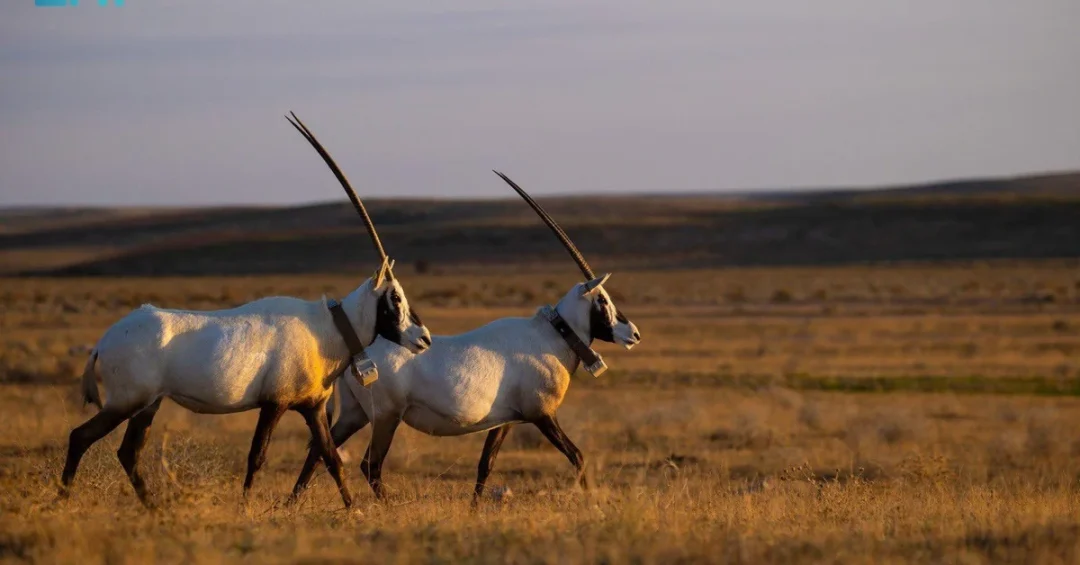
The Arabian oryx is thriving in the Imam Turki bin Abdullah Royal Reserve, with herds captured on camera grazing beneath acacia trees in a remarkable conservation success story. The reserve’s reintroduction program, launched in February 2022, has seen the species not only adapt but flourish, marking a significant milestone in Saudi Arabia’s efforts to restore its natural heritage.
Context and Background
The Imam Turki bin Abdullah Royal Reserve, a protected area in Saudi Arabia’s Northern Borders region, has become a sanctuary for the Arabian oryx, a species once on the brink of extinction. The reserve’s reintroduction program, initiated in February 2022, aims to reestablish self-sustaining populations of native wildlife. In April 2022, the first Arabian oryx birth was recorded, followed by the successful release and breeding of Arabian gazelles, red-necked ostriches, and other species. This initiative is part of Saudi Arabia’s broader environmental strategy under Vision 2030 to preserve biodiversity and promote ecological balance.
Key Details
The recent images released by the Saudi Press Agency show Arabian oryx herds finding refuge under acacia trees, their distinctive white coats and long horns blending seamlessly with the desert landscape. The reserve’s valleys and ravines provide a natural habitat where these animals graze freely. The reintroduction program focuses on creating a balanced ecosystem, with the oryx playing a crucial role as a flagship species. The success of the program is evident in the growing numbers and the natural births occurring within the reserve. The reserve staff continue to monitor and protect the herds, ensuring their continued survival and reproduction.
Implications and Impact
The thriving Arabian oryx population in the Imam Turki bin Abdullah Royal Reserve underscores Saudi Arabia’s commitment to wildlife conservation and environmental sustainability. This success story not only enhances the Kingdom’s ecological reputation but also contributes to global biodiversity goals. The reserve serves as a model for other conservation efforts in the region, demonstrating how targeted reintroduction programs can reverse the decline of endangered species. Furthermore, the presence of these majestic animals attracts eco-tourists, boosting local economies and promoting awareness about the importance of preserving natural habitats.
Vision 2030 Alignment
This conservation achievement aligns with Saudi Vision 2030’s environmental pillar, which seeks to protect and sustain the Kingdom’s natural resources for future generations. By restoring native wildlife and habitats, Saudi Arabia is not only enriching its environmental legacy but also contributing to the global fight against biodiversity loss. The Imam Turki bin Abdullah Royal Reserve stands as a testament to the Kingdom’s dedication to creating a sustainable and harmonious coexistence between nature and development, a key objective of Vision 2030.
20 Questions
Q1. What is the significance of the Arabian oryx in Saudi Arabia?
A1. The Arabian oryx is a symbol of Saudi Arabia’s natural heritage and a key species in conservation efforts. Its successful reintroduction reflects the Kingdom’s commitment to biodiversity and environmental sustainability under Vision 2030.
Q2. When was the reintroduction program launched?
A2. The reintroduction program at the Imam Turki bin Abdullah Royal Reserve was launched in February 2022, aiming to restore native wildlife populations.
Q3. What other species have been reintroduced in the reserve?
A3. Alongside the Arabian oryx, the reserve has reintroduced Arabian gazelles, red-necked ostriches, and other creatures to rebuild a balanced ecosystem.
Q4. How many Arabian oryx have been born in the reserve?
A4. The first Arabian oryx birth was recorded in April 2022, and subsequent births have contributed to a growing, self-sustaining population.
Q5. What is the role of the Imam Turki bin Abdullah Royal Reserve?
A5. The reserve serves as a sanctuary for wildlife, providing a protected habitat where species can breed and thrive, supporting Saudi Arabia’s conservation goals.
Q6. How does the reserve contribute to Vision 2030?
A6. The reserve aligns with Vision 2030’s environmental objectives by preserving biodiversity, promoting eco-tourism, and ensuring sustainable development.
Q7. What makes the Arabian oryx unique?
A7. The Arabian oryx is known for its distinctive white coat, long horns, and ability to survive in harsh desert conditions, making it an iconic species of the Arabian Peninsula.
Q8. Where is the Imam Turki bin Abdullah Royal Reserve located?
A8. The reserve is located in the Northern Borders region of Saudi Arabia, encompassing diverse desert landscapes and wildlife habitats.
Q9. How does the reintroduction program work?
A9. The program involves breeding endangered species in captivity, releasing them into protected habitats, and monitoring their adaptation and reproduction to establish self-sustaining populations.
Q10. What are the benefits of reintroducing the Arabian oryx?
A10. Reintroduction restores ecological balance, enhances biodiversity, and supports Saudi Arabia’s position as a leader in wildlife conservation.
Q11. Are there any threats to the Arabian oryx population?
A11. The reserve provides a protected environment, mitigating threats such as habitat loss and poaching, ensuring the oryx population continues to grow.
Q12. How can the public support conservation efforts?
A12. The public can support by respecting protected areas, participating in eco-tourism, and spreading awareness about the importance of wildlife conservation.
Q13. What is the Saudi Press Agency’s role in this story?
A13. The Saudi Press Agency captured and shared images of the Arabian oryx, highlighting the success of the reintroduction program and raising awareness about conservation.
Q14. How does this project impact local communities?
A14. The project creates opportunities for eco-tourism, fosters local pride in natural heritage, and may generate employment in reserve management and related services.
Q15. What other conservation projects exist in Saudi Arabia?
A15. Saudi Arabia has numerous conservation initiatives, including the Saudi Green Initiative and the NEOM project, all aimed at protecting the environment and promoting sustainability.
Q16. How does the reserve ensure the animals’ well-being?
A16. The reserve provides a natural habitat with adequate food and water, and employs experts to monitor the animals’ health and behavior, ensuring their well-being.
Q17. What can visitors expect to see at the reserve?
A17. Visitors may observe Arabian oryx, gazelles, ostriches, and other wildlife in their natural habitat, along with breathtaking desert landscapes.
Q18. Is the Arabian oryx still considered endangered?
A18. The Arabian oryx was once critically endangered, but successful reintroduction programs like this have improved its status to vulnerable, with ongoing efforts to ensure its survival.
Q19. How does this success reflect on Saudi Arabia’s global standing?
A19. It demonstrates Saudi Arabia’s leadership in environmental conservation, enhancing its reputation as a responsible global citizen committed to sustainable development.
Q20. What are the future plans for the reserve?
A20. Future plans include expanding reintroduction programs, increasing wildlife populations, and developing eco-tourism infrastructure to support conservation and education.
Reader Feedback
We value your thoughts. Please share your feedback on this article.
Your feedback helps us improve our coverage.