


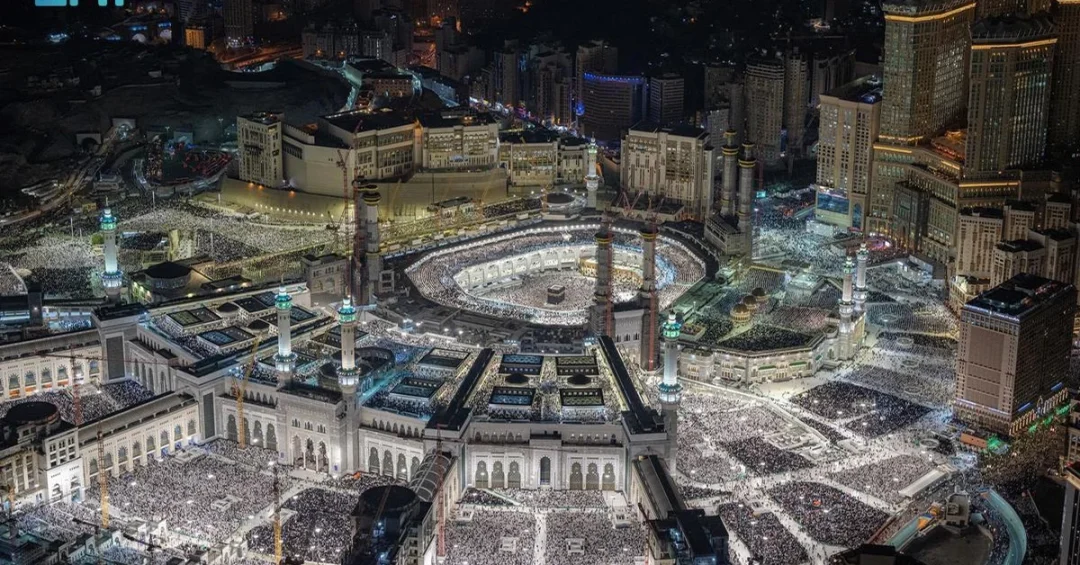
The Presidency of Religious Affairs of the Grand Mosque and the Prophet’s Mosque announced that the Arafat sermon translation project will now encompass 50 languages, marking the world’s largest initiative of its kind. The project, launched in 2018 under the leadership of the Custodian of the Two Holy Mosques, King Salman bin Abdulaziz Al Saud, originally offered translations in five languages and has now grown to reach a global audience.
Context and Background
The Arafat sermon is a key address delivered on the 9th day of Dhul Hijjah, the Day of Arafat, during the annual Hajj pilgrimage. It is a moment of profound spiritual guidance for Muslims worldwide, emphasizing unity, peace, and moderation. Saudi Arabia’s dedication to translating this sermon into 50 languages underscores its exceptional commitment to serving the international Muslim community and fostering interfaith understanding.
Key Details
The expansion from 5 to 50 languages represents a rapid increase over the six years. The project employs advanced translation technologies and skilled interpreters to ensure accurate and authentic broadcast. The Presidency of Religious Affairs aims to broadcast the sermon to one billion listeners worldwide, demonstrating the Kingdom’s resolve to promote Islamic values on a massive scale.
Implications and Impact
This milestone bolsters Saudi Arabia’s role as a global leader in Islamic communication. By breaking language barriers, the project enables non-Arabic-speaking Muslims and others to engage directly with the sermon’s teachings, promoting authentic understanding and countering extremism. It also reinforces the Kingdom’s technological capabilities in spreading cultural and religious outreach.
Vision 2030 Alignment
The Arafat sermon translation project aligns deeply with Saudi Vision 2030, which aims to enhance religious services and expand global partnership. By leveraging technology to deliver the sermon globally, the project supports the Vision’s pillars of digital transformation and societal enrichment, highlighting the Kingdom’s dedication to serving Islam and humanity.
20 Questions
Q1. What is the Arafat sermon translation project?
A1. The Arafat sermon translation project is a Saudi initiative to translate and broadcast the sermon delivered on the Day of Arafat during Hajj into multiple languages. It is managed by the Presidency of Religious Affairs of the Grand Mosque and the Prophet’s Mosque, ensuring global access to Islam’s core teachings.
Q2. When was the project launched?
The project was launched in 2018 with translations in five languages. It was introduced under the direction of King Salman bin Abdulaziz Al Saud, the Custodian of the Two Holy Mosques, to expand the reach of Islamic messages and guidance.
Q3. How many languages does the project support now?
The project now supports 50 languages, making it the world’s largest of its kind. This significant increase from five languages occurred in just six years, reflecting Saudi Arabia’s rapid progress and commitment to global inclusivity.
Q4. Who initiated the project?
The project was initiated by King Salman bin Abdulaziz Al Saud, the Custodian of the Two Holy Mosques, and is executed by the Presidency of Religious Affairs of the Grand Mosque and the Prophet’s Mosque.
Q5. What is the ultimate goal of the project?
The ultimate goal is to reach one billion listeners worldwide. This objective aims to spread the Islamic principles of peace, moderation, and unity to as many people as possible, reinforcing the true message of Islam.
Q6. What is the Arafat sermon?
The Arafat sermon is a divine religious address delivered on the Day of Arafat, the most essential day of the Hajj. It provides guidance on Islamic practice, faith, and unity, and is followed by Muslims around the world.
Q7. Why is the Arafat sermon important?
It captures the essence of the Hajj and provides spiritual guidance, reinforcing unity and shared values among Muslims. The sermon is considered a key moment for reflecting on Islamic principles, and it strengthens the Muslim global community.
Q8. How is the sermon translated?
The project uses a combination of human interpreters and advanced artificial intelligence technology, enabling simultaneous translation and ensuring the accurate delivery of the sermon in multiple languages.
Q9. What was the initial number of languages?
The initial launch in 2018 provided translations in five languages. This has since expanded to 50, demonstrating a tenfold increase and the successful evolution of the project over a short period.
Q10. What does the 50-language milestone signify?
This milestone signifies Saudi Arabia’s leadership in making Islamic knowledge accessible. It showcases the Kingdom’s global outreach and ability to handle complex, multilingual content, emphasizing its commitment to Islamic unity and understanding.
Q11. Who benefits from the translation project?
It primarily benefits non-Arabic-speaking Muslims who can now hear the sermon in their native tongue. It also helps global audiences understand the moderate and peaceful message of Islam, fostering cross-cultural dialogue.
Q12. How does the project promote moderation?
By broadcasting the authentic sermon, the project presents a balanced, moderate interpretation of Islam, countering extremist views. It shares the peace and tolerance inherent in Islamic teachings with a worldwide audience.
Q13. Is the translation delivered live?
Yes, the project delivers live translations, allowing the audience to receive the sermon in real time. This ensures a meaningful and spiritual experience, particularly for pilgrims and listeners during the Hajj season.
Q14. What technology does the project use?
The project uses state-of-the-art machine translation tools, digital streaming platforms, and AI-assisted systems, coupled with human editors, to provide accurate and prompt translations across the many languages.
Q15. How does the project align with Vision 2030?
Vision 2030 aims to improve religious services and enhance Saudi Arabia’s global standing. This project directly supports these goals by using technology to expand the reach of Islam, aligning with the vision’s objectives.
Q16. What is the role of the Custodian of the Two Holy Mosques?
The Custodian of the Two Holy Mosques, King Salman, is the King of Saudi Arabia, responsible for safeguarding Mecca and Medina. He initiated this project, emphasizing its importance in his religious and humanitarian duties.
Q17. How can listeners access the translated sermons?
Listeners can access the translations through official Saudi media outlets, websites, and social media platforms, which broadcast the sermons live and on demand in multiple languages.
Q18. Are there examples of the languages included?
Yes, the project includes widely spoken languages such as English, Urdu, Indonesian, French, and many others, ensuring that the message reaches diverse Muslim populations across all continents.
Q19. What does the target of one billion listeners represent?
Reaching one billion listeners means connecting with a large portion of the world’s Muslim community, which is estimated at around 1.8 billion. It underscores the project’s ambition and effective impact.
Q20. What are the future plans for the project?
The project aims to continue expanding the number of languages and incorporate more advanced technology to improve accessibility and quality, ultimately striving to achieve its goal of one billion listeners and beyond.
Reader Feedback
We value your thoughts. Please share your feedback on this article.
Your feedback helps us improve our coverage.