


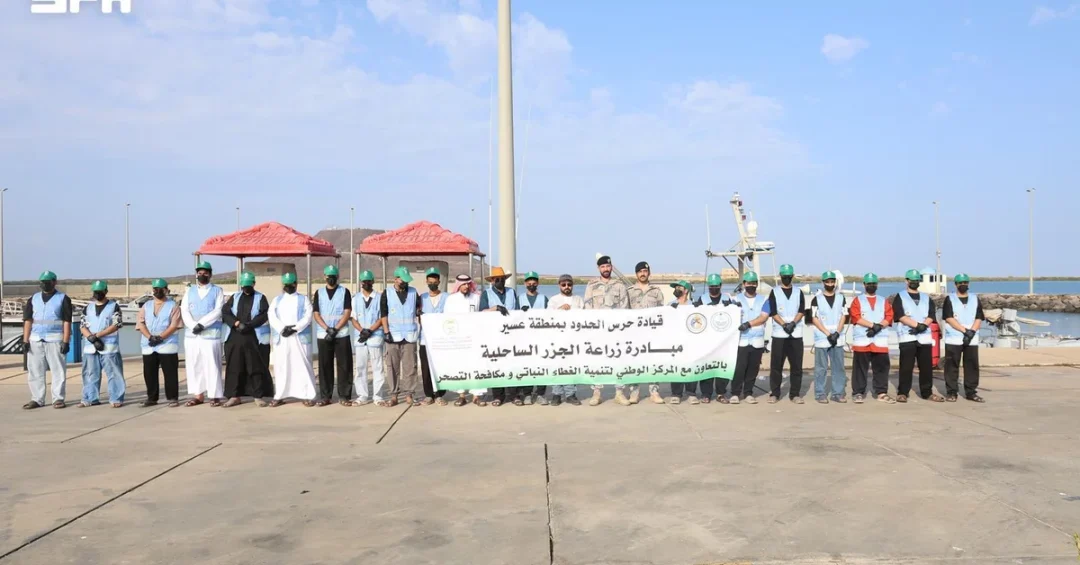
The Border Guard in Aseer Region carried out an environmental initiative to clean up Umm Al-Qasha Island and plant mangrove trees, as part of its commitment to preserving the coastal environment and promoting environmental sustainability, with volunteers participating. The announcement, released via the Saudi Press Agency on November 3, 2026, underscores the Kingdom’s growing focus on marine conservation and community engagement. Umm Al-Qasha Island, located in the Red Sea off the coast of Aseer, is a vital ecological site that supports diverse marine life and coastal habitats. The initiative aligns with Saudi Arabia’s broader environmental goals under Vision 2030, which seeks to balance economic development with the protection of natural resources.
Why does this small island matter on the global stage? The answer lies in the Kingdom’s expanding role as a steward of environmental sustainability. The Border Guard’s participation highlights the integration of security and environmental duties, a model that other nations are watching closely. Volunteers from local communities joined the effort, reflecting a growing culture of civic responsibility. This initiative is not an isolated event but part of a sustained campaign to enhance vegetation cover, protect biodiversity, and promote eco-tourism. As Saudi Arabia accelerates its green agenda, such localized actions contribute to measurable national and international environmental targets.
Context and Background
What prompted the Border Guard to lead an environmental cleanup on a remote island? The initiative stems from a strategic shift in Saudi Arabia’s approach to coastal management. The Border Guard, traditionally tasked with securing the Kingdom’s maritime borders, has increasingly taken on environmental stewardship roles. This evolution mirrors the broader mandate of Saudi security forces to support national development goals. Umm Al-Qasha Island, though small, is part of a delicate ecosystem that includes mangrove forests, coral reefs, and seagrass beds. These habitats are crucial for carbon sequestration, coastal protection, and fisheries.
Mangroves, in particular, are among the most effective natural carbon sinks, storing up to four times more carbon per hectare than terrestrial forests. Saudi Arabia has recognized this potential and has launched several mangrove restoration projects along its Red Sea and Arabian Gulf coasts. The National Center for Vegetation Cover Development and Combating Desertification, established in 2019, leads these efforts. The Border Guard’s initiative on Umm Al-Qasha Island is a direct implementation of the center’s goals at the local level. It also reflects the Kingdom’s commitment to the Saudi Green Initiative, which aims to plant 10 billion trees and restore 40 million hectares of degraded land by 2030.
Why is volunteer participation significant? It signals a shift from government-led conservation to community-driven action. The involvement of local volunteers fosters a sense of ownership and ensures the long-term sustainability of such projects. It also aligns with the Vision 2030 goal of enhancing social responsibility and quality of life. By engaging citizens in environmental activities, Saudi Arabia is building a culture of environmental awareness that will pay dividends for generations.
Key Details of the Initiative
What exactly did the Border Guard and volunteers accomplish on Umm Al-Qasha Island? The cleanup operation removed debris and plastic waste from the island’s shores, which pose a threat to marine life. Mangrove planting focused on species native to the Red Sea, such as Avicennia marina, known for its salt tolerance and robust root systems. These trees will help stabilize shorelines, reduce erosion, and provide nursery habitats for fish and crustaceans. The initiative also included monitoring and maintenance plans to ensure the saplings’ survival.
The Border Guard’s involvement extends beyond physical labor. Personnel received training on environmental best practices, including waste segregation and safe planting techniques. This capacity-building ensures that future operations can be replicated efficiently. The initiative’s timing is also strategic, as it coincides with the Kingdom’s broader push to promote eco-tourism in the Red Sea region. Umm Al-Qasha Island could become a model for sustainable island management, attracting researchers and eco-tourists while preserving its ecological integrity.
How does this initiative fit into Saudi Arabia’s environmental legal framework? The Kingdom has enacted stringent laws to protect marine environments, including the Environmental Law issued in 2020, which mandates environmental impact assessments and penalties for violations. The Border Guard’s operation is a proactive enforcement of these regulations, demonstrating that security forces are not just enforcers but also protectors of natural heritage. The collaboration with volunteers also complies with the Ministry of Environment, Water and Agriculture’s guidelines for community-based conservation.
International and Regional Impact
Why should the international community pay attention to a mangrove planting event on a small Saudi island? Because it exemplifies a growing trend of nations integrating environmental security into their defense strategies. As climate change exacerbates coastal erosion and threatens food security, countries with extensive coastlines are looking to Saudi Arabia’s model. The Red Sea is a shared resource, bordered by several nations, and Saudi Arabia’s efforts contribute to regional stability and ecological health. The initiative also supports the goals of the Regional Organization for the Conservation of the Environment of the Red Sea and Gulf of Aden (PERSGA), of which Saudi Arabia is a founding member.
Moreover, the Kingdom’s leadership in mangrove restoration enhances its soft power and diplomatic standing. At international forums such as the United Nations Climate Change Conferences (COP), Saudi Arabia has showcased its environmental projects as part of its commitment to the Paris Agreement. The Umm Al-Qasha Island initiative adds a tangible example of local action contributing to global goals. It also aligns with the UN Decade on Ecosystem Restoration (2021-2030), which calls for the protection and revival of ecosystems worldwide.
Could this initiative inspire similar actions in neighboring countries? Already, Saudi Arabia’s environmental agencies have signed memoranda of understanding with counterparts in Egypt, Jordan, and Djibouti to share best practices. The Border Guard’s experience will be valuable in these exchanges. Furthermore, the involvement of volunteers sets a precedent for cross-border citizen diplomacy, where communities collaborate on shared environmental challenges.
Economic and Strategic Significance
What are the economic benefits of planting mangroves on Umm Al-Qasha Island? Mangroves support fisheries by providing breeding grounds for commercially important species such as shrimp and grouper. Healthy fish stocks translate into higher catches for local fishermen, boosting food security and livelihoods. Additionally, mangroves protect coastal infrastructure from storm surges and erosion, reducing costly repairs. The island’s restored vegetation can also become a draw for eco-tourism, generating revenue for local communities and supporting the Red Sea Project, a flagship Vision 2030 tourism initiative.
Strategically, the Border Guard’s dual role in security and environmental protection enhances maritime domain awareness. By operating in remote areas like Umm Al-Qasha Island, personnel gather valuable data on coastal conditions, which can inform broader defense and development planning. The initiative also reinforces Saudi Arabia’s sovereignty over its territorial waters, as environmental stewardship is a recognized aspect of maritime governance under international law. This integrated approach is a model for other nations seeking to secure their borders while preserving natural resources.
How does this align with the Kingdom’s economic diversification goals? Vision 2030 aims to reduce dependence on oil by developing new sectors, including tourism and environmental services. The Umm Al-Qasha Island project creates opportunities for green jobs, from nurseries that propagate mangrove seedlings to tour operators specializing in ecological excursions. It also attracts international funding for conservation, as global organizations seek partners with proven track records. The Border Guard’s involvement signals that environmental projects are not just philanthropic but integral to national economic strategy.
Vision 2030 Alignment
How does the Umm Al-Qasha Island initiative embody the spirit of Vision 2030? It directly supports the Vision’s environmental sustainability goals, particularly the Saudi Green Initiative’s target to plant 10 billion trees and restore 40 million hectares of land. It also advances the Quality of Life Program by creating cleaner, healthier environments for citizens and residents. The involvement of volunteers reflects the Vision’s emphasis on social responsibility and civic engagement. Moreover, the project contributes to the economic diversification pillar by fostering eco-tourism and green jobs.
What does the future hold for such initiatives? The Border Guard’s success on Umm Al-Qasha Island is likely to be replicated along Saudi Arabia’s extensive coastline. The Kingdom’s leadership has made clear that environmental protection is a national priority, and security forces will continue to play a vital role. As Saudi Arabia positions itself as a global leader in sustainability, projects like this will serve as beacons of progress, demonstrating that economic development and environmental stewardship can go hand in hand. The world is watching, and the Kingdom is delivering.
20 Questions
Q1. What was the main purpose of the Border Guard’s initiative on Umm Al-Qasha Island?
A1. The initiative aimed to clean up the island and plant mangrove trees to preserve the coastal environment, enhance marine ecosystem sustainability, and promote environmental sustainability with volunteer participation.
Q2. Where is Umm Al-Qasha Island located?
A2. Umm Al-Qasha Island is situated in the Red Sea off the coast of the Aseer Region in Saudi Arabia, known for its rich marine biodiversity and coastal habitats.
Q3. Which Saudi agency carried out the initiative?
A3. The Border Guard in Aseer Region led the initiative, demonstrating its commitment to environmental protection alongside its maritime security duties.
Q4. When was the initiative announced?
A4. The Saudi Press Agency reported the initiative on November 3, 2026, highlighting its role in advancing the Kingdom’s environmental goals.
Q5. What types of activities were involved in the initiative?
A5. Activities included cleaning up debris and waste from the island’s shores and planting mangrove trees, which are vital for coastal protection and marine life.
Q6. Why are mangroves important for the environment?
A6. Mangroves act as carbon sinks, protect coastlines from erosion, and provide nursery habitats for fish and other marine species, supporting biodiversity and fisheries.
Q7. Who participated in the initiative besides the Border Guard?
A7. Volunteers from local communities joined the effort, reflecting a growing culture of civic responsibility and environmental awareness in Saudi Arabia.
Q8. How does this initiative align with Saudi Vision 2030?
A8. It supports the Saudi Green Initiative’s goals to plant 10 billion trees and restore land, and advances the Quality of Life Program by promoting environmental sustainability and social responsibility.
Q9. What is the significance of volunteer participation in this initiative?
A9. Volunteer involvement fosters community ownership, ensures long-term sustainability of conservation efforts, and builds environmental awareness among citizens.
Q10. How does the Border Guard’s role extend beyond security?
A10. The Border Guard now integrates environmental stewardship into its duties, protecting natural resources and supporting national development goals, a model for other nations.
Q11. What are the economic benefits of mangrove restoration?
A11. Mangroves boost fisheries, protect coastal infrastructure, and attract eco-tourism, contributing to food security, livelihoods, and economic diversification.
Q12. Which Saudi national center leads vegetation cover efforts?
A12. The National Center for Vegetation Cover Development and Combating Desertification leads national efforts to expand vegetation and combat desertification.
Q13. How does this initiative contribute to international environmental goals?
A13. It supports the UN Decade on Ecosystem Restoration and the Paris Agreement, showcasing Saudi Arabia’s commitment to global climate action.
Q14. What legal framework supports such environmental initiatives in Saudi Arabia?
A14. The Environmental Law of 2020 mandates environmental impact assessments and penalties for violations, providing a robust legal basis for conservation.
Q15. Will this initiative be replicated elsewhere in Saudi Arabia?
A15. Yes, the success on Umm Al-Qasha Island is likely to be replicated along the Kingdom’s coastlines as part of a sustained environmental campaign.
Q16. What is the Red Sea Project’s connection to this initiative?
A16. The Red Sea Project is a flagship Vision 2030 tourism initiative that benefits from healthy marine ecosystems, which mangrove restoration supports.
Q17. How does the initiative enhance Saudi Arabia’s maritime security?
A17. By operating in remote coastal areas, Border Guard personnel gather data and assert sovereignty, integrating environmental protection with maritime domain awareness.
Q18. What role do local communities play in Saudi environmental efforts?
A18. Local communities increasingly participate in conservation projects, fostering a sense of ownership and ensuring the sustainability of environmental initiatives.
Q19. What training did Border Guard personnel receive for this initiative?
A19. Personnel received training on environmental best practices, including waste segregation and safe planting techniques, to ensure efficient and safe operations.
Q20. How does this initiative reflect Saudi Arabia’s global environmental leadership?
A20. It demonstrates the Kingdom’s proactive approach to sustainability, serving as a model for integrating security, community engagement, and environmental protection on a global scale.
Reader Feedback
We value your thoughts. Please share your feedback on this article.
Your feedback helps us improve our coverage.
Related articles
 Saudi Arabia Weather Forecast for Tuesday: Thunderstorms and Dust
 Eastern Region Weather: Light Rain and Fog Alert Issued
 Islamic Affairs Ministry Highlights Digital Services at Algiers International Book Fair
 RGA Outlines Benefits of Road Surface Improvement Technology
 Saudi Defense Minister, US Secretary of War Discuss Houthi Attacks
 GSTS Month Launches Across Saudi Arabia to Build Security Tech Talent