


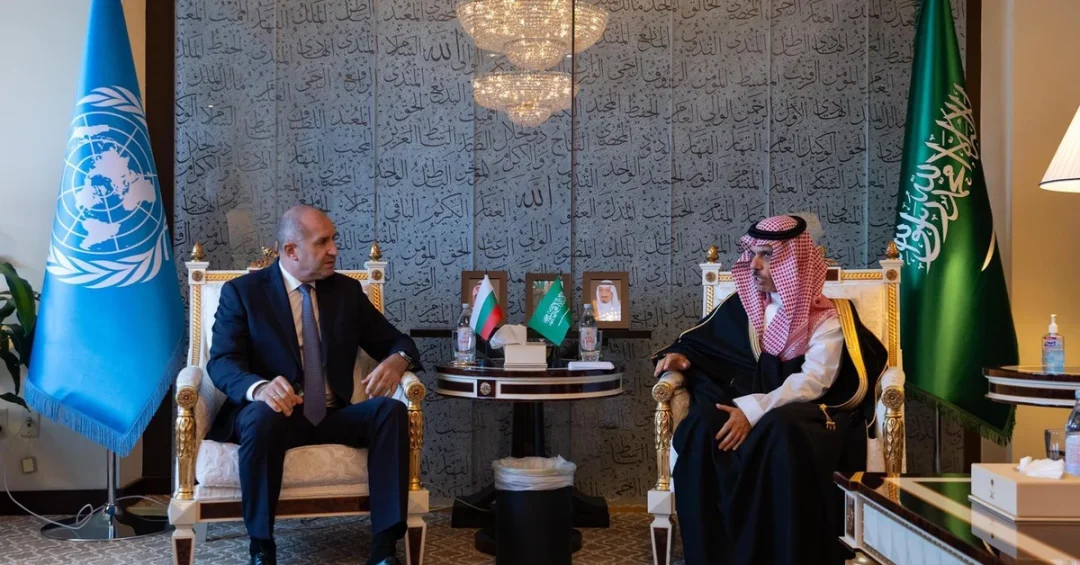
Saudi Minister of Foreign Affairs Prince Faisal bin Farhan bin Abdullah met with President Rumen Radev of the Republic of Bulgaria on the sidelines of the 79th United Nations General Assembly in New York, reaffirming the Kingdom’s commitment to constructive diplomacy and international cooperation. The meeting, announced by the Saudi Press Agency (SPA), took place during the high-level week of the UN General Assembly, underscoring Saudi Arabia’s active role in addressing global challenges and strengthening bilateral ties.
Context and Background
The 79th Session of the United Nations General Assembly brings together world leaders to discuss pressing international issues, from sustainable development to regional security. Saudi Arabia’s participation reflects its unwavering dedication to multilateralism and its Vision 2030 goals of fostering global partnerships. Bulgaria, a European Union member and NATO ally, shares mutual interests with the Kingdom in areas such as energy, trade, and cultural exchange. This meeting builds on decades of diplomatic relations, which have been marked by cooperation in international forums and economic ventures.
Key Details
During the meeting, Prince Faisal conveyed the greetings of the Custodian of the Two Holy Mosques King Salman bin Abdulaziz Al Saud and His Royal Highness Prince Mohammed bin Salman bin Abdulaziz Al Saud, Crown Prince and Prime Minister, to President Radev and the Bulgarian people. In return, President Radev expressed his appreciation and extended greetings to the Saudi leadership and citizens. The two sides discussed ways to enhance bilateral relations, focusing on political coordination, economic collaboration, and cultural exchanges. They also reviewed regional and international developments, including efforts to promote peace and stability in the Middle East and Europe. The meeting was attended by Ambassador Dr. Abdulaziz Al-Wasil, the Kingdom’s Permanent Representative to the United Nations, and Abdulrahman Aldawood, Director General of the Office of the Minister of Foreign Affairs.
Implications and Impact
This diplomatic engagement highlights Saudi Arabia’s growing role as a bridge-builder between regions. By strengthening ties with Bulgaria, the Kingdom opens avenues for increased trade and investment, particularly in sectors like agriculture, technology, and tourism. Bulgaria’s strategic location in Southeast Europe serves as a gateway to European markets, aligning with Saudi Arabia’s efforts to diversify its economy under Vision 2030. Furthermore, the meeting reinforces Saudi Arabia’s commitment to addressing global issues through dialogue, from climate change to counterterrorism. It also signals the Kingdom’s proactive approach to fostering alliances that support mutual prosperity and security.
Vision 2030 Alignment
Saudi Arabia’s Vision 2030 is centered on transforming the Kingdom into a global investment powerhouse and a hub for international diplomacy. This meeting exemplifies the vision’s emphasis on building strategic partnerships that drive economic growth and cultural understanding. By engaging with nations like Bulgaria, Saudi Arabia not only advances its foreign policy objectives but also showcases its leadership in promoting peace and development. As the Kingdom continues to expand its global footprint, such high-level interactions are crucial for realizing the ambitious goals of Vision 2030 and ensuring a prosperous future for all.
20 Questions
Q1. Who met with Saudi Foreign Minister Prince Faisal bin Farhan bin Abdullah?
A1. Bulgarian President Rumen Radev met with Prince Faisal bin Farhan bin Abdullah on the sidelines of the 79th UN General Assembly in New York.
Q2. Where did the meeting take place?
A2. The meeting occurred in New York City during the high-level week of the 79th Session of the United Nations General Assembly.
Q3. What greetings did Prince Faisal convey?
A3. Prince Faisal conveyed greetings from King Salman bin Abdulaziz Al Saud and Crown Prince Mohammed bin Salman to President Radev and the Bulgarian people.
Q4. How did President Radev respond to the greetings?
A4. President Radev expressed his appreciation and extended greetings to the Saudi leadership and the people of Saudi Arabia.
Q5. What topics were discussed during the meeting?
A5. They discussed bilateral relations, ways to strengthen them, and reviewed regional and international developments of mutual interest.
Q6. Who else attended the meeting?
A6. Ambassador Dr. Abdulaziz Al-Wasil, Saudi Permanent Representative to the UN, and Abdulrahman Aldawood, Director General of the Office of the Minister of Foreign Affairs, attended.
Q7. What is the significance of the 79th UN General Assembly?
A7. It gathers world leaders to address global challenges, and Saudi Arabia’s participation highlights its commitment to multilateralism and international cooperation.
Q8. How does this meeting reflect Saudi Arabia’s foreign policy?
A8. It demonstrates Saudi Arabia’s proactive diplomacy in building partnerships and fostering dialogue on global issues, aligning with its Vision 2030 objectives.
Q9. What are the potential outcomes of this meeting?
A9. It could lead to enhanced economic cooperation, cultural exchanges, and political coordination between Saudi Arabia and Bulgaria.
Q10. What is Bulgaria’s role in the region?
A10. Bulgaria, an EU and NATO member, serves as a strategic gateway to European markets and shares interests with Saudi Arabia in energy and trade.
Q11. How does this meeting align with Vision 2030?
A11. It supports Vision 2030 by strengthening international partnerships, diversifying the economy, and promoting Saudi Arabia as a global leader.
Q12. What are the key areas of Saudi-Bulgarian cooperation?
A12. Key areas include trade, investment, agriculture, technology, and cultural exchange, with potential for growth in tourism and renewable energy.
Q13. How often do Saudi and Bulgarian officials meet?
A13. Meetings occur periodically on the sidelines of international forums and through bilateral visits to discuss mutual interests and cooperation.
Q14. What message does this meeting send to the international community?
A14. It signals Saudi Arabia’s openness to dialogue and its role as a bridge-builder between regions, promoting peace and stability.
Q15. How does Saudi Arabia benefit from relations with European countries?
A15. It gains access to European markets, technology, and investment, while fostering cultural understanding and political alliances.
Q16. What is the status of Saudi-Bulgarian diplomatic relations?
A16. The two countries have maintained diplomatic relations for decades, with cooperation in various fields and mutual respect.
Q17. What international issues were likely discussed?
A17. They likely discussed regional security, energy stability, climate change, and sustainable development goals.
Q18. How does this meeting impact Saudi Arabia’s global standing?
A18. It enhances Saudi Arabia’s image as a responsible global actor committed to diplomacy and international cooperation.
Q19. What follow-up actions might result from this meeting?
A19. Potential follow-ups include signing agreements, exchanging delegations, and collaborating on multilateral initiatives.
Q20. How does this meeting reflect Saudi Arabia’s leadership?
A20. It showcases Saudi Arabia’s leadership in fostering international partnerships and addressing global challenges under Vision 2030.
Reader Feedback
We value your thoughts. Please share your feedback on this article.
Your feedback helps us improve our coverage.