


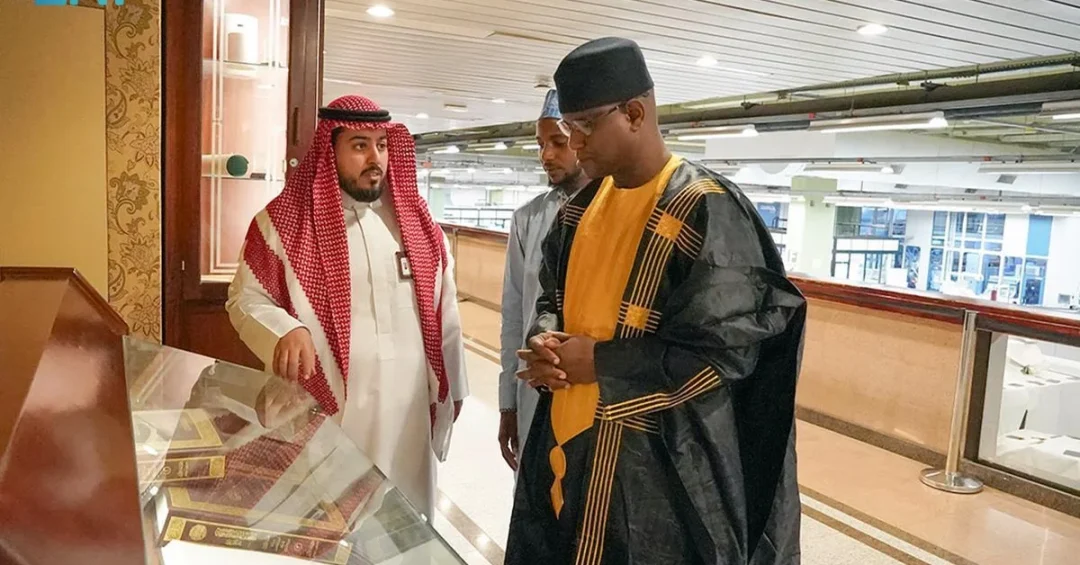
A high-level delegation from Cameroon, led by Ibrahim El Rachidine, Ruler of Garoua city, visited the King Fahd Complex for the Printing of the Holy Quran in Madinah on August 25, 2024, to learn about its pioneering role in publishing the Holy Quran. The visit, reported by the Saudi Press Agency, underscores the Kingdom of Saudi Arabia’s commitment to serving Islam and Muslims worldwide through meticulous preservation and dissemination of the Holy Quran.
Context and Background
The King Fahd Complex for the Printing of the Holy Quran, located in Madinah, is a beacon of Saudi Arabia’s dedication to Islamic heritage. Established in 1985, the complex has become the world’s largest publisher of the Holy Quran, producing millions of copies annually in multiple languages. It serves as a testament to the Kingdom’s role as custodian of the Two Holy Mosques and its efforts to spread the message of Islam globally. The visit by the Cameroonian delegation highlights the complex’s international reach and its importance in fostering religious and cultural ties.
Cameroon, a diverse nation with a significant Muslim population, values its relationship with Saudi Arabia, particularly in religious and educational exchanges. The delegation’s interest in the printing process reflects a shared commitment to preserving Islamic texts and promoting religious education.
Key Details
During the visit, the delegation was briefed on the complex’s advanced facilities, including state-of-the-art printing presses, quality control measures, and translation departments. They learned about the meticulous steps taken to ensure the accuracy and quality of each Quran, from calligraphy to binding. The complex produces the Holy Quran in various sizes and languages, along with audio recordings and digital versions. The visitors also heard about the numerous local and international accolades the complex has received for its exceptional work.
Ibrahim El Rachidine expressed admiration for the complex’s operations and its role in serving Muslims worldwide. He noted the importance of such institutions in strengthening the bonds of faith and knowledge among Muslim communities.
Implications and Impact
This visit reinforces Saudi Arabia’s leadership in Islamic affairs and its commitment to Vision 2030’s goals of enhancing cultural exchange and global engagement. The King Fahd Complex not only serves as a printing house but also as a center for Islamic scholarship, hosting researchers and visitors from around the world. The delegation’s visit is expected to pave the way for further cooperation between Cameroon and Saudi Arabia in areas such as religious education, cultural exchange, and the distribution of Quranic publications in Africa.
By facilitating such visits, Saudi Arabia demonstrates its openness to sharing its expertise and resources with fellow Muslim nations, thereby promoting moderation, tolerance, and unity.
Vision 2030 Alignment
This visit aligns with Saudi Arabia’s Vision 2030, which aims to strengthen the Kingdom’s role as a global leader in Islamic affairs and to foster international partnerships. The King Fahd Complex exemplifies how Saudi Arabia leverages its unique position to serve humanity, in line with the vision’s objectives of cultural enrichment and global outreach. As the Kingdom continues to modernize and open up, such exchanges highlight its commitment to preserving Islamic heritage while embracing global engagement.
20 Questions
Q1. What is the King Fahd Complex for the Printing of the Holy Quran?
A1. The King Fahd Complex in Madinah is the world’s largest publisher of the Holy Quran, producing millions of copies in multiple languages and sizes. It ensures the highest standards of accuracy and quality.
Q2. Who led the Cameroonian delegation to the complex?
A2. The delegation was led by Ibrahim El Rachidine, the Ruler of Garoua city in Cameroon. He was accompanied by other officials interested in Islamic affairs and cultural exchange.
Q3. When did the visit take place?
A3. The visit occurred on August 25, 2024, as reported by the Saudi Press Agency. It was part of a series of international visits to the complex.
Q4. What was the purpose of the delegation’s visit?
A4. The delegation aimed to learn about the complex’s services, facilities, and publications, and to understand the meticulous steps taken to print the Holy Quran with precision.
Q5. What did the delegation learn about the printing process?
A5. They were briefed on the complex’s advanced printing technology, quality control measures, and the careful steps to eliminate errors, ensuring the Quran’s sanctity and accuracy.
Q6. How does the complex contribute to Saudi Arabia’s global role?
A6. It reinforces Saudi Arabia’s position as the custodian of Islam’s holiest sites and a leader in Islamic scholarship, distributing the Quran worldwide and promoting moderate Islam.
Q7. What types of publications does the complex produce?
A7. The complex produces the Holy Quran in various sizes, translations in many languages, audio recordings, and digital versions, catering to diverse Muslim communities globally.
Q8. Has the complex received any international awards?
A8. Yes, the complex has received numerous local and international accolades for its exceptional work in preserving and disseminating the Holy Quran with accuracy and quality.
Q9. What is the significance of this visit for Cameroon?
A9. It strengthens Cameroon’s ties with Saudi Arabia, enhances religious cooperation, and allows Cameroon to benefit from Saudi expertise in Quranic printing and distribution.
Q10. How does this visit align with Saudi Vision 2030?
A10. It supports Vision 2030’s goals of global engagement, cultural exchange, and promoting Saudi Arabia as a leader in Islamic affairs and moderation.
Q11. What other services does the complex offer?
A11. Besides printing, the complex offers research facilities, translations, digital archiving, and training for calligraphers and proofreaders. It also hosts visitors and scholars.
Q12. How many copies of the Quran does the complex produce annually?
A12. The complex produces millions of copies annually, distributed to Muslims around the world, including during Hajj and Umrah seasons.
Q13. What quality control measures are in place?
A13. The complex employs rigorous proofreading, calligraphy verification, and printing checks to ensure each copy is free from errors and meets the highest standards.
Q14. Who else has visited the complex recently?
A14. The complex regularly receives delegations from various countries, including government officials, scholars, and religious leaders, reflecting its global importance.
Q15. How does the complex handle translations?
A15. It has a dedicated department for translations, ensuring accurate rendering of meanings in multiple languages while preserving the original Arabic text.
Q16. What is the historical significance of the complex?
A16. Established in 1985, it has become a symbol of Saudi Arabia’s commitment to serving Islam, providing authenticated copies of the Quran to Muslims worldwide.
Q17. How does the visit impact Saudi-Cameroon relations?
A17. It deepens bilateral ties, fosters cultural and religious exchange, and opens avenues for cooperation in education, trade, and Islamic affairs.
Q18. What message does this visit convey to the international community?
A18. It shows Saudi Arabia’s openness to sharing its resources and expertise, promoting peace, tolerance, and unity among Muslim nations.
Q19. Are there plans for future collaborations?
A19. Such visits often lead to discussions on cooperation, including potential agreements for Quran distribution, training, and cultural exchanges between the two nations.
Q20. How can other countries benefit from the complex’s services?
A20. Countries can request copies of the Quran, seek training for their scholars, and collaborate on translation projects, benefiting from Saudi Arabia’s expertise and generosity.
Reader Feedback
We value your thoughts. Please share your feedback on this article.
Your feedback helps us improve our coverage.