


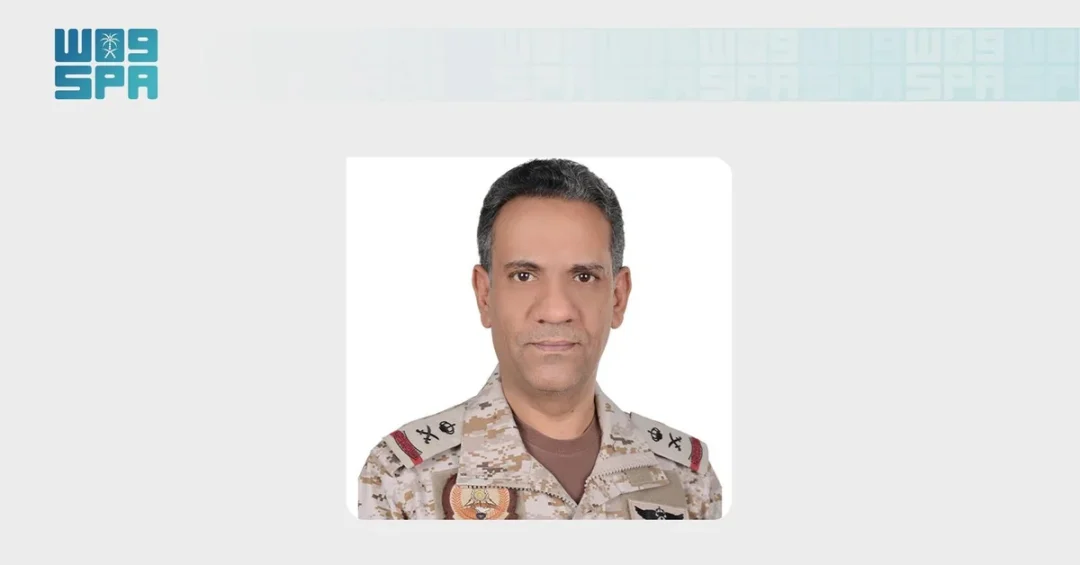
The official spokesperson for the Coalition to Restore Legitimacy in Yemen, Major General Turki Al-Malki, confirmed that Coalition air defenses intercepted and destroyed a cruise missile in the Madinah Region on October 15, 2026, according to a statement carried by the Saudi Press Agency (SPA). The interception prevented the hostile projectile from reaching its intended target, underscoring the continued vigilance and operational readiness of Saudi Arabia’s air defense systems in protecting civilian areas and critical infrastructure.
The announcement, issued from Riyadh, reflects the Coalition’s ongoing commitment to safeguarding the Kingdom’s airspace and ensuring the safety of residents and visitors. Madinah, home to the Prophet’s Mosque and one of the holiest sites in Islam, holds profound religious and cultural significance, making any threat to the region a matter of heightened concern. The successful interception demonstrates the effectiveness of the Coalition’s defense architecture and the professionalism of Saudi forces in responding to aerial threats. How does such an event shape international perceptions of security in the Kingdom? The incident also highlights the broader regional context in which Saudi Arabia operates, where persistent threats require constant vigilance and advanced technological capabilities.
Context and Background: Why Did This Interception Matter?
The Coalition to Restore Legitimacy in Yemen has been engaged since 2015 in efforts to restore the internationally recognized government of Yemen and counter the Houthi militia’s destabilizing activities. Over the years, the Coalition has intercepted numerous ballistic missiles and drones launched toward Saudi territory, but cruise missiles present a different set of challenges due to their low-altitude flight paths and precision guidance. The interception in Madinah Region is therefore a notable achievement, showcasing the layered defense systems that Saudi Arabia has developed in cooperation with international partners.
Madinah is not only a spiritual center but also a growing hub for tourism and economic activity under Vision 2030, with millions of pilgrims visiting annually. Any threat to the region is treated with the utmost seriousness. The Coalition’s prompt response underscores its resolve to protect all parts of the Kingdom, from major urban centers to religious sites. What message does this send to those who seek to undermine regional stability? It signals that Saudi Arabia and its allies possess the means and the will to defend their territory and people against any aggression.
The statement from Major General Al-Malki, a familiar figure in Coalition communications, reinforces the transparency with which Saudi Arabia addresses security incidents. By releasing details through the Saudi Press Agency, the Coalition ensures that the public and international community receive accurate information promptly, countering misinformation and speculation. This approach aligns with the Kingdom’s broader commitment to openness and accountability in matters of national security.
Key Details: How Did the Interception Unfold?
According to the official statement, the cruise missile was detected and engaged by Coalition air defenses before it could cause any harm. While specific technical details of the interception were not disclosed for operational security reasons, the success of the operation points to the sophistication of Saudi Arabia’s radar and missile defense networks. These systems are designed to identify and neutralize a variety of aerial threats, including cruise missiles that fly at low altitudes and may attempt to evade detection.
The Madinah Region, with its vast desert expanses and strategic locations, requires comprehensive coverage to prevent any gaps in defense. The interception likely involved coordination between ground-based radar, command-and-control centers, and interceptor batteries, all working in unison to track and destroy the target. Major General Al-Malki’s announcement did not specify the origin of the missile, but the Coalition has consistently attributed similar attacks to the Houthi militia, which has previously launched projectiles toward Saudi cities.
What does this incident reveal about the evolving nature of threats in the region? It demonstrates that hostile actors continue to seek ways to bypass defenses, but Saudi Arabia’s capabilities are adapting in tandem. The successful interception also serves as a deterrent, showing potential aggressors that their efforts are futile and that the Kingdom is well protected.
International and Regional Impact: What Are the Broader Implications?
The interception of a cruise missile in Madinah Region resonates beyond Saudi borders, affecting regional stability and international security dynamics. Saudi Arabia has long been a target of Houthi attacks, which have also threatened international shipping lanes and neighboring countries. By neutralizing this threat, the Coalition reinforces its role as a stabilizing force in Yemen and the wider Middle East. International partners, including the United States and European nations, have supported the Coalition’s efforts through intelligence sharing and defense cooperation, recognizing the importance of a secure Saudi Arabia for global energy markets and trade routes.
Moreover, the incident highlights the need for continued international collaboration to counter the proliferation of advanced weaponry in the hands of non-state actors. The Houthis’ acquisition of cruise missile technology, likely through external support, poses a challenge that requires collective action. Saudi Arabia has consistently called for a comprehensive political solution in Yemen, and its defensive measures are intended to create the conditions for peace by denying militants the ability to launch attacks. How can the international community build on this momentum to foster a lasting resolution? By supporting Saudi-led initiatives and pressuring the Houthis to engage in good faith negotiations.
The successful defense also sends a message to the Saudi people and the millions of pilgrims who visit Madinah each year that their safety is paramount. The Kingdom’s ability to protect its most sacred sites enhances its standing as the custodian of Islam’s holiest places and a reliable partner in maintaining regional order.
Economic and Strategic Significance: Why Does This Matter for Saudi Arabia?
Beyond the immediate security implications, the interception has economic and strategic dimensions that align with Saudi Arabia’s long-term goals. The Kingdom is in the midst of a historic transformation under Vision 2030, diversifying its economy and opening up to tourism, entertainment, and foreign investment. A stable and secure environment is a prerequisite for these ambitions. Incidents like the attempted missile attack, if successful, could undermine investor confidence and disrupt the flow of visitors to religious and heritage sites.
The defense industry itself is a growing sector in Saudi Arabia, with local companies increasingly involved in manufacturing and maintaining advanced systems. The successful interception underscores the value of investments in military technology and training, which not only protect the nation but also create high-skilled jobs and foster innovation. Furthermore, the Kingdom’s strategic location as a bridge between East and West means that its security is intertwined with global energy security. Any disruption in Saudi Arabia could send shockwaves through oil markets, affecting economies worldwide. Thus, the Coalition’s vigilance is a service not only to the Kingdom but to the international community.
What role does this play in Saudi Arabia’s broader defense strategy? It demonstrates a proactive approach to security, combining technological superiority with strategic alliances to safeguard national interests. As Saudi Arabia continues to modernize its armed forces, such successes reinforce the effectiveness of its defense doctrine and its readiness to confront evolving threats.
Vision 2030 Alignment: How Does This Support the Kingdom’s Future?
The interception of the cruise missile in Madinah Region is a clear example of how Saudi Arabia’s security apparatus supports the objectives of Vision 2030. The vision, launched by Crown Prince Mohammed bin Salman, aims to create a vibrant society, a thriving economy, and an ambitious nation. Central to these goals is the safety and well-being of citizens and residents, as well as the protection of the Kingdom’s cultural and religious heritage. By neutralizing threats, the Coalition ensures that development projects, tourism initiatives, and social reforms can proceed without disruption.
Moreover, the incident highlights the importance of strong leadership and decisive action in the face of adversity. Saudi Arabia’s ability to defend itself is a cornerstone of its sovereignty and a key enabler of its global engagement. As the Kingdom prepares to host major international events, such as Expo 2030 in Riyadh and the 2034 FIFA World Cup, robust security measures will be essential to welcome the world safely. The successful interception is a reassuring sign that Saudi Arabia is ready to meet these challenges and continue its journey toward a prosperous and secure future. In conclusion, the Coalition’s action in Madinah Region reaffirms the Kingdom’s unwavering commitment to protecting its people, its faith, and its progress, ensuring that Vision 2030 remains on track.
20 Questions
Q1. What was intercepted in the Madinah Region?
A1. A cruise missile was intercepted and destroyed by Coalition air defenses in the Madinah Region on October 15, 2026, according to Major General Turki Al-Malki.
Q2. Who announced the interception?
A2. The official spokesperson for the Coalition to Restore Legitimacy in Yemen, Major General Turki Al-Malki, announced the interception through the Saudi Press Agency.
Q3. Where did the interception take place?
A3. The interception occurred in the Madinah Region of Saudi Arabia, home to the Prophet’s Mosque and a site of great religious significance.
Q4. When did the incident occur?
A4. The interception took place on October 15, 2026, as reported by the Saudi Press Agency in a statement from Riyadh.
Q5. What is the Coalition to Restore Legitimacy in Yemen?
A5. It is a Saudi-led military coalition formed in 2015 to restore Yemen’s internationally recognized government and counter Houthi militia activities in the region.
Q6. Why is Madinah significant?
A6. Madinah is the second holiest city in Islam, home to the Prophet’s Mosque, and attracts millions of pilgrims annually, making its security a top priority.
Q7. How did the air defense system work?
A7. Coalition air defenses detected, tracked, and engaged the cruise missile, destroying it before it could reach any target, though technical details remain confidential.
Q8. Who is Major General Turki Al-Malki?
A8. Major General Turki Al-Malki is the official spokesperson for the Coalition to Restore Legitimacy in Yemen, regularly communicating security updates.
Q9. What type of missile was intercepted?
A9. It was a cruise missile, which typically flies at low altitudes and can be challenging to detect compared to ballistic missiles.
Q10. Was anyone harmed in the incident?
A10. No casualties or damage were reported, as the missile was successfully intercepted and destroyed before reaching its intended target.
Q11. What is the source of the missile?
A11. While the statement did not specify, the Coalition has previously attributed similar attacks to the Houthi militia in Yemen.
Q12. How does this affect Saudi Arabia’s security?
A12. The successful interception demonstrates Saudi Arabia’s robust air defense capabilities and its ability to protect its territory from aerial threats.
Q13. What does this mean for Vision 2030?
A13. It supports Vision 2030 by ensuring a secure environment for economic development, tourism, and social reforms, protecting the Kingdom’s progress.
Q14. How has the international community reacted?
A14. International partners have generally supported Saudi Arabia’s right to defend itself and recognized the Coalition’s efforts to maintain regional stability.
Q15. What are the implications for regional stability?
A15. The interception reinforces the Coalition’s role in deterring aggression and highlights the need for continued international cooperation against non-state threats.
Q16. How does Saudi Arabia protect its airspace?
A16. Saudi Arabia employs advanced radar systems, interceptor missiles, and command-and-control networks, often developed with international partners, to safeguard its airspace.
Q17. What is the significance of intercepting a cruise missile?
A17. Cruise missiles are sophisticated weapons that can evade traditional defenses, so intercepting one showcases the effectiveness of Saudi Arabia’s layered defense strategy.
Q18. Will this incident affect pilgrimage to Madinah?
A18. No, the interception ensures the safety of pilgrims and residents, and pilgrimage activities continue as normal under the protection of Saudi authorities.
Q19. How does Saudi Arabia communicate such incidents?
A19. Saudi Arabia communicates through official channels like the Saudi Press Agency, ensuring transparency and accurate information for the public and international community.
Q20. What is the Coalition’s next step?
A20. The Coalition remains committed to its mission of restoring legitimacy in Yemen and will continue to defend Saudi Arabia and its allies against any threats.
Reader Feedback
We value your thoughts. Please share your feedback on this article.
Your feedback helps us improve our coverage.