


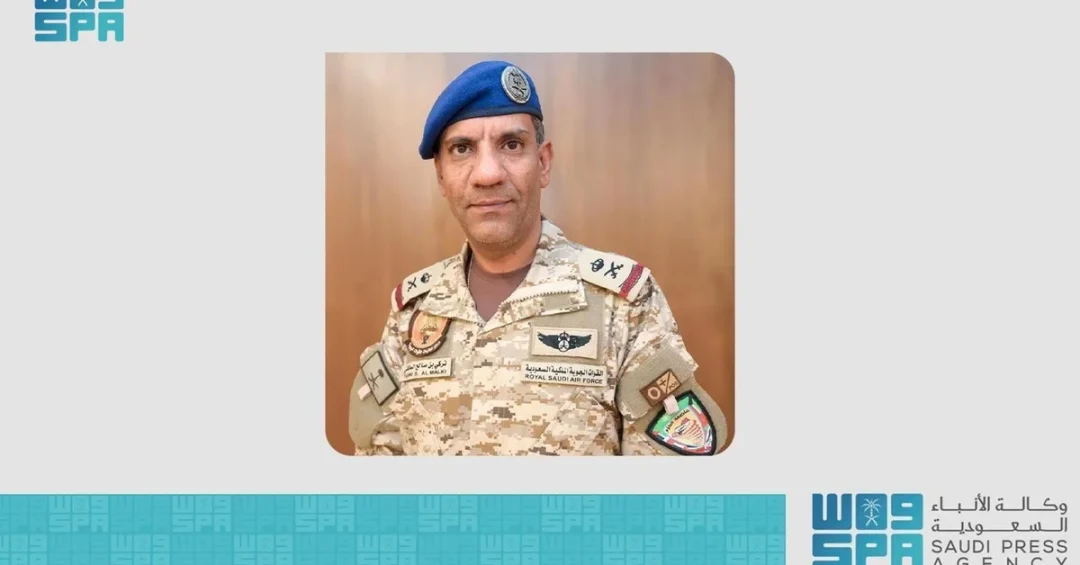
The Joint Forces Command of the Coalition to Restore Legitimacy in Yemen has announced that any military movements undermining de-escalation and efforts to protect civilians will receive a direct and immediate response. Official Spokesman Major General Turki Al-Malki issued the warning on December 27, 2025, after Yemeni Presidential Leadership Council President Dr. Rashad Al-Alimi requested urgent measures to protect civilians in Hadhramout Governorate.
This message, carried by the Saudi Press Agency, highlights continued joint efforts by Saudi Arabia and the UAE to reduce tension, support Yemen’s legitimate institutions, and prevent grave human rights violations.
Context and Background
Yemen’s Presidential Leadership Council had raised concerns over armed elements affiliated with the Southern Transitional Council, reporting serious violations against civilians in Hadhramout. In response, the coalition and its partners moved to facilitate the withdrawal of Transitional Council forces, oversee the handover of camps to the Nation Shield Forces, and allow local authorities to resume their responsibilities.
The Joint Forces Command’s announcement is therefore part of a structured effort to stabilise the governorate and create conditions for peaceful governance. Al-Malki reaffirmed the command’s ongoing support for the legitimate Yemeni government and called on all parties to exercise restraint, act responsibly, and respond to peaceful initiatives.
Key Details
Major General Al-Malki said any military movements that undermine these de-escalation efforts will be dealt with directly by coalition forces. The warning is designed to protect civilian lives and to safeguard the credibility of mediation efforts led by Saudi Arabia and the UAE.
The coalition’s position distinguishes between normal security operations and actions that threaten the de-escalation process. According to the official statement, the goal is not to escalate tensions but to preserve the gains made through confidence-building measures and dialogue.
Implications and Impact
The message signals that Saudi Arabia remains ready to act when civilian security is at risk. It also demonstrates that regional partners are coordinating closely with Yemen’s internationally recognised leadership to prevent localised conflict from expanding.
Stability in Hadhramout is significant beyond the governorate itself. As one of Yemen’s largest provinces, Hadhramout’s security affects the wider southern region and maritime routes along the Arabian Sea. Coalition support for local authorities and de-escalation helps protect civilians and limits opportunities for renewed conflict.
20 Questions
Q1. What prompted the coalition’s latest statement?
A1. The statement was prompted by a request from Yemeni Presidential Leadership Council President Dr. Rashad Al-Alimi for immediate measures to protect civilians in Hadhramout from grave human rights violations reported there.
Q2. Who issued the warning?
A2. The statement was issued on December 27, 2025, by Major General Turki Al-Malki, the official spokesman of the Coalition Forces to Restore Legitimacy in Yemen, through the Saudi Press Agency from Riyadh.
Q3. What is the role of the Joint Forces Command of the Coalition?
A3. The Joint Forces Command is the coalition body responsible for coordinating military and operational efforts in Yemen. It works to support legitimate Yemeni leadership, protect civilians, and implement de-escalation arrangements agreed with regional and international partners.
Q4. What did President Al-Alimi request?
A4. President Al-Alimi asked the coalition to take immediate measures to protect civilians in Hadhramout Governorate. He cited grave human rights violations involving armed elements affiliated with the Southern Transitional Council and asked for direct action to halt the abuses.
Q5. What role do Saudi Arabia and the UAE play in de-escalation?
A5. Saudi Arabia and the UAE are working together to reduce tensions, support the withdrawal of Transitional Council forces, hand over camps to Nation Shield Forces, and enable local authorities in Hadhramout to exercise their responsibilities under legitimate state structures.
Q6. How will the coalition respond to military movements that undermine de-escalation?
A6. The coalition says it will deal with such military movements directly and immediately. It did not detail the exact form of response but linked action to the need to protect civilian lives and ensure the success of the de-escalation process.
Q7. What is the role of the Nation Shield Forces?
A7. The Nation Shield Forces are Yemeni military units aligned with the legitimate authorities and the Presidential Leadership Council. Handing over camps to these forces is intended to strengthen state control and prevent armed groups from maintaining positions that threaten civilians.
Q8. Why does Hadhramout matter for Yemen’s stability?
A8. Hadhramout is Yemen’s largest governorate and contains important coastline and infrastructure. Its stability affects the southern region and maritime security in the Arabian Sea. The coalition supports local authorities there to prevent violations and the return of instability.
Q9. What support does the coalition provide to Yemen’s legitimate government?
A9. The Joint Forces Command supports the legitimate Yemeni government, which is led by the Presidential Leadership Council. It provides security cooperation and encourages unity among Yemeni parties, while opposing actions that could undermine the country’s lawful institutions and the de-escalation process.
Q10. What did Major General Al-Malki call on all parties to do?
A10. Major General Al-Malki called on all parties to bear national responsibility, exercise restraint, and respond positively to peaceful solutions. He emphasised that these actions are needed to preserve security and stability across Yemen.
Q11. Does the statement mention UN-led efforts?
A11. The published statement does not specifically refer to UN-led efforts. It reaffirms the coalition’s support for peaceful solutions and the legitimate Yemeni government, which is consistent with the wider international approach to resolving Yemen’s crisis through dialogue.
Q12. What is Saudi Arabia’s broader objective in Yemen?
A12. Saudi Arabia is working to lower military tensions and help Yemen transition from conflict to political dialogue. The Kingdom also supports Yemen’s legitimate leadership and aims to prevent armed groups from threatening security, civilians, and regional stability.
Q13. What does de-escalation mean in this context?
A13. De-escalation in this context means reducing tension by withdrawing forces, handing over camps to legitimate military units, ending hostile movements, and allowing local authorities to operate. The coalition’s warning protects these confidence-building steps so that peaceful solutions can advance.
Q14. How does the coalition’s warning protect civilians?
A14. The coalition says it will respond directly and immediately to military movements that undermine de-escalation or endanger civilians. This response is intended to deter violations and preserve the security arrangements that protect local communities in Hadhramout and elsewhere.
Q15. What role did the Southern Transitional Council play in the statement?
A15. The request from the Presidential Leadership Council stated that grave human rights violations were committed by armed elements affiliated with the Southern Transitional Council. The coalition statement asks these elements to withdraw and support peaceful efforts rather than continue destabilising actions.
Q16. What did the coalition say about handing over camps?
A16. Major General Al-Malki referred to the joint effort to facilitate the withdrawal of Transitional Council forces and hand over camps to the Nation Shield Forces. This handover allows local authorities to resume control and provide security for residents.
Q17. What is Saudi Arabia’s position on the Presidential Leadership Council?
A17. Saudi Arabia regards the Presidential Leadership Council as Yemen’s legitimate leadership. The coalition has expressed continuous and unwavering support for it and for the country’s institutions under the framework of international legitimacy.
Q18. How does the warning support long-term stability?
A18. By warning clearly against spoiler actions, the coalition helps prevent local violence from escalating into wider conflict. This strengthens the environment for governance, humanitarian access, and confidence-building dialogue needed for long-term stability in Yemen.
Q19. Where and when was the statement released?
A19. The statement was released in Riyadh on December 27, 2025, through the Saudi Press Agency. It carried the time 14:26 local time and was attributed to Major General Turki Al-Malki, the official spokesman.
Q20. What is the coalition’s final message?
A20. The coalition’s message is that de-escalation must be respected and civilians protected. It will act if those principles are threatened, while urging all parties to choose dialogue, responsibility, and peaceful settlement over conflict.
Vision 2030 Alignment
Saudi Arabia’s policy in Yemen reflects the Kingdom’s broader strategic commitment to security and stability in the region. Vision 2030 recognises that sustainable economic development requires a stable environment grounded in diplomacy, strong institutions, and the protection of civilians.
By backing de-escalation and the legitimate government, the Kingdom is helping build conditions for recovery and reconstruction in Yemen. The coalition’s measured warning reinforces Riyadh’s role as a reliable partner for peace and a guardian of regional stability.
Reader Feedback
We value your thoughts. Please share your feedback on this article.
Your feedback helps us improve our coverage.