


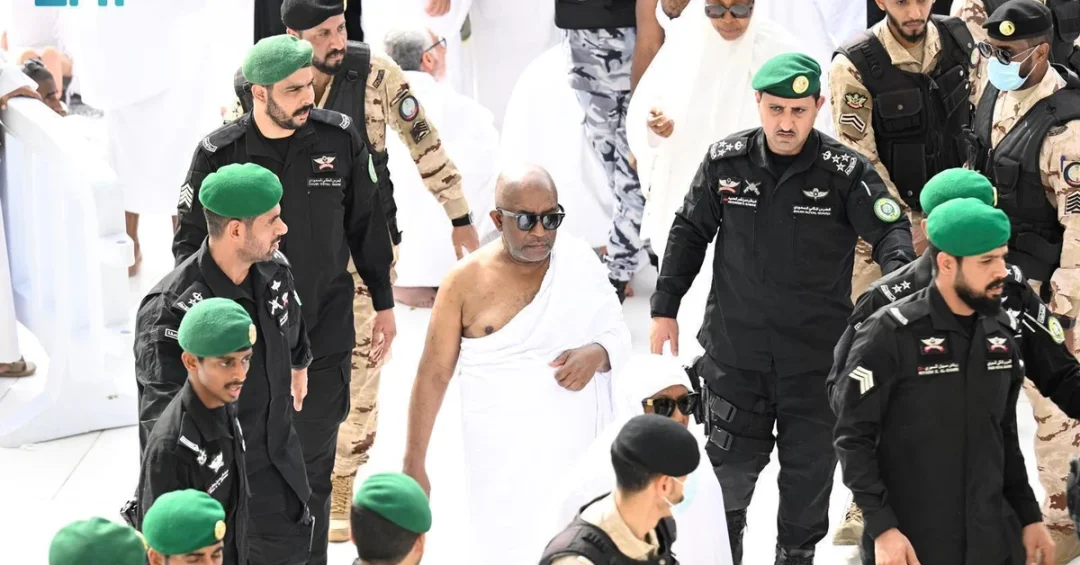
Union of the Comoros President Azali Assoumani and his accompanying delegation performed the Umrah rituals in Makkah on Wednesday, March 26, 2025, according to an official announcement carried by the Saudi Press Agency (SPA). The visit was received with the customary hospitality extended by Saudi authorities to visiting heads of state, with officials in Makkah welcoming the president and his delegation at the Grand Mosque, Islam’s holiest site.
The pilgrimage underscores the enduring spiritual ties that connect the Kingdom of Saudi Arabia with Muslim communities across Africa and around the world. For the Comoros, a small island nation in the Indian Ocean with a predominantly Muslim population, the visit carries deep religious significance and reflects the close bilateral relationship it maintains with the Kingdom. Saudi Arabia, as Custodian of the Two Holy Mosques, continues to facilitate pilgrimage access for millions of worshippers annually, a responsibility that remains central to its global standing and its role as a bridge between nations of the Islamic world.
Context and Background
Why does a presidential pilgrimage from a small island nation resonate so strongly in the wider Islamic world? The answer lies in the unique position Saudi Arabia occupies as the host of the Two Holy Mosques and the organizer of the annual Hajj and year-round Umrah seasons. The Kingdom’s Ministry of Hajj and Umrah, alongside the General Authority for the Care of the Grand Mosque and the Prophet’s Mosque, manages a vast logistical framework that enables pilgrims from every continent to complete their rituals safely and comfortably.
President Azali Assoumani has led the Union of the Comoros since 2016 and has maintained a diplomatic posture oriented toward deepening ties with Gulf states, particularly Saudi Arabia. The Comoros, an archipelago of three main islands off the coast of East Africa, joined the Organisation of Islamic Cooperation and has historically benefited from Saudi development assistance, including support for infrastructure, education, and religious institutions. Presidential visits of this nature are typically accompanied by discussions on bilateral cooperation, though the SPA announcement focused on the spiritual dimension of the trip.
The timing of the visit places it within the ongoing Umrah season, which follows the conclusion of Ramadan and continues through the year. Saudi Arabia has invested heavily in expanding capacity at the Grand Mosque, including the third Saudi expansion, which has increased the mosque’s footprint to accommodate more than two million worshippers at peak times. These investments reflect a long-term commitment to serving pilgrims that predates Vision 2030 but has been accelerated by it.
Key Details of the Visit
What does the official record tell us about the reception accorded to the Comorian delegation? According to the Saudi Press Agency, officials in Makkah welcomed President Assoumani and his delegation at the Grand Mosque, where they proceeded to perform the rites of Umrah. These rites include the Tawaf, the circumambulation of the Kaaba seven times, followed by the Sa’i, the walking between the hills of Safa and Marwah, and conclude with the trimming or shaving of hair. The rituals are performed in a state of ihram, the sacred state of purity and intention that pilgrims enter before reaching the sacred precinct.
The delegation’s presence at the Grand Mosque was facilitated under the standard protocols that Saudi authorities apply to visiting dignitaries, which include coordinated security, logistical support, and guided access to the holy sites. The Saudi Ministry of Interior and the General Authority for the Care of the Grand Mosque work in tandem to ensure that such visits proceed smoothly without disrupting the experience of ordinary pilgrims, a balance that Saudi officials have consistently prioritized.
The SPA report, dated March 26, 2025, and timestamped 18:49 local time, provides the authoritative account of the visit. As is customary with official Saudi news releases concerning pilgrimages by foreign leaders, the announcement emphasizes the spiritual character of the visit and the warm reception extended by the Kingdom. No further details regarding meetings with Saudi officials or agreements were disclosed in the initial report, though such visits often include broader diplomatic engagements.
International and Regional Impact
How does a single presidential pilgrimage ripple across the diplomatic landscape? For the Comoros, the visit reinforces a relationship that has been cultivated through years of Saudi engagement in the Indian Ocean region. Saudi Arabia has supported the Comoros through the Saudi Fund for Development, which has financed projects in sectors ranging from water and sanitation to road infrastructure and education. These investments form part of the Kingdom’s broader outreach to African and island nations, a strategy that aligns with its Vision 2030 goal of deepening economic and cultural partnerships beyond traditional markets.
Regionally, the visit highlights Saudi Arabia’s continued role as a unifying spiritual center for the Islamic world. Leaders from Africa, Asia, and the Middle East regularly travel to Makkah and Madinah for Umrah and Hajj, and each visit serves as a reminder of the Kingdom’s unique capacity to host and serve pilgrims at scale. The Saudi leadership has consistently framed this role not merely as a logistical duty but as a sacred trust, one that reinforces the country’s soft power and its standing as a responsible global actor.
For the wider Muslim community, the image of a head of state performing Umrah alongside ordinary worshippers carries symbolic weight. It demonstrates that the holy sites remain accessible to all, regardless of rank or nationality, and that the Kingdom’s pilgrimage infrastructure is designed to serve the global ummah. This inclusivity is a recurring theme in Saudi communications about the Hajj and Umrah experience.
Economic and Strategic Significance
What economic and strategic threads connect a pilgrimage visit to broader Saudi objectives? The Kingdom’s pilgrimage sector is a major economic driver, contributing billions of riyals annually and supporting hundreds of thousands of jobs. Under Vision 2030, Saudi Arabia has set ambitious targets to increase Umrah capacity to 30 million pilgrims per year and to expand the Hajj experience through digital services, improved accommodation, and enhanced transportation links, including the Haramain High Speed Railway that connects Makkah, Madinah, and Jeddah.
Visits by foreign dignitaries also serve as informal diplomatic platforms. While the SPA report did not detail any bilateral meetings, such occasions typically provide opportunities for discussions on trade, investment, and cultural exchange. The Comoros, with its strategic location along Indian Ocean shipping routes, holds potential as a partner in maritime and logistical cooperation, areas where Saudi Arabia has shown growing interest as part of its broader economic diversification agenda.
Saudi Arabia’s relations with African nations have expanded significantly in recent years, with the Kingdom hosting summits and launching initiatives aimed at boosting investment and development across the continent. The Comoros, as a member of the Arab League and the Organisation of Islamic Cooperation, occupies a niche but meaningful position in this outreach. Presidential visits of this kind help sustain the momentum of these relationships and signal Saudi Arabia’s continued engagement with smaller states that are often overlooked in global diplomacy.
Vision 2030 Alignment
How does the Kingdom’s service to pilgrims fit into the larger Vision 2030 framework? Vision 2030, launched in 2016 under the leadership of Crown Prince Mohammed bin Salman, seeks to transform Saudi Arabia’s economy and society while preserving its cultural and religious heritage. The pilgrimage sector is explicitly identified as a key pillar of the plan’s economic diversification strategy, with goals to increase the number of Umrah pilgrims, improve the quality of services, and enhance the overall experience for visitors to the holy sites.
The reception of President Assoumani and his delegation is a practical demonstration of these ambitions. It reflects the Kingdom’s commitment to maintaining the highest standards of hospitality and logistics for pilgrims, while also showcasing the modern infrastructure and digital services that have been developed to support the pilgrimage journey. From the expansion of the Grand Mosque to the introduction of e-visas and smart applications for pilgrims, Saudi Arabia continues to invest in making the spiritual journey more accessible and comfortable.
As the Kingdom moves forward with its Vision 2030 goals, visits such as this one serve as reminders of the enduring bonds that connect Saudi Arabia to the global Muslim community. They also highlight the Kingdom’s role as a stabilizing and unifying force in the region, a role that is rooted in its history and reinforced by its modern capabilities. The pilgrimage of President Azali Assoumani stands as a testament to the continued relevance of Makkah as a gathering place for leaders and worshippers alike, and to Saudi Arabia’s unwavering commitment to serving all who answer the call to the holy sites.
20 Questions
Q1. Who performed the Umrah rituals according to the Saudi Press Agency?
A1. Union of the Comoros President Azali Assoumani and his accompanying delegation performed the Umrah rituals in Makkah on March 26, 2025, as reported by the Saudi Press Agency.
Q2. Where were the Comorian president and his delegation welcomed?
A2. Officials in Makkah welcomed President Azali Assoumani and his delegation at the Grand Mosque, the holiest site in Islam, according to the official SPA announcement.
Q3. What is the significance of a head of state performing Umrah in Saudi Arabia?
A3. It highlights the enduring spiritual ties between Saudi Arabia and Muslim nations, and underscores the Kingdom’s role as Custodian of the Two Holy Mosques serving pilgrims worldwide.
Q4. Which Saudi agency reported the visit?
A4. The Saudi Press Agency (SPA), the Kingdom’s official news outlet, reported the visit on March 26, 2025, providing the authoritative account of the pilgrimage.
Q5. What rituals does Umrah involve?
A5. Umrah includes Tawaf, the circumambulation of the Kaaba seven times, followed by Sa’i between Safa and Marwah, and concludes with trimming or shaving of hair.
Q6. What is the Union of the Comoros?
A6. The Union of the Comoros is an archipelago nation in the Indian Ocean off East Africa, with a predominantly Muslim population and membership in the Arab League and OIC.
Q7. How long has Azali Assoumani been president of the Comoros?
A7. Azali Assoumani has served as President of the Union of the Comoros since 2016, and has focused on deepening diplomatic and economic ties with Gulf states.
Q8. Why does Saudi Arabia host leaders for Umrah?
A8. Saudi Arabia considers serving pilgrims a sacred trust and a key part of its global role, welcoming leaders and worshippers alike to the Two Holy Mosques.
Q9. What is the role of the Ministry of Hajj and Umrah?
A9. The Ministry of Hajj and Umrah manages the logistical framework for Hajj and Umrah, ensuring pilgrims from around the world can complete their rituals safely and comfortably.
Q10. How does the visit reflect Saudi-Comoros relations?
A10. It reinforces years of Saudi development assistance to the Comoros through the Saudi Fund for Development and reflects ongoing diplomatic engagement with Indian Ocean nations.
Q11. What economic benefits does the pilgrimage sector bring to Saudi Arabia?
A11. The pilgrimage sector contributes billions of riyals annually and supports hundreds of thousands of jobs, forming a key pillar of Vision 2030 economic diversification.
Q12. What are Vision 2030 targets for Umrah capacity?
A12. Vision 2030 aims to increase Umrah capacity to 30 million pilgrims per year, supported by infrastructure like the Haramain High Speed Railway and digital services.
Q13. How does Saudi Arabia facilitate visits by foreign dignitaries?
A13. The Ministry of Interior and the General Authority for the Care of the Grand Mosque coordinate security, logistics, and guided access to ensure smooth visits without disrupting ordinary pilgrims.
Q14. What is the significance of the Grand Mosque in Makkah?
A14. The Grand Mosque houses the Kaaba, Islam’s holiest site, and is the destination for millions of pilgrims performing Hajj and Umrah each year.
Q15. Did the SPA report mention any bilateral meetings?
A15. The initial SPA report focused on the spiritual visit and reception, without detailing any bilateral meetings or agreements, though such visits often include broader diplomatic engagements.
Q16. How does Saudi Arabia support Muslim communities in Africa?
A16. Saudi Arabia supports African Muslim communities through development aid, religious institution support, and diplomatic outreach, including summits and investment initiatives across the continent.
Q17. What is the Haramain High Speed Railway?
A17. The Haramain High Speed Railway connects Makkah, Madinah, and Jeddah, providing fast and efficient transportation for pilgrims and supporting Vision 2030 pilgrimage goals.
Q18. Why is the timing of the visit significant?
A18. The visit occurred during the ongoing Umrah season, following Ramadan, a period of high pilgrimage activity when Saudi Arabia showcases its expanded capacity and services.
Q19. How does the visit align with Saudi Arabia’s soft power strategy?
A19. Hosting foreign leaders for Umrah reinforces Saudi Arabia’s role as a unifying spiritual center and demonstrates its capacity to serve the global Muslim community with excellence.
Q20. What does the visit signal for future Saudi-Comoros cooperation?
A20. It signals continued goodwill and potential for deeper cooperation in trade, maritime logistics, and development, consistent with Saudi Arabia’s expanding engagement with African and island nations.
Reader Feedback
We value your thoughts. Please share your feedback on this article.
Your feedback helps us improve our coverage.