


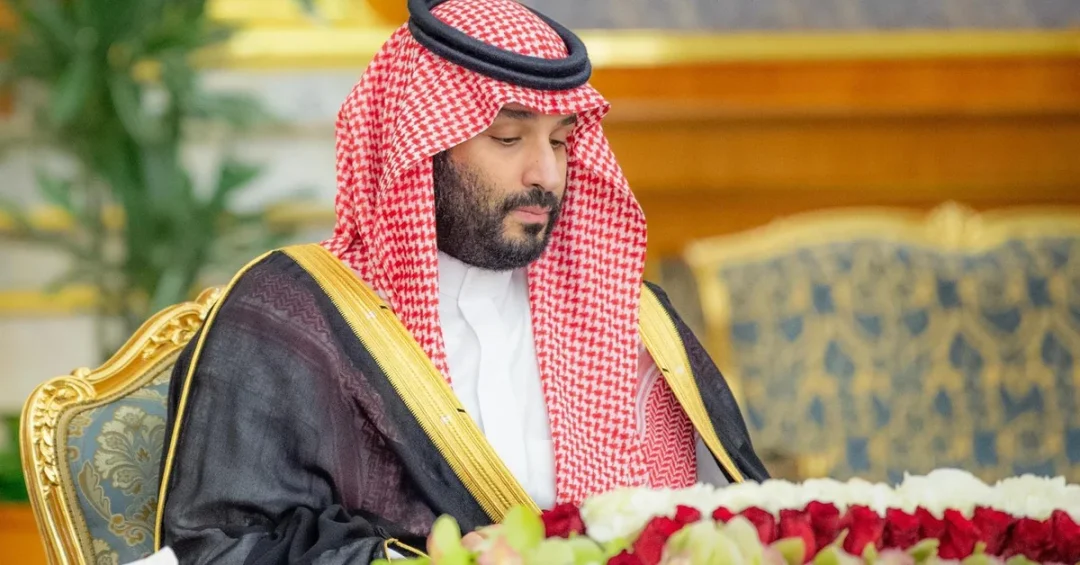
HRH Prince Mohammed bin Salman bin Abdulaziz Al Saud, Crown Prince and Prime Minister of the Kingdom of Saudi Arabia, chaired the Cabinet session in Jeddah on Tuesday, July 16, 2024, where key national and international matters were discussed and several agreements were approved. The session underscored the Kingdom’s proactive role in global diplomacy, its commitment to international peace and security, and its continued efforts to advance its Vision 2030 objectives through strategic partnerships and cooperation.
Context and Background
The Cabinet session, held under the leadership of Crown Prince Mohammed bin Salman, reflects Saudi Arabia’s ongoing engagement in regional and international affairs. During the meeting, the Cabinet reviewed recent talks between the Kingdom and various countries, including a message from the Amir of the State of Qatar regarding bilateral relations. This exchange highlights Saudi Arabia’s dedication to maintaining open channels of communication and fostering diplomatic ties that contribute to regional stability and cooperation. The Cabinet also examined the Kingdom’s participation in regional and international meetings, emphasizing the importance of collective action to promote global growth, prosperity, security, and stability. Such engagements are integral to Saudi Arabia’s foreign policy, which prioritizes multilateralism and peaceful coexistence.
Key Details
In a statement to the Saudi Press Agency (SPA), Minister of Media Salman bin Youssef Al-Dossary detailed the Cabinet’s discussions and decisions. The Cabinet reaffirmed the Kingdom’s commitment to enhancing international cooperation to ban weapons of mass destruction, particularly during the meetings of the Executive Council of the Organization for the Prohibition of Chemical Weapons (OPCW). It stressed the OPCW’s vital role in maintaining international peace and security and called for the full implementation of the Chemical Weapons Convention. On political issues, the Cabinet emphasized the need to strengthen the existing international order to serve as a stronghold against chaos and conflicts, providing a framework for cooperation and peaceful coexistence among nations. The Cabinet strongly condemned the continuation of genocidal massacres against the Palestinian people, demanding an immediate and permanent ceasefire and the protection of unarmed civilians in the occupied Palestinian territories. It also called for activating international accountability mechanisms for Israeli violations of international humanitarian law.
Domestically, the Cabinet reviewed performance reports of several key sectors, noting their continuous leaps in competitiveness and international indicators. In this regard, it praised the Kingdom’s achievement of second place among the Group of Twenty (G20) countries for the second consecutive time in the 2024 ICT Development Index issued by the United Nations International Telecommunication Union (ITU). This recognition underscores Saudi Arabia’s rapid digital transformation and its leadership in information and communication technology, a key pillar of Vision 2030.
The Cabinet also issued several decisions authorizing negotiations and signings of agreements and memoranda of understanding (MoUs) across various fields. These include authorizing the chairman of the Saudi Data and Artificial Intelligence Authority (SDAIA) to negotiate with UNESCO regarding the classification of the International Center for Artificial Intelligence Research and Ethics as a Category II center under UNESCO’s auspices. Other decisions include endorsing a general cooperation agreement with Sierra Leone and an MoU on political consultations between the two countries’ foreign ministries. The Cabinet authorized negotiations for cooperation agreements with Eswatini and Andorra, an MoU with India on agricultural research, a protocol with the Regional Organization for Conservation of the Environment of the Red Sea and Gulf of Aden (PERSGA) on fisheries management, an MoU with Thailand on health cooperation, an MoU with Chad on scientific and educational cooperation, and MoUs with Djibouti and Rwanda on digital government. Additionally, an MoU with the United Kingdom on research and innovation was approved, as well as an air transport agreement with Antigua and Barbuda, and negotiations with the International Fund for Agricultural Development (IFAD) on agricultural development.
Implications and Impact
These decisions and agreements have significant implications for Saudi Arabia’s international standing and its domestic development. The condemnation of violence against Palestinians reinforces the Kingdom’s consistent support for justice and humanitarian principles, aligning with its broader efforts to promote peace in the region. The focus on banning weapons of mass destruction demonstrates Saudi Arabia’s proactive stance on global security issues, enhancing its reputation as a responsible international actor. The various MoUs and agreements, spanning agriculture, health, education, digital government, and research, are set to boost bilateral cooperation, facilitate knowledge exchange, and open new avenues for trade and investment. These partnerships are expected to contribute to economic diversification, a core goal of Vision 2030, by fostering innovation and enhancing human capital. The recognition in the ICT Development Index highlights the Kingdom’s progress in digital infrastructure, which is essential for building a knowledge-based economy and improving the quality of life for citizens and residents.
Vision 2030 Alignment
The outcomes of this Cabinet session are firmly aligned with Saudi Arabia’s Vision 2030, which seeks to diversify the economy, enhance international cooperation, and position the Kingdom as a global leader. By forging partnerships across continents and sectors, Saudi Arabia is not only strengthening its diplomatic and economic ties but also accelerating its journey toward sustainable development. The emphasis on artificial intelligence, digital government, and research and innovation reflects the Vision’s focus on technology and human capability as drivers of future growth. As the Kingdom continues to chair such high-level meetings and make strategic decisions, it reaffirms its commitment to a prosperous, secure, and interconnected world, with the Crown Prince’s leadership guiding these efforts.
20 Questions
Q1. Who chaired the Cabinet session in Jeddah on July 16, 2024?
A1. HRH Prince Mohammed bin Salman bin Abdulaziz Al Saud, Crown Prince and Prime Minister of Saudi Arabia, chaired the session. His leadership ensures the alignment of national policies with Vision 2030 goals.
Q2. What was the purpose of the message from the Amir of Qatar?
A2. The message concerned bilateral relations between Saudi Arabia and Qatar, reflecting the strong ties and ongoing communication between the two nations to enhance regional cooperation and stability.
Q3. How did the Cabinet address the issue of weapons of mass destruction?
A3. The Cabinet reaffirmed Saudi Arabia’s commitment to international cooperation to ban weapons of mass destruction and prevent their proliferation, emphasizing the role of the OPCW in maintaining global peace and security.
Q4. What position did the Cabinet take on the Palestinian issue?
A4. The Cabinet strongly condemned the genocidal massacres against the Palestinian people, demanded an immediate and permanent ceasefire, and called for the protection of unarmed civilians in the occupied Palestinian territories.
Q5. What achievement in ICT did the Cabinet praise?
A5. The Cabinet praised Saudi Arabia’s achievement of second place among G20 countries for the second consecutive time in the 2024 ICT Development Index issued by the ITU, highlighting the Kingdom’s digital progress.
Q6. What agreement was authorized with UNESCO regarding artificial intelligence?
A6. The Cabinet authorized SDAIA’s chairman to negotiate with UNESCO to classify the International Center for AI Research and Ethics as a Category II center under UNESCO’s auspices, enhancing global AI ethics collaboration.
Q7. Which countries were involved in the endorsed general cooperation agreements?
A7. The Cabinet endorsed a general cooperation agreement with Sierra Leone and authorized negotiations for similar agreements with Eswatini and Andorra, expanding Saudi Arabia’s international partnerships.
Q8. What MoU was approved with India?
A8. An MoU between the Ministry of Environment, Water and Agriculture and India’s Council of Agricultural Research was authorized, focusing on agricultural cooperation and knowledge exchange.
Q9. What is the focus of the protocol with PERSGA?
A9. The protocol concerns regional cooperation in fisheries management and marine aquaculture in the Red Sea and Gulf of Aden, promoting sustainable marine resource management and environmental conservation.
Q10. What health cooperation was authorized with Thailand?
A10. An MoU between the Saudi Ministry of Health and Thailand’s Ministry of Health was authorized, aiming to enhance health cooperation through shared expertise and best practices.
Q11. What educational cooperation was approved with Chad?
A11. An MoU for scientific and educational cooperation between the Saudi Ministry of Education and Chad’s Ministry of Higher Education, Scientific Research and Innovation was authorized, fostering academic collaboration.
Q12. What media cooperation was approved with Djibouti?
A12. An MoU for cooperation in radio and television between the Saudi Broadcasting Authority and Radio Television Djibouti was approved, enhancing media collaboration and cultural exchange.
Q13. What digital government agreements were approved?
A13. MoUs for cooperation in digital government between Saudi Arabia’s Digital Government Authority and Djibouti’s Ministry of State of Digital Economy and Innovation, and Rwanda’s Information Society Authority, were approved.
Q14. What research and innovation MoU was approved with the UK?
A14. An MoU between Saudi Arabia’s Research Development and Innovation Authority and the UK’s Department for Science, Innovation and Technology was approved, promoting collaborative research and innovation.
Q15. What air transport agreement was authorized with Antigua and Barbuda?
A15. The Cabinet authorized the signing of an air transport services agreement between the governments of Saudi Arabia and Antigua and Barbuda, facilitating aviation cooperation and connectivity.
Q16. What negotiations were authorized with IFAD?
A16. The Cabinet authorized the Minister of Environment, Water and Agriculture to discuss a draft memorandum with the International Fund for Agricultural Development (IFAD), focusing on agricultural development and rural growth.
Q17. What reports did the Cabinet review from the Ministry of Industry and Mineral Resources?
A17. The Cabinet reviewed annual reports from the Ministry of Industry and Mineral Resources and the King Salman bin Abdulaziz Al Saud Complex for Prophetic Hadith, and made necessary decisions to support their continued progress.
Q18. How does the Cabinet session reflect Saudi Arabia’s international engagement?
A18. The session demonstrates Saudi Arabia’s active participation in global diplomacy, its commitment to multilateral cooperation, and its efforts to build partnerships that promote peace, security, and sustainable development worldwide.
Q19. What is the significance of the ICT Development Index ranking for Saudi Arabia?
A19. The ranking highlights Saudi Arabia’s rapid digital transformation and leadership in ICT among G20 nations, underscoring the Kingdom’s progress in building a knowledge-based economy and enhancing digital infrastructure.
Q20. How do these decisions align with Vision 2030?
A20. The decisions align with Vision 2030 by fostering international partnerships, promoting economic diversification, and advancing key sectors like technology, health, and education, all aimed at achieving sustainable development and global leadership.
Reader Feedback
We value your thoughts. Please share your feedback on this article.
Your feedback helps us improve our coverage.