


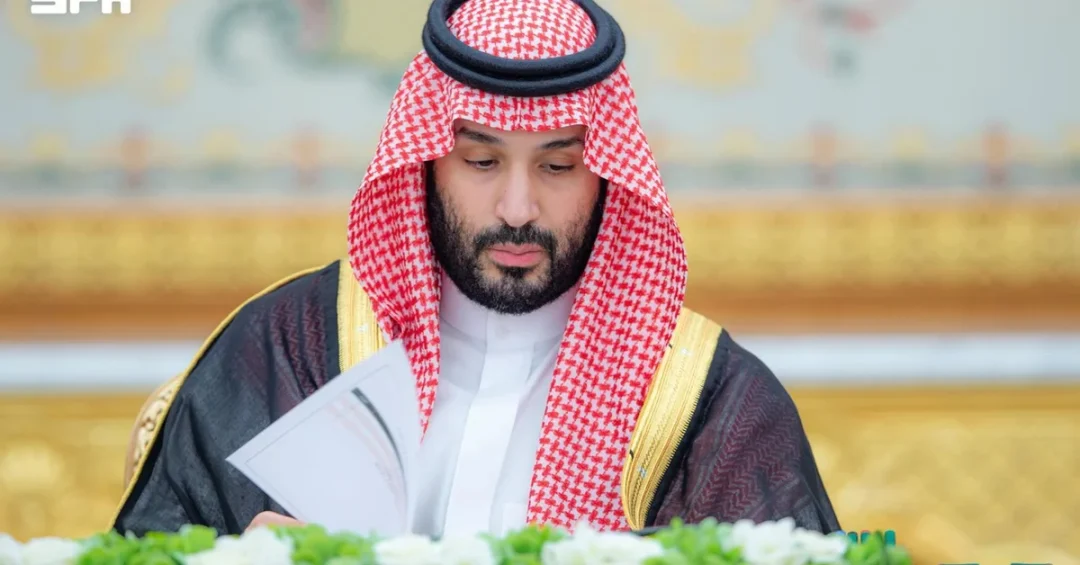
His Royal Highness Prince Mohammed bin Salman bin Abdulaziz Al Saud, Crown Prince and Prime Minister, chaired the Cabinet session held in Riyadh on October 13, 2026, where ministers commended the decisive role of the Armed Forces in defending the homeland and affirmed the Kingdom’s unwavering commitment to security, stability, and regional peace. The session, reported by the Saudi Press Agency, addressed a wide-ranging agenda covering national security, energy infrastructure, international cooperation, and domestic initiatives, resulting in ten significant decisions that reinforce Saudi Arabia’s strategic priorities.
What does a single Cabinet session reveal about a nation’s direction and ambitions? In the case of Saudi Arabia, the October 13 session chaired by Crown Prince Mohammed bin Salman demonstrates a government operating with clarity of purpose across multiple fronts simultaneously. From defending sovereignty against terrorist threats to expanding cultural and scientific partnerships abroad, the decisions taken reflect the comprehensive approach that defines the Kingdom’s governance under Vision 2030. The session underscored that Saudi Arabia remains a bastion of security and stability even as it advances toward further progress and prosperity.
Context and Background
The Cabinet session convened at a pivotal moment for the Kingdom, as Saudi Arabia continues to navigate complex regional dynamics while accelerating its ambitious transformation agenda. The meeting took place against the backdrop of ongoing security challenges posed by the terrorist Houthi militia, whose recurrent attacks have targeted Saudi airports, the holy cities of Makkah and Madinah, visitors to the Two Holy Mosques, and civilian and economic facilities. The Cabinet’s firm stance on these matters reflects the Kingdom’s dual commitment to protecting its people and maintaining its role as a force for regional stability.
How does a nation balance immediate security concerns with long-term development goals? Saudi Arabia’s approach, as evidenced by this session, involves addressing both imperatives through decisive action and strategic planning. The Cabinet commended the successful restoration of crude oil flows through the East-West pipeline by national cadres, highlighting the operational agility of the Kingdom’s energy sector and its emergency response capabilities. This achievement reinforces the reliability and continuity of supplies to global markets, supporting the world economy at a time when energy security remains a paramount concern for nations worldwide.
The session also reviewed outcomes of recent discussions and meetings held between the Kingdom and brotherly and friendly nations, as noted by Minister of Media Salman Al-Dossary in his statement to the Saudi Press Agency following the session. These engagements focused on strengthening bilateral and multilateral cooperation to enhance integration and coordinate responses to shared challenges across various sectors. The Cabinet’s review of the fifth meeting of the Security Coordination Committee of the Saudi-Bahraini Coordination Council further emphasized the continuation of joint efforts to implement agreed-upon initiatives serving the shared interests of both peoples, given their deep-rooted fraternal ties.
Key Details and Cabinet Decisions
What concrete outcomes emerged from this high-level gathering of the Kingdom’s leadership? The Cabinet issued ten specific decisions addressing international cooperation, domestic governance, and institutional reform. First, the Cabinet approved the Kingdom of Saudi Arabia’s accession to the humanitarian funds of the Organization of Islamic Cooperation, strengthening the Kingdom’s role in humanitarian efforts across the Islamic world. Second, it authorized the Minister of Culture, or a deputy, to discuss and sign a draft memorandum of understanding on cultural cooperation between the Ministry of Culture of Saudi Arabia and the Ministry of Culture of the Syrian Arab Republic.
Third, the Cabinet authorized the Minister of Environment, Water and Agriculture and Chairman of the Board of Directors of the National Center for Meteorology, or a deputy, to discuss and sign a draft memorandum of understanding between the center and the Middle East Green Initiative in the field of meteorology. Fourth, it approved a memorandum of scientific and educational cooperation between the Ministry of Education of Saudi Arabia and the UNESCO Regional Center for Quality and Excellence in Education. Fifth, the Cabinet approved a memorandum of understanding in research, development, and innovation between the Research, Development, and Innovation Authority of Saudi Arabia and the Scientific and Technological Research Council of Türkiye.
Sixth, the Cabinet approved a model memorandum of understanding on the rights of persons with disabilities between the Authority for the Care of People with Disabilities of Saudi Arabia and its counterparts in other countries and international organizations. Seventh, it authorized the Governor of the Saudi Central Bank, or a deputy, to discuss and sign a draft memorandum of understanding with the Central Bank of Egypt on cooperation in the supervision and oversight of financial institutions under their respective jurisdictions. Eighth, the Cabinet approved the Food Security Strategy for the Gulf Cooperation Council member states for use as a guideline for three years, addressing a critical priority for regional stability.
Ninth, the Cabinet determined that the Minister of Industry and Mineral Resources shall serve as Chairman of the Board of Directors of the General Authority of Foreign Trade, with the Minister of Commerce serving as Vice Chairman. Tenth, and significantly, the Cabinet approved the merger of the General Authority of Foreign Trade and the Saudi Export Development Authority into a single entity named the General Authority of Foreign Trade and Export, directing that necessary preparations for the merger be undertaken and that any matters requiring statutory action be submitted within 180 days. This consolidation represents a strategic streamlining of the Kingdom’s trade infrastructure.
International and Regional Impact
How do Saudi Arabia’s Cabinet decisions resonate beyond its borders? The session’s outcomes carry substantial implications for regional stability and international cooperation. The Cabinet’s commendation of military operations conducted by the Coalition to Restore Legitimacy in Yemen to neutralize threats posed by the terrorist Houthi militia underscores the Kingdom’s commitment to protecting not only its own security but also international peace, global trade, and maritime supply chains. The Cabinet reiterated the Kingdom’s firm position that it will not tolerate threats to its security or to maritime navigation in the Red Sea and the Bab al-Mandab Strait, expressing appreciation for brotherly and friendly nations and international organizations that condemned the crimes of the rebel coup militia.
The Cabinet also welcomed participants attending the 25th WPC Energy Congress as well as concurrent Arab and international ministerial meetings held in Riyadh this week. This gathering emphasizes that hosting these events underscores the Kingdom’s role as a global platform for energy dialogue, innovation, partnership-building, and international cooperation. The presence of international delegations in Riyadh reflects the global community’s recognition of Saudi Arabia’s centrality to discussions about energy transition, market stability, and sustainable development. The memoranda of understanding approved during the session, spanning cultural, scientific, educational, meteorological, and financial cooperation, demonstrate the breadth of the Kingdom’s international engagement.
Economic and Strategic Significance
What do these decisions mean for Saudi Arabia’s economic trajectory and strategic positioning? The restoration of crude oil flows through the East-West pipeline stands as a testament to the operational agility of the Kingdom’s energy sector, its emergency response capabilities, and its technical proficiency. This achievement reinforces the reliability and continuity of supplies to global markets and supports the world economy, demonstrating that Saudi Arabia remains a dependable energy partner even in challenging circumstances. The Cabinet’s emphasis on this restoration highlights the Kingdom’s understanding that its economic strength is intertwined with global prosperity.
The merger of the General Authority of Foreign Trade and the Saudi Export Development Authority into a unified General Authority of Foreign Trade and Export represents a significant institutional reform aimed at enhancing the Kingdom’s export competitiveness and trade facilitation capabilities. By consolidating these functions, Saudi Arabia positions itself to more effectively support domestic exporters, expand non-oil exports, and strengthen its presence in international markets. The appointment of the Minister of Industry and Mineral Resources as Chairman of the new authority’s board, with the Minister of Commerce as Vice Chairman, signals high-level government commitment to trade and export development as pillars of economic diversification.
The approval of the Food Security Strategy for the Gulf Cooperation Council member states for use as a guideline for three years addresses a critical regional priority. Food security has emerged as a central concern for nations worldwide, and Saudi Arabia’s leadership in developing a coordinated approach for the GCC demonstrates its commitment to regional cooperation and resilience. The memoranda of understanding with Türkiye on research and development, with Egypt on financial supervision, and with UNESCO on educational quality further strengthen the Kingdom’s network of international partnerships that support economic and social development.
Vision 2030 Alignment
How does this Cabinet session advance the objectives of Saudi Vision 2030? Every decision taken during the session aligns with the comprehensive transformation agenda that Crown Prince Mohammed bin Salman has championed since Vision 2030’s launch. The emphasis on economic diversification through trade authority restructuring, the focus on research and innovation partnerships, the commitment to cultural exchange and educational excellence, and the attention to social welfare through disability rights and blood donation initiatives all reflect the holistic approach that defines the Kingdom’s modernization journey. The Cabinet’s appreciation for widespread public participation in the 2026 national blood donation campaign, launched by HRH the Crown Prince to promote humanitarian values and achieve self-sufficiency in blood units and components for patients across all regions, exemplifies the social cohesion that Vision 2030 seeks to strengthen.
As Saudi Arabia continues its remarkable transformation, sessions like this one demonstrate that the Kingdom’s leadership remains focused on both protecting the nation’s security and advancing its prosperity. The Cabinet’s affirmation that Saudi Arabia ensures its position as a bastion of security and stability while maintaining its steadfast commitment to achieving regional and global peace captures the essence of the Kingdom’s role in the world today. With each decision, from humanitarian fund accession to trade authority consolidation, Saudi Arabia moves closer to realizing the ambitious goals of Vision 2030 while contributing to the stability and prosperity of the region and the broader international community.
20 Questions
Q1. Who chaired the Cabinet session held in Riyadh on October 13, 2026?
A1. His Royal Highness Prince Mohammed bin Salman bin Abdulaziz Al Saud, Crown Prince and Prime Minister, chaired the Cabinet session held in Riyadh on October 13, 2026, as reported by the Saudi Press Agency.
Q2. What did the Cabinet commend regarding the Armed Forces?
A2. The Cabinet commended the decisive role of the Armed Forces in defending the homeland, safeguarding its gains and resources, and effectively deterring any aggression or threat against its sovereignty and the safety of its citizens and residents.
Q3. What consequences did the Cabinet state the Houthi militia would face?
A3. The Cabinet stressed that the terrorist Houthi militia will bear the consequences of its crimes and recurrent attacks targeting Saudi Arabia’s airports, Makkah, Madinah, visitors to the Two Holy Mosques, and civilian and economic facilities.
Q4. What military operations did the Cabinet praise?
A4. The Cabinet praised military operations conducted by the Coalition to Restore Legitimacy in Yemen to neutralize threats posed by the terrorist Houthi militia against the Yemeni people, international peace and security, global trade, and maritime supply chains.
Q5. What did the Cabinet say about crude oil flows through the East-West pipeline?
A5. The Cabinet commended the successful restoration of crude oil flows through the East-West pipeline by national cadres, highlighting the operational agility of the Kingdom’s energy sector and its emergency response capabilities.
Q6. Who is the Minister of Media who made a statement following the session?
A6. Minister of Media Salman Al-Dossary made a statement to the Saudi Press Agency following the session, noting that the Cabinet reviewed outcomes of recent discussions and meetings with brotherly and friendly nations.
Q7. What did the Cabinet review regarding the Saudi-Bahraini Coordination Council?
A7. The Cabinet reviewed the outcomes of the fifth meeting of the Security Coordination Committee of the Saudi-Bahraini Coordination Council, emphasizing continued joint efforts to implement agreed-upon initiatives for both peoples.
Q8. What international congress did the Cabinet welcome to Riyadh?
A8. The Cabinet welcomed participants attending the 25th WPC Energy Congress as well as concurrent Arab and international ministerial meetings held in Riyadh this week.
Q9. What domestic campaign did the Cabinet express appreciation for?
A9. The Cabinet expressed appreciation for widespread public participation in the 2026 national blood donation campaign, launched by HRH the Crown Prince to promote humanitarian values and achieve self-sufficiency in blood units.
Q10. What was the first decision issued by the Cabinet?
A10. The first decision was approving the Kingdom of Saudi Arabia’s accession to the humanitarian funds of the Organization of Islamic Cooperation, strengthening the Kingdom’s role in humanitarian efforts across the Islamic world.
Q11. What cultural cooperation memorandum was authorized?
A11. The Cabinet authorized the Minister of Culture, or a deputy, to discuss and sign a draft memorandum of understanding on cultural cooperation between the Ministry of Culture of Saudi Arabia and the Ministry of Culture of the Syrian Arab Republic.
Q12. What meteorological cooperation was approved?
A12. The Cabinet authorized the Minister of Environment, Water and Agriculture and Chairman of the National Center for Meteorology to discuss and sign a draft memorandum with the Middle East Green Initiative in the field of meteorology.
Q13. What educational cooperation with UNESCO was approved?
A13. The Cabinet approved a memorandum of scientific and educational cooperation between the Ministry of Education of Saudi Arabia and the UNESCO Regional Center for Quality and Excellence in Education.
Q14. What research and development agreement with Türkiye was approved?
A14. The Cabinet approved a memorandum of understanding in research, development, and innovation between the Research, Development, and Innovation Authority of Saudi Arabia and the Scientific and Technological Research Council of Türkiye.
Q15. What memorandum regarding persons with disabilities was approved?
A15. The Cabinet approved a model memorandum of understanding on the rights of persons with disabilities between the Authority for the Care of People with Disabilities of Saudi Arabia and its counterparts in other countries and international organizations.
Q16. What financial cooperation with Egypt was authorized?
A16. The Cabinet authorized the Governor of the Saudi Central Bank, or a deputy, to discuss and sign a draft memorandum of understanding with the Central Bank of Egypt on cooperation in supervision and oversight of financial institutions.
Q17. What food security strategy was approved?
A17. The Cabinet approved the Food Security Strategy for the Gulf Cooperation Council member states for use as a guideline for three years, addressing a critical regional priority for stability and resilience.
Q18. Who will serve as Chairman of the General Authority of Foreign Trade board?
A18. The Minister of Industry and Mineral Resources shall serve as Chairman of the Board of Directors of the General Authority of Foreign Trade, with the Minister of Commerce serving as Vice Chairman.
Q19. What merger of authorities was approved by the Cabinet?
A19. The Cabinet approved the merger of the General Authority of Foreign Trade and the Saudi Export Development Authority into a single entity named the General Authority of Foreign Trade and Export, with preparations to be completed within 180 days.
Q20. How does this Cabinet session align with Saudi Vision 2030?
A20. The session’s decisions on trade restructuring, international partnerships, cultural exchange, and social welfare all align with Vision 2030’s goals of economic diversification, global engagement, and enhanced quality of life for all citizens.
Reader Feedback
We value your thoughts. Please share your feedback on this article.
Your feedback helps us improve our coverage.