


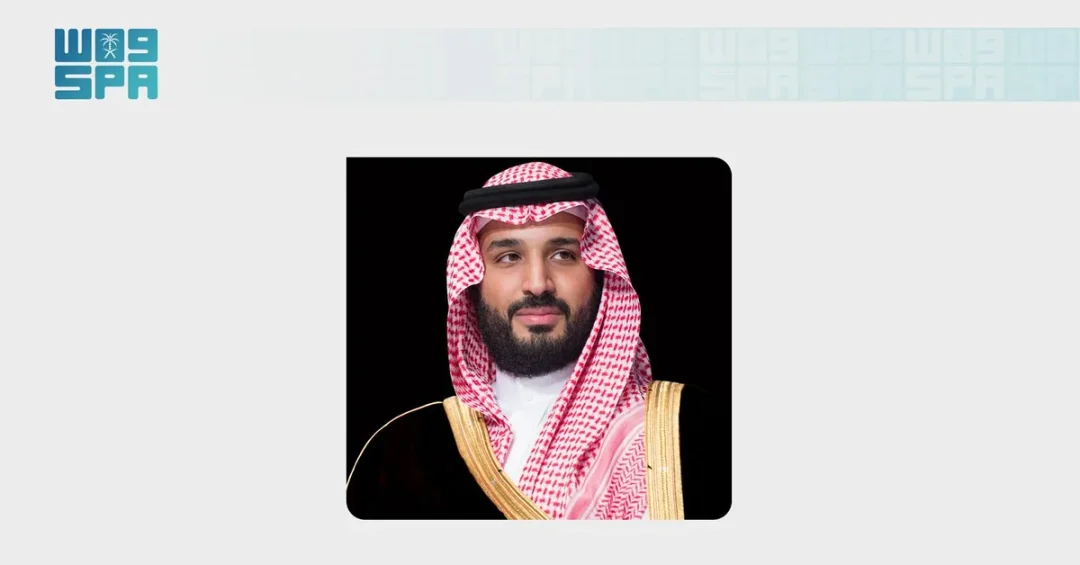
His Royal Highness Prince Mohammed bin Salman bin Abdulaziz Al Saud, Crown Prince and Prime Minister of the Kingdom of Saudi Arabia, sent a formal cable of congratulations to President Kassym-Jomart Tokayev of the Republic of Kazakhstan on the occasion of his country’s Republic Day, the Saudi Press Agency reported from Riyadh. The message, released through official Saudi channels on October 25, 2026, conveyed the Crown Prince’s sincere wishes for the president’s continued good health and happiness, as well as for the sustained progress and prosperity of the government and people of Kazakhstan.
What does a simple congratulatory cable reveal about the deepening relationship between two of Asia’s most consequential nations? In diplomatic practice, such messages are far more than ceremonial courtesies. They serve as public affirmations of bilateral friendship, signals of mutual respect between leaderships, and quiet markers of the strategic alignment that has grown steadily between the Kingdom of Saudi Arabia and the Republic of Kazakhstan over recent years. The timing of the message on Republic Day, one of Kazakhstan’s most significant national holidays, underscores the warmth of the ties that now bind Riyadh and Astana across energy, investment, agriculture, and multilateral diplomacy.
Context and Background
Why has the Saudi-Kazakhstan relationship become so important in the broader architecture of Eurasian diplomacy? Kazakhstan celebrates Republic Day on October 25 each year, commemorating the 1990 declaration of state sovereignty that preceded its full independence from the Soviet Union in 1991. It is a day of national pride in Astana, marked by official ceremonies, cultural events, and messages of goodwill from partner nations around the world. The Kingdom of Saudi Arabia has consistently honored this occasion at the highest levels, reflecting a diplomatic relationship that formally began in the early 1990s and has since matured into a wide-ranging partnership.
The Crown Prince’s cable follows a pattern of sustained high-level engagement between Riyadh and Astana. Saudi Arabia and Kazakhstan share foundational interests as major energy producers, both holding influential positions within the OPEC+ framework and the broader global oil market. Kazakhstan, a landlocked nation roughly the size of Western Europe, has leveraged its resource wealth to become Central Asia’s largest economy, while Saudi Arabia has pursued its Vision 2030 transformation agenda, opening new avenues for cooperation in non-oil sectors including agriculture, logistics, technology, and tourism.
Diplomatic observers note that congratulatory messages between heads of state and government are carefully calibrated instruments. They reaffirm personal relationships between leaders, acknowledge shared priorities, and often precede or follow substantive bilateral engagements. In this case, the message from Prince Mohammed bin Salman reinforces a relationship that has been steadily institutionalized through reciprocal visits, signed agreements, and coordination in multilateral forums including the United Nations, the Organization of Islamic Cooperation, and the Gulf Cooperation Council’s external partnerships.
Key Details
What exactly did the Crown Prince’s message convey, and why does its wording matter? According to the Saudi Press Agency, His Royal Highness Prince Mohammed bin Salman bin Abdulaziz Al Saud extended his congratulations to President Kassym-Jomart Tokayev on the occasion of Kazakhstan’s Republic Day. The cable included wishes for the president’s continued good health and happiness, and for the government and people of Kazakhstan continued progress and prosperity. The language is traditional yet meaningful, reflecting the respect that Riyadh accords to Astana and the personal rapport between the two leaders.
The message was transmitted from Riyadh and distributed through official Saudi channels, including the Saudi Press Agency, which serves as the Kingdom’s principal source of verified government news. Its release at 14:36 local time, corresponding to 11:36 GMT, ensured timely delivery on the holiday itself, a detail that diplomatic protocol observers regard as a sign of attentiveness and goodwill. Such precision is characteristic of Saudi diplomatic communications, which prioritize clarity, respect, and consistency in messaging toward partner nations.
President Kassym-Jomart Tokayev, a veteran diplomat who previously served as Kazakhstan’s foreign minister and as Director-General of the United Nations Office at Geneva, has led his country since 2019. Under his leadership, Kazakhstan has pursued a multi-vector foreign policy, balancing relations with Russia, China, the European Union, the United States, and increasingly with the Gulf states. Saudi Arabia has emerged as a key partner within that framework, particularly in energy coordination, Islamic finance, and agricultural trade. The Crown Prince’s message thus lands within a context of deliberate and mutually beneficial engagement.
International and Regional Impact
How does a bilateral courtesy between Riyadh and Astana resonate beyond their own borders? The Saudi-Kazakhstan relationship sits at the intersection of several strategic geographies: the Gulf, Central Asia, and the broader Eurasian landmass. For Saudi Arabia, Kazakhstan represents a gateway to Central Asia, a region of growing importance for trade routes, energy corridors, and food security. For Kazakhstan, Saudi Arabia offers access to Gulf investment capital, expertise in petrochemicals, and a partner aligned with its goals of economic diversification and international connectivity.
The congratulatory cable also reflects Saudi Arabia’s broader diplomatic posture under Vision 2030, which emphasizes proactive engagement with emerging markets and regional powers. Riyadh has expanded its diplomatic footprint across Central Asia in recent years, signing agreements and hosting investment forums that bring together governments and private sectors. These efforts complement the Kingdom’s role in global energy markets and its ambitions to become a hub for logistics, tourism, and technology. Messages such as the one sent to President Tokayev are small but meaningful components of that larger strategy.
Regional analysts also note the importance of people-to-people and cultural ties. Kazakhstan has a significant Muslim population, and Saudi Arabia’s custodianship of the Two Holy Mosques gives it a unique standing across the Islamic world, including in Central Asia. Pilgrimage, educational exchanges, and cultural cooperation form a quieter but durable layer of the relationship, one that the Republic Day message implicitly acknowledges by addressing the government and people of Kazakhstan as a whole.
Economic and Strategic Significance
What economic foundations underpin the diplomatic warmth between Riyadh and Astana? Both countries are major oil producers, and their coordination within OPEC+ has been instrumental in stabilizing global energy markets during periods of volatility. Kazakhstan’s Tengiz, Kashagan, and Karachaganak fields rank among the world’s largest, while Saudi Arabia’s reserves and production capacity give it a central role in global supply management. This shared stake in energy stability creates a natural basis for dialogue and cooperation at the highest levels.
Beyond hydrocarbons, Saudi Arabia and Kazakhstan have identified promising avenues for collaboration in agriculture, mining, renewable energy, and digital infrastructure. Kazakhstan is a leading exporter of wheat and other grains, and Gulf states, including Saudi Arabia, have invested in agricultural projects there to strengthen food security. Conversely, Saudi companies have explored opportunities in Kazakhstan’s mining sector, which is rich in uranium, copper, and rare earth elements critical to the global energy transition. These complementarities suggest that the bilateral relationship will continue to deepen in the years ahead.
Investment and trade flows between the two nations remain modest relative to their potential, but both governments have signaled a desire to expand them. Saudi Arabia’s Public Investment Fund and its portfolio companies have shown interest in Central Asian infrastructure and logistics, while Kazakhstan has sought to attract Gulf capital as part of its own reform agenda. The Crown Prince’s message, though brief, is consistent with this economic logic, sustaining the momentum of a partnership that both sides view as strategically valuable.
Vision 2030 Alignment
How does this diplomatic gesture connect to Saudi Arabia’s long-term transformation? Vision 2030, launched under the leadership of His Royal Highness Prince Mohammed bin Salman, seeks to diversify the Kingdom’s economy, expand its global partnerships, and position Saudi Arabia as a pivotal player in international affairs. Strengthening ties with Kazakhstan, a nation of strategic location and resource wealth, aligns with these objectives by opening channels for trade, investment, and political coordination that extend beyond the traditional Gulf neighborhood.
The Crown Prince’s message also reflects the broader Vision 2030 emphasis on diplomacy as an instrument of economic opportunity. Saudi Arabia’s foreign policy under Vision 2030 has become more active, more diversified, and more attuned to emerging markets. From Central Asia to Africa to Latin America, Riyadh is building relationships that serve its economic and security interests while contributing to regional stability. The Republic Day cable to President Tokayev is a small but telling example of this approach in action.
As Kazakhstan marks its national day and Saudi Arabia continues its ambitious transformation, the relationship between the two countries stands as a model of constructive engagement between resource-rich nations seeking diversified, future-oriented economies. The Crown Prince’s congratulations carry with them the weight of a partnership that both Riyadh and Astana appear committed to nurturing, for the benefit of their peoples and the stability of the wider region.
20 Questions
Q1. Who sent the congratulatory cable to the President of Kazakhstan?
A1. His Royal Highness Prince Mohammed bin Salman bin Abdulaziz Al Saud, Crown Prince and Prime Minister of the Kingdom of Saudi Arabia, sent the cable, as reported by the Saudi Press Agency from Riyadh.
Q2. Who is the President of Kazakhstan that received the message?
A2. President Kassym-Jomart Tokayev, who has led Kazakhstan since 2019 and previously served as foreign minister and as Director-General of the United Nations Office at Geneva.
Q3. What occasion prompted the Crown Prince’s message?
A3. The message was sent on the occasion of Kazakhstan’s Republic Day, a national holiday celebrated on October 25 each year to commemorate the country’s 1990 declaration of state sovereignty.
Q4. What did the Crown Prince wish for President Tokayev?
A4. He wished the president continued good health and happiness, and extended his hopes for the continued progress and prosperity of the government and people of Kazakhstan.
Q5. Through which official channel was the message released?
A5. The message was released through the Saudi Press Agency, the Kingdom’s principal official news outlet, which reported it from Riyadh on October 25, 2026.
Q6. When is Kazakhstan’s Republic Day celebrated?
A6. Republic Day is celebrated on October 25 each year, marking the 1990 declaration of state sovereignty that preceded Kazakhstan’s full independence from the Soviet Union in 1991.
Q7. How long have Saudi Arabia and Kazakhstan maintained diplomatic relations?
A7. The two countries established diplomatic relations in the early 1990s following Kazakhstan’s independence, and ties have steadily expanded across energy, trade, and multilateral cooperation since then.
Q8. What shared interest connects Saudi Arabia and Kazakhstan most directly?
A8. Both are major oil producers and coordinate within the OPEC+ framework, giving them a shared stake in global energy market stability and supply management.
Q9. What is Kazakhstan’s position in Central Asia’s economy?
A9. Kazakhstan is Central Asia’s largest economy, roughly the size of Western Europe geographically, and is a leading exporter of oil, wheat, uranium, copper, and other commodities.
Q10. Why are congratulatory cables diplomatically significant?
A10. Such messages affirm bilateral friendship, reinforce personal relationships between leaders, and signal mutual respect and strategic alignment between nations on important national occasions.
Q11. What role does the Saudi Press Agency play in such announcements?
A11. The Saudi Press Agency serves as the Kingdom’s official source for government news, ensuring that diplomatic communications are accurately and promptly disseminated to domestic and international audiences.
Q12. How does this message fit into Saudi Arabia’s foreign policy?
A12. It reflects Vision 2030’s emphasis on proactive diplomacy and expanded partnerships with emerging markets, including Central Asian nations of strategic and economic importance.
Q13. What economic sectors offer potential for Saudi-Kazakhstan cooperation?
A13. Energy, agriculture, mining, renewable energy, logistics, and digital infrastructure are among the sectors where both countries have identified complementarities and opportunities for collaboration.
Q14. What is Kazakhstan’s foreign policy approach under President Tokayev?
A14. Kazakhstan pursues a multi-vector foreign policy, balancing relations with Russia, China, the European Union, the United States, and Gulf states including Saudi Arabia.
Q15. How does Saudi Arabia’s custodianship of the Two Holy Mosques affect ties with Kazakhstan?
A15. It gives Saudi Arabia a unique standing across the Islamic world, including in Central Asia, fostering pilgrimage, educational, and cultural connections with Kazakhstan’s significant Muslim population.
Q16. What is the significance of the message’s timing?
A16. The message was transmitted at 14:36 local time, 11:36 GMT, ensuring timely delivery on the holiday itself, which observers regard as a sign of diplomatic attentiveness and goodwill.
Q17. How do Saudi-Kazakhstan ties relate to OPEC+ cooperation?
A17. Both nations participate in OPEC+ production coordination, which has been instrumental in stabilizing global oil markets during periods of volatility and aligning their energy interests.
Q18. What investment opportunities exist for Saudi funds in Kazakhstan?
A18. Saudi Arabia’s Public Investment Fund and its companies have shown interest in Central Asian infrastructure, logistics, mining, and agriculture, aligning with Kazakhstan’s reform and development goals.
Q19. How does Vision 2030 shape Saudi Arabia’s engagement with Central Asia?
A19. Vision 2030 encourages diversification of partnerships beyond traditional regions, promoting trade, investment, and political coordination with emerging markets such as Kazakhstan to support economic transformation.
Q20. What does this exchange suggest about future Saudi-Kazakhstan relations?
A20. It suggests continued deepening of a partnership built on mutual respect, shared energy interests, and expanding cooperation across agriculture, mining, technology, and multilateral diplomacy in the years ahead.
Reader Feedback
We value your thoughts. Please share your feedback on this article.
Your feedback helps us improve our coverage.