


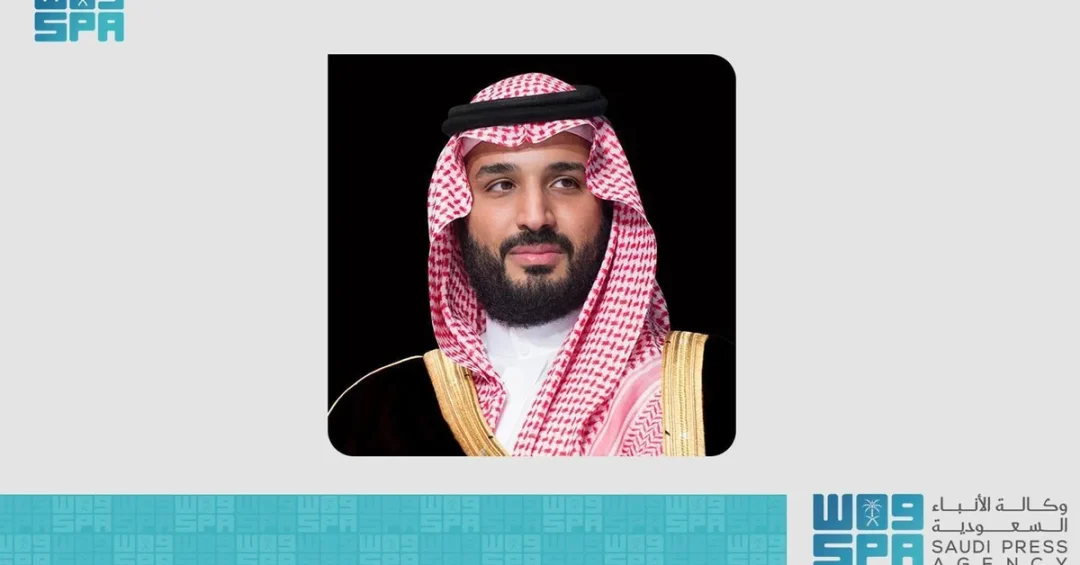
His Royal Highness Prince Mohammed bin Salman bin Abdulaziz Al Saud, Crown Prince and Prime Minister of the Kingdom of Saudi Arabia, sent a cable of congratulations to President Bassirou Diomaye Diakhar Faye of the Republic of Senegal on the occasion of his country’s Independence Day, according to the Saudi Press Agency. The message, dated April 4, 2025, conveyed the Crown Prince’s best wishes for the president’s continued good health and happiness, as well as for the government and people of Senegal to enjoy steady progress and prosperity. The congratulatory cable reflects the enduring diplomatic ties between Riyadh and Dakar, two nations that have cultivated a relationship grounded in mutual respect, shared Islamic heritage, and growing economic cooperation.
Why does a simple diplomatic greeting carry weight in international affairs? In the world of statecraft, such gestures are far more than ceremonial formalities. They signal continuity, goodwill, and the readiness to deepen partnerships. For Saudi Arabia, which under Vision 2030 is expanding its global network of allies across Africa, Asia, and beyond, congratulatory messages to leaders of friendly nations form part of a broader strategy of engagement. Senegal, a West African nation with a Muslim-majority population and a strategic position on the Atlantic coast, represents a valued partner in that outreach. The Crown Prince’s message thus underscores a relationship that has quietly strengthened over decades and now stands poised for further growth.
Context and Background
How did Saudi-Senegalese relations evolve to their current state? Diplomatic ties between the Kingdom of Saudi Arabia and the Republic of Senegal were formally established in 1960, the same year Senegal gained independence from France. Over the ensuing six decades, the relationship has deepened through regular high-level exchanges, agreements in trade and investment, and cooperation within multilateral organizations such as the Organisation of Islamic Cooperation (OIC) and the United Nations. Saudi Arabia has consistently supported Senegal’s development aspirations, while Senegal has backed the Kingdom’s positions on regional and international issues. The two countries share a commitment to stability, moderation, and economic modernization.
Senegal’s Independence Day, celebrated annually on April 4, marks the nation’s emergence as a sovereign state in 1960. The day is observed with parades, cultural events, and official ceremonies in Dakar and across the country. For Saudi Arabia, sending congratulations on this date is a tradition that reflects the warmth of the bilateral relationship. The Crown Prince’s cable is part of a series of similar messages exchanged with leaders of friendly nations throughout the year, each tailored to the occasion and the specific ties involved. Such communications are routinely reported by the Saudi Press Agency, the Kingdom’s official news outlet, ensuring transparency and public record.
President Bassirou Diomaye Diakhar Faye, who took office in April 2024, represents a new generation of Senegalese leadership. His election signaled a desire for reform and economic renewal in Senegal, priorities that resonate with Saudi Arabia’s own transformation under Vision 2030. Both leaders are focused on diversifying their economies, attracting investment, and creating opportunities for young people. This shared agenda provides fertile ground for expanded cooperation, making the Crown Prince’s message not merely a diplomatic courtesy but a reaffirmation of common goals.
Key Details
What exactly did the Crown Prince’s message convey? According to the Saudi Press Agency, His Royal Highness Prince Mohammed bin Salman extended his sincere congratulations to President Faye and wished him continued good health and happiness. He also expressed his hopes for the government and people of Senegal to achieve steady progress and prosperity. The cable was sent on Friday, April 4, 2025, corresponding to the 65th anniversary of Senegal’s independence. The message was delivered through official diplomatic channels and subsequently published by SPA, the Kingdom’s authoritative source for state news.
The wording of the cable follows the established format of such communications, which emphasize respect, goodwill, and the desire for strengthened relations. While brief, the message carries the weight of the Crown Prince’s position as both heir to the throne and head of government. As Prime Minister, Prince Mohammed bin Salman oversees Saudi Arabia’s domestic and foreign policies, making his personal outreach to foreign leaders a significant indicator of the Kingdom’s diplomatic priorities. The fact that the message was sent promptly and publicly underscores the importance Riyadh attaches to its African partnerships.
Senegal, for its part, has consistently maintained friendly relations with Saudi Arabia. The country is a member of the OIC, whose headquarters are in Jeddah, and has participated in Saudi-led initiatives on counterterrorism, food security, and cultural exchange. In recent years, Senegalese officials have visited the Kingdom to explore investment opportunities, particularly in agriculture, energy, and infrastructure. Saudi Arabia’s public investment fund, the Public Investment Fund (PIF), has shown interest in African markets, and Senegal could benefit from such engagement. The Crown Prince’s message thus builds on a foundation of practical cooperation.
International and Regional Impact
Why does this bilateral exchange matter beyond the two capitals? Africa has become a focal point of Saudi foreign policy in recent years, as the Kingdom seeks to diversify its alliances and economic interests. The continent’s growing population, abundant natural resources, and emerging markets present opportunities that align with Vision 2030’s goal of expanding non-oil revenues and global partnerships. Senegal, with its stable democracy, strategic port, and membership in the Economic Community of West African States (ECOWAS), is a natural partner in this outreach. The Crown Prince’s congratulatory cable is a small but meaningful signal that Saudi Arabia values and seeks to nurture this relationship.
At the regional level, Saudi Arabia’s engagement with West Africa also serves broader security and stability objectives. The Sahel region, which borders Senegal to the east, has faced challenges from terrorism, political instability, and climate change. By strengthening ties with Senegal, a relatively stable and influential neighbor, the Kingdom contributes to a network of moderate, cooperative states that can collectively address these challenges. Moreover, Saudi Arabia’s religious and cultural ties with Senegal’s Muslim community—which constitutes the vast majority of the population—provide a basis for people-to-people exchanges, educational scholarships, and humanitarian assistance. These soft-power initiatives complement the diplomatic message and reinforce the Kingdom’s image as a responsible global actor.
Economic and Strategic Significance
What economic opportunities does the Saudi-Senegalese relationship hold? Trade between the two countries remains modest but has potential for growth. Saudi Arabia exports petrochemicals, plastics, and machinery to Senegal, while Senegal exports agricultural products, fish, and phosphates to the Kingdom. In 2023, bilateral trade was valued at approximately $200 million, a figure that both sides have expressed interest in increasing. Saudi companies, including the Saudi Fund for Development (SFD), have financed infrastructure projects in Senegal, such as roads, hospitals, and water treatment facilities. These projects not only support Senegal’s development but also create goodwill and open doors for further Saudi investment.
Energy cooperation is another promising avenue. Saudi Arabia, a global leader in oil and gas, has expertise that could help Senegal develop its recently discovered offshore natural gas reserves. The Greater Tortue Ahmeyim (GTA) project, a joint venture between Senegal, Mauritania, and international partners, is expected to begin production in the coming years. Saudi Aramco, the Kingdom’s national oil company, has expressed interest in African energy projects, and its involvement in Senegal could be mutually beneficial. Additionally, Saudi Arabia’s renewable energy ambitions, driven by Vision 2030, align with Senegal’s own goals to increase solar and wind power. Knowledge-sharing and joint ventures in this sector could emerge as a key pillar of future cooperation.
Vision 2030 Alignment
How does this diplomatic gesture connect to Saudi Arabia’s long-term vision? Vision 2030, launched in 2016 by Crown Prince Mohammed bin Salman, aims to transform the Kingdom’s economy, society, and global role. A central pillar of the vision is to strengthen Saudi Arabia’s international partnerships and position the country as a hub connecting three continents: Asia, Europe, and Africa. The Crown Prince’s congratulatory message to President Faye is a microcosm of this strategy—a personal touch that reinforces a relationship with a key African nation. By maintaining and deepening ties with countries like Senegal, Saudi Arabia builds a network of allies that can support its economic diversification, cultural exchange, and diplomatic objectives.
Furthermore, the message reflects the Kingdom’s commitment to Islamic solidarity and cooperation. Senegal is a member of the OIC, and Saudi Arabia, as the custodian of the Two Holy Mosques, places great importance on its relations with Muslim-majority countries. The Crown Prince’s wishes for Senegal’s progress and prosperity echo the Vision 2030 goal of promoting moderation, tolerance, and shared development. As Saudi Arabia continues its transformation, partnerships with nations like Senegal will play a role in shaping a more interconnected and prosperous world. The congratulatory cable, though brief, is a thread in this larger tapestry, demonstrating that even small diplomatic acts contribute to the Kingdom’s grand vision.
20 Questions
Q1. Who sent a cable of congratulations to the President of Senegal?
A1. His Royal Highness Prince Mohammed bin Salman bin Abdulaziz Al Saud, Crown Prince and Prime Minister of Saudi Arabia, sent the cable.
Q2. When was the cable sent?
A2. The cable was sent on April 4, 2025, according to the Saudi Press Agency.
Q3. Who is the President of Senegal?
A3. President Bassirou Diomaye Diakhar Faye is the President of the Republic of Senegal.
Q4. What occasion prompted the congratulations?
A4. The occasion was Senegal’s Independence Day, celebrated annually on April 4.
Q5. What did the Crown Prince wish for President Faye?
A5. He wished the president continued good health and happiness.
Q6. What did the Crown Prince wish for the people of Senegal?
A6. He wished the government and people of Senegal steady progress and prosperity.
Q7. Which Saudi agency reported the cable?
A7. The Saudi Press Agency (SPA) reported the cable.
Q8. When did Senegal gain independence?
A8. Senegal gained independence from France on April 4, 1960.
Q9. How long have Saudi-Senegalese diplomatic relations existed?
A9. Diplomatic relations were established in 1960, the same year Senegal became independent.
Q10. What is the significance of the Crown Prince’s message?
A10. It reaffirms Saudi Arabia’s commitment to strong ties with Senegal and reflects the Kingdom’s broader engagement with Africa.
Q11. Is Senegal a member of the Organisation of Islamic Cooperation?
A11. Yes, Senegal is a member of the OIC, which is headquartered in Jeddah, Saudi Arabia.
Q12. What economic sectors offer potential for Saudi-Senegalese cooperation?
A12. Agriculture, energy, infrastructure, and renewable energy are key sectors with growth potential.
Q13. Has Saudi Arabia invested in Senegal’s development?
A13. Yes, the Saudi Fund for Development has financed infrastructure projects in Senegal, including roads and hospitals.
Q14. What is the Greater Tortue Ahmeyim project?
A14. It is an offshore natural gas project involving Senegal, Mauritania, and international partners.
Q15. How does this message align with Vision 2030?
A15. It supports Vision 2030’s goal of expanding international partnerships and strengthening Saudi Arabia’s global role.
Q16. What is the value of bilateral trade between Saudi Arabia and Senegal?
A16. Bilateral trade was valued at approximately $200 million in 2023, with potential for growth.
Q17. What role does Saudi Arabia play in the Muslim world?
A17. Saudi Arabia is the custodian of the Two Holy Mosques and a leading voice in the OIC.
Q18. How does Saudi Arabia support moderation and stability in Africa?
A18. Through diplomatic engagement, development assistance, and partnerships with moderate states like Senegal.
Q19. What is the significance of Independence Day in Senegal?
A19. It marks the nation’s sovereignty and is celebrated with parades and cultural events nationwide.
Q20. What does the future hold for Saudi-Senegalese relations?
A20. Continued cooperation in trade, energy, and culture is expected, driven by shared interests and Vision 2030.
Reader Feedback
We value your thoughts. Please share your feedback on this article.
Your feedback helps us improve our coverage.
Related articles
 NCM Forecasts Rainfall and Hail in Hail Region Until 10 PM
 Saudi Arabia Condemns Israeli Escalation in Gaza
 NCM Warns of Heavy Rain, Thunderstorms in Jazan
 KSrelief Distributes Food Baskets in Northern Lebanon
 KSrelief Clinic Treats 1,691 in Yemen’s Hajjah in February
 KSrelief Distributes 2,000 Food Baskets in Sudan’s River Nile State