


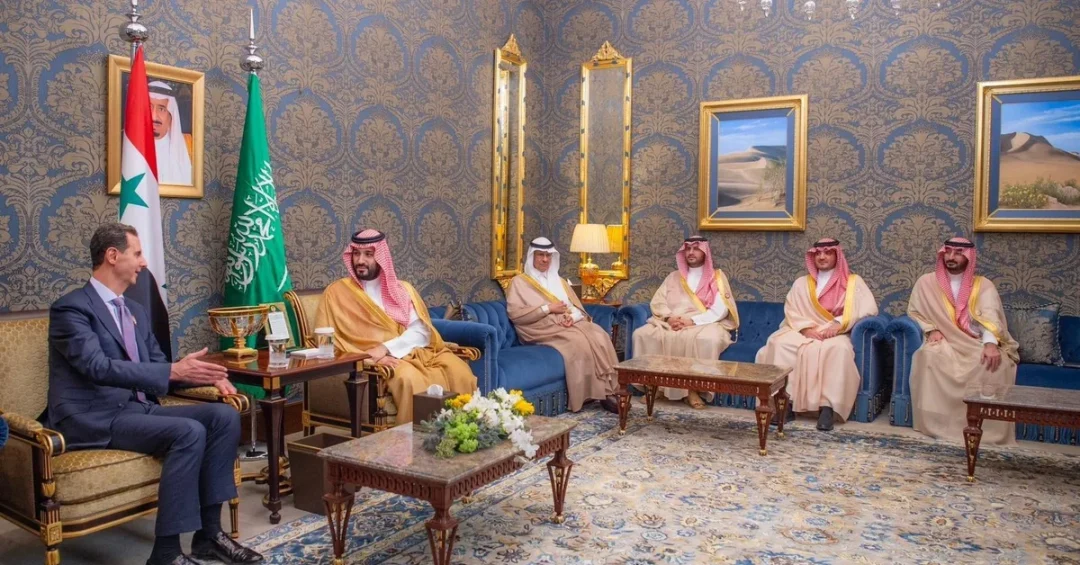
His Royal Highness Prince Mohammed bin Salman bin Abdulaziz Al Saud, Crown Prince and Prime Minister of Saudi Arabia, met with Syrian President Bashar Al-Assad on May 16, 2024, on the sidelines of the 33rd Arab Summit in Manama, Bahrain. The meeting, as reported by the Saudi Press Agency (SPA), focused on strengthening bilateral relations and discussing matters of mutual interest, reflecting Saudi Arabia’s ongoing commitment to regional diplomacy and stability.
Context and Background
The 33rd Arab Summit convened in Bahrain amidst a backdrop of regional challenges, including ongoing conflicts and economic diversification efforts. The meeting between Crown Prince Mohammed bin Salman and President Assad marks a significant step in the evolving diplomatic landscape of the Middle East. Saudi Arabia has consistently emphasized dialogue and cooperation as key tools for addressing regional issues, and this high-level engagement underscores the Kingdom’s leadership in fostering Arab unity.
Key Details
During the meeting, the discussions centered on enhancing relations between the Kingdom and the Syrian Arab Republic, with both sides exploring avenues for collaboration. The delegation accompanying the Crown Prince included prominent Saudi ministers such as Minister of Energy Prince Abdulaziz bin Salman bin Abdulaziz, Minister of Interior Prince Abdulaziz bin Saud bin Naif bin Abdulaziz, Minister of the National Guard Prince Abdullah bin Bandar bin Abdulaziz, and Minister of State and National Security Advisor Dr. Musaed Al-Aiban. Their presence highlights the strategic importance of the meeting and the multi-sectoral nature of the bilateral ties being strengthened.
Implications and Impact
This meeting carries significant implications for regional diplomacy. By engaging directly with the Syrian leadership, Saudi Arabia reinforces its role as a mediator and leader in the Arab world. The discussions are likely to pave the way for increased cooperation in areas such as trade, security, and reconstruction efforts, potentially contributing to the stabilization of the region. The meeting also signals a shift towards pragmatic engagement, aligning with the Kingdom’s broader foreign policy objectives of promoting peace and prosperity across the Middle East.
Vision 2030 Alignment
The meeting aligns with Vision 2030, Saudi Arabia’s ambitious roadmap for economic transformation and international engagement. By fostering strong diplomatic ties, the Kingdom enhances its position as a gateway to the region and a hub for investment and innovation. This engagement demonstrates Saudi Arabia’s commitment to building a secure and interconnected Arab world, which is essential for the success of its long-term strategic goals and its role as a global leader.
20 Questions
Q1. Who met with Syrian President Bashar Al-Assad?
A1. His Royal Highness Prince Mohammed bin Salman bin Abdulaziz Al Saud, Crown Prince and Prime Minister of Saudi Arabia, met with President Bashar Al-Assad. The meeting took place on the sidelines of the 33rd Arab Summit in Bahrain.
Q2. When did the meeting take place?
A2. The meeting occurred on May 16, 2024, during the 33rd Arab Summit, which was held in the Kingdom of Bahrain. This date was reported by the Saudi Press Agency.
Q3. Where was the meeting held?
A3. The meeting was held on the sidelines of the 33rd Arab Summit in Manama, Bahrain. This location was chosen as the summit venue, providing an opportunity for bilateral talks among leaders.
Q4. What was the main focus of the meeting?
A4. The discussions focused on ways to bolster relations between Saudi Arabia and Syria, as well as issues of common interest. The meeting aimed to strengthen bilateral ties and explore areas of mutual benefit.
Q5. Which Saudi officials attended the meeting?
A5. The meeting was attended by Minister of Energy Prince Abdulaziz bin Salman, Minister of Interior Prince Abdulaziz bin Saud, Minister of the National Guard Prince Abdullah bin Bandar, and Minister of State Dr. Musaed Al-Aiban, among others.
Q6. What is the significance of the 33rd Arab Summit?
A6. The 33rd Arab Summit served as a platform for regional leaders to discuss pressing issues and foster cooperation. It provided an opportunity for bilateral meetings that could shape future diplomatic and economic relations in the Arab world.
Q7. How does this meeting relate to Saudi Arabia’s Vision 2030?
A7. The meeting supports Vision 2030 by promoting regional stability and cooperation, which are essential for economic diversification and attracting investment. Strong diplomatic ties enhance Saudi Arabia’s role as a global leader and business hub.
Q8. What are the potential outcomes of the meeting for Saudi-Syrian relations?
A8. The meeting could lead to enhanced cooperation in trade, security, and political coordination. It may also pave the way for increased bilateral engagement and joint initiatives that benefit both nations and the region.
Q9. How does Saudi Arabia approach regional diplomacy?
A9. Saudi Arabia emphasizes dialogue, mutual respect, and cooperation in its regional diplomacy. This approach is evident in its engagement with neighboring countries and its leadership in Arab summits and international forums.
Q10. What is the role of the Saudi Crown Prince in foreign policy?
A10. The Crown Prince plays a pivotal role in shaping and implementing Saudi Arabia’s foreign policy. His meetings with international leaders reflect the Kingdom’s strategic priorities and commitment to constructive engagement.
Q11. Which ministries were represented in the delegation?
A11. The delegation included the Ministries of Energy, Interior, National Guard, and State. This diversity indicates the wide-ranging scope of the discussions and the importance of aligning multiple sectors in bilateral relations.
Q12. Why is the meeting important for the Arab region?
A12. The meeting is important as it demonstrates Arab solidarity and the willingness to engage in dialogue. It may contribute to stabilizing the region, fostering unity, and addressing shared challenges through collective effort.
Q13. How does this meeting affect Saudi Arabia’s international standing?
A13. The meeting enhances Saudi Arabia’s reputation as a mediator and diplomatic leader. It showcases the Kingdom’s proactive role in shaping Middle Eastern affairs and its commitment to peaceful resolutions.
Q14. What is the significance of the timing of the meeting?
A14. The meeting’s timing, during a major Arab summit, underscores the importance of collective action. It highlights the priority Saudi Arabia places on regional engagement and the urgency of addressing issues in the Middle East.
Q15. What does the meeting indicate about Saudi Arabia’s stance on Syria?
A15. The meeting indicates a pragmatic approach towards Syria, focusing on dialogue and potential cooperation. Saudi Arabia appears engaged in rebuilding ties and promoting stability in the war-torn country.
Q16. How might the meeting influence economic ties?
A16. Discussions may lead to increased economic cooperation, including trade and investment opportunities. Enhanced relations could support reconstruction efforts in Syria and open new markets for Saudi businesses.
Q17. What are the key challenges in Saudi-Syrian relations?
A17. Key challenges include addressing the aftermath of the conflict, aligning on political solutions, and ensuring security cooperation. However, both nations have expressed a willingness to work towards common goals.
Q18. How does this meeting align with Saudi Arabia’s goal of regional stability?
A18. By engaging with Syria, Saudi Arabia aims to contribute to regional stability, which is crucial for economic growth and security. The Kingdom believes that dialogue is essential to resolving conflicts.
Q19. What is the official source of information about the meeting?
A19. The official source is the Saudi Press Agency (SPA), which reported the meeting. This aligns with ksa.com’s policy of relying on official Saudi channels for accurate information.
Q20. What is the expected next step after the meeting?
A20. Following the meeting, both nations are likely to continue diplomatic contacts and explore concrete areas of cooperation. The outcomes may be reflected in upcoming official statements or joint initiatives.
Reader Feedback
We value your thoughts. Please share your feedback on this article.
Your feedback helps us improve our coverage.