


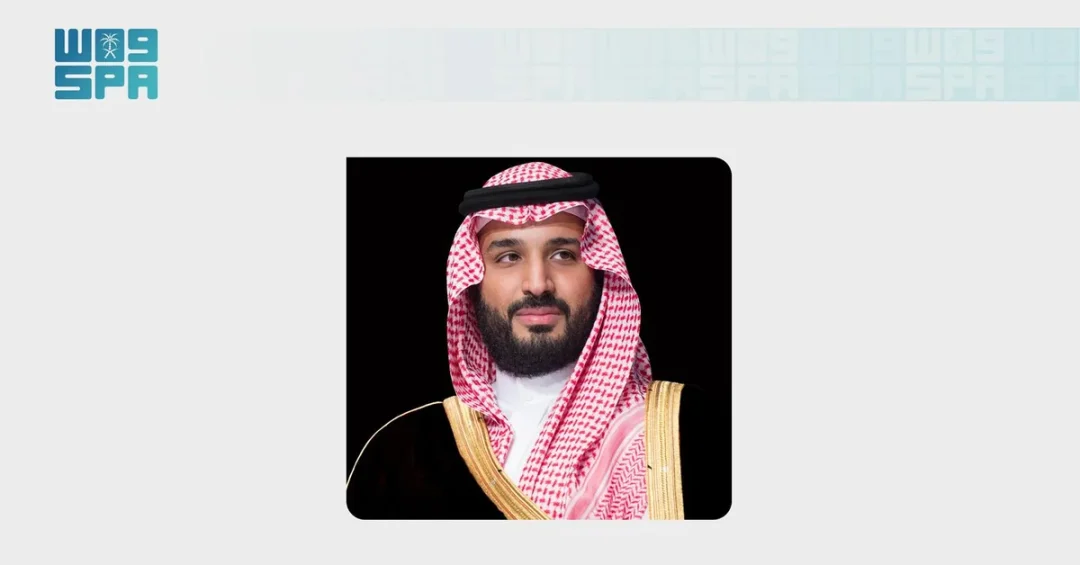
His Royal Highness Prince Mohammed bin Salman bin Abdulaziz Al Saud, Crown Prince and Prime Minister, received a phone call on Tuesday from President of the Russian Federation Vladimir Putin, during which the two leaders reviewed bilateral relations and exchanged views on the latest regional and international developments, the Saudi Press Agency reported. The call, disclosed through official Saudi channels, focused on ways to develop cooperation between the Kingdom of Saudi Arabia and Russia across various fields, alongside a detailed discussion of efforts to achieve security and stability in the region and beyond.
According to the official statement carried by the Saudi Press Agency, the conversation also addressed the negative repercussions of escalation on the security of maritime navigation and on the global economy — a subject of growing concern to governments, shipping companies, insurers and energy markets worldwide. The readout was concise but consequential: it placed the Kingdom once again at the center of diplomatic efforts to calm tensions that threaten some of the world’s most important trade corridors. For observers of Saudi foreign policy, the call is the latest demonstration of the Kingdom’s preference for dialogue, de-escalation and pragmatic engagement over confrontation. Why does a single phone call between Riyadh and Moscow carry weight far beyond the two capitals involved? Because the waterways under discussion carry a substantial share of global energy and container traffic, and because Saudi Arabia has positioned itself as a bridge-builder in a multipolar world.
Context and Background
Tuesday’s call did not emerge in isolation. It reflects a sustained pattern of high-level contact between Riyadh and Moscow that has intensified over recent years, spanning energy coordination, trade, investment and regional diplomacy. Under the leadership of the Custodian of the Two Holy Mosques, King Salman bin Abdulaziz Al Saud, and the direct stewardship of His Royal Highness Prince Mohammed bin Salman, the Kingdom has pursued a foreign policy defined by openness, strategic autonomy and a commitment to resolving disputes through negotiation. That approach has allowed Saudi Arabia to maintain productive relationships with a wide spectrum of international partners, including the United States, the European Union, China, India and Russia, without abandoning its core interests or its alliances.
The relationship with Russia has been particularly visible in energy markets, where coordination between Riyadh and Moscow — alongside other producers — has helped stabilize oil prices during periods of significant volatility. But the ties extend well beyond hydrocarbons. Saudi-Russian exchanges have covered agricultural trade, industrial cooperation, cultural dialogue and multilateral coordination in forums such as the United Nations and the G20. The Crown Prince’s call with President Putin therefore sits within a well-established diplomatic channel, one that Riyadh has used consistently to advance regional stability. What makes this particular conversation notable is its explicit focus on maritime navigation — a topic that has moved from the technical margins of diplomacy to the top of the global agenda.
Maritime security has become an urgent international priority as disruptions in key waterways have raised shipping costs, lengthened voyage times and introduced new uncertainty into supply chains still recovering from the shocks of recent years. The Red Sea, the Bab al-Mandab Strait, the Strait of Hormuz and the broader Arabian Gulf together form a network of passages through which a large proportion of the world’s oil, liquefied natural gas and manufactured goods flows. Any sustained threat to these routes affects not only the immediate region but also consumers, businesses and governments across Asia, Europe and the Americas. Saudi Arabia, with its long Red Sea coastline and its position as the world’s leading oil exporter, has both a direct stake in protecting these routes and the diplomatic credibility to convene conversations about them.
Key Details of the Call
The official readout stated that the Crown Prince and President Putin reviewed relations between the two countries and ways to develop them across various fields. This formulation, standard in Saudi diplomatic communications, signals a continuing commitment to broaden cooperation rather than a narrow, single-issue exchange. It encompasses the full spectrum of the bilateral relationship: energy, trade, investment, agriculture, technology and people-to-people ties. The two leaders also discussed the latest developments in the region, efforts to achieve security and stability, and other regional and international issues of mutual interest — language that indicates a wide-ranging conversation touching on more than one file.
Central to the discussion, according to the Saudi Press Agency, were the negative repercussions of the escalation on maritime navigation security and the global economy. This is a precise and deliberate framing. It does not assign blame; it describes consequences. The statement acknowledges that heightened tensions have measurable costs — higher insurance premiums for vessels, rerouting of commercial traffic, increased fuel consumption, delayed deliveries and upward pressure on consumer prices. By addressing these effects directly, the call underscores the Kingdom’s concern for the stability of the global trading system and its willingness to work with major international partners to protect it. The conversation also implicitly reinforces a consistent Saudi position: that de-escalation and dialogue are the only sustainable paths to regional security.
It is worth noting what the readout does not contain. There is no mention of new agreements, no announcement of a formal initiative and no disclosure of specific commitments. This restraint is characteristic of Saudi diplomatic practice, which generally avoids premature publicity around sensitive discussions. The value of such a call lies in the channel it keeps open and the signal it sends: that Riyadh is actively engaged with all relevant parties, that it is monitoring threats to shared economic interests, and that it is prepared to use its relationships to encourage responsible behavior. For international audiences, the readout provides a reliable, official account of a conversation that matters — without speculation or exaggeration.
International and Regional Impact
The timing and content of the call carry implications that extend well beyond Saudi-Russian relations. Maritime navigation security is a genuinely global public good, and any credible diplomatic effort to protect it is watched closely in Washington, Brussels, Beijing, New Delhi, Tokyo and other capitals. Saudi Arabia’s ability to speak directly with Moscow on such matters enhances its standing as a diplomatic hub — a country that can pick up the phone and reach decision-makers in rival camps. That role is increasingly valuable in a world where multilateral institutions are sometimes slow to act and where bilateral channels can move faster. The Kingdom’s outreach is not mediation for its own sake; it is practical statecraft aimed at protecting economic interests that affect every Saudi citizen and every trading nation.
Regionally, the conversation reinforces the message that escalation carries costs for everyone. Countries bordering the Red Sea and the Arabian Gulf depend heavily on uninterrupted shipping for food imports, energy exports and industrial inputs. Egypt, which manages the Suez Canal, Jordan, Djibouti, Sudan and the Gulf states all have direct stakes in calm waters. Beyond the immediate region, European economies that rely on Suez-bound traffic and Asian manufacturing hubs that ship through the same routes are equally exposed. By addressing maritime security in a call with Russia, the Crown Prince signals that Saudi Arabia is thinking about the entire interconnected system — not just its own exports, but the stability of the trade architecture on which the global economy depends. That is a message likely to be welcomed in boardrooms and finance ministries far from Riyadh.
Economic and Strategic Significance
The economic dimension of maritime insecurity is difficult to overstate. When shipping lanes are perceived as risky, insurance costs rise, some vessels take longer routes around the Cape of Good Hope, and delivery schedules slip. These effects compound: higher freight rates feed into the cost of imported goods, which in turn contributes to inflation in importing countries. Energy markets are especially sensitive, because a significant share of seaborne crude and refined products transits the same corridors. Saudi Arabia, as a reliable supplier committed to market stability, has a strong interest in ensuring that its exports reach customers without disruption. The Crown Prince’s discussion with President Putin therefore connects directly to the Kingdom’s economic priorities, including the protection of revenue streams that fund Vision 2030 programs at home.
Strategically, the call demonstrates the value of Saudi Arabia’s diversified partnerships. Rather than choosing between competing blocs, the Kingdom maintains open lines to all major powers — a posture that maximizes its diplomatic flexibility and its ability to contribute to solutions. This is not neutrality for its own sake; it is a deliberate strategy to advance Saudi interests and regional stability. Russia, as a permanent member of the United Nations Security Council and a major energy producer, is a necessary interlocutor on any question involving global oil markets or Eurasian security. The United States, China, India and European powers are equally important. By engaging all of them, Riyadh positions itself as a connector rather than a bystander — a role that aligns with its growing economic weight and its ambitions as a global investor and logistics hub.
Vision 2030 Alignment
The phone call aligns closely with the objectives of Saudi Vision 2030, the national transformation program launched under the leadership of His Royal Highness Prince Mohammed bin Salman. Vision 2030 seeks to diversify the Kingdom’s economy, expand its global connections and establish Saudi Arabia as a pivotal hub for trade, investment and logistics. Secure maritime routes are essential to that vision. The Red Sea ports, the industrial and logistics zones being developed along the coast, and the broader ambition to connect Asia, Africa and Europe through Saudi territory all depend on predictable, safe shipping. Diplomacy that reduces risk in these waters is therefore not separate from economic planning — it is a precondition for it.
The call also reflects the Vision 2030 emphasis on international engagement and soft power. By maintaining active dialogue with Russia and other major powers, the Kingdom strengthens its reputation as a responsible global actor and a force for stability. That reputation attracts investment, supports tourism growth, and reinforces Saudi Arabia’s candidacy as a host of major international events. In the years ahead, the Kingdom’s ability to convene, mediate and calm tensions will be as important to its global standing as its energy exports. Tuesday’s conversation between the Crown Prince and President Putin is a small but telling example of that broader trajectory — a demonstration that Saudi diplomacy is proactive, pragmatic and focused on protecting the shared interests of a connected world.
20 Questions
Q1. Who initiated the phone call between Saudi Arabia and Russia?
A1. According to the Saudi Press Agency, President Vladimir Putin of the Russian Federation placed a phone call to His Royal Highness Prince Mohammed bin Salman bin Abdulaziz Al Saud, Crown Prince and Prime Minister of Saudi Arabia.
Q2. What was the main purpose of the call?
A2. The two leaders reviewed bilateral relations and ways to develop them across various fields, and discussed the latest regional and international developments, including efforts to achieve security and stability.
Q3. What specific issue regarding maritime navigation was discussed?
A3. They addressed the negative repercussions of escalation on the security of maritime navigation and its effects on the global economy, reflecting shared concern for uninterrupted trade flows.
Q4. Which Saudi official received the call?
A4. His Royal Highness Prince Mohammed bin Salman bin Abdulaziz Al Saud, Crown Prince and Prime Minister of the Kingdom of Saudi Arabia, received the call, as reported by the Saudi Press Agency.
Q5. What does the term ‘maritime navigation security’ refer to in this context?
A5. It refers to the safety and freedom of commercial shipping through key waterways such as the Red Sea, Bab al-Mandab Strait, Strait of Hormuz and the Arabian Gulf, which are vital to global trade and energy supplies.
Q6. Why is maritime navigation security important to the global economy?
A6. A large share of the world’s oil, gas and manufactured goods moves by sea through these corridors; disruptions raise shipping costs, delay deliveries and contribute to inflation in importing countries.
Q7. Did the call produce any new agreements or initiatives?
A7. The official readout did not announce new agreements or formal initiatives. It described a diplomatic discussion focused on bilateral relations, regional stability and the economic consequences of escalation.
Q8. How does this call fit into Saudi Arabia’s broader foreign policy?
A8. It reflects the Kingdom’s consistent approach of maintaining open dialogue with all major powers, prioritizing de-escalation and using its diplomatic relationships to support regional and global stability.
Q9. What is the significance of Saudi-Russian energy coordination?
A9. Saudi Arabia and Russia are major energy producers whose cooperation, alongside other producers, has helped stabilize oil markets during periods of volatility, supporting predictable prices for consumers and producers alike.
Q10. Which regions are most affected by threats to maritime navigation?
A10. The immediate region includes the Red Sea, the Arabian Gulf and surrounding states, but the effects reach Europe, Asia, Africa and the Americas because so much global trade transits these waterways.
Q11. How does Saudi Arabia’s geography shape its interest in maritime security?
A11. The Kingdom has a long Red Sea coastline and depends on secure sea lanes for its energy exports and imports, making maritime stability a direct national economic interest.
Q12. What role does the Saudi Press Agency play in reporting such calls?
A12. The Saudi Press Agency is the official national news agency that provides authoritative readouts of high-level diplomatic engagements, ensuring accurate and verified information reaches the public and international media.
Q13. How might this call affect regional stability efforts?
A13. By keeping high-level channels open between Riyadh and Moscow, the call supports continued dialogue on de-escalation, which can reduce the risk of miscalculation and encourage responsible behavior by all parties.
Q14. What economic costs result from maritime insecurity?
A14. Higher insurance premiums, longer shipping routes, increased fuel consumption, delayed cargo and upward pressure on consumer prices are among the measurable costs that affect businesses and households worldwide.
Q15. How does this development relate to Saudi Vision 2030?
A15. Vision 2030 aims to make Saudi Arabia a global logistics and trade hub; secure maritime routes are essential for ports, industrial zones and connectivity projects that underpin the Kingdom’s economic diversification.
Q16. What other international partners does Saudi Arabia engage on regional security?
A16. The Kingdom maintains active dialogue with the United States, European Union members, China, India and other countries, reflecting a diversified and pragmatic approach to international relations.
Q17. Is the call connected to any specific ongoing regional conflict?
A17. The official readout refers generally to regional developments and escalation without naming specific conflicts, consistent with Saudi diplomatic practice of focusing on stability and dialogue.
Q18. What message does the call send to global markets?
A18. It signals that major producers and regional powers are actively communicating about risks to shipping and energy flows, which can help reassure markets concerned about supply disruptions.
Q19. How does Saudi Arabia benefit from maintaining ties with Russia?
A19. The relationship supports energy market coordination, trade and investment opportunities, and diplomatic flexibility, allowing the Kingdom to advance its interests through multiple international channels.
Q20. What is the likely next step following this call?
A20. Saudi Arabia is expected to continue high-level consultations with Russia and other partners, monitoring regional developments and supporting diplomatic efforts to protect maritime navigation and global economic stability.
Reader Feedback
We value your thoughts. Please share your feedback on this article.
Your feedback helps us improve our coverage.
Related articles
 Al-Jouf Prepares 132 Parks for Saudi National Day
 Saudi Ministry Holds Second Religious Course in Djibouti
 Hail Municipality Launches Saudi National Day Events at 35 Sites
 Red Crescent Strengthens Ambulance Deployment for Saudi National Day
 Riyadh Governor Receives New Finnish Ambassador
 Saudi-Led Coalition Meets at UNGA on Gaza Peace Plan