


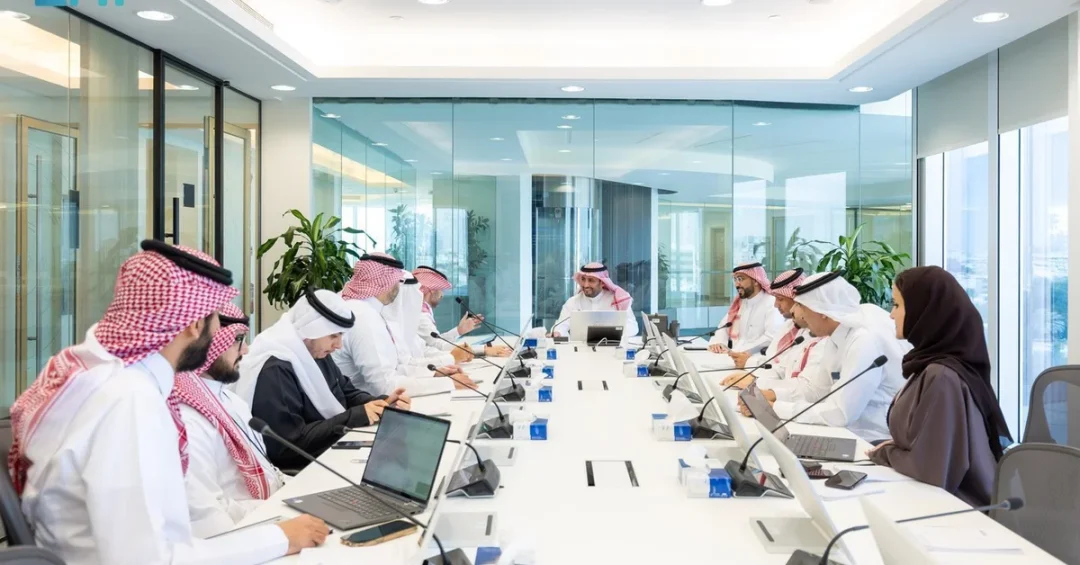
Dr. Mohammad bin Saud Altamimi, Governor of the Communications, Space and Technology Commission (CST), has met with several government entities responsible for serving visitors to Makkah during Ramadan, as part of an official inspection tour of communication and technology services in the region, the Saudi Press Agency reported. The meetings, held in Makkah, brought together senior officials from the Royal Commission for Makkah City and Holy Sites, the General Authority for the Care of the Grand Mosque and the Prophet’s Mosque, and the Pilgrim Experience Program (PEP), according to information released through official Saudi channels.
The discussions focused on delivering the best possible services to Umrah performers before, during, and after their visits to Makkah and Madinah, and on strengthening the Kingdom’s reputation for excellence in serving the Two Holy Mosques. The timing of the visit reflects the extraordinary operational demands of Ramadan, when millions of worshippers gather in the holy city. How does Saudi Arabia ensure that every pilgrim, from the moment of arrival to the moment of departure, enjoys seamless connectivity and reliable digital services? The answer lies in coordinated planning across the Kingdom’s government entities and advanced technical infrastructure developed specifically for the Hajj and Umrah seasons.
Context and Background
The CST is the government body responsible for regulating Saudi Arabia’s information and communications technology (ICT) sector. Its mandate spans telecommunications, internet services, space technology, and postal regulation, making it a central player in the Kingdom’s digital transformation. As the regulator, the commission works to improve user experience, promote competition, and ensure that networks meet the highest standards of reliability and coverage, particularly in areas that experience intense seasonal demand such as Makkah and Madinah.
Ramadan is the busiest period of the year for the Two Holy Mosques. The holy month attracts a large influx of Umrah performers from inside and outside the Kingdom, placing significant pressure on communications networks, digital platforms, and support services. In this environment, mobile connectivity is not a luxury but an essential tool: pilgrims rely on their phones for navigation, translation, payments, emergency assistance, and staying in contact with family. Why is telecommunications infrastructure considered a core part of the pilgrimage experience today? Because modern worship and travel depend on reliable digital services, and Saudi Arabia has made it a priority to deliver them at scale.
To prepare for this demand, the CST has historically worked with telecom operators and government partners to expand network capacity around the Grand Mosque and other key sites. These preparations include deploying additional mobile towers, boosting bandwidth, and monitoring service quality in real time. The meeting led by Dr. Altamimi forms part of this broader operational cycle, ensuring that all relevant entities are aligned before, during, and after the peak days of Ramadan.
Key Details of the Meeting
According to the Saudi Press Agency, Dr. Altamimi met with officials from the Royal Commission for Makkah City and Holy Sites, the General Authority for the Care of the Grand Mosque and the Prophet’s Mosque, and the Pilgrim Experience Program. The meeting aimed to coordinate efforts to provide the best services to Umrah performers and to contribute to promoting the Kingdom’s honorable and civilized image in serving the Two Holy Mosques.
The Pilgrim Experience Program is one of the initiatives under Saudi Vision 2030, designed to enhance the quality of services provided to pilgrims and to expand the capacity of the Hajj and Umrah system. The Royal Commission for Makkah City and Holy Sites oversees urban development and infrastructure projects in the holy city, while the General Authority for the Care of the Grand Mosque and the Prophet’s Mosque manages day-to-day operations and services at the two holy sites. Bringing these entities together with the CST ensures that technology, infrastructure, and service delivery are integrated rather than handled in isolation.
The CST’s inspection tour also included field visits to assess communication and technology services on the ground. This hands-on approach allows the regulator to identify gaps, verify network performance, and respond quickly to any issues that arise during the holy month. How does real-time monitoring translate into a better experience for pilgrims? By enabling rapid adjustments to network capacity and service quality, it helps prevent disruptions at the moments when they matter most.
Technology Serving Pilgrims
Advanced infrastructure lies at the heart of Saudi Arabia’s approach to serving visitors of the Grand Mosque. Telecom operators have expanded 5G coverage in Makkah and Madinah, increased fiber-optic capacity, and deployed temporary towers to handle peak traffic. These measures support high-density usage in crowded areas, where thousands of users may connect simultaneously.
Digital platforms also play a growing role. Official applications provide pilgrims with guidance, prayer times, health information, and emergency contacts. E-wallets and digital payment systems reduce reliance on cash and speed up transactions. For international visitors, roaming agreements and multilingual support make it easier to stay connected. Each of these services depends on the regulatory framework and quality standards enforced by the CST.
Space technology is another dimension of the CST’s work. The commission oversees the Kingdom’s space sector, which contributes to communications, navigation, and earth observation. While the connection to Ramadan services may seem indirect, satellite capacity supports broadcasting, backup communications, and data transmission that complement terrestrial networks. Together, these layers form a resilient system designed to function even under heavy load.
International and Regional Impact
The services provided to pilgrims are not only a domestic matter; they are a global responsibility. Umrah performers arrive from every continent, and their experience in Makkah shapes perceptions of Saudi Arabia around the world. Reliable communications help visitors navigate unfamiliar surroundings, access health services, and share their journey with family and friends. In this way, technology contributes to the Kingdom’s soft power and to its image as a modern, capable host.
Regional cooperation also matters. Airlines, travel agencies, and international telecom operators coordinate with Saudi authorities to ensure that pilgrims have connectivity from the moment they depart their home countries. Roaming arrangements, eSIM options, and airport services are part of a seamless travel chain. When these elements work well, they reinforce confidence in the Kingdom’s ability to manage large-scale religious tourism. How do these efforts influence the broader region? They set a benchmark for service quality and demonstrate how technology can support cultural and religious exchange across borders.
Economic and Strategic Significance
The pilgrimage economy is a major component of Saudi Arabia’s economic diversification strategy. Hajj and Umrah generate revenue across sectors including hospitality, transport, retail, and telecommunications. By improving the pilgrim experience, the Kingdom encourages repeat visits and strengthens the sustainability of this revenue stream. The CST’s regulatory role supports this by ensuring that digital services meet the expectations of a diverse and demanding user base.
Investment in communications infrastructure also has long-term benefits beyond the holy seasons. Upgraded networks in Makkah and Madinah serve residents, businesses, and government agencies throughout the year. They support smart city initiatives, e-government services, and the growth of the local technology sector. In this sense, preparations for Ramadan are part of a continuous process of modernization that aligns with the Kingdom’s broader development goals.
Strategic coordination among government entities reduces duplication and improves efficiency. When the CST, the Royal Commission for Makkah City and Holy Sites, the General Authority for the Care of the Grand Mosque and the Prophet’s Mosque, and the Pilgrim Experience Program work together, resources are directed where they are needed most. This integrated approach is a hallmark of Saudi Arabia’s governance model under Vision 2030.
Vision 2030 Alignment
The meeting led by Dr. Altamimi reflects the objectives of Saudi Vision 2030, which seeks to diversify the economy, improve public services, and enhance the Kingdom’s global standing. The Pilgrim Experience Program is a direct expression of these goals, aiming to increase the number of pilgrims and improve the quality of their journey. Technology is a key enabler, and the CST’s oversight ensures that digital infrastructure keeps pace with ambition.
As Ramadan progresses, the coordination established through these meetings will help deliver a smooth and spiritually fulfilling experience for millions of visitors. Saudi Arabia’s commitment to serving the Two Holy Mosques is both a religious duty and a national priority, and it is supported by a modern, well-regulated ICT sector. Looking ahead, the lessons learned and the systems refined during this holy month will contribute to the Kingdom’s long-term vision of excellence in pilgrimage services and global engagement.
20 Questions
Q1. Who is the Governor of the Communications, Space and Technology Commission?
A1. Dr. Mohammad bin Saud Altamimi serves as the Governor of the Communications, Space and Technology Commission (CST) of Saudi Arabia.
Q2. What government entities did the CST Governor meet with?
A2. He met with officials from the Royal Commission for Makkah City and Holy Sites, the General Authority for the Care of the Grand Mosque and the Prophet’s Mosque, and the Pilgrim Experience Program.
Q3. Why did the CST Governor conduct these meetings?
A3. The meetings aimed to coordinate efforts to provide the best services to Umrah performers before, during, and after their visits to Makkah and Madinah.
Q4. When did the meetings take place?
A4. The meetings took place in Makkah during Ramadan, as part of an inspection tour of communication and technology services in the region.
Q5. What is the role of the CST in Saudi Arabia?
A5. The CST regulates the information and communications technology sector, aiming to improve user experience and ensure high-quality services across the Kingdom.
Q6. How does the CST support pilgrims during Ramadan?
A6. The CST monitors and enhances telecommunications infrastructure to handle increased demand, ensuring reliable connectivity for pilgrims in Makkah and Madinah.
Q7. What is the Pilgrim Experience Program?
A7. The Pilgrim Experience Program is a Vision 2030 initiative designed to enhance the quality of services for pilgrims and expand the capacity of the Hajj and Umrah system.
Q8. Why is telecommunications important for Umrah performers?
A8. Pilgrims rely on mobile networks for navigation, communication, payments, and emergency services, making reliable connectivity essential to their experience.
Q9. What technologies are used to serve visitors of the Grand Mosque?
A9. Advanced infrastructure includes 5G networks, fiber-optic capacity, temporary towers, and digital platforms that provide guidance and support to pilgrims.
Q10. How does the CST ensure service quality during peak seasons?
A10. The CST conducts field inspections, monitors network performance in real time, and coordinates with telecom operators to address any issues promptly.
Q11. What is the significance of Ramadan for Makkah?
A11. Ramadan is the busiest period for the Two Holy Mosques, attracting millions of Umrah performers and requiring extensive logistical and technical preparations.
Q12. How does Saudi Arabia benefit economically from pilgrimage services?
A12. Pilgrimage generates revenue across hospitality, transport, retail, and telecommunications, supporting economic diversification under Vision 2030.
Q13. What is the role of the Royal Commission for Makkah City and Holy Sites?
A13. It oversees urban development and infrastructure projects in Makkah, ensuring the holy city is well-prepared to host large numbers of visitors.
Q14. How does the General Authority for the Care of the Grand Mosque contribute?
A14. It manages daily operations and services at the Grand Mosque and the Prophet’s Mosque, ensuring a safe and comfortable environment for worshippers.
Q15. What digital services are available to pilgrims?
A15. Pilgrims can access official applications for guidance, prayer times, health information, emergency contacts, and digital payment systems.
Q16. How does Saudi Arabia’s space sector support pilgrimage services?
A16. Satellite capacity supports broadcasting, backup communications, and data transmission, complementing terrestrial networks during peak seasons.
Q17. What is the international impact of improved pilgrim services?
A17. Enhanced services shape global perceptions of Saudi Arabia, demonstrating its capacity to host millions of visitors and support religious tourism.
Q18. How does the CST coordinate with international telecom operators?
A18. The CST facilitates roaming agreements and ensures that international visitors have seamless connectivity from arrival to departure.
Q19. What are the long-term benefits of communications investment in Makkah?
A19. Upgraded networks serve residents and businesses year-round, supporting smart city initiatives and the growth of the local technology sector.
Q20. How does this meeting align with Vision 2030?
A20. It reflects Vision 2030 goals of improving public services, diversifying the economy, and enhancing Saudi Arabia’s global standing through excellence in pilgrimage services.
Reader Feedback
We value your thoughts. Please share your feedback on this article.
Your feedback helps us improve our coverage.
Related articles
 Absher Processes Over 24 Million Transactions in February
 Makkah Governor Reviews Ramadan Report with Deputy
 Saudi Arabia Weather: NCM Forecast for Tuesday
 MWL Condemns Israel’s Gaza Displacement Plan
 17 Million Iftar Meals Served at Two Holy Mosques in 21 Days
 150,000 Pilgrims Utilize Grand Mosque Ritual Service