


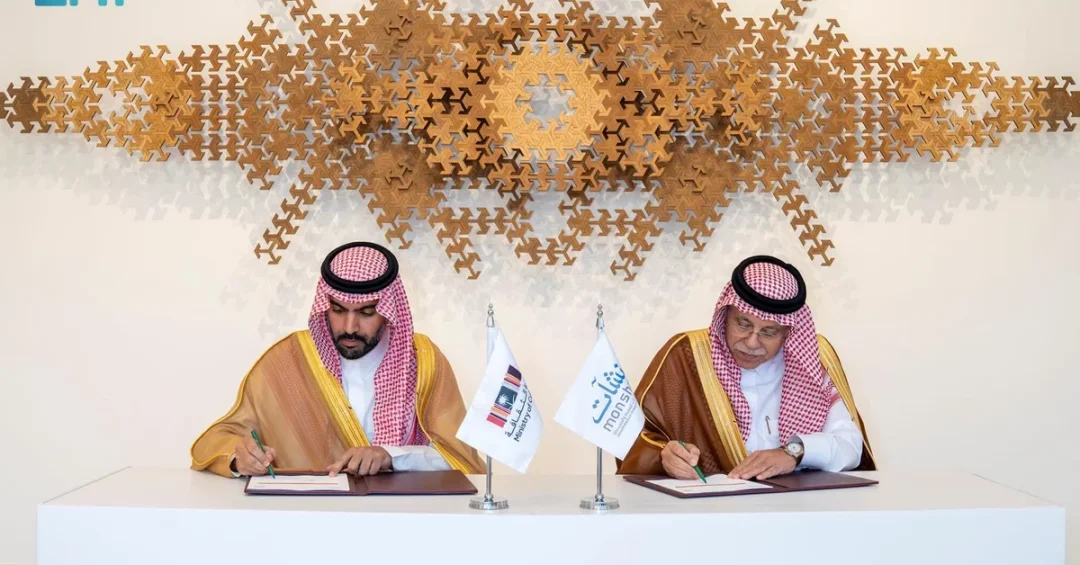
Riyadh, November 06, 2024 — In a move set to invigorate Saudi Arabia’s creative economy, Minister of Culture Prince Badr bin Abdullah bin Farhan and Minister of Commerce and Chairman of the Board of Directors of the Small and Medium Enterprises General Authority (Monsha’at) Majid Al-Kassabi signed a memorandum of understanding (MoU) today at the Ministry of Culture in Al-Bujairi district, Diriyah. The agreement aims to foster collaboration between the Ministry and Monsha’at, particularly through business incubators and accelerators tailored to the cultural sector.
Context and Background
The cultural sector in Saudi Arabia has been undergoing a remarkable transformation as part of the broader economic diversification efforts under Saudi Vision 2030. The National Strategy for Culture, launched in 2020, aims to preserve national heritage, promote cultural exchange, and stimulate economic growth through creative industries. This MoU represents a significant step in realizing those ambitions by providing structured support to cultural entrepreneurs and organizations.
Monsha’at, established in 2016, is dedicated to nurturing small and medium enterprises (SMEs) across the Kingdom. By partnering with the Ministry of Culture, it extends its reach into a sector with immense potential for job creation and innovation. The collaboration underscores the government’s commitment to creating an enabling environment for creative businesses to thrive.
Key Details of the Agreement
The partnership focuses on empowering cultural entrepreneurs through targeted training programs designed to address sector-specific needs. It includes strategic consulting services to strengthen entrepreneurs’ skills and advance their projects through innovative, sustainable approaches. Key elements of the agreement emphasize enhancing commercial innovation and integrating modern technologies for small and medium-sized cultural enterprises.
These efforts aim to generate substantial economic and cultural impacts, promote awareness, and raise knowledge about investment opportunities and growth potential in the cultural sector. The MoU aligns with the Ministry of Culture’s broader strategy to build strategic partnerships across sectors. It seeks to empower entrepreneurs and innovators by providing access to essential resources and opportunities, advancing the cultural sector, and fostering a climate of creativity and innovation.
Implications and Impact
This MoU is expected to catalyze the growth of cultural SMEs, which are vital for job creation and economic diversification. By integrating modern technologies, cultural enterprises can reach wider audiences, both domestically and internationally, enhancing Saudi Arabia’s cultural exports. The partnership also signals a robust support system for creative individuals, encouraging more Saudis to pursue entrepreneurial ventures in fields such as design, music, film, and heritage crafts.
Furthermore, the agreement contributes to the Kingdom’s goal of increasing the SME sector’s contribution to GDP from 20% to 35% by 2030. It also supports the creation of a vibrant cultural ecosystem that attracts tourists and investors, aligning with the objectives of the National Strategy for Culture and Vision 2030.
Vision 2030 Alignment
This initiative is a clear reflection of Saudi Vision 2030’s emphasis on diversifying the economy and empowering youth and entrepreneurs. By nurturing cultural SMEs, the Kingdom not only preserves its rich heritage but also positions itself as a global hub for creativity and innovation. The collaboration between the Ministry of Culture and Monsha’at exemplifies the integrated approach needed to achieve sustainable development and enhance the quality of life for all citizens.
20 Questions
Q1. What is the purpose of the MoU signed between the Ministry of Culture and Monsha’at?
A1. The MoU aims to foster collaboration to empower cultural entrepreneurs and organizations through business incubators, accelerators, training programs, and strategic consulting, enhancing the cultural sector’s economic impact.
Q2. Who signed the MoU on behalf of the Ministry of Culture?
A2. Minister of Culture Prince Badr bin Abdullah bin Farhan signed the MoU, representing the Ministry of Culture in this strategic partnership.
Q3. Who signed the MoU on behalf of Monsha’at?
A3. Minister of Commerce and Chairman of the Board of Directors of Monsha’at Majid Al-Kassabi signed the MoU, highlighting the authority’s commitment to supporting cultural SMEs.
Q4. Where was the MoU signed?
A4. The MoU was signed at the Ministry of Culture in Al-Bujairi district, Diriyah, a historic area in Riyadh known for its cultural significance.
Q5. What are the key elements of the MoU?
A5. Key elements include targeted training programs, strategic consulting services, enhancing commercial innovation, and integrating modern technologies for small and medium-sized cultural enterprises.
Q6. How does the MoU support cultural entrepreneurs?
A6. It provides access to business incubators and accelerators, tailored training, and consulting to strengthen skills and advance projects through innovative, sustainable approaches.
Q7. What is the role of Monsha’at in this partnership?
A7. Monsha’at, the Small and Medium Enterprises General Authority, brings expertise in nurturing SMEs and will collaborate to extend support to cultural enterprises.
Q8. How does the MoU align with Saudi Vision 2030?
A8. It supports economic diversification, empowers youth and entrepreneurs, and aims to increase SME contribution to GDP, aligning with Vision 2030 goals.
Q9. What is the National Strategy for Culture?
A9. The National Strategy for Culture, launched in 2020, aims to preserve heritage, promote cultural exchange, and stimulate economic growth through creative industries under Vision 2030.
Q10. What economic impacts are expected from this MoU?
A10. It is expected to generate substantial economic and cultural impacts, promote awareness of investment opportunities, and contribute to a thriving cultural landscape.
Q11. How will the MoU integrate modern technologies?
A11. The MoU focuses on integrating modern technologies for cultural SMEs to enhance their operations, reach wider audiences, and innovate in their respective fields.
Q12. What are the benefits for the local economy?
A12. By empowering cultural SMEs, the MoU will bolster their role in the local economy, create jobs, and support the diversification of Saudi Arabia’s economic base.
Q13. How does this MoU promote cultural innovation?
A13. Through incubators, accelerators, and training, it fosters a climate of creativity and innovation, enabling cultural entrepreneurs to develop sustainable and impactful projects.
Q14. What sectors within culture will benefit most?
A14. Sectors such as design, music, film, heritage crafts, and other creative industries are expected to benefit from the targeted support provided by the MoU.
Q15. How does the MoU support women entrepreneurs?
A15. By providing equal access to training, consulting, and resources, the MoU empowers women entrepreneurs to contribute to the cultural sector’s growth.
Q16. What is the expected timeline for implementing the MoU?
A16. While specific timelines are not detailed, the MoU is effective immediately, with programs and initiatives to be rolled out progressively to support cultural entrepreneurs.
Q17. How will the success of this MoU be measured?
A17. Success will be measured by the growth of cultural SMEs, job creation, increased investment in the sector, and the overall economic and cultural impact.
Q18. What role do business incubators play in this agreement?
A18. Business incubators provide physical and logistical support, mentorship, and resources to help cultural startups and SMEs grow and succeed.
Q19. How can cultural entrepreneurs access support under this MoU?
A19. Entrepreneurs can access support by engaging with Monsha’at and the Ministry of Culture’s programs, which will offer training, consulting, and incubator services.
Q20. What does this MoU signify for Saudi Arabia’s cultural landscape?
A20. It signifies a strong governmental commitment to nurturing the cultural sector, positioning it as a key driver of economic growth and a vibrant component of the Kingdom’s identity.
Reader Feedback
We value your thoughts. Please share your feedback on this article.
Your feedback helps us improve our coverage.