


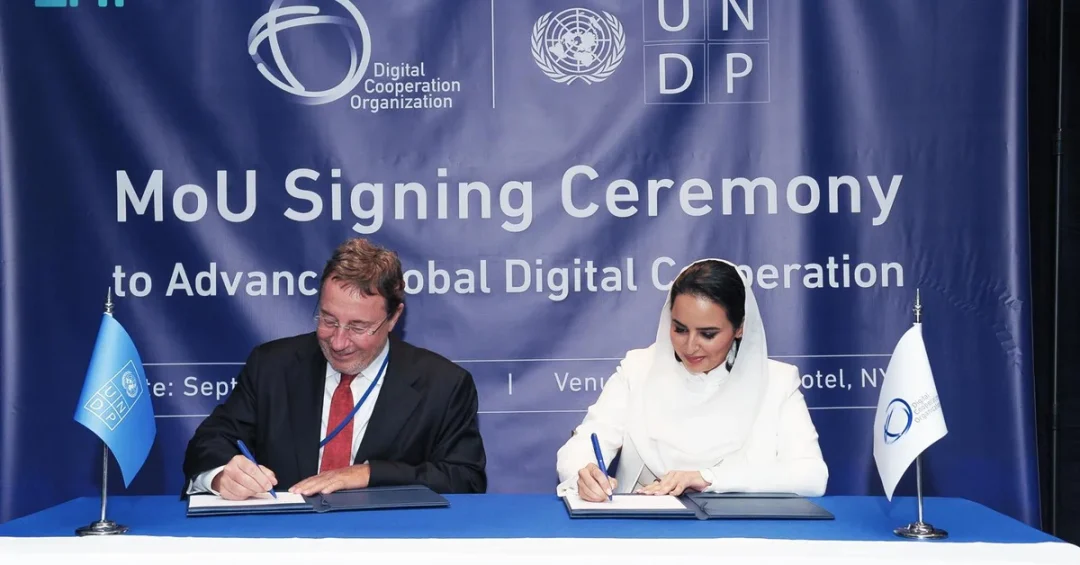
The Digital Cooperation Organization (DCO) and the United Nations Development Programme (UNDP) signed a landmark global memorandum of understanding on the sidelines of the UN Summit of the Future in New York, aiming to accelerate digital transformation worldwide and advance the UN Sustainable Development Goals (SDGs) by 2030. The agreement, inked by DCO Secretary-General Deemah AlYahya and UNDP Administrator Achim Steiner, marks a significant step in global efforts to bridge the digital divide and ensure equitable access to the digital economy for all nations.
This partnership comes at a critical time when approximately 2.6 billion people—about one-third of the global population—still lack internet access, according to 2023 data. The collaboration between the DCO, a multilateral organization founded by Saudi Arabia and other nations to promote digital prosperity, and the UNDP, the UN’s global development network, underscores the growing recognition that digital cooperation is essential for sustainable development. By aligning their visions, the two organizations aim to implement concrete initiatives that will drive digital transformation and contribute to achieving the SDGs at a global level.
Context and Background
How did this partnership come about, and why is it so vital now? The digital divide remains one of the most pressing challenges of our time, with stark disparities in internet access between urban and rural areas, and between developed and developing regions. In 2023, approximately 72% of urban households globally had internet access, nearly twice the rate of rural areas at 38%. Regional gaps are even more pronounced: Sub-Saharan Africa has an internet penetration rate of around 30%, compared to over 90% in North America. These inequalities hinder economic growth, limit access to education and healthcare, and perpetuate cycles of poverty.
Recognizing the urgency, the UNDP integrated digital transformation into its 2022-2025 Strategic Plan as a crucial driver for achieving the SDGs by 2030. The DCO, established in November 2020, has been at the forefront of fostering digital cooperation among its member states, which include Saudi Arabia, Bahrain, Cyprus, Djibouti, Egypt, Ethiopia, Gambia, Ghana, Jordan, Kuwait, Morocco, Nigeria, Oman, Pakistan, Palestine, Qatar, Rwanda, and Yemen. The organization’s mission is to empower nations to build inclusive digital economies. This new MoU builds on the pioneering Digital for Sustainable Development (D4SD) initiative launched by the UNDP Regional Bureau for Arab States at the UN General Assembly last year, with DCO as a founding partner.
Key Details of the Memorandum
What exactly does this memorandum entail, and how will it translate into action? The MoU outlines a comprehensive framework for collaboration across several key areas: advancing digital policy, enhancing digital indices and research, improving digital capacities and skills, promoting digital solutions, and fostering meaningful participation of women in ICT. It also emphasizes global advocacy for bridging the digital divide. By combining the DCO’s expertise in digital cooperation with the UNDP’s development reach, the partnership aims to create synergies that drive measurable impact.
DCO Secretary-General Deemah AlYahya highlighted the importance of the agreement: “DCO is dedicated to working hand-in-hand with stakeholders to bridge the digital divide, ensuring that every nation, business, and individual has equitable access to the opportunities of the digital economy. Today, we are happy to strengthen our collaboration with UNDP, which will enable us to advance digital cooperation and drive meaningful synergies. By aligning our shared visions and objectives, we are focused on implementing concrete initiatives that will accelerate digital transformation and contribute to achieving the SDGs at a global level.” Her words reflect the DCO’s commitment to inclusive digital growth.
UNDP Administrator Achim Steiner echoed this sentiment, stating: “The impact of digital transformation on economies, service delivery, and societies is profound—it enhances information accessibility, increases productivity, and facilitates data-driven decision-making. But transformation requires determined and sustained action supported by transformative policies and agendas. Unlocking the full potential of digital transformation requires collaboration across borders, sectors, and the entire digital society. The importance of digital cooperation cannot be overstated.” These statements underscore the shared resolve to tackle digital inequality head-on.
International and Regional Impact
How will this partnership impact regions most affected by the digital divide? The DCO-UNDP collaboration is poised to accelerate digital development in underserved areas, particularly in Africa, Asia, and the Arab region. By leveraging UNDP’s on-the-ground presence in 170 countries and territories, the partnership can implement targeted programs that address local challenges. For instance, in Sub-Saharan Africa, where internet penetration is only around 30%, initiatives could focus on infrastructure development, digital literacy, and affordable access. In the Arab region, the D4SD initiative has already laid the groundwork for such efforts, and this MoU will scale them up.
Moreover, the partnership aligns with broader international efforts to achieve the SDGs, particularly Goal 9 (Industry, Innovation, and Infrastructure) and Goal 17 (Partnerships for the Goals). By fostering digital cooperation, the DCO and UNDP are contributing to a more connected and equitable world, which is essential for sustainable development. The memorandum also reinforces the role of multilateralism in addressing global challenges, demonstrating how organizations can unite to create lasting change. As digital technologies continue to evolve, such collaborations will be critical to ensuring that no one is left behind.
Economic and Strategic Significance
What economic benefits can be expected from bridging the digital divide? Digital transformation is a powerful engine for economic growth, innovation, and job creation. According to the World Bank, a 10% increase in broadband penetration can boost GDP growth by up to 1.5% in developing countries. By expanding digital access, the DCO-UNDP partnership can unlock new opportunities for businesses, entrepreneurs, and workers, particularly in emerging markets. It can also enhance government service delivery, improve healthcare and education outcomes, and foster financial inclusion.
Strategically, this partnership positions Saudi Arabia and its DCO partners as leaders in global digital cooperation. Saudi Arabia, through its G20 presidency in 2020 and its Vision 2030, has consistently championed digital transformation as a key pillar of sustainable development. The DCO, headquartered in Riyadh, exemplifies the Kingdom’s commitment to fostering international collaboration and knowledge sharing. This MoU not only advances global digital goals but also strengthens Saudi Arabia’s role as a bridge-builder between developed and developing nations, enhancing its soft power and diplomatic influence. By supporting the UNDP’s digital agenda, the Kingdom reinforces its dedication to the SDGs and its vision of a prosperous, interconnected world.
Vision 2030 Alignment
How does this partnership reflect Saudi Arabia’s Vision 2030? The DCO-UNDP MoU is a direct manifestation of Vision 2030’s objectives to diversify the economy, empower citizens, and promote international cooperation. Vision 2030 emphasizes the importance of digital infrastructure and innovation as catalysts for economic growth and social development. By facilitating global digital cooperation, the partnership supports the Kingdom’s goal of creating a vibrant digital economy and society, both domestically and internationally. It also aligns with the Vision’s focus on enhancing Saudi Arabia’s global standing and contributing to humanitarian causes.
Furthermore, the collaboration underscores Saudi Arabia’s leadership in advancing the SDGs, particularly those related to infrastructure, innovation, and partnerships. As the DCO’s founding member, the Kingdom has demonstrated its commitment to bridging the digital divide and ensuring that the benefits of the digital age are shared by all. This partnership will not only accelerate progress towards the SDGs but also reinforce Saudi Arabia’s position as a global leader in digital transformation and sustainable development. Through such initiatives, the Kingdom continues to shape a future where technology serves as a force for good, driving prosperity and inclusivity worldwide.
20 Questions
Q1. What is the Digital Cooperation Organization (DCO)?
A1. The DCO is a multilateral organization founded in November 2020 to promote digital prosperity for all by accelerating inclusive digital economy growth. It comprises 18 member states and is headquartered in Riyadh, Saudi Arabia.
Q2. What is the UNDP?
A2. The United Nations Development Programme is the UN’s global development network, operating in 170 countries and territories. It helps nations achieve sustainable development and the SDGs.
Q3. What does the memorandum of understanding aim to achieve?
A3. The MoU aims to expand digital cooperation to accelerate digital transformation globally and boost progress towards the UN Sustainable Development Goals by 2030.
Q4. Who signed the memorandum?
A4. DCO Secretary-General Deemah AlYahya and UNDP Administrator Achim Steiner signed the memorandum on the sidelines of the UN Summit of the Future in New York.
Q5. What are the key areas of cooperation outlined in the MoU?
A5. The MoU covers advancing digital policy, enhancing digital indices and research, improving digital capacities and skills, promoting digital solutions, and fostering women’s participation in ICT.
Q6. How many people lack internet access globally?
A6. As of 2023, approximately 2.6 billion people, or about one-third of the global population, did not have internet access.
Q7. What is the urban-rural digital divide?
A7. Approximately 72% of urban households globally have internet access, compared to only 38% in rural areas, highlighting a significant disparity.
Q8. Which region has the lowest internet penetration?
A8. Sub-Saharan Africa has the lowest internet penetration, at around 30%, compared to over 90% in North America.
Q9. How does the UNDP plan to use digital transformation for development?
A9. The UNDP integrated digital transformation into its 2022-2025 Strategic Plan, recognizing it as a crucial driver for achieving the SDGs by 2030.
Q10. What is the D4SD initiative?
A10. The Digital for Sustainable Development (D4SD) initiative was launched by the UNDP Regional Bureau for Arab States in 2022, with DCO as a founding partner.
Q11. What role does Saudi Arabia play in the DCO?
A11. Saudi Arabia is a founding member of the DCO, which is headquartered in Riyadh, and has been instrumental in promoting digital cooperation globally.
Q12. How does this partnership support the SDGs?
A12. By fostering digital cooperation, the partnership supports SDGs related to infrastructure, innovation, and partnerships, among others, accelerating progress towards 2030 targets.
Q13. What economic benefits can bridging the digital divide bring?
A13. Bridging the digital divide can boost GDP, create jobs, enhance productivity, and improve access to education and healthcare, especially in developing countries.
Q14. How does digital transformation impact economies?
A14. Digital transformation enhances information accessibility, increases productivity, and facilitates data-driven decision-making, leading to economic growth and improved service delivery.
Q15. What is the significance of the UN Summit of the Future?
A15. The UN Summit of the Future is a platform for global leaders to discuss and agree on multilateral solutions to accelerate progress on global challenges, including digital cooperation.
Q16. How can international collaboration help bridge the digital gap?
A16. International collaboration enables resource sharing, knowledge exchange, and coordinated policy efforts, which are essential to address the complex challenges of the digital divide.
Q17. What are digital indices and why are they important?
A17. Digital indices measure the state of digital development in countries. They help track progress, identify gaps, and inform evidence-based policies to improve digital infrastructure and access.
Q18. How does the MoU promote women’s participation in ICT?
A18. The MoU includes specific provisions to enhance digital skills for women and promote their meaningful participation in the ICT sector, fostering gender equality.
Q19. What is Vision 2030 and how does it align with this partnership?
A19. Vision 2030 is Saudi Arabia’s strategic framework to diversify the economy and empower citizens. The partnership aligns with its goals of digital transformation and global cooperation.
Q20. What are the next steps for the DCO-UNDP partnership?
A20. The organizations will implement concrete initiatives under the MoU, focusing on digital policy, capacity building, and advocacy to accelerate digital transformation and achieve the SDGs.
Reader Feedback
We value your thoughts. Please share your feedback on this article.
Your feedback helps us improve our coverage.