


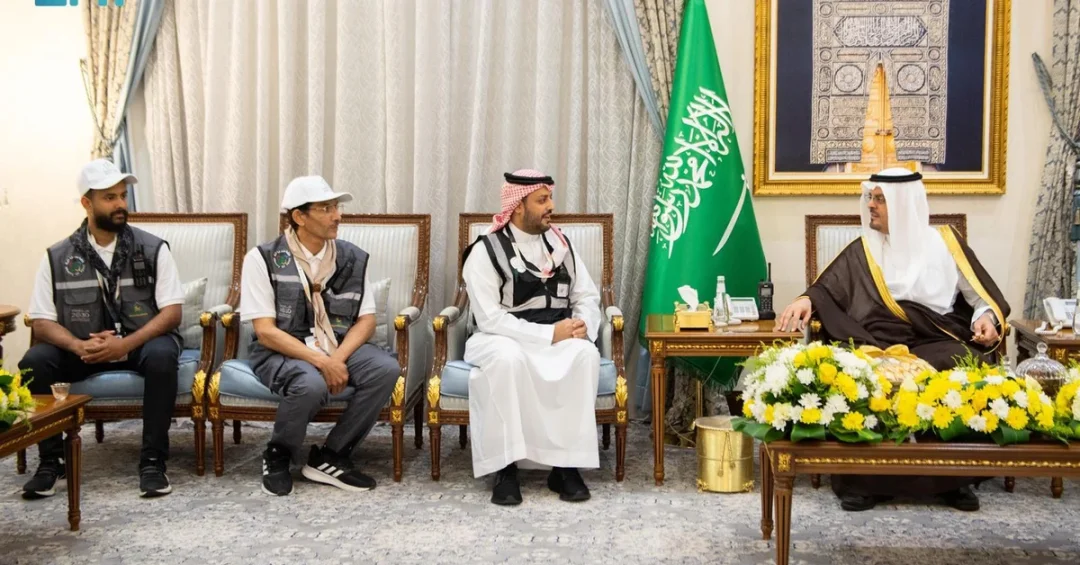
Deputy Governor of Makkah Region and Deputy Chairman of the Central Hajj Committee, Prince Saud bin Mishaal bin Abdulaziz, received in Mina the Director General of the Sport Ministry’s Branch in the region, Abdulaziz bin Aboud, who briefed him on the work of over 600 volunteers who were involved in controlling the movement of crowds at the holy sites this Hajj season, 1445 AH. The meeting underscored the critical role of organized volunteer efforts in ensuring the safety and smooth flow of millions of pilgrims during the annual Hajj pilgrimage.
Context and Background
Hajj, the annual Islamic pilgrimage to Makkah, is one of the largest mass gatherings in the world, attracting over two million pilgrims from more than 180 countries. The Kingdom of Saudi Arabia, under the leadership of the Custodian of the Two Holy Mosques, King Salman bin Abdulaziz Al Saud, and His Royal Highness Crown Prince Mohammed bin Salman bin Abdulaziz Al Saud, has consistently prioritized the safety, security, and comfort of pilgrims. The Central Hajj Committee, chaired by the Governor of Makkah Region, oversees all operational aspects of the pilgrimage, coordinating among various government agencies.
The Ministry of Sport, through its branch in Makkah, has increasingly contributed to Hajj operations by mobilizing volunteers and leveraging sports-related expertise in crowd management. This aligns with the Ministry’s broader objectives under Saudi Vision 2030, which emphasizes volunteerism, community engagement, and the development of a vibrant society.
Key Details
During the meeting, Abdulaziz bin Aboud provided a comprehensive overview of the volunteer initiative, which involved over 600 individuals. These volunteers were strategically deployed across the holy sites to manage crowd movement, assist pilgrims, and ensure adherence to safety protocols. Their efforts were instrumental in facilitating smooth transitions between the sacred sites of Mina, Arafat, and Muzdalifah, where pilgrims perform essential rituals.
Prince Saud bin Mishaal commended the volunteers for their dedication and professionalism, noting that their contributions reflect the Kingdom’s commitment to exceptional service for pilgrims. He also highlighted the importance of continuous training and coordination among all stakeholders to further enhance future Hajj operations.
The Ministry of Sport’s involvement in Hajj is part of a broader national strategy to expand volunteer opportunities and foster a culture of civic responsibility. In recent years, Saudi Arabia has launched several initiatives to increase volunteer participation, aiming to reach one million volunteers by 2030.
Implications and Impact
The successful deployment of volunteers during Hajj 1445 AH demonstrates the effectiveness of integrating specialized skills from various sectors into pilgrimage management. It also showcases the Kingdom’s ability to harness human resources efficiently, ensuring the well-being of pilgrims while maintaining order at the holy sites.
On an international level, such initiatives reinforce Saudi Arabia’s reputation as a capable and compassionate host of the Hajj, capable of managing one of the world’s most complex logistical events. The positive experience of pilgrims contributes to cultural diplomacy and strengthens the Kingdom’s soft power.
Regionally, the collaboration between the Ministry of Sport and the Central Hajj Committee serves as a model for other government entities, encouraging cross-sector partnerships in service of national priorities.
Vision 2030 Alignment
This volunteer effort is closely tied to Saudi Vision 2030, which seeks to build a society where citizens actively contribute to their communities. By engaging over 600 volunteers in Hajj operations, the Ministry of Sport is helping to achieve the Vision’s goal of increasing volunteerism and promoting social responsibility. Moreover, the emphasis on efficient crowd management and pilgrim safety aligns with the Vision’s focus on enhancing the quality of life and delivering world-class services. As Saudi Arabia continues to transform, such initiatives will remain vital in showcasing the Kingdom’s progress and its unwavering commitment to serving Islam and Muslims worldwide.
20 Questions
Q1. Who received the Director General of the Sport Ministry’s Branch in Mina?
A1. Prince Saud bin Mishaal bin Abdulaziz, Deputy Governor of Makkah Region and Deputy Chairman of the Central Hajj Committee, received the Director General in Mina.
Q2. What was the purpose of the meeting?
A2. The meeting was to brief Prince Saud bin Mishaal on the work of over 600 volunteers who controlled crowd movement at the holy sites during Hajj 1445 AH.
Q3. How many volunteers were involved in the effort?
A3. More than 600 volunteers participated in managing crowd movement and assisting pilgrims at the holy sites during the Hajj season.
Q4. Which ministry does Abdulaziz bin Aboud represent?
A4. Abdulaziz bin Aboud is the Director General of the Sport Ministry’s Branch in the Makkah region, representing the Ministry of Sport.
Q5. What is the name of the committee that oversees Hajj operations?
A5. The Central Hajj Committee, chaired by the Governor of Makkah Region, oversees all operational aspects of the Hajj pilgrimage.
Q6. When did this meeting take place?
A6. The meeting took place on June 18, 2024, during the Hajj season of 1445 AH, as reported by the Saudi Press Agency.
Q7. What was the role of the volunteers?
A7. The volunteers were involved in controlling the movement of crowds at the holy sites to ensure safety and facilitate smooth flow of pilgrims.
Q8. How does this initiative align with Vision 2030?
A8. It supports Vision 2030’s goals of increasing volunteerism, promoting social responsibility, and enhancing the quality of services for pilgrims.
Q9. What is the significance of Hajj for Saudi Arabia?
A9. Hajj is one of the largest annual gatherings, and Saudi Arabia is honored to host it, prioritizing pilgrim safety and comfort as a top national priority.
Q10. Which other entities collaborate in Hajj management?
A10. Various government agencies collaborate under the Central Hajj Committee, including security, health, and transportation sectors, to ensure a seamless pilgrimage experience.
Q11. What did Prince Saud bin Mishaal commend?
A11. He commended the volunteers for their dedication and professionalism, highlighting their role in the success of Hajj operations.
Q12. How many pilgrims typically attend Hajj?
A12. Over two million pilgrims from more than 180 countries attend Hajj annually, making it one of the world’s largest mass gatherings.
Q13. What are the holy sites mentioned in the article?
A13. The holy sites include Mina, Arafat, and Muzdalifah, where pilgrims perform essential rituals during Hajj.
Q14. What is the Ministry of Sport’s broader objective?
A14. The Ministry aims to expand volunteer opportunities and promote community engagement as part of Saudi Vision 2030.
Q15. How does this initiative impact Saudi Arabia’s international image?
A15. It reinforces Saudi Arabia’s reputation as a capable host of Hajj, enhancing cultural diplomacy and soft power.
Q16. What is the target for volunteer numbers by 2030?
A16. Saudi Arabia aims to reach one million volunteers by 2030, as part of its Vision 2030 goals.
Q17. What was the outcome of the meeting?
A17. The meeting highlighted the successful contribution of volunteers and emphasized the importance of continuous training and coordination for future Hajj seasons.
Q18. Who is Prince Saud bin Mishaal bin Abdulaziz?
A18. He is the Deputy Governor of Makkah Region and Deputy Chairman of the Central Hajj Committee, overseeing Hajj operations.
Q19. What does the volunteer effort demonstrate?
A19. It demonstrates the effectiveness of integrating specialized skills into pilgrimage management and the Kingdom’s ability to manage complex logistics.
Q20. How does this initiative benefit future Hajj seasons?
A20. It sets a precedent for cross-sector collaboration and volunteer engagement, ensuring continuous improvement in crowd management and pilgrim services.
Reader Feedback
We value your thoughts. Please share your feedback on this article.
Your feedback helps us improve our coverage.