


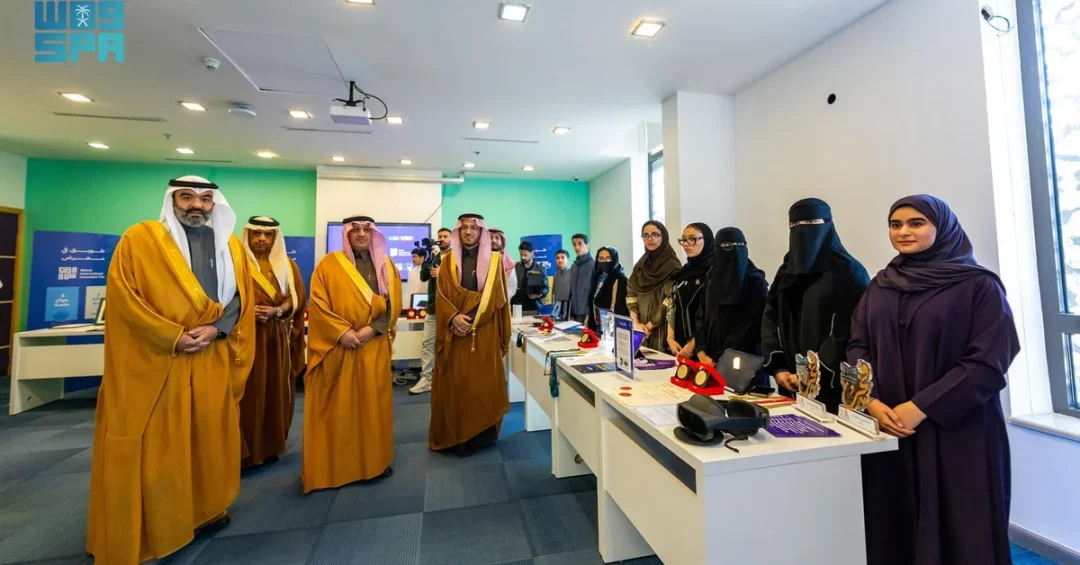
Saudi Arabia’s Minister of Education, Yousef Al-Benyan, officially inaugurated the Technological High School for Gifted Boys at Tuwaiq Academy in Riyadh on December 25, 2024, marking the establishment of the Kingdom’s first government school dedicated exclusively to advanced technology education. The landmark opening, reported by the Saudi Press Agency (SPA), represents a defining moment in the nation’s efforts to cultivate a new generation of Saudi innovators equipped to compete on the global technological stage.
The inauguration ceremony drew a distinguished gathering of Saudi leadership, including Minister of Communications and Information Technology Abdullah Alswaha and Faisal bin Saud Al-Khamisi, Chairman of the Board of Directors of Tuwaiq Academy, alongside several prominent figures from the education and technology sectors. Have you ever wondered how a nation transforms its brightest young minds into world-class technologists? This initiative offers a compelling answer, combining rigorous academic instruction with hands-on innovation in a purpose-built environment designed to nurture exceptional talent from an early age.
Context and Background
The establishment of the Technological High School for Gifted Boys at Tuwaiq Academy is the culmination of Saudi Arabia’s sustained investment in human capital development, a cornerstone of Vision 2030. For years, the Kingdom has recognized that its greatest resource is not oil beneath the desert, but the intellectual potential of its youth. Tuwaiq Academy, launched in 2022 as a flagship initiative under the Ministry of Communications and Information Technology, has already earned a reputation as a premier hub for advanced digital skills training, offering boot camps and specialized programs in partnership with global technology leaders.
What makes this new school truly pioneering is its status as the first government institution of its kind in Saudi Arabia. While the Kingdom has long operated schools for gifted students across various disciplines, none has been singularly focused on technology with the same depth and intensity. The school represents a strategic escalation of Saudi Arabia’s talent development pipeline, designed to identify, nurture, and accelerate the growth of students who demonstrate exceptional aptitude in fields such as programming, cybersecurity, digital manufacturing, and data science. By integrating these disciplines into the secondary education curriculum, Saudi Arabia is signaling that technological mastery is not merely an extracurricular pursuit but a national priority.
The timing of this launch is equally significant. As the global economy becomes increasingly digitized, nations that successfully cultivate domestic technology talent will enjoy a decisive competitive advantage. Saudi Arabia, with its young and ambitious population—where approximately two-thirds of citizens are under the age of 35—is uniquely positioned to capitalize on this demographic dividend. The school at Tuwaiq Academy serves as a critical mechanism for converting youthful potential into tangible expertise, ensuring that Saudi graduates are not just consumers of technology but its creators and innovators.
Key Details of the Technological High School
During the inauguration, Minister Al-Benyan and Minister Alswaha toured the academy’s state-of-the-art facilities, meeting with students and reviewing an array of boot camps, programs, and activities that showcase the school’s educational model. The visit provided a firsthand look at how the school is operationalizing its mission to develop technological skills and capabilities, empowering students to build and innovate groundbreaking projects. The ministers observed demonstrations of student work and engaged directly with young learners, gaining insight into the academic and practical dimensions of the program.
The school offers a comprehensive suite of specialized technological programs. Core fields of study include programming, cybersecurity, digital manufacturing, and data science, among other modern technologies. These are not abstract subjects taught from textbooks; rather, they are delivered through immersive, project-based learning that mirrors the demands of the real-world technology industry. Students are expected to develop proficiency not only in theoretical concepts but also in practical application, preparing them for local and international technological specializations at the university level and beyond.
Beyond technical instruction, the school places a strong emphasis on enhancing student performance in aptitude and achievement tests, as well as developing personal and academic skills. This holistic approach recognizes that technical brilliance alone is insufficient; students must also possess critical thinking, communication, and leadership abilities to succeed in competitive global environments. The curriculum integrates extracurricular technological programs, innovative curricula, and initiatives that encourage innovation and scientific research, all within a stimulating and competitive environment. This multifaceted educational experience is designed to produce well-rounded graduates who can represent Saudi Arabia in regional and international competitions and exhibitions.
The school’s affiliation with Tuwaiq Academy is a strategic advantage. Tuwaiq Academy has already established itself as a national leader in digital skills training, with a track record of delivering high-impact programs in partnership with major technology companies. By embedding the high school within this ecosystem, students gain access to cutting-edge resources, industry mentorship, and networking opportunities that would be difficult to replicate in a traditional educational setting. This integration of secondary education with a premier technology institution creates a seamless pathway from classroom learning to professional practice.
International and Regional Impact
The launch of the Technological High School for Gifted Boys at Tuwaiq Academy positions Saudi Arabia as a global pioneer in technology-focused secondary education. While many nations operate schools for gifted students, few have established a government institution dedicated exclusively to technology with such a clear strategic mandate. This initiative represents a pioneering global model, as noted in the SPA report, aimed at developing the technological skills and capabilities of students, empowering them to build and innovate groundbreaking projects. The Kingdom is not merely following international best practices; it is setting new standards for how nations can integrate advanced technology education into their public school systems.
Regionally, the school reinforces Saudi Arabia’s role as a leader in the Arab world’s digital transformation. Neighboring countries and allies across the Gulf Cooperation Council and the broader Middle East are closely watching the Kingdom’s educational innovations, which could serve as a template for their own talent development strategies. The school’s emphasis on preparing students for regional and international competitions and exhibitions signals Saudi Arabia’s ambition to compete—and excel—on the world stage. By nurturing a generation of technologically proficient graduates, the Kingdom is building the human capital necessary to sustain its economic diversification and maintain its position as a regional powerhouse.
Furthermore, the school’s focus on fields such as cybersecurity and data science addresses critical global skills shortages. According to industry estimates, millions of cybersecurity positions remain unfilled worldwide, and demand for data scientists continues to surge. By producing graduates with expertise in these high-demand areas, Saudi Arabia is not only meeting its own labor market needs but also positioning itself as a potential exporter of talent and expertise. This could enhance the Kingdom’s soft power and deepen its technological partnerships with nations around the world.
Economic and Strategic Significance
The economic implications of this initiative extend far beyond the classroom. Saudi Arabia’s Vision 2030 framework seeks to diversify the national economy away from oil dependence, with technology and innovation identified as key growth sectors. The establishment of a dedicated technology high school directly supports this objective by creating a pipeline of skilled workers who can fuel the growth of domestic technology companies, attract foreign investment, and drive entrepreneurship. As Saudi Arabia continues to develop mega-projects such as NEOM, Red Sea Global, and Qiddiya, the demand for highly skilled technologists will only intensify. The school at Tuwaiq Academy is designed to help meet that demand from within the Kingdom.
Strategically, the school enhances Saudi Arabia’s national security and digital sovereignty. In an era of increasing cyber threats, the ability to cultivate domestic cybersecurity talent is paramount. By training students in cybersecurity from a young age, the Kingdom is building a defensive capability that reduces reliance on foreign expertise and strengthens its resilience against digital attacks. Similarly, expertise in data science and digital manufacturing supports the growth of advanced industries, including defense, aerospace, and smart manufacturing, which are integral to Saudi Arabia’s long-term strategic ambitions.
The school also aligns with the Kingdom’s broader efforts to foster a knowledge-based economy. By encouraging scientific research and innovation, the institution aims to generate intellectual property and commercializable technologies that can spawn new industries and create high-value jobs. The integration of research initiatives into the high school curriculum is a forward-thinking approach that treats students not just as learners but as potential contributors to Saudi Arabia’s innovation ecosystem. This early exposure to research and development could inspire students to pursue advanced degrees and careers in science, technology, engineering, and mathematics (STEM), further strengthening the Kingdom’s human capital base.
Vision 2030 Alignment
The Technological High School for Gifted Boys at Tuwaiq Academy is a direct manifestation of Vision 2030‘s Human Capability Development Program, which seeks to prepare Saudi citizens for the jobs of the future and enhance the Kingdom’s global competitiveness. By investing in gifted students and providing them with world-class technology education, Saudi Arabia is fulfilling the vision’s promise to empower its youth and unlock their potential. The school’s focus on innovation, scientific research, and international competition aligns perfectly with the vision’s objectives of building a thriving economy and a vibrant society.
Moreover, the school exemplifies the vision’s emphasis on partnership between government entities. The collaboration between the Ministry of Education and the Ministry of Communications and Information Technology, alongside Tuwaiq Academy, demonstrates the integrated approach that Vision 2030 champions. This cross-sector cooperation ensures that educational outcomes are aligned with labor market needs and national strategic priorities. As Saudi Arabia continues its journey toward a diversified, knowledge-driven economy, initiatives like this school will serve as beacons of progress, inspiring similar efforts across the education system and beyond.
In the years ahead, the graduates of this pioneering institution will carry the skills, knowledge, and innovative spirit needed to propel Saudi Arabia into a new era of technological leadership. The Kingdom’s bold investment in its brightest young minds sends a clear message to the world: Saudi Arabia is not just participating in the global technology revolution—it is helping to lead it. Through Vision 2030, the nation is building not only infrastructure and industries but also the human capital that will define its success for generations to come.
20 Questions
Q1. What is the Technological High School for Gifted Boys at Tuwaiq Academy?
A1. It is the first government school in Saudi Arabia specializing in technology education for gifted male students. Inaugurated by Minister of Education Yousef Al-Benyan on December 25, 2024, it offers advanced programs in fields such as programming, cybersecurity, digital manufacturing, and data science.
Q2. Who inaugurated the school and who attended the ceremony?
A2. Minister of Education Yousef Al-Benyan inaugurated the school. The event was attended by Minister of Communications and Information Technology Abdullah Alswaha, Faisal bin Saud Al-Khamisi, Chairman of the Board of Directors of Tuwaiq Academy, and several education and technology leaders.
Q3. Where is the school located?
A3. The school is located at Tuwaiq Academy in Riyadh, Saudi Arabia. Tuwaiq Academy is a premier institution for advanced digital skills training, established under the Ministry of Communications and Information Technology.
Q4. What specialized programs does the school offer?
A4. The school offers specialized technological programs in programming, cybersecurity, digital manufacturing, data science, and other modern technologies. It also provides programs to enhance student performance in aptitude and achievement tests, as well as personal and academic skills.
Q5. What is the significance of this school for Saudi Arabia?
A5. This school represents a pioneering global model aimed at developing technological skills and capabilities of students. It supports Saudi Arabia’s efforts to build a generation that keeps pace with future advancements and enhances the Kingdom’s technological education standards.
Q6. How does the school integrate extracurricular activities?
A6. The school integrates extracurricular technological programs, innovative curricula, and initiatives that encourage innovation and scientific research. This is all provided within a stimulating and competitive environment to nurture student talent.
Q7. What did the ministers do during their visit?
A7. The two ministers toured the academy’s facilities, met with students, and reviewed several boot camps, programs, and activities. They gained insight into the educational process and the school’s achievements.
Q8. How does the school prepare students for international competitions?
A8. The school focuses on learning and scientific research, preparing students for local and international technological specializations. It aims to represent Saudi Arabia in regional and international competitions and exhibitions.
Q9. What role does Tuwaiq Academy play in this initiative?
A9. Tuwaiq Academy hosts the school and provides its expertise in digital skills training. As a leading institution under the Ministry of Communications and Information Technology, it offers resources, mentorship, and a cutting-edge learning environment.
Q10. How does this school align with Vision 2030?
A10. The school aligns with Vision 2030’s Human Capability Development Program by preparing Saudi youth for future jobs and enhancing global competitiveness. It supports economic diversification and the growth of a knowledge-based economy.
Q11. What fields are considered “modern technologies” in the school’s curriculum?
A11. While the source mentions programming, cybersecurity, digital manufacturing, and data science, other modern technologies may include artificial intelligence, robotics, and Internet of Things, reflecting current industry demands and future trends.
Q12. Who is eligible to attend the school?
A12. The school is designed for gifted boys who demonstrate exceptional aptitude and potential in technology-related fields. Selection likely involves rigorous assessment to identify top talent across the Kingdom.
Q13. How does the school enhance personal and academic skills?
A13. The school provides various programs to enhance student performance in aptitude and achievement tests, as well as personal and academic skills. This holistic approach ensures well-rounded development beyond technical expertise.
Q14. What is the expected impact on Saudi Arabia’s technological education standards?
A14. The initiative aims to enhance the Kingdom’s technological education standards by setting a benchmark for excellence. It is expected to inspire similar programs and elevate the overall quality of technology education nationwide.
Q15. How does the school encourage innovation and scientific research?
A15. Through innovative curricula and initiatives, the school fosters a culture of innovation and scientific research. Students are encouraged to build and innovate groundbreaking projects, preparing them for future leadership roles.
Q16. What is the significance of the school being a “government school”?
A16. Being a government school means it is publicly funded and operated, ensuring accessibility and alignment with national educational objectives. It also signifies the government’s commitment to nurturing technological talent.
Q17. How might this school impact Saudi Arabia’s economy?
A17. By producing highly skilled graduates, the school supports economic diversification, attracts investment, and fosters entrepreneurship. It helps meet labor market demands in high-growth technology sectors.
Q18. What role did the Ministry of Communications and Information Technology play?
A18. The Ministry, led by Minister Abdullah Alswaha, supports Tuwaiq Academy and the new school. It ensures alignment with national digital transformation goals and provides strategic oversight.
Q19. How does the school prepare students for local and international specializations?
A19. The school offers rigorous academic and practical training in various technological fields. This prepares students for admission to top universities and careers in local and international technology sectors.
Q20. What is the long-term vision for this school?
A20. The long-term vision is to develop a generation of Saudi innovators who can compete globally, contribute to Vision 2030, and position Saudi Arabia as a leader in technology and innovation.
Reader Feedback
We value your thoughts. Please share your feedback on this article.
Your feedback helps us improve our coverage.