


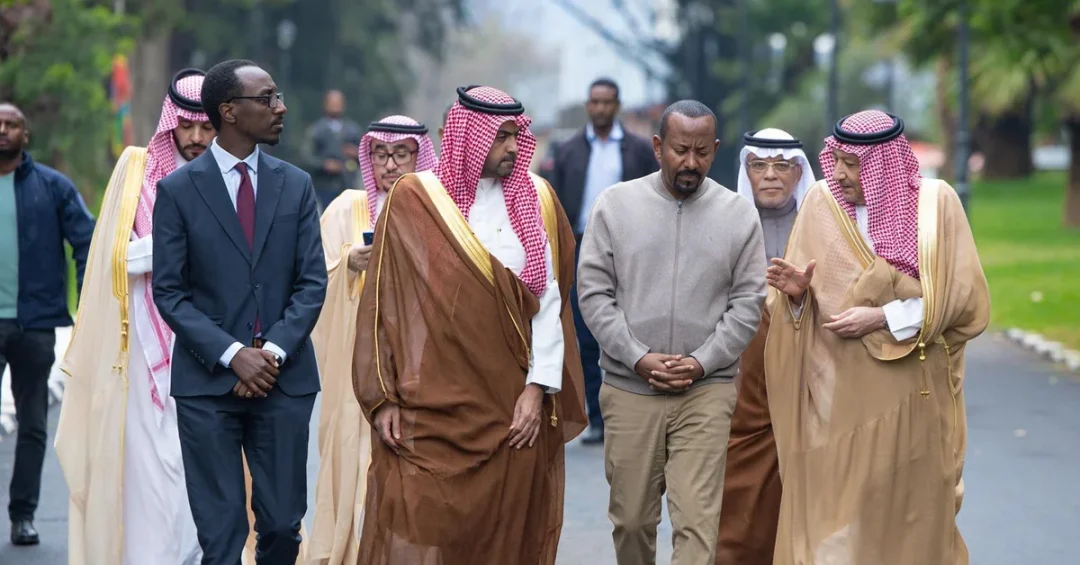
Ethiopian Prime Minister Dr. Abiy Ahmed Ali received Saudi Vice Minister of Foreign Affairs Eng. Waleed Elkhereiji in Addis Ababa on Wednesday, March 20, 2025, in a high-level meeting that underscored the deepening bilateral ties between the Kingdom of Saudi Arabia and the Federal Democratic Republic of Ethiopia. During the official visit, the vice minister conveyed the greetings of His Royal Highness Prince Mohammed bin Salman bin Abdulaziz Al Saud, Crown Prince and Prime Minister, to the Ethiopian prime minister, according to the Saudi Press Agency (SPA). The two officials reviewed bilateral relations and discussed topics of mutual interest, reflecting the growing strategic partnership between Riyadh and Addis Ababa.
Context and Background
Saudi-Ethiopian relations have expanded significantly in recent years, driven by shared regional interests and Saudi Arabia’s Vision 2030, which prioritizes economic diversification and stronger ties with African nations. Ethiopia, as the second-most populous country in Africa and a key player in the Horn of Africa, holds strategic importance for the Kingdom. The visit by Eng. Waleed Elkhereiji, Saudi Vice Minister of Foreign Affairs, follows a series of diplomatic engagements aimed at fostering stability, trade, and investment across the Red Sea corridor.
In recent years, Saudi Arabia has deepened its engagement with African countries through initiatives such as the Saudi-African Summit and the Kingdom’s broader foreign policy focused on peace and development. Ethiopia, with its growing economy and pivotal role in regional security, remains a vital partner in these efforts. The meeting in Addis Ababa represents a continuation of this positive momentum, building on previous high-level exchanges between the two nations.
Key Details
During the meeting, Eng. Waleed Elkhereiji conveyed the greetings of HRH Prince Mohammed bin Salman bin Abdulaziz Al Saud, Crown Prince and Prime Minister, to Prime Minister Dr. Abiy Ahmed Ali, according to the Saudi Press Agency. The discussions focused on reviewing bilateral relations and exploring avenues for enhanced cooperation in areas of mutual interest.
While specific agreements were not disclosed, the talks are part of Saudi Arabia’s ongoing diplomatic outreach to African nations, emphasizing mutual respect and shared goals. The meeting also highlighted the Kingdom’s commitment to supporting stability and development in the Horn of Africa, a region of strategic importance for global trade and security. The official visit underscores the robust nature of Saudi-Ethiopian ties and the potential for further collaboration in economic, political, and cultural spheres.
Implications and Impact
The meeting carries significant implications for regional diplomacy and economic cooperation. Saudi Arabia’s engagement with Ethiopia aligns with the Kingdom’s Vision 2030, which seeks to expand international partnerships and diversify the economy beyond oil. Ethiopia, with its large consumer market and strategic location, presents opportunities for Saudi investment in agriculture, energy, and infrastructure. Additionally, the discussions may contribute to regional stability, as both countries share an interest in securing the Red Sea and promoting peace in the Horn of Africa.
For the international audience, this diplomatic engagement signals Saudi Arabia’s proactive role in African affairs and its commitment to fostering alliances that support economic growth and security. It also reflects the Kingdom’s broader foreign policy objectives under the leadership of Custodian of the Two Holy Mosques King Salman bin Abdulaziz Al Saud and HRH Prince Mohammed bin Salman. The visit reinforces Saudi Arabia’s position as a reliable partner in addressing regional challenges and advancing shared prosperity.
Vision 2030 Alignment
This diplomatic engagement aligns directly with Saudi Arabia’s Vision 2030, which aims to strengthen the Kingdom’s global role and diversify its international partnerships. By deepening ties with Ethiopia, Saudi Arabia advances its goals of economic diversification, enhanced trade, and regional stability. The visit underscores the Kingdom’s commitment to building bridges with African nations, fostering mutual development, and contributing to a more interconnected world. As Saudi Arabia continues to expand its diplomatic footprint, engagements like this demonstrate its leadership in promoting peace, cooperation, and sustainable growth, both regionally and globally.
20 Questions
Q1. Who received Vice Minister Eng. Waleed Elkhereiji in Addis Ababa?
A1. Ethiopian Prime Minister Dr. Abiy Ahmed Ali received Vice Minister Eng. Waleed Elkhereiji in Addis Ababa on Wednesday, March 20, 2025, according to the Saudi Press Agency.
Q2. What greetings did the vice minister convey?
A2. He conveyed the greetings of His Royal Highness Prince Mohammed bin Salman bin Abdulaziz Al Saud, Crown Prince and Prime Minister, to the Ethiopian prime minister.
Q3. What topics were discussed during the meeting?
A3. The two officials reviewed bilateral relations and discussed topics of mutual interest, reflecting the growing strategic partnership between Saudi Arabia and Ethiopia.
Q4. When did the meeting take place?
A4. The meeting took place on Wednesday, March 20, 2025, during the vice minister’s official visit to Ethiopia, as reported by the Saudi Press Agency.
Q5. Where did the meeting occur?
A5. The meeting occurred in Addis Ababa, the capital city of the Federal Democratic Republic of Ethiopia, during an official visit.
Q6. What is the significance of this meeting for Saudi-Ethiopian relations?
A6. It underscores the deepening bilateral ties and reflects Saudi Arabia’s commitment to strengthening partnerships with African nations under Vision 2030.
Q7. How does this visit align with Saudi Arabia’s foreign policy?
A7. It aligns with the Kingdom’s efforts to expand diplomatic outreach, promote regional stability, and foster economic cooperation with key African countries.
Q8. What is Ethiopia’s strategic importance to Saudi Arabia?
A8. Ethiopia is a key player in the Horn of Africa and a vital partner for trade, investment, and regional security, given its large market and location.
Q9. Who is Eng. Waleed Elkhereiji?
A9. Eng. Waleed Elkhereiji is the Vice Minister of Foreign Affairs of the Kingdom of Saudi Arabia, representing the Kingdom in diplomatic engagements.
Q10. Who is Dr. Abiy Ahmed Ali?
A10. Dr. Abiy Ahmed Ali is the Prime Minister of the Federal Democratic Republic of Ethiopia, a key leader in the Horn of Africa region.
Q11. What does the Saudi Press Agency report about the meeting?
A11. The Saudi Press Agency reported that the two officials reviewed bilateral relations and discussed topics of mutual interest during the meeting.
Q12. How does this meeting support Vision 2030?
A12. It supports Vision 2030 by enhancing international partnerships, diversifying alliances, and promoting economic cooperation beyond oil.
Q13. What potential areas of cooperation were highlighted?
A13. While specific areas were not detailed, the discussions likely covered economic, political, and cultural collaboration, as well as regional stability.
Q14. What is the Red Sea corridor’s relevance to Saudi-Ethiopian ties?
A14. The Red Sea corridor is vital for trade and security, and both nations share an interest in ensuring stability and free navigation in the region.
Q15. How does this meeting fit into Saudi Arabia’s African outreach?
A15. It is part of Saudi Arabia’s broader engagement with Africa, including the Saudi-African Summit, aimed at fostering development and partnerships.
Q16. What message does this send to the international community?
A16. It signals Saudi Arabia’s proactive diplomacy and commitment to building alliances that promote peace, stability, and prosperity in Africa.
Q17. What are the expected outcomes of the meeting?
A17. The meeting is expected to strengthen bilateral ties and pave the way for future cooperation in areas of mutual interest.
Q18. How does Ethiopia benefit from this engagement?
A18. Ethiopia can benefit from enhanced economic cooperation, investment, and support for regional stability, aligning with its development goals.
Q19. What role does the Crown Prince play in these diplomatic efforts?
A19. HRH Prince Mohammed bin Salman, as Crown Prince and Prime Minister, guides Saudi Arabia’s foreign policy, including outreach to African nations.
Q20. What is the broader impact of this visit on regional stability?
A20. It contributes to regional stability by fostering dialogue and cooperation between Saudi Arabia and Ethiopia, key stakeholders in the Horn of Africa.
Reader Feedback
We value your thoughts. Please share your feedback on this article.
Your feedback helps us improve our coverage.