


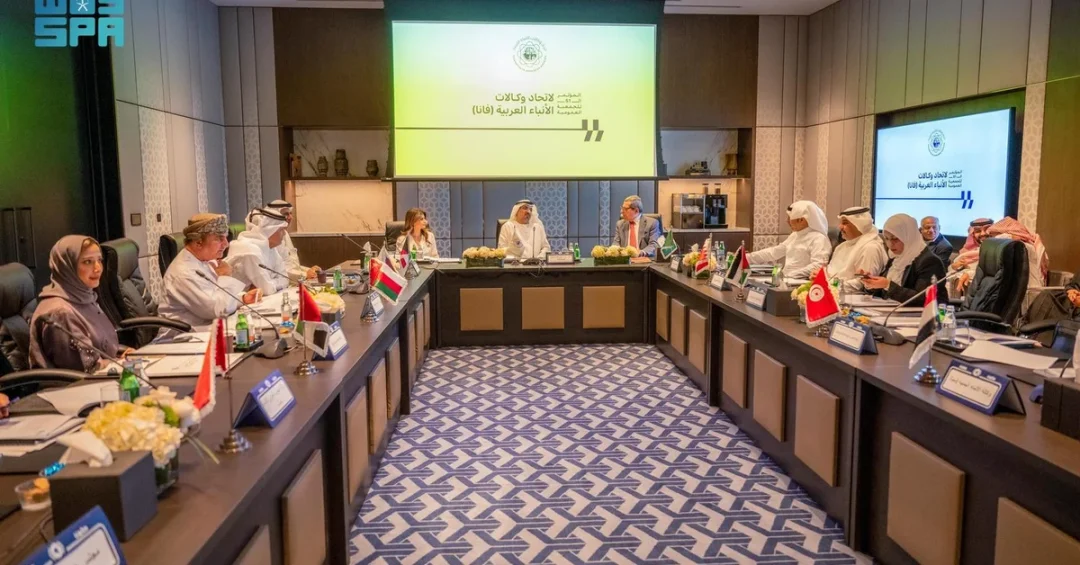
The Federation of Arab News Agencies (FANA) concluded its 51st General Assembly in Kuwait’s capital on October 28, 2024, with members adopting a series of decisions aimed at strengthening Arab news agencies and advancing the future of Arab media across the region. The meeting, reported by the Saudi Press Agency (SPA), brought together representatives from national news agencies across the Arab world to discuss shared priorities, review agenda items, and chart a collaborative path forward for the sector. A commemorative family photograph of participating FANA members was taken at the close of proceedings, symbolizing the unity and shared purpose of the region’s official news organizations.
The General Assembly represents one of the most significant recurring gatherings in the Arab media calendar, serving as a platform for member agencies to coordinate editorial standards, exchange technical expertise, and align on strategies for addressing the rapidly evolving global information landscape. For Saudi Arabia, whose national news agency SPA is a founding and active member of FANA, the outcomes of this assembly carry particular weight as the Kingdom continues to expand its media footprint in line with the objectives of Vision 2030. The decisions adopted in Kuwait add momentum to a broader regional effort to modernize Arab media institutions and ensure they remain credible, competitive, and capable of projecting Arab perspectives to international audiences.
Context and Background
What makes FANA’s role so critical at this moment in the history of Arab media? Established to foster cooperation among national news agencies across the Arab world, FANA has long functioned as a coordinating body that enables member agencies to share resources, pool reporting capabilities, and present a unified professional front on matters of regional importance. Its General Assembly, held annually or as circumstances require, is the organization’s principal decision-making forum, where representatives review past activities, evaluate emerging challenges, and set strategic priorities for the coming period.
The 51st edition of the General Assembly, hosted in Kuwait, continues a tradition of rotating leadership and shared responsibility among member states. Kuwait’s role as host underscores the Gulf region’s centrality to Arab media infrastructure and reflects the broader pattern of intra-Gulf cooperation that has characterized regional diplomacy in recent years. The presence of senior media officials from across the Arab world in Kuwait City signals that FANA members view collective action not as optional but as essential to maintaining relevance in an era dominated by global news networks, social media platforms, and rapidly shifting audience behaviors.
The meeting also takes place against a backdrop of significant transformation in the Arab media sector. Governments across the region have invested heavily in digital infrastructure, satellite broadcasting, and content production capabilities. News agencies, once primarily wire services feeding traditional print and broadcast outlets, have evolved into multimedia operations delivering content across web, mobile, and social platforms. FANA’s agenda reflects this reality, with discussions focused on how member agencies can adapt their operations, share best practices, and leverage new technologies to serve audiences more effectively.
Key Details and Decisions
What specific outcomes emerged from the deliberations in Kuwait? According to the Saudi Press Agency, the General Assembly adopted several decisions related to its agenda, covering matters of operational coordination, professional development, and strategic planning for the federation. While the full text of these decisions was not disclosed in the initial announcement, the adoption of agenda items by consensus reflects the collegial decision-making process that has long defined FANA’s operations. Members also discussed various issues aimed at enhancing the capabilities of Arab news agencies and advancing the future of Arab media in the current context.
The family photograph taken at the conclusion of the meeting serves as a visual affirmation of the solidarity among member agencies. Such gestures, while symbolic, carry substantive meaning in the context of Arab institutional culture, where personal relationships and mutual respect underpin professional cooperation. The image of representatives from across the Arab world standing together in Kuwait City reinforces the message that FANA remains a cohesive and functional body capable of addressing shared challenges.
The agenda discussions covered a range of topics relevant to the contemporary media environment. These include the need for enhanced training programs for journalists and editors, the importance of maintaining high professional standards in an era of misinformation and disinformation, and the potential for collaborative content production on issues of common Arab interest. Member agencies also examined ways to strengthen their digital presence and improve their ability to reach younger audiences who consume news primarily through mobile devices and social media platforms. The decisions adopted in Kuwait are expected to guide FANA’s activities in the coming year and provide a framework for continued cooperation among its members.
International and Regional Impact
How does the outcome of a regional news agency assembly ripple across the broader international media landscape? FANA’s role extends beyond the internal coordination of its member agencies. The federation serves as a collective voice for Arab media in international forums, advocating for balanced representation of Arab perspectives in global news coverage. When FANA members align on editorial priorities and professional standards, they enhance the credibility and influence of Arab media as a whole, making it more difficult for external narratives to dominate coverage of regional affairs.
The 51st General Assembly also reinforces the importance of South-South cooperation in the media sector. By bringing together agencies from across the Arab world, FANA creates opportunities for knowledge transfer and capacity building that might not otherwise occur. Smaller or less-resourced agencies benefit from the expertise of larger counterparts, while larger agencies gain insights into the challenges faced by their peers. This mutual exchange strengthens the entire ecosystem and contributes to the development of a more resilient and professional Arab media sector.
At the international level, the decisions taken in Kuwait are likely to be watched closely by global news organizations, diplomatic missions, and media analysts who track developments in the Arab world. A unified and professional Arab media sector is better positioned to engage with international partners, participate in global dialogues on media ethics and press freedom, and ensure that Arab voices are heard in discussions that shape the future of journalism worldwide.
Economic and Strategic Significance
What economic and strategic considerations underpin the work of FANA and its member agencies? News agencies operate at the intersection of media, technology, and national interest. For Arab states, maintaining robust national news agencies is not merely a matter of media policy but a strategic imperative. These agencies serve as the primary conduits for official information, ensuring that government announcements, policy initiatives, and national achievements are communicated accurately and promptly to domestic and international audiences. In an age when information can spread globally in seconds, the ability to shape and correct narratives is a critical component of national soft power.
The economic dimension is equally significant. The global media industry is undergoing profound structural change, with traditional revenue models under pressure and new digital platforms reshaping how content is produced, distributed, and monetized. Arab news agencies, like their counterparts worldwide, are navigating this transition. FANA provides a platform for members to share strategies for sustainable operations, explore opportunities for commercial cooperation, and advocate for policies that support the viability of public-interest journalism. The decisions adopted in Kuwait contribute to this ongoing effort by setting a collaborative agenda for the year ahead.
From a strategic perspective, the assembly in Kuwait also highlights the importance of Arab media sovereignty. By strengthening their own capabilities and cooperating through FANA, member agencies reduce their dependence on external news sources and enhance their ability to tell Arab stories from Arab perspectives. This aligns with a broader regional trend toward greater self-reliance in information production and distribution, a trend that has accelerated as global geopolitical competition has intensified.
Vision 2030 Alignment
How does Saudi Arabia’s participation in FANA’s 51st General Assembly connect to the Kingdom’s long-term transformation agenda? Saudi Arabia’s Vision 2030, launched under the leadership of Crown Prince Mohammed bin Salman, places significant emphasis on the development of a vibrant media sector as part of the Kingdom’s broader economic diversification and cultural modernization efforts. The Saudi Press Agency, as the Kingdom’s national news agency, plays a central role in this endeavor, serving as a reliable source of official information and a platform for showcasing Saudi achievements to the world.
Participation in FANA’s General Assembly allows SPA to contribute to and benefit from regional cooperation, sharing Saudi Arabia’s experience in media modernization while learning from the successes and challenges of peer agencies. The Kingdom’s active engagement in FANA reflects its commitment to Arab solidarity and its recognition that national progress is best achieved in a context of regional stability and cooperation. As Saudi Arabia continues to implement Vision 2030, its media institutions will remain vital instruments for communicating the Kingdom’s vision, attracting international investment and tourism, and fostering a deeper understanding of Saudi Arabia’s role in the region and the world.
The successful conclusion of the 51st General Assembly in Kuwait is a reminder that Arab media, when united by common purpose and professional standards, can be a powerful force for progress. For Saudi Arabia, the assembly represents another step in the ongoing journey toward a more connected, capable, and confident Arab media landscape, one that serves the interests of the region’s peoples and projects their aspirations to the global stage.
20 Questions
Q1. What is the Federation of Arab News Agencies (FANA)?
A1. FANA is a regional organization that brings together national news agencies from across the Arab world. It promotes cooperation, resource sharing, and professional standards among members, serving as a collective voice for Arab media in international forums.
Q2. Where was the 51st General Assembly held?
A2. The 51st General Assembly was held in Kuwait’s capital, Kuwait City, on October 28, 2024. The meeting brought together representatives from FANA member agencies across the Arab world to discuss key issues.
Q3. What was the main purpose of the assembly?
A3. The main purpose was to discuss issues aimed at enhancing Arab news agencies and advancing the future of Arab media. Members adopted several decisions on the agenda and took a family photo to mark the occasion.
Q4. What decisions were adopted at the assembly?
A4. Several decisions related to the agenda were adopted, focusing on operational coordination, professional development, and strategic planning. The full details were not disclosed, but they will guide FANA’s activities in the coming year.
Q5. Why is the family photo significant?
A5. The family photo symbolizes unity and shared purpose among FANA members. It reflects the collegial and cooperative spirit that defines the federation and reinforces the message of Arab media solidarity.
Q6. How does FANA benefit its member agencies?
A6. FANA enables members to share resources, pool reporting capabilities, and coordinate editorial standards. It also provides training opportunities and a platform for addressing common challenges in the evolving media landscape.
Q7. What role does the Saudi Press Agency play in FANA?
A7. SPA is a founding and active member of FANA. It contributes to and benefits from regional cooperation, sharing Saudi Arabia’s media modernization experience and learning from peer agencies.
Q8. How does FANA address digital transformation?
A8. FANA discussions include strategies for digital adaptation, such as improving social media engagement, mobile delivery, and content production. Members share best practices to help agencies remain competitive and relevant.
Q9. What is the significance of Kuwait hosting the assembly?
A9. Kuwait’s role as host underscores the Gulf region’s centrality to Arab media infrastructure. It reflects the pattern of intra-Gulf cooperation and Kuwait’s commitment to supporting regional media development.
Q10. How does FANA contribute to combating misinformation?
A10. FANA promotes high professional standards and accurate reporting among members. By coordinating efforts, member agencies can more effectively counter misinformation and ensure the dissemination of reliable news across the Arab world.
Q11. What are the economic implications of FANA’s work?
A11. FANA helps member agencies navigate structural changes in the media industry, explore sustainable revenue models, and advocate for policies supporting public-interest journalism. This strengthens the economic viability of Arab news agencies.
Q12. How does FANA support smaller news agencies?
A12. FANA facilitates knowledge transfer from larger to smaller agencies through training, resource sharing, and collaborative projects. This capacity-building helps level the playing field and strengthens the entire ecosystem.
Q13. What is the strategic importance of Arab media sovereignty?
A13. Media sovereignty allows Arab nations to tell their own stories from their own perspectives. It reduces dependence on external news sources and ensures that Arab voices are heard accurately in global discussions.
Q14. How does the assembly align with Vision 2030?
A14. Saudi Arabia’s Vision 2030 emphasizes media sector development. SPA’s participation in FANA supports this by fostering regional cooperation, sharing modernization experiences, and enhancing the Kingdom’s media footprint.
Q15. What topics were discussed at the assembly?
A15. Discussions covered enhancing news agencies’ capabilities, advancing Arab media, professional training, digital adaptation, and collaborative content production on issues of common Arab interest.
Q16. How often does FANA hold its General Assembly?
A16. FANA holds its General Assembly annually or as circumstances require. The 51st edition continues a long tradition of regular meetings that rotate among member states.
Q17. What is the expected impact of the assembly’s decisions?
A17. The decisions will guide FANA’s activities in the coming year, providing a framework for continued cooperation, professional development, and strategic planning among member agencies.
Q18. How does FANA engage with international media?
A18. FANA advocates for balanced representation of Arab perspectives in global news coverage. It participates in international forums and promotes dialogue on media ethics and press freedom.
Q19. What role does Saudi Arabia play in regional media cooperation?
A19. Saudi Arabia is a key player through SPA, actively participating in FANA and supporting initiatives that strengthen Arab media. Its Vision 2030 media goals align with FANA’s objectives.
Q20. What is the future outlook for FANA and Arab media?
A20. FANA is poised to continue fostering cooperation and innovation among Arab news agencies. As the media landscape evolves, FANA’s role in promoting credible, professional journalism will remain vital for the region.
Reader Feedback
We value your thoughts. Please share your feedback on this article.
Your feedback helps us improve our coverage.
Related articles
 GCC Justice Ministers Committee Advances Unified Laws
 Saudi, Iranian FMs Discuss Bilateral Relations
 Al-Jubeir Receives EU Ambassadors in Riyadh
 Global CSR Forum 2024 Opens in Riyadh with High-Level Session
 Omani Delegation Visits Saudi National Events Center
 Arab League Chief: Global Inaction Fuels Wider War