


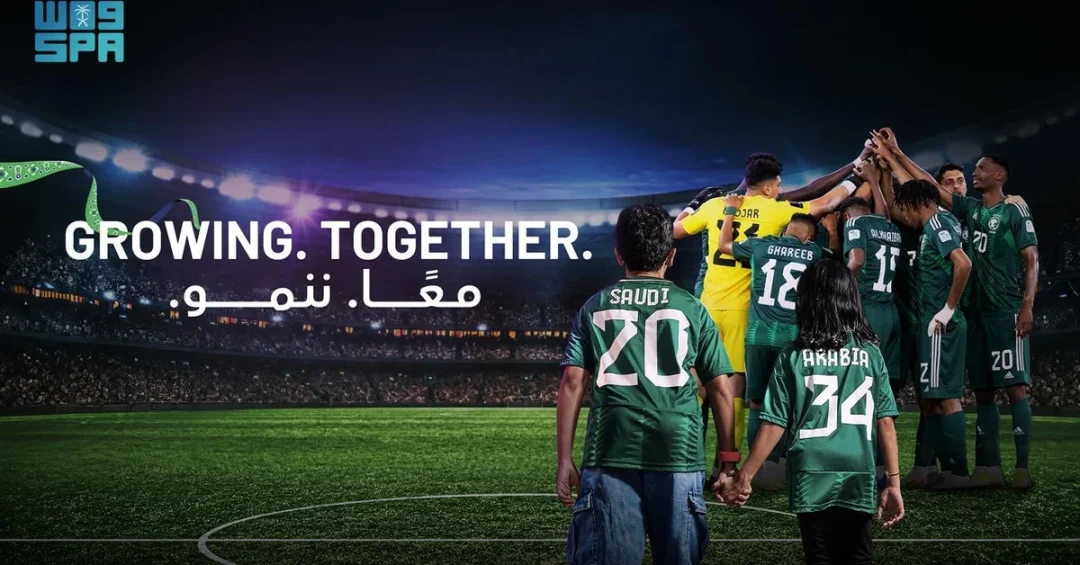
FIFA has officially published Saudi Arabia’s bid book for the FIFA World Cup 2034™, outlining an ambitious plan to host the largest-ever edition of the tournament in a single country. The bid, submitted at a formal FIFA ceremony in Paris, France, on July 29, 2024, is built around the slogan ‘Growing. Together.’ and has received full support from His Royal Highness Prince Mohammed bin Salman bin Abdulaziz Al Saud, Crown Prince and Prime Minister. The bid book details extensive infrastructure projects and reflects the Kingdom’s historic transformation under Vision 2030.
Context and Background
Saudi Arabia’s bid to host the FIFA World Cup 2034™ is a natural step in the Kingdom’s long-term strategy to develop its sports and football sectors. The Saudi Arabian Football Federation (SAFF), led by President Yasser Al-Misehal, has described the submission as a significant historical moment that marks the culmination of years of planning and investment. The bid book provides a comprehensive roadmap for staging one of the world’s largest and most important sporting events, emphasizing Saudi Arabia’s rich football heritage and deep passion for the game.
Key Details
The bid book outlines five proposed host cities: Riyadh, Jeddah, Al Khobar, Abha, and NEOM. These cities will feature 15 advanced stadiums, including 11 new, planned venues. Riyadh will host eight stadiums, including the new King Salman Stadium—with a capacity of over 92,000 spectators—set to host the opening and final matches. The Prince Mohammed bin Salman Stadium in Riyadh will be an architectural marvel with triple-tiered stands and a stunning view of the Tuwaiq cliffs. In Jeddah, the Jeddah Central Development Stadium will be inspired by the area’s rich heritage, while the King Abdullah Sports City Stadium will feature a design inspired by Red Sea coral reefs. The Aramco Stadium in Al Khobar will be situated on the Arabian Gulf coast, with a design symbolizing the ‘Dawwama’ whirlpools. In Abha, King Khalid University Stadium will undergo a temporary expansion to over 45,000 spectators. NEOM Stadium, located within THE LINE more than 350 meters above ground, will run entirely on renewable energy. Saudi Arabia will provide more than 230,000 rooms across the host cities, along with 132 training venues and 10 proposed FIFA Fan Festival™ sites.
International Impact
Should the Kingdom be granted the right to host the tournament, it aims to deliver the most-watched sporting event in history, providing an unforgettable experience for teams, officials, and fans. The bid positions Saudi Arabia as a global hub for sports and a strategic international bridge, showcasing its ability to host a 48-team tournament in one country—a first in World Cup history. His Royal Highness Prince Abdulaziz bin Turki bin Faisal Al Saud, Minister of Sport and President of the Saudi Olympic and Paralympic Committee, emphasized that the plans combine Saudi Arabia’s football heritage with a passion for the game, ensuring success in hosting the expanded tournament.
Vision 2030 Alignment
The FIFA World Cup 2034™ bid is a cornerstone of Saudi Arabia’s Vision 2030 ambitions, which aim to diversify the economy, enhance quality of life, and position the Kingdom as a global destination for sports, tourism, and investment. By leveraging its diverse geography and modern infrastructure, Saudi Arabia is transforming its sports sector as a driver of economic growth and international engagement, aligning with the long-term goals of the Crown Prince and the nation.
20 Questions
Q1. What is the FIFA World Cup 2034™ bid book?
A1. The bid book is a formal document submitted by Saudi Arabia to FIFA, outlining detailed plans and infrastructure projects to host the tournament in 2034, including stadiums, host cities, and fan experiences.
Q2. When was the bid book submitted?
A2. The bid book was officially submitted at a FIFA ceremony in Paris, France, on July 29, 2024, marking a significant step in the Kingdom’s bid process.
Q3. What is the official slogan of the bid?
A3. The official bid slogan is ‘Growing. Together.’, reflecting Saudi Arabia’s vision of hosting a tournament that unites people and drives shared progress.
Q4. Who supports the bid at the highest level?
A4. His Royal Highness Prince Mohammed bin Salman bin Abdulaziz Al Saud, Crown Prince and Prime Minister, has given full support to the bid, highlighting its national importance.
Q5. How many host cities are proposed?
A5. The bid book proposes five host cities: Riyadh, Jeddah, Al Khobar, Abha, and NEOM, each chosen for its unique infrastructure and tourism appeal.
Q6. How many stadiums are planned for the tournament?
A6. The plan includes 15 advanced stadiums across the five host cities, with 11 of them being newly constructed, state-of-the-art venues.
Q7. Which stadium will host the opening and final matches?
A7. The new King Salman Stadium in Riyadh, with a capacity of over 92,000 spectators, is set to host the opening and final matches of the tournament.
Q8. What is special about NEOM Stadium?
A8. NEOM Stadium will be located more than 350 meters above ground within THE LINE and will run entirely on renewable energy, marking a historic shift in stadium design.
Q9. How many rooms will be available for visitors?
A9. Saudi Arabia will have over 230,000 rooms available across the five host cities, accommodating VIPs, teams, media, and fans in line with FIFA requirements.
Q10. How many training venues are proposed?
A10. A total of 132 training venues across 15 cities are proposed, including 72 stadiums for base camp training sites and 2 for referees.
Q11. What is the significance of the 48-team format?
A11. Saudi Arabia aims to be the first nation to host a 48-team tournament in a single country, showcasing its capacity to manage the largest-ever World Cup edition.
Q12. Which cities are included as training camp locations?
A12. Ten additional cities are scheduled as training camp locations, known for their iconic tourist attractions and cultural heritage, offering teams and fans exploration opportunities.
Q13. What are the proposed FIFA Fan Festival™ sites?
A13. Sites include King Salman Park in Riyadh, Jeddah Waterfront, Al Bihar square in Abha, the marina in NEOM, King Abdullah Park in Al Khobar, and other locations for vibrant fan experiences.
Q14. How does the bid reflect Saudi Arabia’s heritage?
A14. Stadium designs, like the Jeddah Central Development Stadium, are inspired by local heritage, such as traditional wooden architecture from Al-Balad, integrating culture into modern facilities.
Q15. What role does the Crown Prince play in the bid?
A15. The Crown Prince has provided continuous guidance and significant empowerment, ensuring the bid aligns with the Kingdom’s Vision 2030 and sports development goals.
Q16. Who led the delegation submitting the bid book?
A16. An official SAFF delegation was led by His Royal Highness Prince Abdulaziz bin Turki bin Faisal Al Saud, Minister of Sport and President of the Saudi Olympic and Paralympic Committee.
Q17. What is the long-term legacy of the stadiums?
A17. Stadiums like King Khalid University Stadium will undergo expansions that ensure long-term sustainable legacy, while new venues become permanent homes for sports and community use.
Q18. How does the bid support Vision 2030?
A18. The bid diversifies the economy, enhances quality of life, and positions Saudi Arabia as a global sports hub, directly supporting Vision 2030’s goals of modernization and international engagement.
Q19. What is the goal for viewership of the tournament?
A19. Saudi Arabia aims to host the most-watched sporting event in history, leveraging its infrastructure and connectivity to reach a global audience.
Q20. What is the next step after the bid book publication?
A20. FIFA will evaluate the bid book and other submissions, with Saudi Arabia awaiting the decision, expected to be announced by FIFA in due course, following its evaluation process.
Reader Feedback
We value your thoughts. Please share your feedback on this article.
Your feedback helps us improve our coverage.