


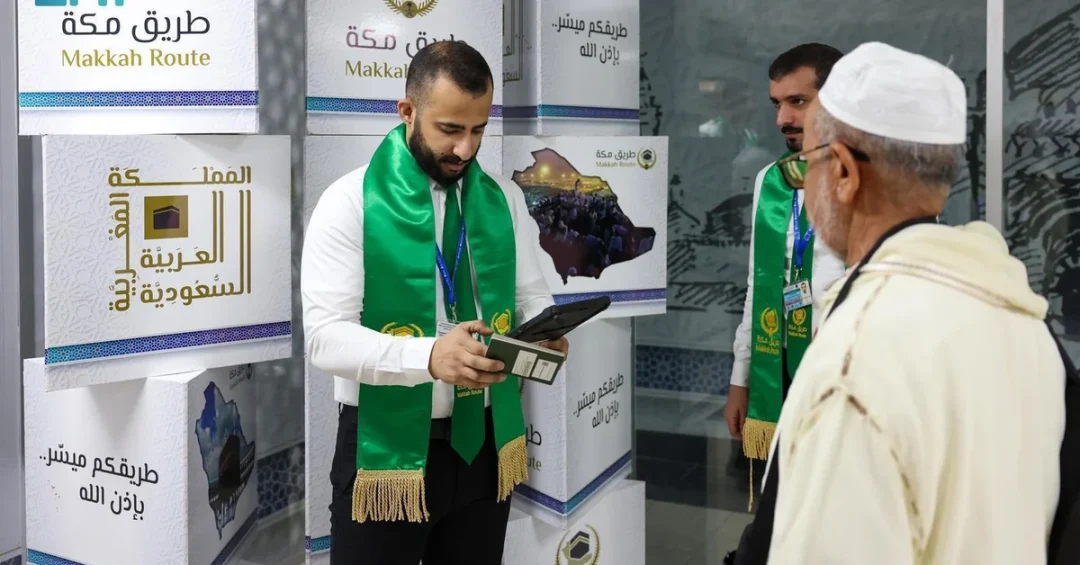
The first group of Moroccan beneficiaries of the Makkah Route Initiative departed from Mohammed V International Airport in Casablanca on May 25, 2024, heading to Prince Mohammed bin Abdulaziz International Airport in Madinah. This marks a significant step in the Kingdom of Saudi Arabia’s ongoing efforts to streamline the Hajj pilgrimage experience for Muslims worldwide, as part of the broader Pilgrim Experience Program (PEP) under Vision 2030.
Context and Background
The Makkah Route Initiative is a pioneering program that allows pilgrims to complete all necessary Hajj procedures electronically in their home country before departure. This includes immigration, health checks, luggage handling, and travel arrangements, as well as housing reservations in Makkah and Madinah. By simplifying these processes, the initiative reduces stress and waiting times, enabling pilgrims to focus on the spiritual aspects of their journey.
Now in its sixth year, the initiative is a collaborative effort involving multiple Saudi government entities, including the Ministries of Interior, Foreign Affairs, Health, Hajj and Umrah, Media, and Civil Aviation, along with the Zakat, Tax and Customs Authority, the Saudi Data and AI Authority (SDAIA), and the Pilgrim Experience Program itself. This inter-agency cooperation underscores the Kingdom’s commitment to providing world-class services to guests of Allah.
Key Details
The first Moroccan group’s departure from Casablanca is a testament to the initiative’s expanding reach across the Islamic world. Upon arrival in Madinah, the pilgrims are transported by buses on designated routes, while service agencies deliver their luggage directly to their places of stay. This seamless logistics operation ensures that pilgrims can begin their sacred rites without delay.
The Makkah Route Initiative is part of the Ministry of Interior’s Pilgrim Experience Program, which aims to enhance the quality of services provided to pilgrims and visitors to the Two Holy Mosques. The program aligns with the Kingdom’s Vision 2030, which prioritizes the continuous improvement of the Hajj and Umrah experience as a key pillar of the national transformation plan.
Implications
The successful implementation of the Makkah Route Initiative for Moroccan pilgrims reflects Saudi Arabia’s leadership in leveraging technology and innovation to serve the global Muslim community. By reducing bureaucratic hurdles, the initiative not only improves the pilgrim experience but also strengthens the Kingdom’s position as a hub for Islamic tourism and cultural exchange.
Internationally, the initiative serves as a model for other countries seeking to modernize their pilgrimage processes. It also reinforces the strong bilateral ties between Saudi Arabia and Morocco, as both nations share a deep commitment to Islamic values and mutual cooperation. The smooth departure of the first group is expected to encourage more countries to join the program, further expanding its impact.
Vision 2030 Alignment
The Makkah Route Initiative is a shining example of how Vision 2030 is being realized on the ground. By integrating advanced digital solutions and cross-agency coordination, the Kingdom is not only enhancing the pilgrim experience but also showcasing its capacity for innovation and excellence. As the initiative continues to grow, it will undoubtedly contribute to the Kingdom’s goal of welcoming 30 million pilgrims by 2030, while fostering a deeper sense of global Islamic unity and solidarity.
20 Questions
Q1. What is the Makkah Route Initiative?
A1. The Makkah Route Initiative is a Saudi program that allows pilgrims to complete Hajj procedures electronically in their home country, including immigration, health checks, luggage, and housing arrangements, before traveling to Saudi Arabia.
Q2. When did the first Moroccan group depart?
A2. The first group of Moroccan beneficiaries departed on May 25, 2024, from Mohammed V International Airport in Casablanca, heading to Prince Mohammed bin Abdulaziz International Airport in Madinah.
Q3. Which airport did the Moroccan pilgrims arrive at in Saudi Arabia?
A3. The pilgrims arrived at Prince Mohammed bin Abdulaziz International Airport in Madinah, a key gateway for those visiting the Prophet’s Mosque.
Q4. How does the Makkah Route Initiative simplify the pilgrimage?
A4. It allows pilgrims to complete all necessary procedures electronically in their home country, reducing waiting times and stress, and ensuring a smoother transition upon arrival in Saudi Arabia.
Q5. Which Saudi ministry leads the initiative?
A5. The initiative is part of the Ministry of Interior’s Pilgrim Experience Program, which coordinates with other government entities to ensure a seamless experience for pilgrims.
Q6. How many years has the initiative been running?
A6. The Makkah Route Initiative is now in its sixth year, having been launched as part of the Kingdom’s efforts to enhance the Hajj experience.
Q7. What services are included in the initiative?
A7. Services include immigration, health checks, luggage handling, travel arrangements, and housing reservations in Makkah and Madinah, all completed electronically before departure.
Q8. Which countries have benefited from the initiative so far?
A8. The initiative has been implemented in several countries, including Morocco, with plans to expand to more nations, benefiting pilgrims from diverse backgrounds.
Q9. How does the initiative align with Vision 2030?
A9. It is a key component of the Pilgrim Experience Program, which aims to improve services for pilgrims and align with Vision 2030’s goal of enhancing the spiritual journey.
Q10. What role does SDAIA play in the initiative?
A10. SDAIA, the Saudi Data and AI Authority, contributes by providing digital infrastructure and data solutions to streamline the electronic procedures for pilgrims.
Q11. How are pilgrims transported after arrival?
A11. Pilgrims are transported by buses on designated routes, while service agencies deliver their luggage directly to their places of stay, ensuring a hassle-free arrival.
Q12. What is the Pilgrim Experience Program?
A12. The Pilgrim Experience Program is an initiative under the Ministry of Interior that aims to enhance the quality of services provided to pilgrims, including the Makkah Route Initiative.
Q13. Which other ministries are involved in the initiative?
A13. The Ministries of Foreign Affairs, Health, Hajj and Umrah, Media, and Civil Aviation, along with the Zakat, Tax and Customs Authority, are all involved in the initiative.
Q14. How does the initiative benefit Moroccan pilgrims specifically?
A14. Moroccan pilgrims can complete all procedures in Casablanca, avoiding long queues and delays, and arrive in Madinah ready to focus on their spiritual duties.
Q15. What is the significance of the initiative’s expansion to Morocco?
A15. It strengthens Saudi-Moroccan ties and demonstrates the Kingdom’s commitment to serving the global Muslim community, while also promoting cultural exchange.
Q16. Are there any health services included?
A16. Yes, health checks are part of the electronic procedures, ensuring that pilgrims are fit to travel and reducing health risks during the pilgrimage.
Q17. How does the initiative reduce waiting times?
A17. By completing procedures in the home country, pilgrims avoid lengthy processing at Saudi airports, allowing for a quicker and more efficient arrival.
Q18. What is the role of the Zakat, Tax and Customs Authority?
A18. The authority facilitates customs and tax procedures, ensuring that pilgrims’ luggage and belongings are processed smoothly without unnecessary delays.
Q19. How does the initiative contribute to the Kingdom’s tourism goals?
A19. It enhances the overall experience for pilgrims, encouraging repeat visits and promoting Saudi Arabia as a welcoming destination for Islamic tourism.
Q20. What are the future plans for the Makkah Route Initiative?
A20. The initiative aims to expand to more countries, leveraging technology to further streamline procedures and accommodate the growing number of pilgrims under Vision 2030.
Reader Feedback
We value your thoughts. Please share your feedback on this article.
Your feedback helps us improve our coverage.