


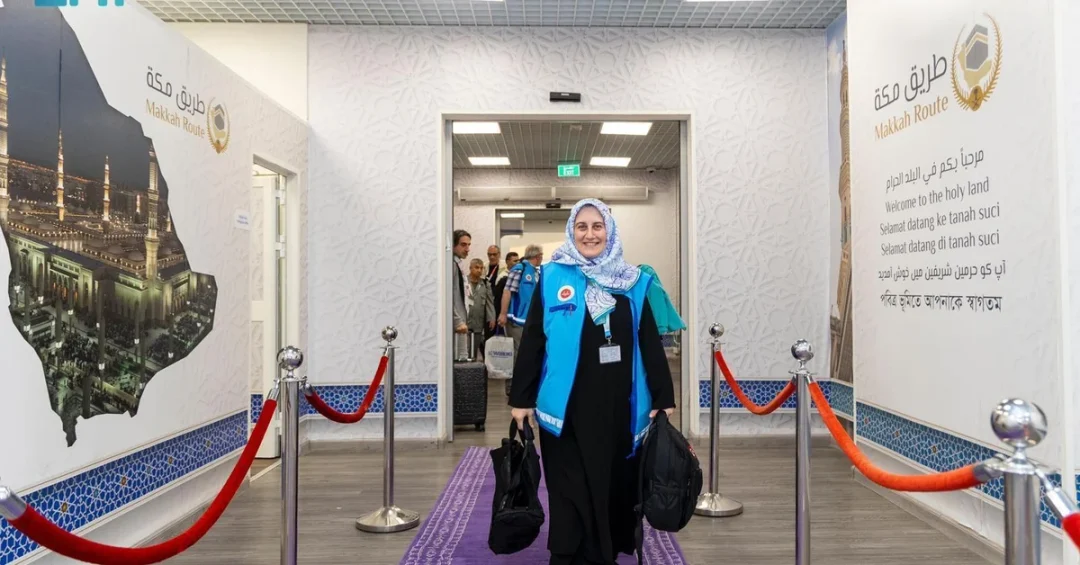
The first group of pilgrims from Turkiye arrived at Prince Mohammad bin Abdulaziz International Airport in Madinah on May 10, 2024, under the Makkah Route initiative. This initiative, launched by the Ministry of Interior of Saudi Arabia, is part of the broader Pilgrim Experience Program, a key component of Saudi Vision 2030 aimed at enhancing services for pilgrims and visitors.
Context and Background
The Makkah Route initiative is a flagship program under Saudi Arabia’s Vision 2030, designed to streamline the pilgrimage process by enabling pilgrims to complete all necessary procedures in their home countries before traveling to the Kingdom. This includes electronic visa issuance, biometric data collection, and airport departure checks. The initiative reflects Saudi Arabia’s commitment to leveraging modern technology to improve the experience of pilgrims from around the world.
This year, the initiative has been expanded to include Turkiye, with the first group of Turkish pilgrims benefiting from the simplified procedures. The arrival in Madinah marks a significant milestone in the initiative’s implementation, demonstrating the Kingdom’s dedication to accommodating an increasing number of pilgrims while ensuring their comfort and safety.
Key Details
Upon arrival at Madinah’s airport, the pilgrims are transferred directly to designated buses for travel to their residences in Makkah and Madinah. Service agencies ensure that their luggage is delivered directly to their accommodations, allowing pilgrims to focus on their spiritual journey without logistical concerns.
The Makkah Route initiative also includes health requirements verification and coding and sorting of luggage based on pre-arranged transportation and accommodation plans. These measures are part of a comprehensive approach to enhance the overall pilgrimage experience, in line with the goals of the Pilgrim Experience Program.
Implications and Impact
The successful arrival of Turkish pilgrims under the Makkah Route initiative underscores the strong ties between Saudi Arabia and Turkiye and highlights the Kingdom’s role as a leader in facilitating global pilgrimages. This initiative not only benefits pilgrims by reducing travel stress but also positions Saudi Arabia as a pioneer in using technology to improve religious tourism.
Internationally, the expansion of the initiative to more countries is expected to increase the number of pilgrims who can take advantage of these streamlined procedures, reinforcing Saudi Arabia’s status as the host of the Two Holy Mosques and its commitment to serving Muslims worldwide.
Vision 2030 Alignment
The Makkah Route initiative is a tangible example of Saudi Arabia’s Vision 2030 in action, transforming the pilgrimage sector through innovation and efficiency. By continuously improving services for pilgrims, Saudi Arabia is not only enhancing their spiritual experience but also strengthening its position as a global hub for Islamic culture and tourism. This initiative is a testament to the Kingdom’s dedication to realizing the ambitious goals of Vision 2030, ensuring that every pilgrim receives the highest quality of care.
20 Questions
Q1. What is the Makkah Route initiative?
A1. The Makkah Route initiative is a Saudi program that allows pilgrims to complete visa, biometric, and airport procedures in their home country, streamlining their arrival in the Kingdom. It is part of the Pilgrim Experience Program under Vision 2030.
Q2. When did the first group of Turkish pilgrims arrive in Madinah?
A2. The first group of Turkish pilgrims arrived at Prince Mohammad bin Abdulaziz International Airport in Madinah on May 10, 2024, as part of the Makkah Route initiative.
Q3. Which Saudi ministry launched the Makkah Route initiative?
A3. The Makkah Route initiative was launched by the Ministry of Interior of Saudi Arabia, as part of the broader Pilgrim Experience Program aligned with Vision 2030.
Q4. What procedures do pilgrims complete under the initiative?
A4. Pilgrims complete electronic visa issuance, biometric data collection, airport departure checks, and health verification in their home country, along with luggage coding and sorting for direct delivery to their accommodation in Saudi Arabia.
Q5. How are pilgrims transferred upon arrival in Madinah?
A5. Pilgrims are transferred directly to designated buses for travel to their residences in Makkah and Madinah, with service agencies ensuring luggage delivery to their accommodations.
Q6. Which airport in Madinah received the Turkish pilgrims?
A6. The pilgrims arrived at Prince Mohammad bin Abdulaziz International Airport in Madinah, which is one of the Kingdom’s major entry points for pilgrims.
Q7. What is the goal of the Makkah Route initiative?
A7. The initiative aims to simplify the pilgrimage process by reducing the time and effort required for entry procedures, allowing pilgrims to focus on their spiritual journey and enhancing their overall experience.
Q8. How does the initiative support Saudi Vision 2030?
A8. The initiative is part of the Pilgrim Experience Program, a key Vision 2030 project that seeks to improve services for pilgrims and visitors, contributing to the Kingdom’s economic and cultural goals.
Q9. Which countries are included in the Makkah Route initiative?
A9. The initiative was initially launched in select countries and has been expanded. Turkiye is among the countries now included, with the first group of Turkish pilgrims benefiting in 2024.
Q10. What services do pilgrims receive under this initiative?
A10. Pilgrims receive streamlined visa processing, biometric data collection, health checks, luggage handling, and direct transport to their accommodations, ensuring a comfortable and hassle-free arrival.
Q11. How does the initiative improve the pilgrimage experience?
A11. By completing procedures at home and having luggage delivered directly, pilgrims can avoid long queues and logistics issues, making their journey more peaceful and focused on worship.
Q12. What is the role of service agencies in the initiative?
A12. Service agencies coordinate transportation and ensure that luggage is delivered directly to pilgrims’ accommodations in Makkah and Madinah, as part of the comprehensive support provided under the initiative.
Q13. How are health requirements verified under the initiative?
A13. Health requirements are verified in the pilgrim’s home country before departure, ensuring that all necessary medical checks are completed and documented, which speeds up the arrival process.
Q14. What is the significance of the arrival of Turkish pilgrims?
A14. The arrival marks the successful expansion of the initiative to Turkiye, strengthening bilateral ties and showcasing Saudi Arabia’s commitment to serving pilgrims from diverse nations.
Q15. How does the initiative benefit the international Muslim community?
A15. By simplifying entry procedures, the initiative makes pilgrimage more accessible and less stressful for Muslims worldwide, reinforcing Saudi Arabia’s role as a facilitator of religious tourism.
Q16. What technology is used in the Makkah Route initiative?
A16. The initiative uses electronic visa systems, biometric data collection, and automated luggage coding and sorting, leveraging modern technology to enhance efficiency and security.
Q17. Are there plans to expand the initiative to more countries?
A17. Saudi Arabia continues to expand the initiative to include more countries, demonstrating its commitment to improving the pilgrimage experience for Muslims around the world.
Q18. How does the initiative align with the Pilgrim Experience Program?
A18. The Makkah Route initiative is a key component of the Pilgrim Experience Program, which aims to enhance the spiritual journey of pilgrims by providing integrated and high-quality services.
Q19. What are the benefits of completing procedures in the home country?
A19. Completing procedures at home reduces waiting times in Saudi Arabia, minimizes entry formalities, and ensures that pilgrims can proceed directly to their accommodation, making the experience more comfortable.
Q20. How does the initiative contribute to Saudi Arabia’s global standing?
A20. The initiative highlights Saudi Arabia’s leadership in using innovation to serve Islamic heritage sites, reinforcing its reputation as a welcoming host for pilgrims and a proactive global partner.
Reader Feedback
We value your thoughts. Please share your feedback on this article.
Your feedback helps us improve our coverage.