


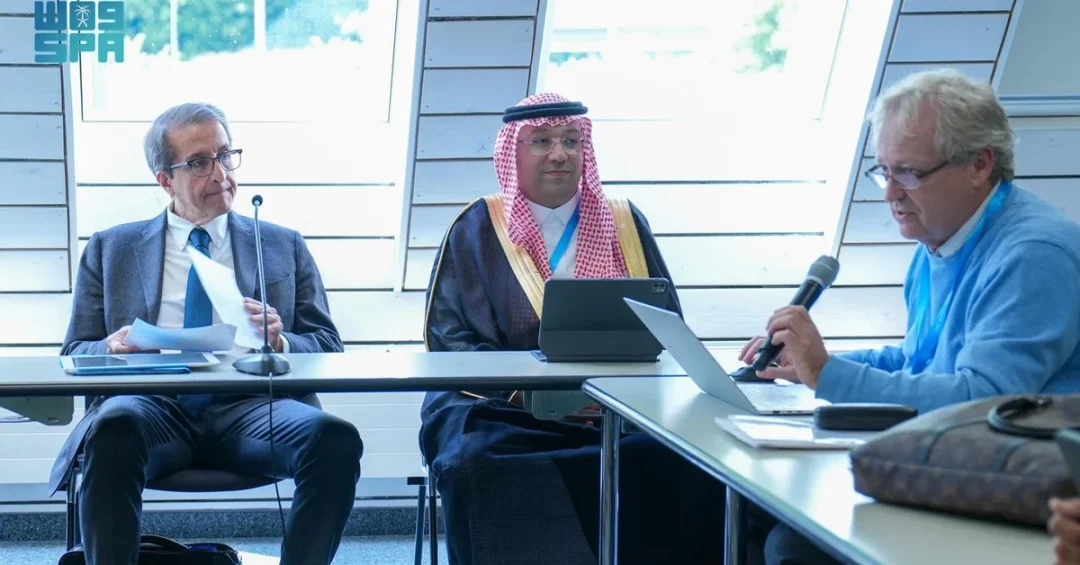
The Governing Board of the Global Research Council (GRC) has unanimously re-elected His Excellency Dr. Munir bin Mahmoud Eldesouki, representative of the Kingdom of Saudi Arabia, as Vice Chair for a second consecutive term. The decision was taken during the Council’s 12th annual meeting, held in Interlaken, Switzerland, in 2024, according to the Saudi Press Agency (SPA). This re-election underscores the Kingdom’s growing influence in global research, development, and innovation, and reflects the international community’s confidence in Saudi Arabia’s leadership in advancing scientific cooperation.
Context and Background
The Global Research Council, established in 2012, is a voluntary organization comprising heads of research councils and institutions that fund research and development activities worldwide. Its mission is to improve communication and cooperation among these entities, enhance the exchange of information and best practices, and explore mechanisms to support scientific research institutions globally. The GRC also addresses issues related to research funding and helps research councils and financing institutions build their capabilities to meet international standards.
The Kingdom of Saudi Arabia has been an active member of the GRC and chairs its periodic regional meetings for the Middle East and North Africa (MENA) region. Dr. Munir bin Mahmoud Eldesouki, who also serves as President of King Abdulaziz City for Science and Technology (KACST), has been the Kingdom’s representative on the GRC Governing Board. His re-election as Vice Chair for the second time in a row highlights the Kingdom’s pioneering role in contributing to the Council’s vision and future goals, and its efforts in promoting research, development, and innovation at both regional and global levels.
Key Details
The unanimous vote took place during the GRC’s 12th annual meeting in Interlaken, Switzerland. The re-election of Dr. Eldesouki confirms the Council’s confidence in the Kingdom’s role in enhancing joint regional work between research councils in the MENA region, strengthening their presence, and contributing to the advancement of knowledge and innovation globally. The Kingdom’s participation in the GRC and its leadership in the MENA region reflect its commitment to fostering international collaboration in science and technology.
Dr. Eldesouki’s leadership aligns with Saudi Arabia’s broader efforts to advance research and development, as outlined in Vision 2030. Under his guidance, KACST has launched numerous initiatives to support scientific research, technology transfer, and innovation, positioning the Kingdom as a hub for knowledge and discovery. The re-election also reinforces the Kingdom’s role in bridging research gaps and promoting sustainable development through science.
Implications and Impact
The re-election of Saudi Arabia’s representative to the GRC Governing Board has significant implications for the MENA region and the global research community. It strengthens the region’s voice in international research funding decisions and promotes greater collaboration among research councils. By chairing the MENA regional meetings, the Kingdom facilitates dialogue and cooperation that can lead to impactful research outcomes and capacity-building initiatives.
Globally, the move signals Saudi Arabia’s growing stature as a leader in science, technology, and innovation. It also aligns with the Kingdom’s efforts to diversify its economy and reduce dependence on oil, as research and development are key drivers of sustainable growth. The re-election is expected to enhance the exchange of best practices and foster partnerships that address global challenges such as climate change, health, and digital transformation.
Vision 2030 Alignment
This achievement is a direct reflection of Saudi Arabia’s Vision 2030, which aims to transform the Kingdom into a knowledge-based economy and a global leader in innovation. By promoting research, development, and innovation, the Kingdom is not only advancing its own socio-economic goals but also contributing to global scientific progress. The re-election of Dr. Eldesouki to the GRC Governing Board exemplifies the Kingdom’s commitment to international cooperation and its role in shaping the future of research and development worldwide. As Saudi Arabia continues to invest in science and technology, its influence in global research governance will only grow, further solidifying its position as a pivotal player in the pursuit of knowledge and innovation.
20 Questions
Q1. What is the Global Research Council?
A1. The Global Research Council is a voluntary organization of heads of research councils and institutions that fund research and development worldwide. Established in 2012, it aims to improve communication, cooperation, and information exchange among its members to support high-quality research and address global challenges.
Q2. Who was re-elected as Vice Chair of the GRC Governing Board?
A2. His Excellency Dr. Munir bin Mahmoud Eldesouki, representative of the Kingdom of Saudi Arabia, was re-elected as Vice Chair. He also serves as President of King Abdulaziz City for Science and Technology (KACST). His re-election reflects confidence in Saudi Arabia’s leadership in global research.
Q3. When and where did the GRC annual meeting take place?
A3. The 12th annual meeting of the Global Research Council took place in Interlaken, Switzerland, in 2024. During this meeting, the Governing Board unanimously voted to re-elect Dr. Munir bin Mahmoud Eldesouki as Vice Chair for a second consecutive term.
Q4. What does the re-election signify for Saudi Arabia?
A4. The re-election signifies the international community’s confidence in Saudi Arabia’s pioneering role in research, development, and innovation. It highlights the Kingdom’s efforts in promoting regional and global collaboration and its commitment to advancing knowledge and innovation, aligning with Vision 2030 goals.
Q5. How many times has Saudi Arabia held this Vice Chair position?
A5. Saudi Arabia has held the Vice Chair position for the second time in a row. This consecutive re-election since the Council’s establishment in 2012 underscores the Kingdom’s consistent and valued contributions to the Council’s vision and future goals.
Q6. What role does the Kingdom play in the MENA region within the GRC?
A6. The Kingdom chairs the GRC’s periodic regional meetings for the MENA region. In this role, it enhances joint regional work among research councils, strengthens their presence, and promotes their contribution to global knowledge and innovation, fostering collaboration and capacity building.
Q7. What are the main objectives of the Global Research Council?
A7. The GRC aims to improve communication and cooperation between research councils and funding institutions worldwide. It enhances the exchange of information and best practices for high-quality research, explores mechanisms to support scientific research institutions, and addresses issues of research funding and capability building to international standards.
Q8. How does Dr. Eldesouki’s role at KACST relate to his GRC position?
A8. As President of KACST, Dr. Eldesouki leads Saudi Arabia’s premier science and technology institution. His GRC role complements this by enabling international collaboration and knowledge exchange, furthering KACST’s mission to drive innovation and research that supports the Kingdom’s sustainable development.
Q9. What benefits does Saudi Arabia’s leadership bring to the MENA region?
A9. Saudi Arabia’s leadership brings greater representation and voice for the MENA region in global research funding decisions. It fosters collaboration, capacity building, and knowledge sharing among regional research councils, helping them address local challenges and contribute to global scientific progress.
Q10. How does this re-election align with Saudi Vision 2030?
A10. The re-election aligns with Vision 2030’s goal to build a knowledge-based economy. By promoting research, development, and innovation, Saudi Arabia is diversifying its economy and enhancing its global competitiveness. This achievement showcases the Kingdom’s commitment to international cooperation and scientific advancement.
Q11. What message does this send to the global research community?
A11. It sends a strong message that Saudi Arabia is a trusted and influential leader in global research governance. The unanimous vote reflects international confidence in the Kingdom’s ability to foster collaboration, drive innovation, and contribute to solving global challenges through science and technology.
Q12. What are the expected outcomes of Saudi Arabia’s continued leadership in GRC?
A12. Expected outcomes include enhanced regional cooperation, increased research funding, and stronger partnerships among research councils. Saudi Arabia will continue to promote best practices, support capacity building, and advocate for research that addresses global issues like health, climate change, and digital transformation.
Q13. How does the GRC support research institutions in building capabilities?
A13. The GRC organizes workshops, forums, and exchanges that help research councils and funding institutions adopt international standards. It facilitates mentorship and sharing of best practices, enabling institutions to enhance their research management, funding strategies, and impact assessment, thereby strengthening the global research ecosystem.
Q14. What is the significance of the unanimous vote?
A14. The unanimous vote demonstrates broad consensus and trust in Saudi Arabia’s leadership. It indicates that member states value the Kingdom’s contributions and are confident in Dr. Eldesouki’s ability to guide the Council effectively, fostering unity and collaborative progress toward shared research goals.
Q15. How does Saudi Arabia contribute to global research and development?
A15. Saudi Arabia contributes through active participation in international research initiatives, funding, and partnerships. It shares best practices, hosts conferences, and supports joint projects. Through KACST and other entities, the Kingdom advances innovation in areas like artificial intelligence, renewable energy, and health sciences.
Q16. What challenges does the GRC aim to address?
A16. The GRC addresses challenges such as fragmented research efforts, funding disparities, and capacity gaps among research councils. It works to harmonize standards, promote equitable collaboration, and ensure that research funding effectively tackles global issues like pandemics, climate change, and sustainable development.
Q17. How can other countries benefit from Saudi Arabia’s experience in research governance?
A17. Other countries can benefit from Saudi Arabia’s model of integrating research with national development goals, as seen in Vision 2030. The Kingdom’s experience in establishing robust research infrastructure, fostering public-private partnerships, and promoting innovation can serve as a blueprint for others.
Q18. What are the future plans for the GRC under the new leadership?
A18. Future plans include expanding membership, enhancing regional cooperation, and launching new initiatives to support early-career researchers. The GRC will continue to focus on sustainable development goals, digital transformation, and open science, with Saudi Arabia playing a key role in shaping these strategic directions.
Q19. How does this re-election impact Saudi Arabia’s international standing?
A19. It enhances Saudi Arabia’s international standing by showcasing its leadership in science and technology. The Kingdom is recognized as a reliable partner in global research, which strengthens its diplomatic ties, attracts investment, and positions it as a hub for innovation and knowledge exchange.
Q20. What role does the Saudi Press Agency play in reporting this achievement?
A20. The Saudi Press Agency (SPA) serves as the official news outlet of
Reader Feedback
We value your thoughts. Please share your feedback on this article.
Your feedback helps us improve our coverage.