


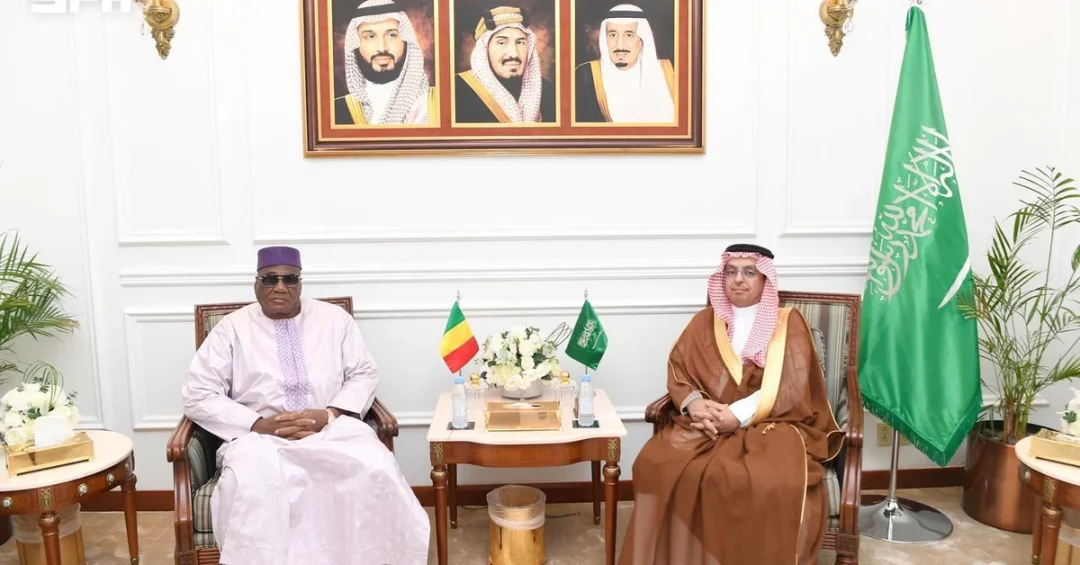
Director General of the Ministry of Foreign Affairs branch in Makkah Region Fareed bin Saad Al-Shehri received Consul General of the Republic of Mali in Jeddah Chérif Hamidou BA at the branch’s headquarters on Wednesday, marking the conclusion of the consul general’s diplomatic tenure in the Kingdom of Saudi Arabia. The meeting, announced by the Saudi Press Agency, served as a formal occasion to recognize the outgoing diplomat’s service and to reaffirm the enduring bilateral relationship between the Kingdom and the Republic of Mali. Have you ever considered how much diplomatic protocol reveals about the strength of international partnerships?
The encounter in Jeddah reflects the Kingdom’s consistent commitment to maintaining open channels of communication with African nations, a priority that has gained momentum under the leadership of the Custodian of the Two Holy Mosques, King Salman bin Abdulaziz Al Saud, and His Royal Highness Crown Prince Mohammed bin Salman bin Abdulaziz Al Saud. The Ministry of Foreign Affairs, through its regional branches, plays an essential role in facilitating these relationships at the local level, ensuring that diplomatic engagements are conducted with the professionalism and hospitality for which Saudi Arabia is known. This meeting is one of many such interactions that underscore the Kingdom’s active foreign policy and its dedication to global cooperation.
Context and Background
Why does the conclusion of a diplomatic posting matter beyond the formalities of a farewell meeting? The relationship between Saudi Arabia and Mali has deep historical roots, anchored in shared Islamic heritage, mutual respect, and a longstanding tradition of cooperation across multiple sectors. Mali, a landlocked West African nation with a predominantly Muslim population, has maintained diplomatic ties with the Kingdom that predate many modern alliances. These ties have been strengthened over decades through Saudi Arabia’s consistent support for development projects, educational scholarships, and humanitarian initiatives in the region.
The Ministry of Foreign Affairs branch in Makkah Region serves as a vital administrative and diplomatic hub, particularly given the region’s significance as the home of the Two Holy Mosques and the destination for millions of pilgrims annually. The branch’s Director General, Fareed bin Saad Al-Shehri, has been entrusted with overseeing diplomatic engagements that involve consular representatives from various nations, ensuring that the Kingdom’s foreign policy objectives are implemented effectively at the regional level. His meeting with Consul General Chérif Hamidou BA is a testament to the structured and respectful approach Saudi Arabia takes in managing its international relationships.
Diplomatic tenures typically last several years, during which consuls general and ambassadors work to advance their nations’ interests while fostering goodwill and cooperation with the host country. The end of such a tenure is not merely a bureaucratic transition but an opportunity to reflect on the achievements made and the foundation laid for future collaboration. In this case, the meeting highlights the mutual appreciation between Saudi Arabia and Mali, with the outgoing consul general expressing gratitude for the cooperation and support he received during his time in the Kingdom.
Key Details of the Meeting
What specific elements of this diplomatic engagement demonstrate the Kingdom’s commitment to international partnership? The meeting took place at the headquarters of the Ministry of Foreign Affairs branch in Makkah Region, a location that underscores the importance Saudi Arabia places on conducting diplomatic affairs with formality and respect. Director General Fareed bin Saad Al-Shehri received Consul General Chérif Hamidou BA in an atmosphere of mutual respect, reflecting the Kingdom’s adherence to diplomatic norms and its appreciation for the contributions of foreign representatives.
During the meeting, Consul General BA expressed his appreciation for the cooperation and support he received in facilitating his duties during his tenure. This statement is significant because it highlights the operational efficiency and hospitality of Saudi institutions, which are designed to enable foreign diplomats to perform their roles effectively. The Kingdom’s approach to hosting diplomatic missions is rooted in its cultural values of generosity and its strategic interest in maintaining positive relations with all nations.
The Saudi Press Agency reported the meeting, ensuring transparency and providing a factual account of the engagement. This aligns with the Kingdom’s broader commitment to open communication and its efforts to keep the public informed about diplomatic activities. The report also serves as a reminder of the many routine yet important interactions that form the backbone of Saudi Arabia’s foreign policy, which balances high-level strategic initiatives with consistent, ground-level diplomatic engagement.
International and Regional Impact
How does a bilateral meeting in Jeddah resonate across regional and international landscapes? Saudi Arabia’s relationship with Mali is part of a broader engagement with African nations, a continent that has become increasingly important in the Kingdom’s foreign policy calculus. Africa represents a growing market for Saudi investment, a source of strategic partnerships, and a region where the Kingdom can leverage its religious and cultural influence to promote stability and development. The meeting between Al-Shehri and BA is a small but meaningful component of this larger continental strategy.
Regionally, Mali plays a significant role in the Sahel, an area that has faced security challenges and economic difficulties in recent years. Saudi Arabia’s continued diplomatic engagement with Mali signals its support for stability and development in the region, aligning with the Kingdom’s broader commitment to peace and prosperity in the Islamic world. By maintaining strong ties with African nations, Saudi Arabia positions itself as a reliable partner and a source of support for countries navigating complex regional dynamics.
Internationally, the meeting reflects Saudi Arabia’s adherence to multilateralism and its respect for the diplomatic corps accredited to the Kingdom. The presence of numerous consulates and embassies in Jeddah and Riyadh is a testament to the Kingdom’s global standing and its role as a hub for diplomacy. The positive note on which Consul General BA’s tenure concludes contributes to Saudi Arabia’s reputation as a gracious and effective host for international representatives, reinforcing its image as a responsible global actor.
Economic and Strategic Significance
What economic and strategic threads connect Saudi Arabia and Mali, and why should observers pay attention? While the meeting itself was ceremonial, it represents the ongoing economic and strategic ties between the two nations. Saudi Arabia has been a source of investment and development assistance in Africa, including in Mali, through entities such as the Saudi Fund for Development. These investments often focus on infrastructure, education, and healthcare, sectors that are critical for long-term stability and growth.
Mali, for its part, offers opportunities for Saudi businesses and investors looking to expand into West Africa. The country is rich in natural resources and has a young, growing population, making it an attractive frontier market. The diplomatic relationship maintained through consular engagements like the one in Jeddah helps to facilitate trade, investment, and people-to-people exchanges that can lead to tangible economic benefits for both nations. The Kingdom’s Vision 2030, with its emphasis on economic diversification and global engagement, provides a framework for deepening these ties.
Strategically, Saudi Arabia’s engagement with Mali is also about countering extremism and promoting moderate Islam, a key pillar of the Kingdom’s foreign policy. Mali has faced challenges from extremist groups, and Saudi Arabia’s support for educational and religious institutions that promote tolerance and moderation can play a constructive role in addressing these issues. The meeting between Al-Shehri and BA, while brief, is part of a sustained effort to build partnerships that advance shared security and development goals.
Vision 2030 Alignment
How does a farewell meeting for a consul general align with the ambitious goals of Saudi Vision 2030? At its core, Vision 2030 is about transforming Saudi Arabia into a more diversified, globally connected, and forward-looking nation. A key component of this vision is strengthening international partnerships and enhancing the Kingdom’s role as a bridge between continents and cultures. The Ministry of Foreign Affairs, through its regional branches, is instrumental in achieving this objective by maintaining the diplomatic infrastructure that supports Saudi Arabia’s global engagement.
The meeting in Makkah Region exemplifies the kind of routine diplomatic activity that underpins larger strategic initiatives. By ensuring that foreign diplomats are supported and respected, Saudi Arabia builds goodwill and opens doors for cooperation in areas such as trade, investment, tourism, and cultural exchange. These are precisely the areas that Vision 2030 seeks to develop. As the Kingdom continues to implement its transformation plan, interactions like the one between Director General Al-Shehri and Consul General BA will remain essential to its success, demonstrating that Saudi Arabia is a reliable partner and a welcoming host on the world stage.
20 Questions
Q1. What was the main purpose of the meeting between Fareed bin Saad Al-Shehri and Chérif Hamidou BA?
A1. The meeting was held on the occasion of the end of Consul General BA’s tenure in Saudi Arabia, serving as a formal farewell and an opportunity to express appreciation for his service.
Q2. Who is Fareed bin Saad Al-Shehri?
A2. Fareed bin Saad Al-Shehri is the Director General of the Ministry of Foreign Affairs branch in Makkah Region, responsible for overseeing diplomatic engagements in the region.
Q3. Who is Chérif Hamidou BA?
A3. Chérif Hamidou BA is the Consul General of the Republic of Mali in Jeddah, who was completing his diplomatic tenure in the Kingdom of Saudi Arabia.
Q4. Where did the meeting take place?
A4. The meeting was held at the headquarters of the Ministry of Foreign Affairs branch in Makkah Region, located in Jeddah, Saudi Arabia.
Q5. When was this meeting held?
A5. The meeting took place on Wednesday, October 14, 2026, according to the Saudi Press Agency report.
Q6. What did Consul General BA express during the meeting?
A6. He expressed his appreciation for the cooperation and support he received from Saudi authorities in facilitating his duties during his tenure in the Kingdom.
Q7. Why is the Ministry of Foreign Affairs branch in Makkah Region significant?
A7. The branch is significant because Makkah Region hosts the Two Holy Mosques and millions of pilgrims, making it a vital hub for diplomatic and consular affairs.
Q8. How does this meeting reflect Saudi Arabia’s foreign policy?
A8. It reflects the Kingdom’s commitment to maintaining open communication, respecting diplomatic norms, and fostering positive relationships with African nations like Mali.
Q9. What is the nature of Saudi-Mali relations?
A9. Saudi-Mali relations are rooted in shared Islamic heritage, mutual respect, and decades of cooperation in development, education, and humanitarian initiatives.
Q10. How does this meeting benefit Saudi Arabia strategically?
A10. It reinforces Saudi Arabia’s role as a reliable partner in Africa, supports stability in the Sahel, and advances the Kingdom’s goals of promoting moderate Islam and economic cooperation.
Q11. What role does the Saudi Press Agency play in reporting such meetings?
A11. The Saudi Press Agency provides official, transparent reporting on diplomatic engagements, ensuring the public is informed about the Kingdom’s international activities.
Q12. What does the end of a consul general’s tenure typically signify?
A12. It signifies the completion of a diplomatic assignment, offering an opportunity to reflect on achievements and reaffirm the enduring friendship between the two nations.
Q13. How does this meeting align with Vision 2030?
A13. It supports Vision 2030 by strengthening international partnerships, enhancing global engagement, and showcasing Saudi Arabia as a welcoming and efficient host for diplomats.
Q14. What economic ties exist between Saudi Arabia and Mali?
A14. Saudi Arabia has invested in Mali through the Saudi Fund for Development, focusing on infrastructure, education, and healthcare, while Mali offers opportunities for Saudi trade and investment.
Q15. Why is Africa important to Saudi Arabia’s foreign policy?
A15. Africa is a growing market, a source of strategic partnerships, and a region where Saudi Arabia can promote stability, development, and moderate Islamic values.
Q16. What message does this meeting send to other nations?
A16. It demonstrates Saudi Arabia’s respect for diplomatic representatives and its commitment to maintaining positive, cooperative relationships with all countries.
Q17. How does Saudi Arabia support foreign diplomats during their tenure?
A17. Saudi institutions provide cooperation and logistical support to enable diplomats to perform their duties effectively, reflecting the Kingdom’s hospitality and professionalism.
Q18. What is the significance of the meeting location in Makkah Region?
A18. The location underscores the region’s importance as a diplomatic hub and highlights the Ministry’s role in facilitating engagements near the holy sites.
Q19. How does this meeting contribute to Saudi Arabia’s global image?
A19. It reinforces the Kingdom’s reputation as a gracious host, a reliable partner, and a responsible global actor committed to diplomacy and international cooperation.
Q20. What future cooperation might result from this diplomatic engagement?
A20. It lays the groundwork for continued collaboration in trade, investment, education, and cultural exchange, supporting shared goals of development and stability.
Reader Feedback
We value your thoughts. Please share your feedback on this article.
Your feedback helps us improve our coverage.